
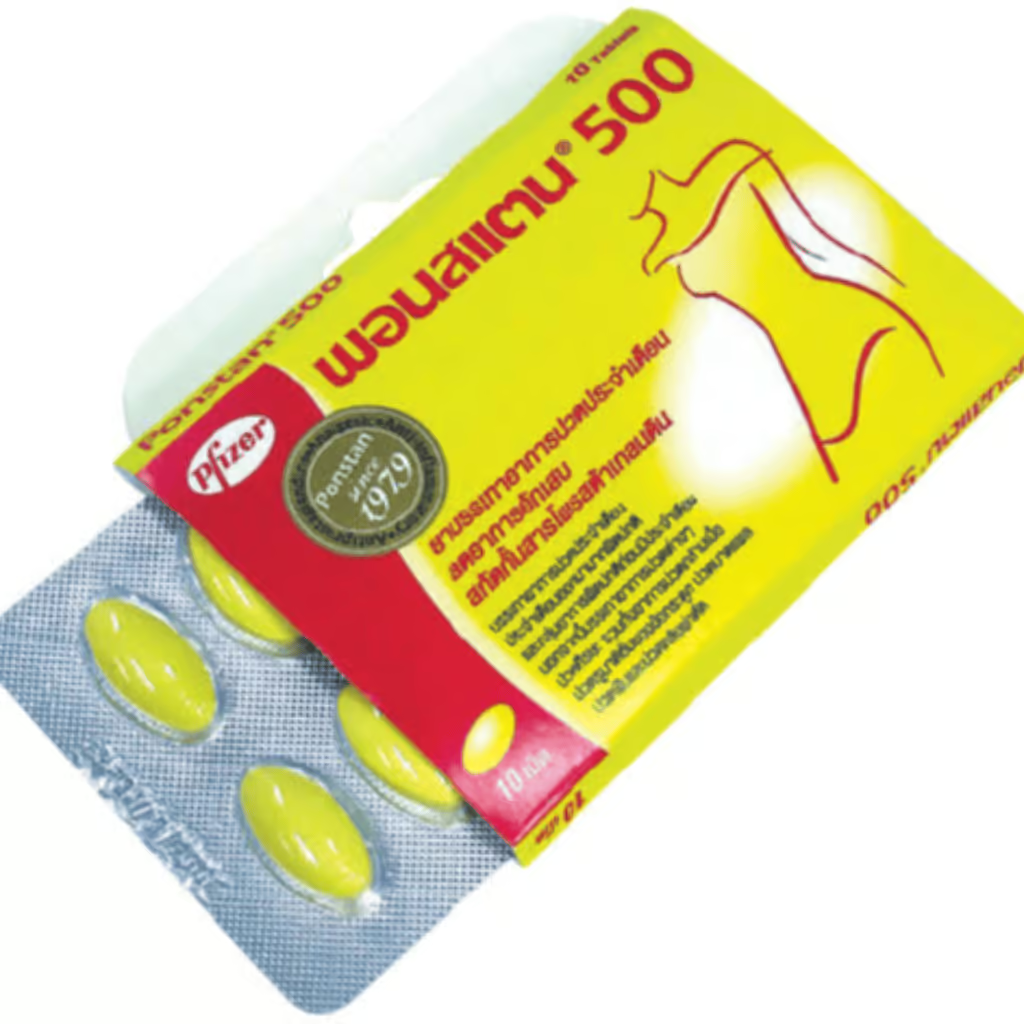
Ponstan 500 mg.

Ponstan 500 mg. Ponstan is a medication belonging to the group of nonsteroidal anti-inflammatory drugs (NSAIDs) containing Mefenamic acid. It is used to treat mild to moderate pain and is particularly effective in relieving menstrual pain. It is commonly used during menstrual cycles. 1) Precautions Before Using Ponstan: Do not use Ponstan 500 mg. in individuals with the following conditions:  2)  How to use the medication:  2.1. If a dose is missed:  3) Precautions while using the medication: 4) Potential risks from the medication: Common side effects may include: 5) How to store the medication: Note: This information is a general summary. Please read the medication label carefully before use and consult your doctor or pharmacist if you have any questions.

Paracetamol medication box and tablets for pain relief from Kitcha Dental Clinic Chiang Mai, Thailand.
Paracetamol 500 mg. (tablet)

Paracetamol 500 mg. (tablet) Paracetamol is a medication in the group of fever reducers and mild to moderate pain relievers. It is used for conditions such as headaches, muscle aches from colds, toothaches, menstrual cramps, muscle pain, back pain, and osteoarthritis. 1) Precautions Before Using  Paracetamol: Use Transamin with caution in individuals with the following conditions:  2)  How to use the medication:  3) Precautions while using the medication: 4) Potential risks from the medication: Common side effects may include: 5) How to store the medication: Note: This information is a general summary. Please read the medication label carefully before use and consult your doctor or pharmacist if you have any questions.
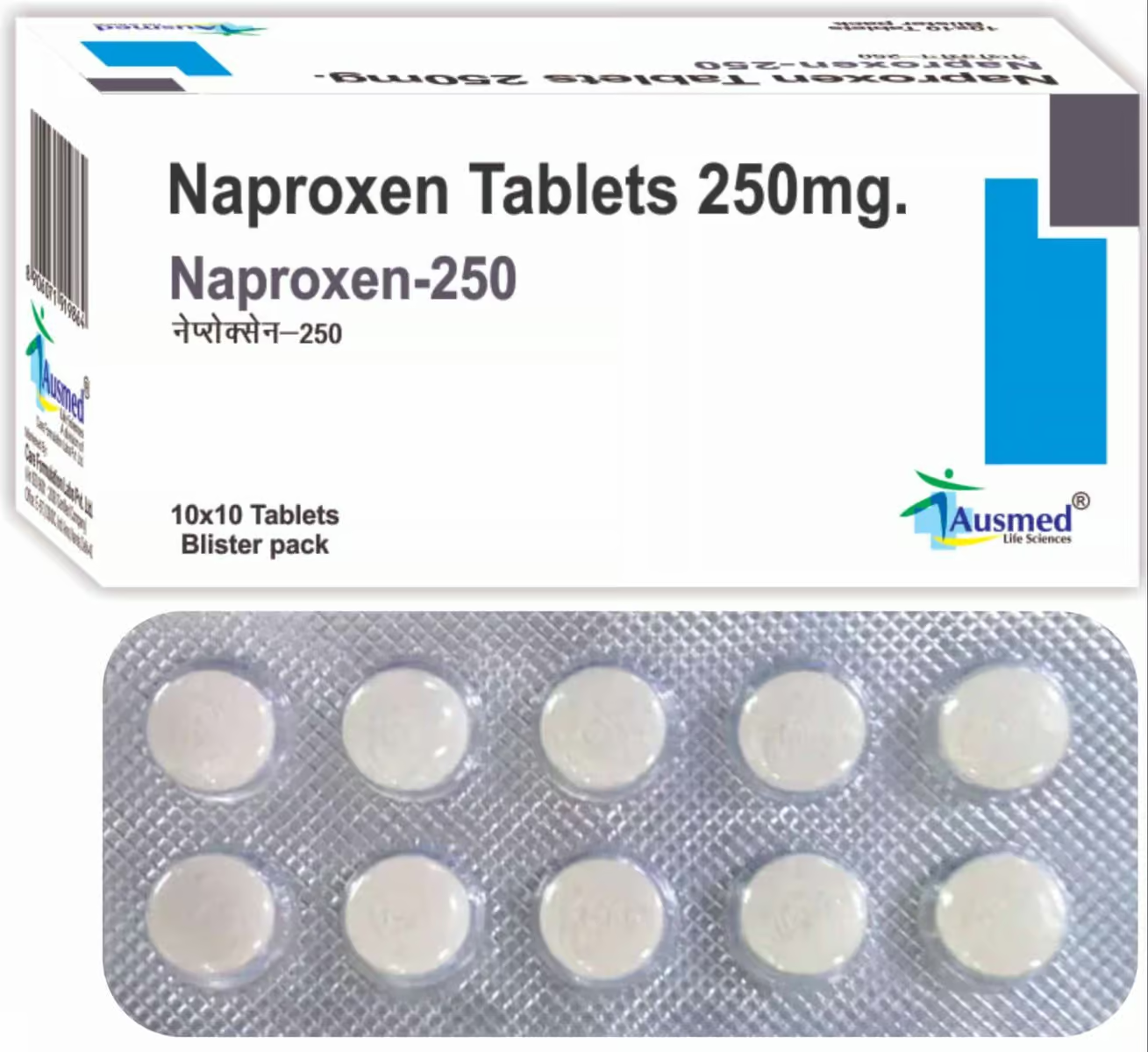
Naproxen 250 mg. (tablet)

Naproxen 250 mg. (tablet) Naproxen belongs to the group of Non-Steroidal Anti-Inflammatory Drugs (NSAIDs), which are anti-inflammatory drugs that are not steroids. It works by reducing hormones that cause inflammation and pain in the body. Naproxen is used to treat pain, swelling, and inflammation caused by various conditions such as arthritis, tendonitis, rheumatoid arthritis, gout, muscle pain, or menstrual cramps. Naproxen is considered a dangerous drug with significant contraindications and side effects. Therefore, its use should be guided by a doctor or pharmacist’s advice. 1) Precautions Before Using Naproxen :   2)  How to use the medication : Note: If an overdose occurs, closely monitor for abnormal symptoms. If severe abnormal symptoms such as dizziness, drowsiness, fainting, abdominal discomfort, confusion, nausea, vomiting, or high blood pressure occur, seek medical attention immediately.  3) Precautions while using the medication: 4) Potential risks from the medication: 5) How to store the medication: Note: This information is a general summary. Please read the medication label carefully before use and consult your doctor or pharmacist if you have any questions.

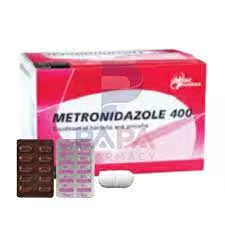
Metronidazole 400mg medication box for dental and medical infections, with blister pack and tablet layout.
Metronidazole 400 mg. (Tablets)

Metronidazole 400 mg. (Tablets) Metronidazole is an antibiotic used to treat bacterial infections. It works by inhibiting the growth of bacteria in the body. It is commonly used to treat acne vulgaris, skin infections, oral infections, respiratory tract infections, or bacterial infections in the genital area. It may be prescribed alone, in combination with other antibiotics, or when other medications have been ineffective. 1) Precautions Before Using Metronidazole: Exercise caution in individuals with the following conditions:  2)  How to UseHow to use the medication:  3) Precautions while using the medication: 4) Potential risks from the medication: Using Metronidazole may cause allergic reactions, such as hives, itching, facial or neck swelling, difficulty breathing, joint pain, and blistering skin rash. If any of these symptoms occur, discontinue the medication immediately and seek medical attention. Additionally, Metronidazole may also lead to other side effects, including: These side effects may vary from person to person. If any severe side effects persist or worsen, it is essential to consult a doctor promptly. 5) How to store the medication: Note: This information is a general summary. Please read the medication label carefully before use and consult your doctor or pharmacist if you have any questions.

Transamin 250 mg. (Capsules)

Transamin 250 mg. (Capsules) Transamin contains tranexamic acid, approved by the United States Food and Drug Administration (US FDA). It is a synthetic derivative of the amino acid lysine and works by inhibiting the breakdown of blood clots. It is commonly used to treat conditions such as oral bleeding, post-surgical bleeding, bleeding in childbirth, and abnormal menstrual bleeding. 1) Precautions Before Using Transamin: Use Transamin with caution in individuals with the following conditions:  2)  How to use the medication:  3) Precautions while using the medication: 4) Potential risks from the medication: Common side effects may include: 5) How to store the medication: Note: This information is a general summary. Please read the medication label carefully before use and consult your doctor or pharmacist if you have any questions.

Ibuprofen 400 mg. (Tablets)

Ibuprofen 400 mg. (Tablets) Ibuprofen is a non-steroidal anti-inflammatory drug (NSAID) used to relieve pain, reduce fever, and alleviate inflammation. It is commonly used for mild to moderate pain relief, including pain from inflammation, menstrual pain, and headaches. Medical professionals also prescribe it for certain types of joint pain and to alleviate migraine headaches. 1) Precautions Before Using Ibuprofen:  Use Ibuprofen with caution in individuals with the following conditions:  2)  How to Use: How to use the medication: Ibuprofen should be taken with or after food immediately to reduce gastric irritation. It is potentially dangerous and has moderate side effects, so it should not be self-administered. Use the smallest effective dose for the shortest duration, not exceeding 10 days. Dosages vary between adults and children, so consult a doctor or pharmacist before use. 2.1) If a dose is missed, take it when remembered. Do not double the dose if it’s near the time for the next dose. 2.2)  For headache and fever relief:  3) Precautions while using the medication: 4) Potential risks from the medication: General side effects may include: 5) Storage: Note: This information is a general summary. Please read the medication label carefully before use and consult your doctor or pharmacist if you have any questions.

Doxycycline (Capsules)

Doxycycline (Capsules) Doxycycline belongs to the tetracycline class of antibiotics. It treats various bacterial infections such as acne, urinary tract infections, gastrointestinal infections, eye infections, genuine and pseudomembranous infections, and gum disease. Once absorbed into the body, Doxycycline is sent to the liver for metabolism, with a half-life of 15-25 hours, eliminating 50% of the drug through urine. 1) Precautions Before Using Doxycycline: Do not use Augmentin in individuals with the following conditions :  2)  How to use the medication:  3) Precautions while using the medication: 4) Potential risks from the medication: 5) Storage: How to store the medication: Note: This information is a general summary. Please read the medication label carefully before use and consult your doctor or pharmacist if you have any questions.

Clindamycin 300 mg. (Capsules)

Clindamycin 300 mg. (Capsules) Clindamycin is an antibiotic used to treat bacterial infections. It works by inhibiting the growth of bacteria in the body. It is commonly used to treat acne vulgaris, skin infections, oral infections, respiratory tract infections, or bacterial infections in the genital area. It may be prescribed alone, in combination with other antibiotics, or when other medications have been ineffective. 1) Precautions Before Using Clindamycin: Do not use Clindamycin in individuals with the following conditions :  2)  How to use the medication:  3) Precautions while using the medication: 4) Potential risks from the medication: 5) How to store the medication: Note: This information is a general summary. Please read the medication label carefully before use and consult your doctor or pharmacist if you have any questions.

Augmentin 1g. (Tablets)

Augmentin is a combination medication containing amoxicillin and clavulanic acid. It treats bacterial infections affecting the ears, lungs, sinuses, skin, and urinary tract. Amoxicillin is a penicillin-class antibiotic that inhibits bacterial growth, while clavulanic acid inhibits the enzyme beta-lactamase, which protects bacteria from destruction by amoxicillin. Augmentin cannot treat viral infections such as the common cold or flu. 1) Precautions Before Using Augmentin: Do not use Augmentin in individuals with the following conditions  2)  How to use the medication:  3) Precautions while using the medication: 4) Potential risks from the medication: 5) How to store the medication: Note: This information is a general summary. Please read the medication label carefully before use and consult your doctor or pharmacist if you have any questions.

Arcoxia (90 mg. and 120 mg.) (Tablets)

Arcoxia (90 mg. and 120 mg.) (Tablets) Arcoxia is a trade name for Etoricoxib, available in three strengths: Arcoxia 60 mg, Arcoxia 90 mg, and Arcoxia 120 mg. It belongs to the NSAIDs (Nonsteroidal Anti-Inflammatory Drugs) class, which can alleviate inflammation and pain without affecting the stomach and blood clotting by inhibiting the action of the enzyme cyclooxygenase. 1) Precautions Before Using Arcoxia: Do not use Arcoxia in individuals with the following conditions  2) How to use the medication:   3) Precautions while using the medication:    4) Potential risks from the medication:     5) How to store the medication: Note: This information is a general summary. Please read the medication label carefully before use and consult your doctor or pharmacist if you have any questions.