Mandibular Advancement Device (MAD) FAQ | Snoring & Sleep Apnea Treatment in Chiang Mai

Get to Know the Mandibular Advancement Device (MAD) – Common Questions Answered Introduction For many people who struggle with snoring or mild to moderate obstructive sleep apnea (OSA), one treatment option that often comes up is the Mandibular Advancement Device (MAD). This small, custom-made oral appliance is worn during sleep to help keep the airway open, reduce snoring, and improve overall sleep quality. But before deciding to use one, patients usually have a lot of questions and concerns. This article gathers the most frequently asked questions (FAQs) about MADs, based on clinical knowledge and research, to help you better understand how it works. ❓ Is it comfortable to wear? In the beginning, some users may experience: Mild jaw discomfort Tooth or gum soreness Increased saliva Gum irritation Most of these symptoms improve after a short adjustment period, or when the dentist makes small modifications to improve the fit. Proper follow-up is important to ensure comfort. ❓ Are there any long-term side effects? With long-term use, some people may experience: Minor changes in their bite Slight tooth movement These effects are usually mild and can be managed if patients attend regular dental check-ups every 6 months for monitoring and adjustments. ❓ What if I have TMJ (jaw joint problems)? People with existing TMJ disorders may feel discomfort when using a MAD. In these cases, it is important to: Consult a dentist experienced in sleep dentistry Begin with gradual adjustments Closely monitor symptoms to reduce risks ❓ Does it really work? Research shows that MADs are effective in reducing snoring and daytime sleepiness, especially for people with: Primary snoring (habitual snoring without apnea) Mild to moderate obstructive sleep apnea (OSA) Results depend on choosing the right type of device and consistent nightly use. If the device is not used regularly, the benefits usually decrease. ❓ Are there any long-term side effects? With long-term use, some people may experience: Minor changes in their bite Slight tooth movement These effects are usually mild and can be managed if patients attend regular dental check-ups every 6 months for monitoring and adjustments. ❓ What if I have TMJ (jaw joint problems)? People with existing TMJ disorders may feel discomfort when using a MAD. In these cases, it is important to: Consult a dentist experienced in sleep dentistry Begin with gradual adjustments Closely monitor symptoms to reduce risks ❓ Who is a good candidate for a MAD? Good candidates include: People with chronic snoring Patients with mild to moderate OSA Those with healthy teeth and gums People looking for an alternative to CPAP Not recommended for:   Patients with severe dental problems (loose teeth, advanced gum disease) People with severe OSA or obesity (who may benefit more from CPAP) Those with severe teeth grinding (bruxism) unless additional protection is used ✅ Conclusion The Mandibular Advancement Device (MAD) is a practical and effective solution for many people with snoring or mild to moderate OSA. It offers advantages such as small size, portability, and ease of use compared to CPAP.   However, MAD treatment works best under the guidance of a trained dentist, with proper fitting and follow-up care. This ensures both comfort and long-term effectiveness in improving sleep health. Request Appointment
Snoring, Sleep Apnea & MAD Chiang Mai | Sleep Dentistry Solutions

Snoring, Sleep Disruption, and the Role of Mandibular Advancement Device (MAD) in Chiang Mai in Restoring Peaceful Nights Snoring is more than just a background noise at night — it can have a real impact on relationships, overall health, and quality of life. For couples, it’s often a shared problem: one partner snores, the other struggles to sleep, and both end up feeling tired, irritable, and less productive during the day. In Chiang Mai, there is growing awareness of treatment options beyond the well-known CPAP machine. MAD services in Chiang Mai, offered by Kitcha Dental Clinic specializing in Sleep dentistry in Chiang Mai, are helping people find quieter nights and better rest without bulky equipment. Understanding Snoring Snoring happens when airflow through the mouth and nose is partially blocked during sleep. This narrowing causes surrounding tissues in the throat to vibrate, producing the familiar rumbling sound. Common causes include: Relaxation of throat muscles during sleep Anatomical features such as a narrow airway or large tongue Nasal congestion or allergies Sleep position (e.g., lying on your back) Excess weight, which can add pressure to the airway While occasional light snoring may be harmless, loud and persistent snoring can indicate obstructive sleep apnea (OSA), a condition where breathing repeatedly stops and starts during sleep. The Impact on Sleep Partners Snoring doesn’t just affect the snorer — it affects anyone within earshot. For sleep partners, it can lead to: Difficulty falling asleep Frequent awakenings Daytime sleepiness Mood changes and irritability Some couples end up sleeping in separate rooms, which can affect intimacy and emotional closeness. Over time, this nightly disruption may put a strain on relationships. Why Treat Snoring? Beyond relationship stress, untreated snoring — especially when linked to OSA — can contribute to: High blood pressure Heart disease risk Poor concentration and memory Chronic fatigue This makes finding an effective solution important for both health and harmony at home. What Is a Mandibular Advancement Device (MAD)? A Mandibular Advancement Device or a Snoring Mouthpiece or a Custom Sleep Apnea Device, a small, custom-made oral appliance worn at night. It works by gently moving the lower jaw forward to: Keep the airway open Prevent tissue vibration Reduce or minimize snoring sounds Unlike CPAP, which uses continuous air pressure through a mask, a MAD is silent, portable, and doesn’t require electricity. MAD vs CPAP – Key Differences While CPAP remains the gold standard for severe OSA, many people with mild to moderate OSA or primary snoring prefer MADs for their convenience and comfort. MAD advantages: Small and discreet — fits entirely in the mouth No noise from machines or airflow Easy to travel with No mask or tubing Often easier to adapt to for new users CPAP advantages: Highly effective for severe OSA Adjustable airflow for tailored treatment Monitored through built-in data systems For people who find CPAP uncomfortable or difficult to use, MAD Chiang Mai offers a practical alternative with professional fitting and follow-up care from sleep dentistry Chiang Mai specialists. Case Scenario – From Sleepless Nights to Quiet Rest Imagine a couple in Chiang Mai — the husband has been snoring loudly for years. His wife often wakes up multiple times a night and sometimes moves to the guest room. Both are exhausted during the day, their moods suffer, and even family life feels strained. After researching snoring solutions, they visit a sleep dentistry at Kitcha Dental Clinic in Chiang Mai. The dentist examines the husband’s airway and recommends a MAD. Within a week of use, the wife reports quieter nights, and both partners begin sleeping through the night without interruption. Getting Started with MAD in Chiang Mai If you’re considering a MAD, here’s what to expect: Consultation – A sleep dentistry-trained dentist will review your medical history, sleep symptoms, and possibly your sleep study results. Fabricating the model of jaw – for a precise fit and comfort. Custom Fabrication – Your MAD is made specifically for your teeth and bite. Adjustment Period – Most people adjust within a few nights, though some may need minor fit changes. Follow-Up Visits – Regular reviews ensure the device continues to work effectively and comfortably. Tips for Using MAD Successfully Wear it consistently every night for best results Store it in a clean, dry case when not in use Clean it daily using mild soap or specialized cleaning tablets Report any jaw discomfort or bite changes to your dentist promptly Conclusion Snoring affects more than just the person making the noise — it impacts relationships, health, and daily well-being. If you or your partner struggles with loud, disruptive snoring and wants an alternative to CPAP, MAD in Chiang Mai services through Sleep dentistry at Kitcha Dental Clinic Chiang Mai could be the answer. With professional assessment, custom fitting, and ongoing support, a MAD can help restore not only quiet nights but also harmony at home. Request Appointment

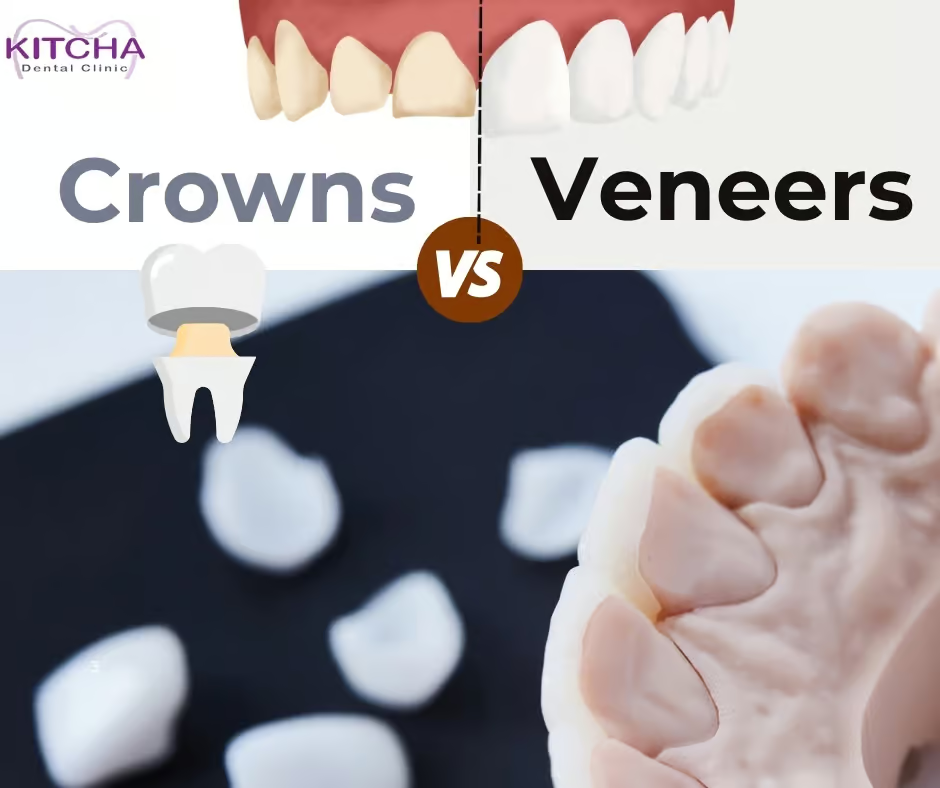
Crowns vs Veneers for dental restoration at Kitcha Dental Clinic Chiang Mai, professional options for improving your smile.
Veneer or Crown: Which Is Better or More Suitable for You?

Veneer or Crown: Which Is Better or More Suitable for You? When it comes to improving the appearance and function of your teeth, two common dental options come to mind: veneers and crowns. Both can address various dental issues, from aesthetic imperfections to structural damage. Choosing between veneers and crowns depends on your dental goals, oral health status, and budget. This article delves into the differences, advantages, and situations where each option may be more suitable. Ideal Candidates for Veneers: Veneers work well for people who want to enhance the appearance of their teeth without undergoing extensive dental work. They’re suitable for minor cosmetic corrections and ideal for patients with healthy teeth who don’t need major structural repairs. Ideal Candidates for Crowns: Crowns are typically recommended for patients with teeth that have sustained significant structural damage due to decay, fractures, or root canal treatments. They’re also ideal for patients with substantial enamel erosion or extensive filling needs. Crowns are suitable for those who need both functional restoration and cosmetic improvement. Veneers vs. Crowns: Key Differences Choosing Between Veneers and Crowns Veneers May Be Better For You If: Crowns May Be Better For You If: Both veneers and crowns can significantly enhance your smile and improve dental functionality, but the choice depends on your specific dental needs and lifestyle. Veneers are ideal for minor cosmetic improvements, while crowns are better for teeth that need added protection and support. Consulting with a qualified dentist is the best way to determine which option suits you, taking into account factors like tooth condition, function, and desired aesthetics. By making an informed choice, you can enjoy a beautiful, healthy smile for years to come.

Relaxed woman sleeping peacefully on a pillow at Kitcha Dental Clinic Chiang Mai, showcasing comfortable dental care environment and stress-free experience.
Understanding Mandibular Advancement Devices for Bruxism and Sleep Apnea Treatment

When it comes to treating conditions like bruxism (teeth grinding) and sleep apnea, a Mandibular Advancement Device (MAD) has emerged as a highly effective solution. This custom-made dental appliance, designed to shift the lower jaw slightly forward, helps open the airway and reduce airway obstruction during sleep. Let’s dive into the benefits and relevance of this device in managing sleep disorders. What is a Mandibular Advancement Device (MAD)? A Mandibular Advancement Device is primarily used to manage Obstructive Sleep Apnea (OSA), a condition where the airway collapses or becomes blocked during sleep, leading to disrupted breathing. The MAD works by repositioning the lower jaw and tongue forward, preventing the collapse of the airway. How Does MAD Help with Sleep Apnea? For patients suffering from sleep apnea, the device ensures that air passes freely, reducing the occurrence of pauses in breathing. This not only improves the quality of sleep but also minimizes the health risks associated with untreated sleep apnea, such as high blood pressure, heart disease, and daytime fatigue. Mandibular Advancement Device and Bruxism Aside from sleep apnea, MADs are also useful in addressing bruxism or teeth grinding. Many people suffer from this condition unknowingly, especially at night, which can cause tooth damage, jaw pain, and headaches. A well-fitted MAD helps protect the teeth by reducing the pressure from grinding while promoting better jaw alignment. Dr. Worakanya Buranaphatthana: Specialist in Dental Sleep Medicine Dr. Worakanya Buranaphatthana, an experienced and highly respected dentist at Kitcha Dental Clinic, specializes in treating sleep-related dental issues like sleep apnea and bruxism. Her expertise in dental sleep medicine, coupled with her gentle approach to patient care, makes her a top choice for patients seeking long-term solutions for these conditions. At Kitcha Dental Clinic in Chiang Mai, Thailand, patients can expect personalized treatment plans tailored to their needs. Whether you’re a local patient or visiting internationally, Dr. Worakanya ensures a thorough evaluation to determine the most effective treatment plan, often incorporating the use of Mandibular Advancement Devices. Why Choose Kitcha Dental Clinic? At Kitcha Dental Clinic, we pride ourselves on providing the latest in dental technology combined with the warm, personalized care of our expert team. Our Mandibular Advancement Devices are custom-fitted to ensure maximum comfort and effectiveness, giving you relief from both bruxism and sleep apnea.For more information or to book a consultation with Dr. Worakanya Buranaphatthana, feel free to contact us at: Tel (Thailand): 053-200201 | 091-797-7888International: +66-2-107-5595Website: www.kitchadentalclinic.comEmail: ap*********@**********ic.comTake control of your sleep and dental health today!

All-on-4 and All-on-6 Dental Implants

All-on-4 and All-on-6 Dental Implants: Who Needs Them?  Are They Worth It? Dental implants have revolutionized the way we restore teeth, offering permanent solutions for those with missing teeth. Two popular treatments, All-on-4 and All-on-6 implants, are gaining traction, but who exactly needs these procedures, and are they worth it? Let’s dive into the specifics, exploring what makes them different, who benefits from them, and their overall value. What Are All-on-4 and All-on-6 Implants? Both All-on-4 and All-on-6 are techniques for full-arch teeth replacement. Instead of individual implants for every missing tooth, these methods anchor a complete set of prosthetic teeth on either four or six implants, depending on the case. All-on-4: Four implants are strategically placed in the jaw, providing full support for a complete dental arch.All-on-6: Similar to All-on-4, but with six implants, offering potentially more stability for the prosthesis. Who Are These Procedures For? These procedures are designed for individuals who: Who Needs All-on-4 or All-on-6?Patients with significant tooth loss who do not want removable dentures are ideal candidates for both procedures. Typically, individuals who: All-on-4 is often a go-to for those with moderate to severe tooth loss, whereas All-on-6 might be more suitable for patients who need additional support due to their jawbone structure or higher bite force. Is It Worth It? The answer is YES. The benefits of All-on-4 and All-on-6 over traditional dentures are numerous:Natural Look and Feel: Unlike dentures, implants look and function like natural teeth, allowing for easier chewing and a confident smile. What Does the Research Say? Numerous studies back the effectiveness of these treatments: Conclusion For patients seeking a long-term solution to tooth loss, All-on-4 and All-on-6 are excellent options. The choice between the two often comes down to personal anatomy and bite force requirements, but both offer a significant improvement in quality of life over traditional dentures. If you’re unsure which option is best for you, our skilled dental team at Kitcha Dental Clinic, Chiang Mai can help you decide. For those located outside Thailand, we offer consultations via email to discuss your needs. Contact Us Today. Thailand: 053-200201 | 091-797-7888www.kitchadentalclinic.com Email: ap*********@**********ic.com        

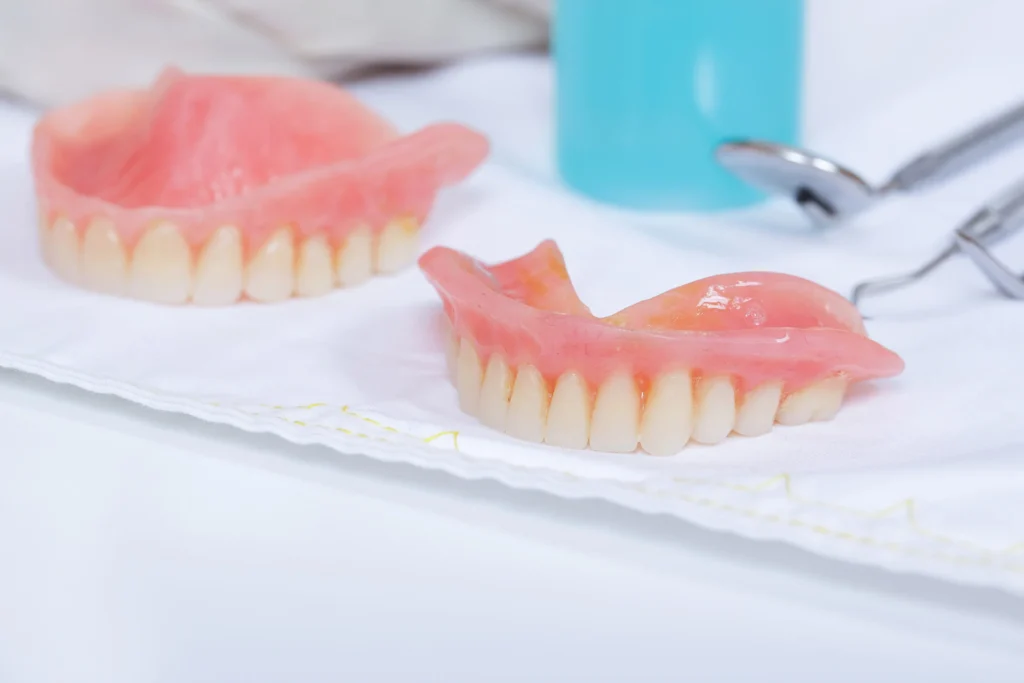
Removable dentures on a white cloth at Kitcha Dental Clinic Chiang Mai, showcasing expert dental prosthetic services.
Removable Denture

Removable Denture Removable Denture are designed for individuals with a few remaining natural teeth or for those who have lost all their teeth. These dentures can be easily removed for cleaning. Made from plastic or composite materials that closely match the color of natural teeth, they feature a base made of either plastic or metal that rests on the gums or the roof of the mouth. Evaluate the Pros and Cons of Removable Dentures Removable dentures offer several advantages, including replacing lost natural teeth, improving the quality of life for those who have lost teeth, and restoring effective chewing function. However, additional adjustments or replacements may be necessary if teeth are extracted or if the gums change over time. Consider the following benefits and drawbacks of removable dentures Advantages : Disadvantages : Preparing for Removable Denture Process for Getting Removable Denture The process of fitting removable dentures involves several steps and typically requires 5-6 visits to the dentist. The steps are as follows Possible Complications with Removable Denture Caring for Removable Denture

Invisalign Clear Aligner

Patient Instruction Invisalign 1. General Information Invisalign is a clear aligner system that uses 3D computer technology to create personalized orthodontic devices. The process begins with the dentist taking an impression of the patient’s mouth. This impression is then scanned into a digital model of the teeth. A computer program determines the step-by-step movement of the teeth according to the treatment plan outlined by the dentist. Each stage of tooth movement is used as a template to manufacture the individual Invisalign aligners. 2. Alternatives treatment 3.  Risk and side effect of treatment 4. Pre / Post Care Wearing Invisalign   Removing Invisalign   Daily Care and Cleaning for Invisalign Proper Oral Hygiene for Invisalign Wearers Storage of Invisalign  Precautions Prohibitions    

Invisalign®

Invisalign® In the pursuit of a radiant, flawless smile, traditional orthodontic methods have often presented hurdles. From the discomfort induced by metal wires and brackets to the self-consciousness stemming from a conspicuously altered appearance, achieving straight teeth historically demanded sacrifices. However, with the advent of groundbreaking dental technology, a revolutionary solution has emerged, offering unparalleled convenience, comfort, and discretion: Invisalign. And here at Kitcha Dental Clinic, we take immense pride in offering this cutting-edge orthodontic treatment to our cherished patients, paving the way for a straighter, more confident smile like never before. What sets Invisalign apart from traditional braces is its ingenious approach to teeth straightening. Instead of relying on conspicuous metal components, Invisalign harnesses the power of transparent aligners meticulously crafted to fit snugly over your teeth. This means that as you undergo treatment, your aligners remain virtually invisible to others, empowering you to smile, speak, and laugh with unparalleled confidence. Yet, the allure of Invisalign transcends mere aesthetics. Unlike traditional braces, which can induce discomfort and irritation, Invisalign aligners are fashioned from smooth, comfortable materials that glide seamlessly over your teeth, sparing your gums and cheeks from unwelcome abrasion. With Invisalign, you can seamlessly navigate through your daily activities without the hindrance of bulky metal brackets chafing against the delicate interior of your mouth. Moreover, Invisalign offers a level of flexibility unparalleled in orthodontic treatment. While traditional braces impose restrictions on certain foods due to the risk of hardware damage, Invisalign aligners can be effortlessly removed before meals, granting you the freedom to relish all your favorite culinary delights without constraint. Whether you’re indulging in a crisp apple or savoring a succulent steak, you can do so with unwavering confidence, knowing that your aligners can be conveniently slipped out and reinserted afterward. At Kitcha Dental Clinic, we are dedicated to providing our patients with a level of care that transcends expectations. When you entrust us with your Invisalign journey, you can rest assured that you are in the capable hands of a team of seasoned dental professionals committed to your well-being. From your initial consultation to the culmination of your treatment, we embark on this transformative journey alongside you, ensuring that every step is marked by comfort, ease, and efficacy. Leveraging state-of-the-art 3D scanning technology, we meticulously craft a bespoke treatment plan tailored to your unique dental needs, ensuring optimal results with each successive aligner change. However, our dedication to your oral health extends far beyond the confines of your treatment plan. Throughout your Invisalign journey, we vigilantly monitor your progress, making any necessary adjustments to ensure that your teeth are shifting according to plan. Our ultimate goal is not only to bestow upon you a beautifully aligned smile but also to enhance your overall oral health and well-being, fostering a lifelong commitment to dental excellence.

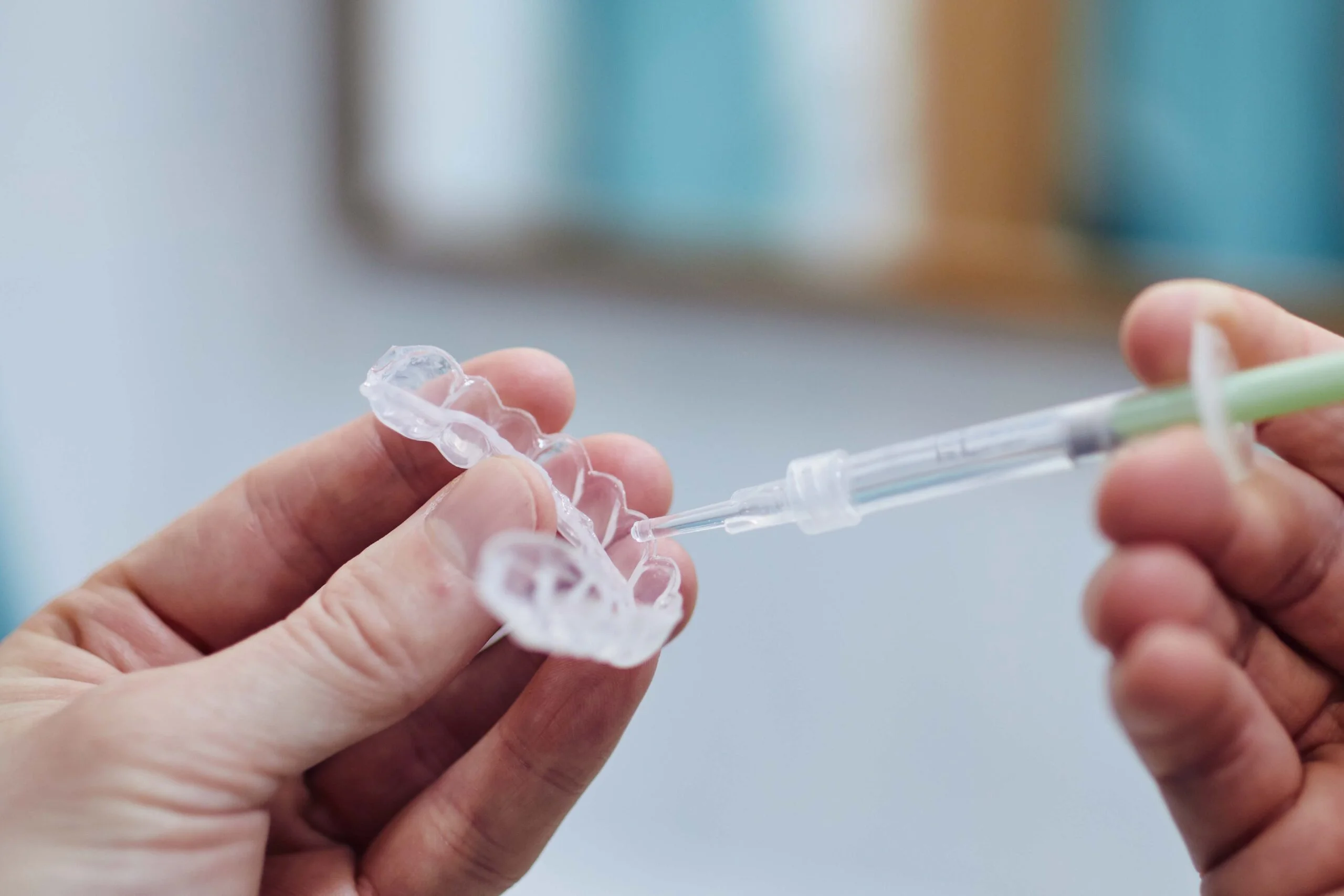
Clear dental aligners being filled with dental resin or adhesive for orthodontic treatment at Kitcha Dental Clinic Chiang Mai.
Opalescence PF Tooth Whitening Gel (Home Bleaching)

Opalescence PF is  : a water-based tooth whitening gel with concentrations of 10%, 15%, 20%, and 35%. It contains hydrogen peroxide at 10%, 15%, 20%, and 35%, respectively. This formula is used for teeth whitening, with results varying based on individual needs. It helps maintain tooth moisture during the whitening process. The higher concentration of the gel not only reduces sensitivity but also decreases the likelihood of shade relapse in the future. This is because the patient’s teeth remain moisturized from the beginning to the end of the whitening process. Mechanism of Action: Hydrogen peroxide infiltrates the tooth structure, then breaks down into water and oxygen. These oxygen molecules bind to the color molecules that make teeth appear yellow or dark, causing them to break down. As a result, the teeth appear whiter. 1. Precautions before using the whitening gel: Patients should consult a dentist to assess their dental and gum health. The dentist will select the appropriate formula and provide guidance and close monitoring. 2. How to use the whitening gel: 3. Precautions: 4. Side effects: Some potential side effects of using the whitening gel may include 5. Storage instructions: Recommendations:

Colored dental fillings on molar teeth at Kitcha Dental Clinic Chiang Mai, offering tooth restoration and cavity treatment.
The Safe Mercury Amalgam Removal Technique (SMART)

The Safe Mercury Amalgam Removal Technique (SMART) At Kitcha Dental Clinic, we prioritize your health and safety by following the Safe Mercury Amalgam Removal Technique (SMART) protocol, established by the International Academy of Oral Medicine and Toxicology (IAOMT). Our commitment to excellence ensures that your dental care is not only effective but also safe and environmentally responsible. The Safe Mercury Amalgam Removal Technique (SMART) is a set of rigorous safety recommendations designed to protect patients, dental professionals, and the environment from mercury exposure during the removal of dental amalgam fillings. These protocols are based on the latest scientific research and were most recently updated by the IAOMT on July 19, 2019. Our dentists at Kitcha Dental Clinic are certified in SMART, ensuring you receive the highest standard of care. Dental amalgam fillings contain approximately 50% mercury, which can release harmful mercury vapors during everyday activities like brushing and chewing. The release of mercury is significantly higher during the placement, replacement, and removal of these fillings. Mercury vapor is a known neurotoxin that can affect the nervous, digestive, and immune systems, as well as the lungs and kidneys. Chronic exposure to mercury vapor can have serious health implications, making it crucial to handle amalgam fillings with the utmost care. At Kitcha Dental Clinic, we implement the SMART protocol to minimize your exposure to mercury vapors and particulates. This protocol ensures that both patients and dental professionals are protected from the potential hazards associated with mercury exposure. Our SMART-certified dentists follow these comprehensive safety measures to protect your health during amalgam removal: These measures ensure that the amalgam removal process is safe for patients, dental professionals, and the environment. We adhere to all federal, state, and local regulations for the safe handling and disposal of mercury-contaminated materials. Our protocols extend beyond the removal procedure itself, encompassing the safe cleaning and disposal of any materials and equipment that come into contact with mercury. Additionally, we take extra precautions to ensure that pregnant or breastfeeding women are not exposed to mercury during their visits. The IAOMT does not recommend amalgam filling removal for women who are pregnant or breastfeeding, and we follow these guidelines rigorously to protect both our patients and staff. At Kitcha Dental Clinic, your safety and well-being are our top priorities. We are dedicated to providing you with safe and effective dental care using the latest and most reliable methods. Our commitment to the SMART protocol underscores our dedication to patient safety, environmental responsibility, and professional excellence. Contact us today to learn more about our SMART-certified services and how we can help you achieve a healthier smile. Trust Kitcha Dental Clinic for your dental care needs, where your health and safety come first.