
A mandibular advancement device (MAD) is a medical oral appliance for snoring and obstructive sleep apnea. It is made for your teeth and worn at night, holding the lower jaw slightly forward so the airway behind the tongue stays more open.

What the device is made of
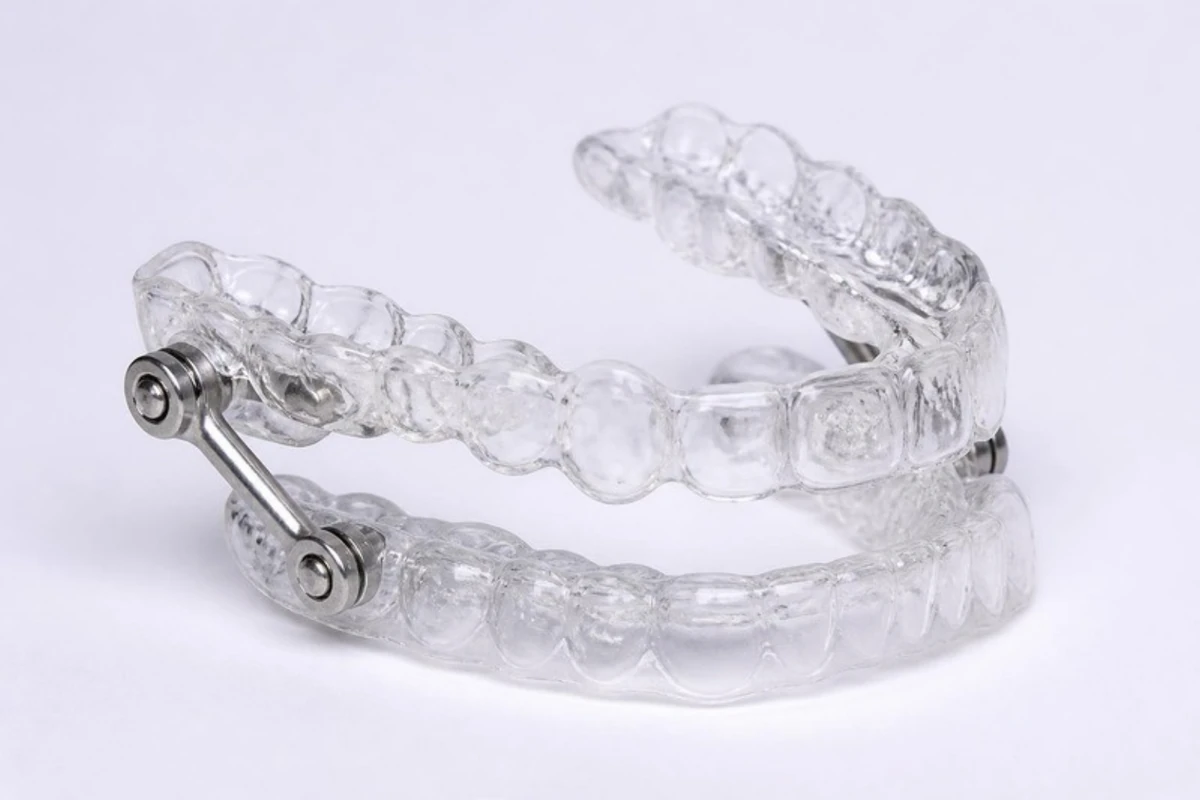
A MAD fits over both the upper and lower teeth. It is made from impressions or a digital scan of your teeth, and the forward position of the lower jaw can be adjusted. Appliances can be made from several types of material, which your dentist explains.
A physician assesses your sleep first
A MAD is a treatment, not a diagnosis. A physician diagnoses sleep apnea with a sleep test and decides whether an oral appliance, CPAP or another option suits you. A dentist then checks whether your teeth, gums and jaw joints can support the appliance.
Fitting and adjusting the device
When you receive the appliance, you learn how to put it in, take it out and clean it. Over the following weeks your dentist moves the jaw position forward step by step, and your physician reviews the effect on your sleep.
Possible side effects
- The jaw or teeth may feel tight for a short time in the morning during the first weeks.
- You may notice more saliva or a dry mouth.
- Over the long term, the way your teeth meet can gradually change, so your bite is checked at follow-up visits.
- Report jaw discomfort or changes in your bite to your dentist promptly.
Is a MAD used for teeth grinding?
A MAD is designed to help breathing during sleep. Teeth grinding is usually managed with a night guard, which covers the teeth to protect them. If you both snore and grind your teeth, your dentist explains which appliance suits you.
Teeth grinding and night guards
Getting a MAD at the clinic
Appliances at Kitcha Dental Clinic are made and adjusted by dentists in our jaw-joint, bite and teeth-grinding team, who work alongside the physicians who assess your sleep. Tell us about your snoring and any sleep test you have had, and a coordinator will book a time with a dentist.