
Both are custom appliances worn at night and made from a scan or impressions of your teeth, so they are easy to confuse. They do different jobs. A night guard, or occlusal splint, protects the teeth from grinding and clenching. A mandibular advancement device (MAD) holds the lower jaw slightly forward to help keep the airway open during sleep.

What a night guard does
A night guard covers the biting surfaces, protects the teeth from grinding forces and lets the jaw muscles rest. It starts with a dental examination of the teeth, jaw joints and chewing muscles. It also helps protect crowns, veneers and implants from grinding.
Teeth grinding and night guards
What a MAD does
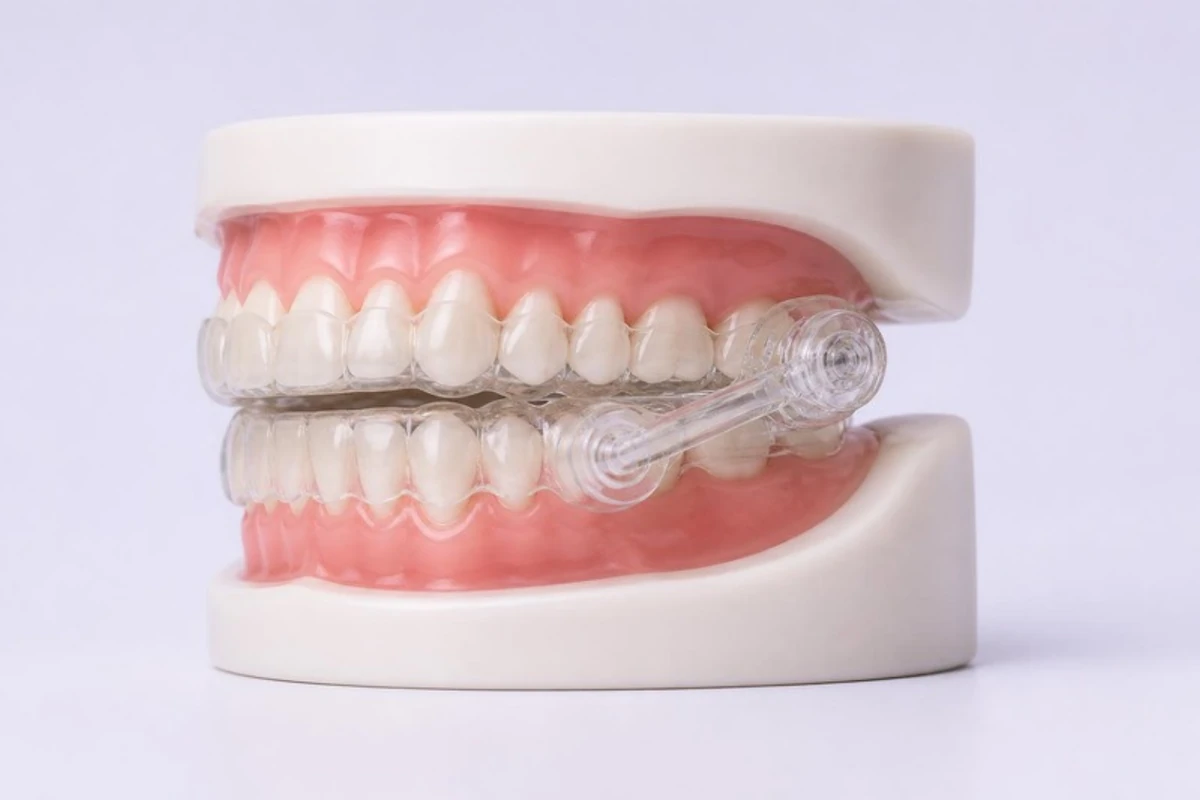
A MAD fits over the upper and lower teeth and holds the lower jaw slightly forward, which can reduce snoring and the breathing pauses of sleep apnea. It starts with a sleep assessment by a physician, then a dental examination, and your dentist adjusts the jaw position step by step over several weeks.
Snoring and sleep apnea appliance (MAD)
Which one do you need?
- Worn or chipped teeth, a jaw that aches in the morning, or someone hears you grinding: a dental examination for a night guard.
- Loud snoring, pauses in breathing or daytime sleepiness: a sleep assessment by a physician first, then a dental examination for a MAD if it is recommended.
- Both snoring and grinding: tell your dentist about both, and they explain which appliance suits you.
Visits and care
A night guard usually takes at least three visits: the examination, a scan or impressions, and fitting about a week later with a follow-up adjustment. A MAD takes several dental visits, with adjustment visits over the following weeks, and the sleep assessment is arranged separately with the physician. Bring either appliance to every check-up so its fit and your bite can be checked.