
Wisdom tooth removal in Chiang Mai
Wisdom teeth that come through straight can be kept, but impacted or partly erupted ones often cause pain, infection or decay. At Kitcha Dental Clinic, wisdom teeth are assessed with X-rays and removed by dentists with postgraduate training in oral and maxillofacial surgery.
- Open every day, 09:00–20:00
- Opposite Chiang Mai Gate
- Coordinators in English and Thai
Is this you?
- You have pain or swelling at the back of your mouth.
- Food gets stuck around a wisdom tooth that has only partly come through.
- Your dentist has seen a wisdom tooth pressing on the tooth in front of it.
- Your orthodontist has asked for wisdom teeth to be removed.
If your wisdom teeth have room and come through straight, they can usually stay. An X-ray shows the position of each tooth and its roots.
Types of wisdom teeth: how they sit in the jaw
Upright
The tooth stands straight and has enough room. If you can clean it well, it can often stay.
Tilted forward
The tooth leans against the molar in front of it. Food and plaque collect where the two meet, so that molar is at risk of decay.
Lying sideways
The tooth lies on its side with its crown pointing at the molar in front. The X-ray shows how deep it is buried.
Tilted backward
The crown leans toward the back of the jaw. The dentist studies the X-ray closely before planning the surgery.
Besides the angle, your dentist also notes how deep the tooth lies: covered by gum only, partly in bone or fully in bone. A tooth that has only partly come through may have gum lying over it, which traps food. Angle and depth together help the dentist judge how straightforward the removal is likely to be.
When removal is usually advised

Pain or infection
Gum around a partly erupted tooth can trap food and bacteria and become infected.
Damage to the next tooth
A tilted wisdom tooth can cause decay or bone loss on the back of the molar in front of it.
Decay that cannot be cleaned
Wisdom teeth are hard to reach with a toothbrush, so decay is common.
Orthodontic treatment
Your orthodontist may ask for wisdom teeth to be removed as part of the treatment plan.
When a wisdom tooth can be kept and watched
No symptoms and easy to clean
A tooth that has come through, does not hurt, and can be reached by your brush and floss can usually stay. Your dentist keeps an eye on it at routine check-ups.
Buried, but the X-ray looks normal
A tooth buried in bone with no cyst, decay or damage to the tooth beside it can be watched. Your dentist may repeat the X-ray from time to time to see whether anything has changed.
Watching is not ignoring
A tooth that is left in place still needs follow-up, because problems can appear later. If you notice pain, swelling, a bad taste or food that keeps packing in, tell your dentist without waiting for the next visit.
A shared decision
If you are unsure, your dentist explains the options for that tooth, including keeping it, and you decide together.
Is a wisdom tooth bothering you?
Send a recent X-ray if you have one, or book an examination. Your dentist explains whether the tooth needs to come out, how it would be removed and the fee.
What your dentist looks for on the X-ray before surgery
Angle and depth
Whether the tooth is tilted or upright, and how much of it is covered by gum or bone. This shapes the plan, for example whether the gum must be opened and whether the tooth is divided into pieces.
Roots
How many roots there are, how long and how curved they are, and which structures they lie close to.
The nerve in the lower jaw
A nerve canal runs through the lower jaw beneath the teeth. When the panoramic X-ray hints that a root may lie against it, for example a darkened root or a broken white line along the canal, a CBCT 3D scan shows the relationship more clearly. The scan helps with planning but does not make the risk disappear. Not every tooth needs one.
The sinus (upper teeth)
The roots of an upper wisdom tooth can lie close to the sinus. Your dentist checks this and tells you what to avoid afterward, such as blowing your nose hard.
The neighboring tooth and the bone
Decay on the back of the molar in front, bone loss, or a cyst (a fluid-filled sac) around the crown of the tooth.
What happens, and how many visits
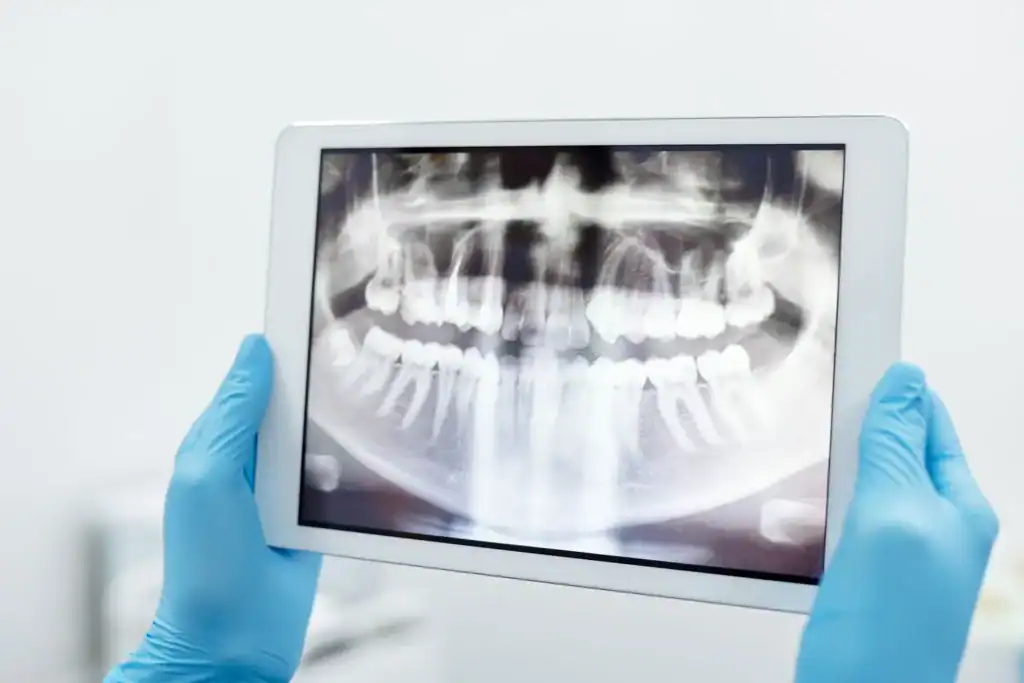
Assessment and X-rays
A panoramic X-ray, and a CBCT scan when the roots are close to the nerve, shows how the tooth sits. Your medical history and medicines are checked.
Removing the tooth
The area is numbed with local anesthesia. For an impacted tooth, the gum is opened and the tooth may be divided into pieces to remove it gently; stitches are usually placed. Nitrous oxide or oral sedation is available for suitable cases.
Check visit
About 7 days later, the healing is checked and any stitches are removed.
Most people can travel 2–3 days after the removal; your dentist confirms this for your case. Tell us your dates when you book so the check visit can be planned.
If radiation worries you: at our clinic, X-rays inside the mouth are digital, taken with phosphor plates and sensors that help lower the dose compared with film. Our Planmeca ProMax CBCT has an Ultra Low Dose mode, your dentist chooses the mode that suits each case, and X-rays are taken only when they are needed.
Possible risks, explained plainly
Dry socket
A few days after surgery the pain grows instead of easing, sometimes with a bad taste. It happens when the blood clot does not form well or comes away early, leaving bone uncovered. If this happens, contact the clinic. Your dentist can help ease it.
Temporary numbness or tingling
After a lower wisdom tooth is removed, some people notice numbness or tingling in the tongue, lip or chin. It usually improves, but it can last weeks or even months. This is one reason the nerve is checked on the X-ray before surgery.
Swelling, bruising and a stiff jaw
A swollen cheek and some bruising are common, and the jaw may feel stiff when you open wide. These usually ease over about 2 weeks.
Infection
Signs to watch for include a fever or chills, swelling that keeps growing, a bad smell or taste, or pus. Contact the clinic promptly, because an infection may need antibiotics.
Before you decide
Your dentist explains which of these apply to your tooth, and you can ask any question before agreeing to surgery.
Recovery after removal
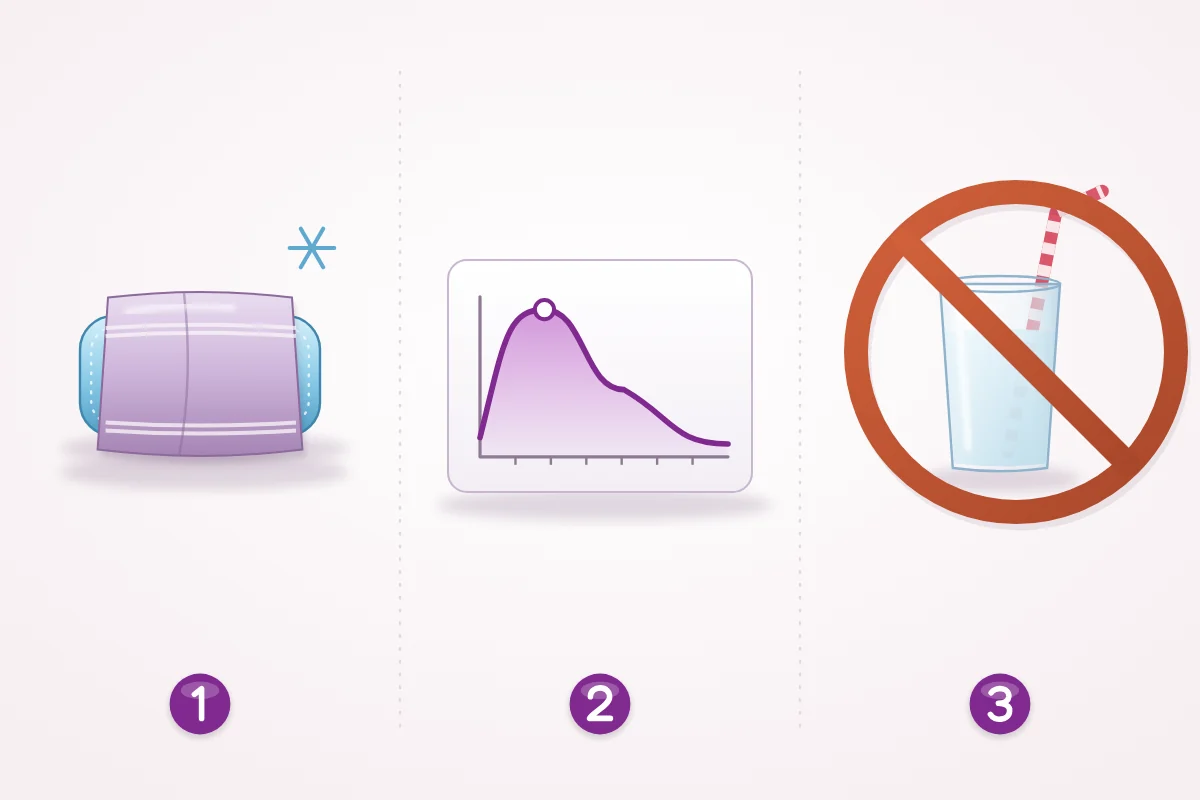
Swelling and soreness
Swelling and soreness are common for a few days and usually ease after that. Use an ice pack on and off on the first day, and take medicines as your dentist prescribes.
Protecting the clot
Do not spit, rinse hard, smoke or use a straw for the first day, and eat soft, cool food on the other side.
When to contact us
Contact the clinic if bleeding or pain gets worse instead of better, if you have a fever or chills, or if there is increasing swelling, redness or discharge.
Recovery day by day, from day one to two weeks
Day 0–1
The numbness wears off, and a little oozing is normal. Bite on gauze for about 1 hour, put a cold pack on your cheek in on-and-off spells, and take medicines as your dentist prescribes. Do not spit, rinse hard, smoke or use a straw.
Day 2–3
Swelling and bruising may be most noticeable now, then begin to settle. Keep using cold packs through day 2 and switch to warm ones from day 3. From day 2 you can rinse gently with warm salt water after meals. Eat soft food, avoid hot, spicy or hard food, and skip smoking and alcohol for at least 72 hours. If the pain grows instead of easing, contact the clinic.
Day 4–7
Soreness eases a little more each day, and you can add firmer food bit by bit once chewing is comfortable. Around day 7 (your dentist may book it anywhere from day 5 to day 10) you come back so the wound can be checked and any stitches taken out.
About 2 weeks
The gum has usually closed over the site. A little tightness or discomfort when chewing can remain, and the tissue underneath takes several weeks to heal fully, longer for a tooth that was buried. Everyone heals at their own pace, so ask the clinic if what you feel is very different from this.
This is a general guide. Follow the written instructions your dentist gives you after your own surgery.
Cost of wisdom tooth removal
The fee depends on how the tooth sits: in the gum only, partly in bone or fully in bone. Prices per tooth are on our prices page, and your dentist confirms the fee after the X-ray. X-rays, sedation and medicines are charged separately, only if you need them.
Prices on our prices page are shown as ranges. Your final fee depends on what the examination finds, and may include additional items — such as a rubber dam or special materials — when your treatment needs them. Your dentist explains these before treatment.
Who treats you
Wisdom teeth are removed by dentists with postgraduate training in oral and maxillofacial surgery, including a Master's degree in Oral and Maxillofacial Surgery from Prince of Songkla University.
Wisdom teeth FAQs
Do all wisdom teeth need to come out?
No. Wisdom teeth that have room and come through straight can usually stay, as long as you can keep them clean. Impacted or partly erupted ones are checked with X-rays and removed if they cause, or are likely to cause, problems.
Does wisdom tooth removal hurt?
The area is numbed with local anesthesia, so you should feel pressure rather than sharp pain; tell your dentist if you feel anything sharp. Swelling and soreness for a few days afterwards are common. Nitrous oxide or oral sedation is available for suitable cases.
How long is the recovery?
Swelling and soreness usually ease after a few days, and the gum heals in about 2 weeks. Stitches, if placed, are removed at a check visit about 7 days later.
Why do some wisdom teeth need a 3D scan (CBCT)?
Because the roots of some lower wisdom teeth lie close to the nerve canal in the jaw. When the standard panoramic X-ray hints that they may be close, a CBCT scan shows the roots and the canal in three dimensions, so the dentist can plan the surgery around the nerve. Not every tooth needs one.
Can wisdom tooth removal leave my tongue or lip numb?
It can, in some people. Numbness or tingling in the tongue, lip or chin sometimes follows removal of a lower wisdom tooth. It usually improves, but it can last weeks or months. If you are still numb after the local anesthesia has worn off, tell your dentist.
How many days off work do I need after wisdom tooth surgery?
Many people return to normal activities the next day. After a harder removal you may want one to three days off, and it is wise to skip strenuous exercise while the area heals. Your dentist advises you based on your tooth.
The pain is getting worse a few days after surgery. Is that normal?
Soreness should ease a little each day. If the pain grows instead, especially after the second or third day, contact the clinic. It may be a dry socket, where the blood clot has come away early, and your dentist can help ease it.
Can all four wisdom teeth be removed at once?
Sometimes. It depends on how difficult each tooth is, your health and your preference. Your dentist suggests whether to remove them together or in separate visits.
Can I fly after wisdom tooth removal?
Most people can travel 2–3 days after the removal; your dentist confirms this for your case. Tell us your travel dates when you book.
How much does wisdom tooth removal cost?
It depends on how the tooth sits: in the gum only, partly in bone or fully in bone. Prices per tooth are on our prices page, and your dentist confirms the fee after the X-ray.
Book a wisdom tooth consultation
Tell us which side is bothering you and send a recent X-ray if you have one. A coordinator replies in English or Thai and books a time with a dentist. Open every day, 09:00–20:00 (Thailand time).
Or email us at [email protected]
Content reviewed by Dr. Pawak Tungthangthum — DDS, Chiang Mai University; Master's Degree in Esthetic Restorative and Implant Dentistry (International Program), Chulalongkorn University · Last reviewed