
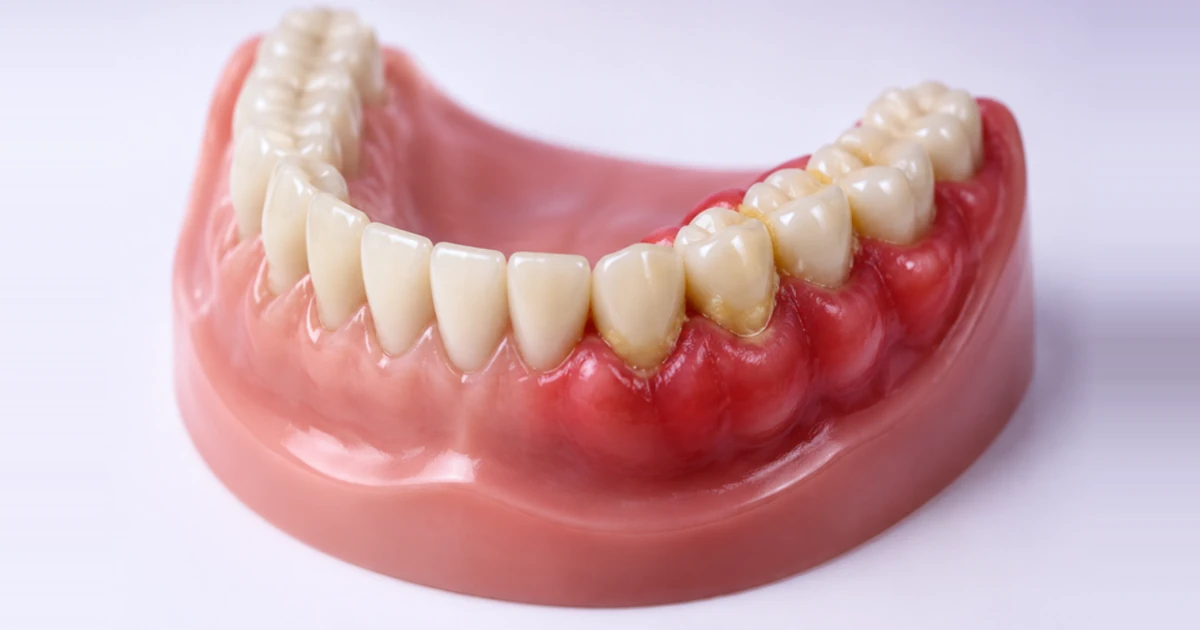
Red, swollen gums that throb or bleed when you brush can leave you wondering how serious it is, whether a cleaning will fix it, or whether you’ll need surgery.
Most of the time, the cause is plaque and tartar building up along the gum line. At this stage it’s called gingivitis (gum inflammation), and the gums can get healthy again once the cause is removed. Even if it has progressed to periodontitis, it can still be treated step by step, and the earlier you start, the more of the bone around your teeth can be saved. The one thing to know: you can’t brush tartar off. Your dentist has to remove it.
Quick summary
- Swollen gums with no pus, no fever and no swelling spreading to the face: start by cleaning better at home, then book a gum check
- Pus, a loose tooth or swelling that spreads fast: see a dentist within 1-2 days. If you have trouble swallowing or breathing, go to a hospital right away
- The dentist treats it step by step, starting with a professional cleaning (scaling), and uses surgery only where the gums haven’t improved
When should you see a dentist?
Not all swollen gums are equally urgent. See which of these fits you.
Go to a hospital right away if the swelling spreads to your eye, under your jaw, down your neck or under your tongue; if you have trouble swallowing, breathing or opening your mouth; or if you have a high fever and feel very unwell.
See a dentist within 1-2 days if there’s a painful, throbbing lump or pus; a loose tooth; sore ulcers on the gum between the teeth with easy bleeding and strong bad breath; or the gum covering your very back molar is so swollen that opening your mouth feels tight.
Book a gum check within a few weeks if your gums are red and swollen around several teeth and bleed when you brush, but there’s no pus and no fever, or if the swelling has lasted more than 2 weeks even though you’ve been cleaning better.
If it’s a single lump with pus, read Swollen gum with pus. If bleeding when you brush is the main problem, read Bleeding gums.
What causes swollen gums?
The most common cause is plaque and tartar along the gum line, which usually makes the gums swell around several teeth at once.
Swelling in just one spot usually has a specific cause: food stuck between the teeth (sore and swollen between two teeth), gum over a wisdom tooth (sore at the very back; see Do all wisdom teeth need removing?), or a gum abscess (a throbbing lump). A rough edge on a filling or crown, crowded teeth, braces and dentures can also make the gum around them swell.
Do all wisdom teeth need removing?
Hormone changes, such as during pregnancy, and some medicines can also make the gums thicken.
Diabetes and smoking make gum disease progress faster. Diabetes and gum disease affect each other both ways, so tell both your dentist and the doctor who looks after your diabetes. If you smoke, cutting down or quitting helps your gums respond better to treatment.
Gingivitis vs periodontitis: what’s the difference?
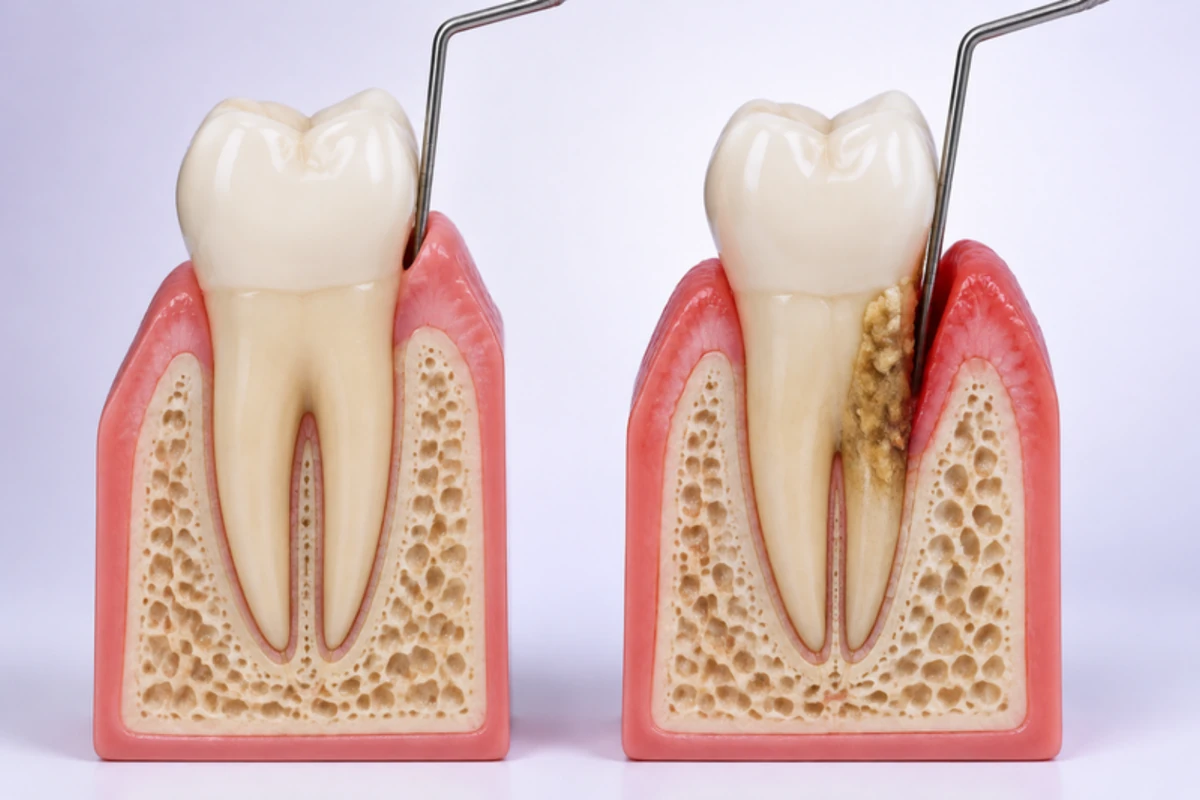
These are the same disease at two different stages. The difference is whether the inflammation has reached the bone and the ligaments that hold the teeth in place.
Gingivitis affects only the gums: they’re red, swollen and bleed, but usually don’t hurt. At this stage, the gums can go back to normal once the plaque and tartar are removed.
Periodontitis goes deeper, into the ligaments and the bone around the roots. You may notice receding gums, teeth that look longer, wider gaps between teeth, bad breath or a loose tooth. Treatment aims to settle the disease and keep the bone you still have.
You can’t tell the stage by looking in the mirror, because gum disease is often silent. Even with no pain, the disease can go deeper than it looks. That’s why your dentist measures the gum pockets and takes an X-ray to check the bone.
Caring for your gums at home
There are three things you can and should do at home.
- Brush twice a day with fluoride toothpaste. Spit out the foam, but don’t rinse with water afterwards, and avoid using mouthwash straight after brushing.
- Angle the bristles toward the gum line and use short, gentle strokes. There’s no need to scrub hard.
- Clean between your teeth once a day with floss or interdental brushes, in a size that fits the gaps between your teeth.
Mouthwash can be used as an extra if your dentist advises it, but it can’t replace removing tartar.
Things to avoid: buying antibiotics and taking them yourself; squeezing, piercing or cutting a lump on the gum; scraping off tartar yourself with tools bought online; or using home remedies instead of getting checked.
How dentists treat swollen gums
It starts with an exam and a plan. The dentist asks about your health conditions and medicines, measures your gum pockets and takes an X-ray to check the bone. The clinic uses digital X-rays and takes only the ones that are needed.
For gingivitis, the dentist cleans and polishes your teeth (scaling), removes plaque from the gum line, and shows you how to clean at home. The clinic offers GBT, which uses a dye to show up plaque so you can see where your brush is missing. This usually needs no anesthetic. Read more in Scaling: does it hurt, and how often?
Scaling: does it hurt, and how often?
For periodontitis, you’ll need root planing (a deep cleaning): cleaning below the gum along the pocket of each tooth and smoothing the root surface. It’s usually done under local anesthetic (a numbing injection), in one visit or split into 2-3 visits. See Root planing: how it differs from scaling.
Root planing: how it differs from scaling
After your whole mouth has been cleaned, the dentist rechecks at about 2 weeks and assesses again at about 1 month, to see which areas have improved and which need more work. Gum disease can come back, so regular checks and cleanings continue after that.
Gum surgery and lasers
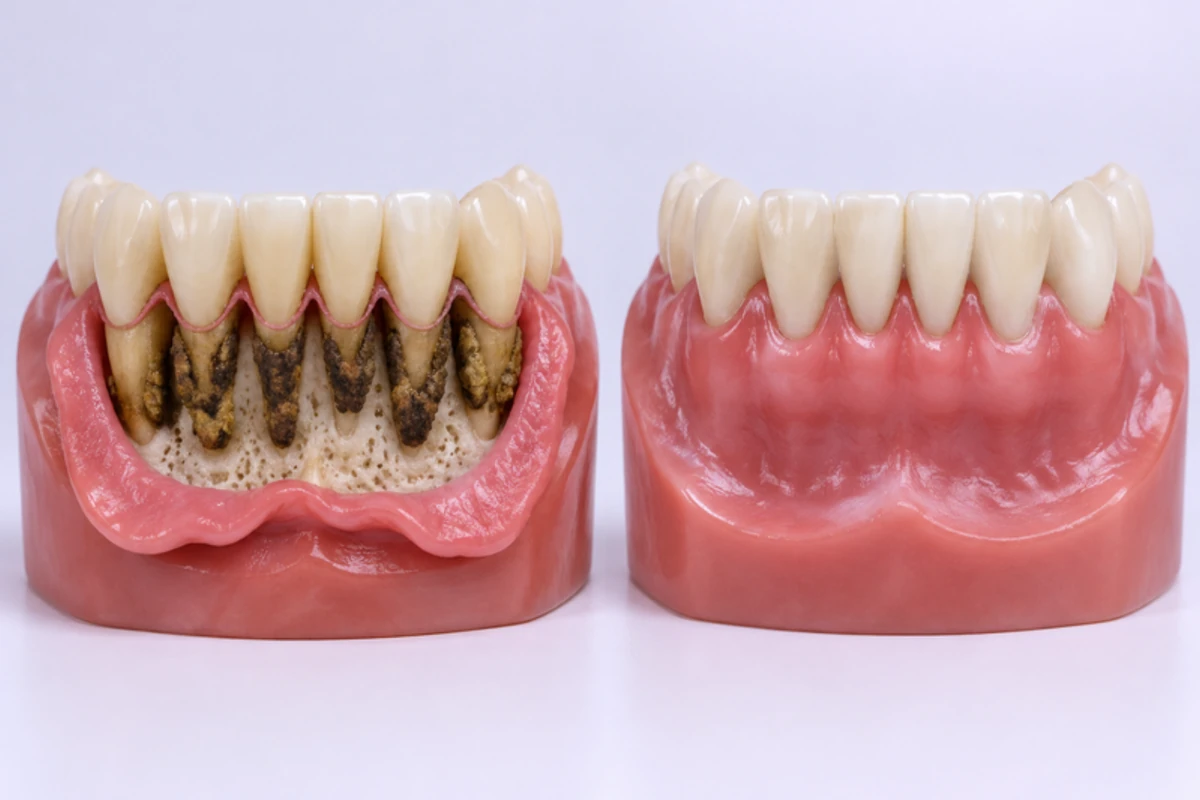
Gum surgery is used only where pockets are still deep after cleaning and a reassessment. Most often, this means opening the gum so the dentist can see the root and bone directly, cleaning the places instruments couldn’t reach during root planing, then stitching the gum closed. Some patients also have bone and tissue rebuilt around the root, or the gum reshaped. At Kitcha Dental Clinic, this treatment is planned by dentists who have studied periodontics further, including master’s and doctoral degrees.
Receding gums aren’t the same as swollen gums, but they often go together. With receding gums, the gum edge moves down and the root shows. If the gum is still inflamed, that has to settle first, and then the dentist assesses whether a gum graft is worthwhile. See Gum grafting for receding gums.
Gum grafting for receding gums
As for lasers, the clinic has a Waterlase laser, and the dentist uses it as an extra in some cases, for example to help reshape the gum edge. The main treatment for gum disease is still removing plaque and tartar thoroughly. A laser can’t replace scaling or root planing. See Laser dentistry.
If you’re pregnant, take regular medicines or have implants
Pregnancy. Hormones make the gums inflamed more easily, even when there’s not much plaque. Tell your dentist you’re pregnant, and your dentist will plan your care. See Pregnant: can you have dental treatment?
Pregnant: can you have dental treatment?
Medicines that make the gums grow. Some blood pressure medicines, anti-seizure medicines and certain immunosuppressants can make the gums thicken. If the overgrown gum is bothering you, your dentist may talk to the doctor who prescribed the medicine. Don’t stop or change any medicine yourself.
Blood thinners or antiplatelet medicines. In some cases you don’t need to stop the medicine. In others, your dentist may want to check with the doctor who looks after you first. Don’t stop the medicine yourself.
Dental implants. The gum around an implant can become inflamed too. If it’s swollen, red or bleeding, book a check without waiting for pain. The clinic recommends a professional cleaning every 6 months and an implant check once a year. See Peri-implantitis.
Frequently asked questions about swollen gums
How long do swollen gums take to go away, and can they heal on their own?
If the cause is food stuck between the teeth or a small scratch, the gum usually settles within a few days once you clean well. If the cause is tartar, things may improve as you take better care, but hardened tartar has to be removed by a dentist, or the problem usually comes back.
Does scaling or root planing hurt? Will I need anesthetic?
For gingivitis, a cleaning usually needs no anesthetic. Root planing is usually done under local anesthetic, and your gums may feel sore for a few days afterwards.
Does everyone need gum surgery?
No. Surgery is only used where the pockets are still deep after cleaning and a reassessment.
If I have gum disease, how often should I have a cleaning?
Your dentist will usually schedule follow-ups every 3 or 6 months depending on how severe it is, then set the interval that suits you.
Can I use Thai social security for scaling?
The clinic can provide the service. You pay at the clinic, and the clinic issues a medical certificate and receipt so you can claim the cost yourself. Please check your entitlement and limits directly with the Social Security Office, because the policy can change. For fees, see the gum section of the prices page and the scaling section.
gum section of the prices page
What should I ask my dentist?
Try asking which stage your gums are at, which areas need extra care, whether your health conditions or medicines affect the plan, how many visits you’ll need, and when you’ll be reassessed.
Summary
- Most swollen gums start with plaque and tartar. At the gingivitis stage, the gums can get healthy again
- At home, clean along the gum line and between your teeth every day. Tartar has to be removed by a dentist
- The dentist treats it step by step, with surgery only where the gums haven’t improved. A laser is an extra in some cases
- If you’re pregnant, have diabetes, take certain medicines or have implants, tell your dentist so the plan suits you
If you would like the dentist to check your gums and explain the treatment plan, you can book an appointment at Kitcha Dental Clinic, call +66 53 200 201, message us on LINE @kitchaclinic or WhatsApp +66 91 797 7888. For more about the service, see periodontal (gum) treatment.
The clinic is open every day, 09:00-20:00, except 31 December, 1 January and 13-15 April. Walk-ins are welcome, but the dentists see patients with appointments first, so you may have to wait a while. Booking ahead gives you a fixed time.
Sources for this article
- American Academy of Periodontology (AAP): patient information on gum disease and gum surgery
- NHS UK and MedlinePlus (US): information on gum disease
- European Federation of Periodontology (EFP): treatment guideline for periodontitis, 2020
- Faculty of Dentistry, Naresuan University: “Fun Talk” radio program, 2023
- The clinic’s own experience, and the periodontal (gum) treatment page