
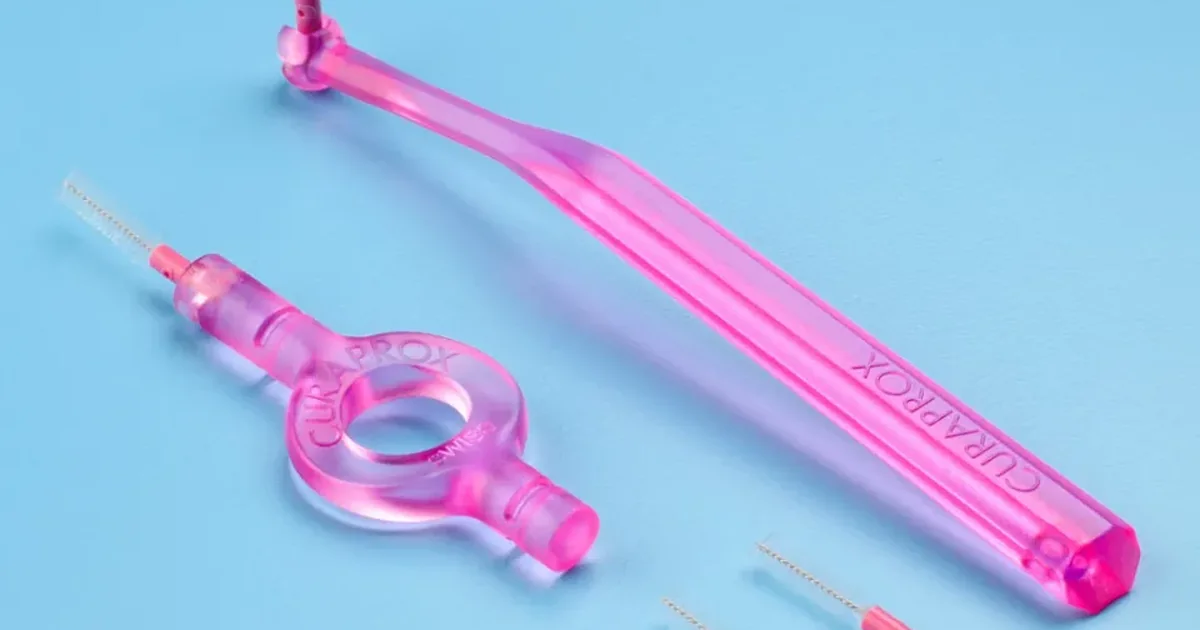
Maybe you bought a box of floss, tried it, saw a little blood and stopped. Maybe the floss keeps getting stuck or shredding, or your dentist mentioned interdental brushes and you are not sure which size to buy. Cleaning between the teeth feels like it should be simple, yet most of us were never really shown how.
The good news: once you have the right tool and a few minutes of practice, it becomes a quick daily habit. A toothbrush cleans the outer surfaces well, but the sides of the teeth that face each other are where plaque, tartar, decay and gum inflammation often start. Floss and interdental brushes reach those sides.
This article shows you how to floss step by step, how to choose and use an interdental brush, whether to floss before or after brushing, what research says about each tool, how to care for braces, bridges and implants, and what is normal in the first couple of weeks.
In short: clean between your teeth once a day. Floss suits tight contacts where the gum fills the gap. Interdental brushes suit any space they can pass through comfortably, and research suggests they remove plaque between the teeth well. Choose a brush that fits snugly without forcing. The NHS suggests flossing before brushing, and a little bleeding in the first days usually settles as the gums get healthier.
Which tool suits you? A quick self-check
Floss is likely a good fit
- Your teeth touch each other tightly and the gum fills the space between them.
- Even the smallest interdental brush will not pass without pushing.
- You have good hand control and do not mind wrapping floss around your fingers.
An interdental brush is likely a good fit
- You can see small gaps between the teeth, or the gums have pulled back a little.
- You have had gum treatment, or you have a bridge, implant or braces.
- Floss feels awkward in your hands or keeps snapping into the gum.
See a dentist soon
- Gums still bleed after about two weeks of gentle daily cleaning.
- Floss shreds or catches at the same spot again and again.
- Food packs into one gap every time you eat, or a gap feels new.
Why the spaces between teeth need their own cleaning
A toothbrush reaches the cheek, tongue and biting surfaces, but its bristles only touch the edge of the space where two teeth meet. Plaque left there is protected from the brush, and it is where gum inflammation and decay between the teeth often begin. That is why the NHS, the CDC and the Thai Department of Health all recommend cleaning between the teeth every day, in addition to brushing twice a day.
What does the research say? A Cochrane review of 35 trials with almost 4,000 adults found that adding floss or interdental brushes to toothbrushing may reduce gum inflammation, and that interdental brushes may work better than floss. The certainty of the evidence was rated low, mostly because the trials were short. A European consensus on preventing gum disease concluded that interdental brushes are the tool of choice wherever they fit, with floss for tight spaces where a brush cannot pass without trauma. In practice, the right tool is the one that fits your gaps and that you will use every day.
Bleeding gums and gingivitis: what to do
Floss, interdental brushes and water flossers compared
| Cleaning aid | Works well for | Tips |
|---|---|---|
| Dental floss | Tight contacts where the gum fills the space | Curve it around each tooth. Waxed and unwaxed clean equally well; pick the one that feels comfortable. |
| Interdental brush | Gaps the brush passes through without forcing, gum recession, bridges, implants, braces | Sizes differ between gaps, so you may need two or three sizes. |
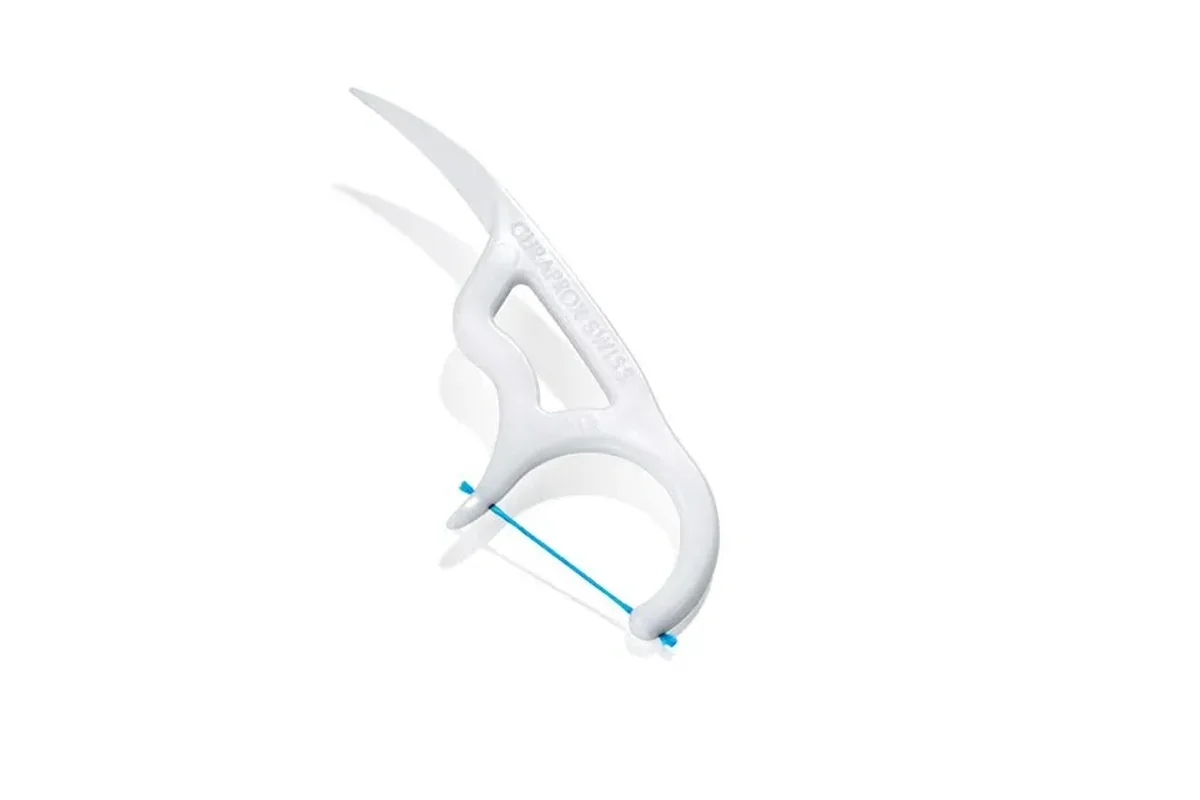
| Floss pick (floss on a handle) | People with limited hand movement or a small mouth opening, and travel | Easier to hold, but it cannot wrap around the tooth as well as hand-held floss. |
| Water flosser | Braces and bridges, or as an extra after brushing | Rinses out food well. Cleveland Clinic notes it does not remove the sticky plaque film on its own, so pair it with floss or brushes. |
| Toothpick | Removing a stuck piece of food now and then | The NHS advises against using it for daily cleaning because it can damage the gums. |
A network analysis of 22 trials comparing ten different cleaning aids ranked interdental brushes first for reducing gum inflammation, with water flossers second. Floss still has a clear place: in tight contacts where nothing else fits, it is the tool that reaches.
How to floss, step by step
- Take about 30 to 45 cm of floss and wind most of it around one middle finger and a little around the other.
- Hold a short piece, about 3 to 4 cm, tight between your thumbs and index fingers.
- Ease the floss between two teeth with a gentle side-to-side motion. Slide it through the contact slowly rather than snapping it down onto the gum.
- Curve the floss into a C shape around one tooth and slide it gently just under the gum line, as far as it goes comfortably.
- Rub up and down against the side of the tooth several times, then curve it around the neighboring tooth and repeat.
- Unwind a fresh section for each space, and finish with the back side of the last tooth on each side.
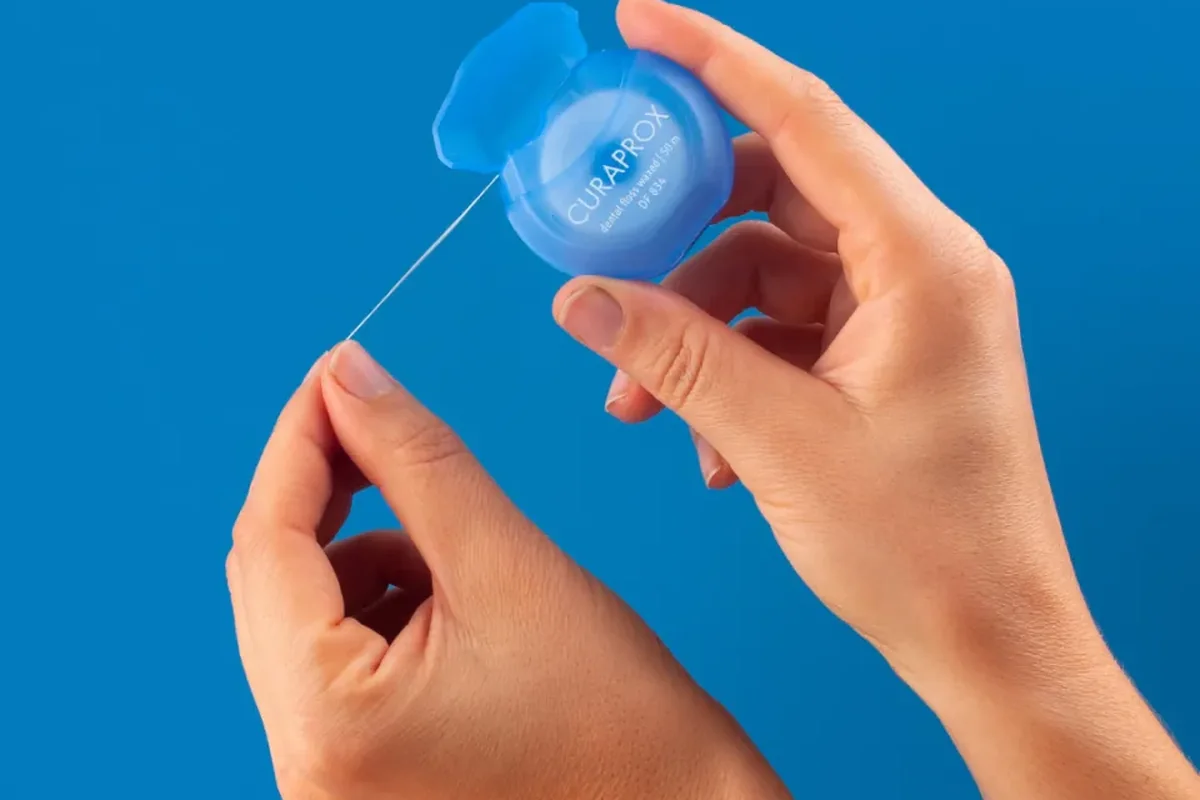
Go gently and take your time at first. It usually takes a minute or two once you have the rhythm. Faculty of Dentistry, Naresuan University adds a useful tip: if floss keeps shredding at the same place, there may be a rough filling edge, a crack or decay there, which is worth showing to a dentist.
How to choose and use an interdental brush
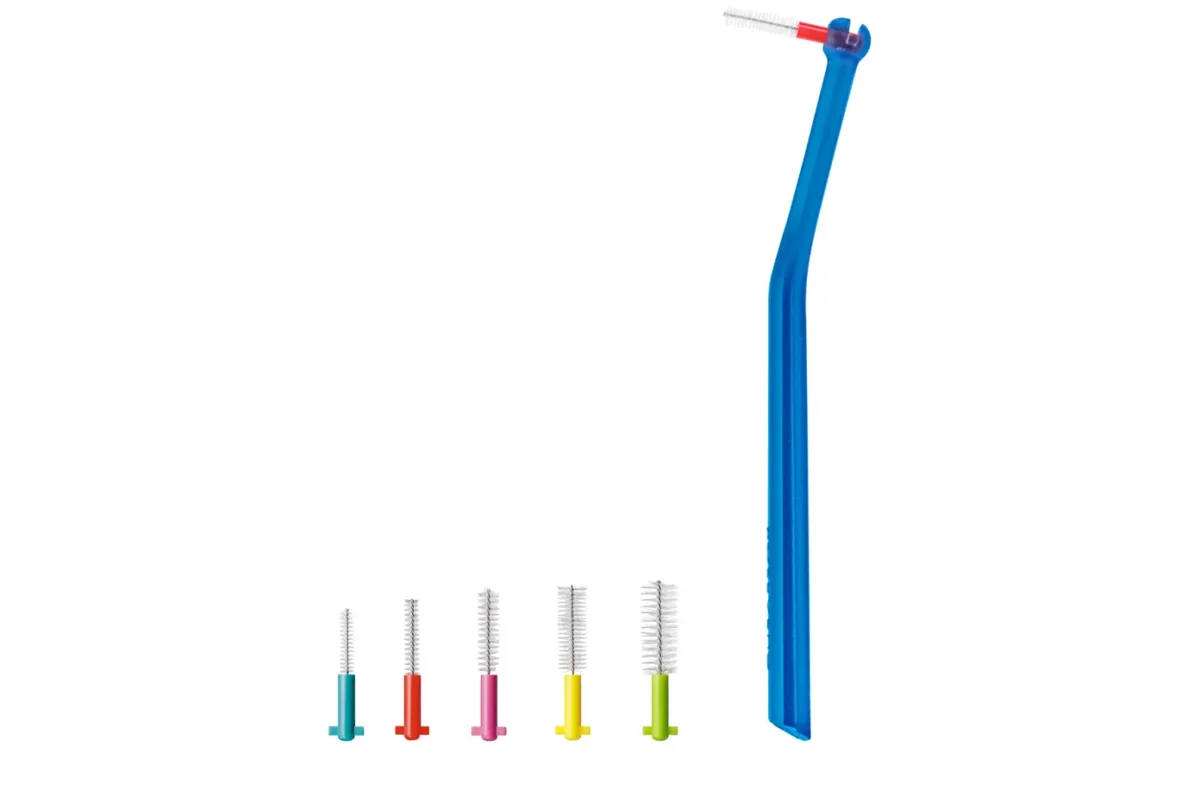
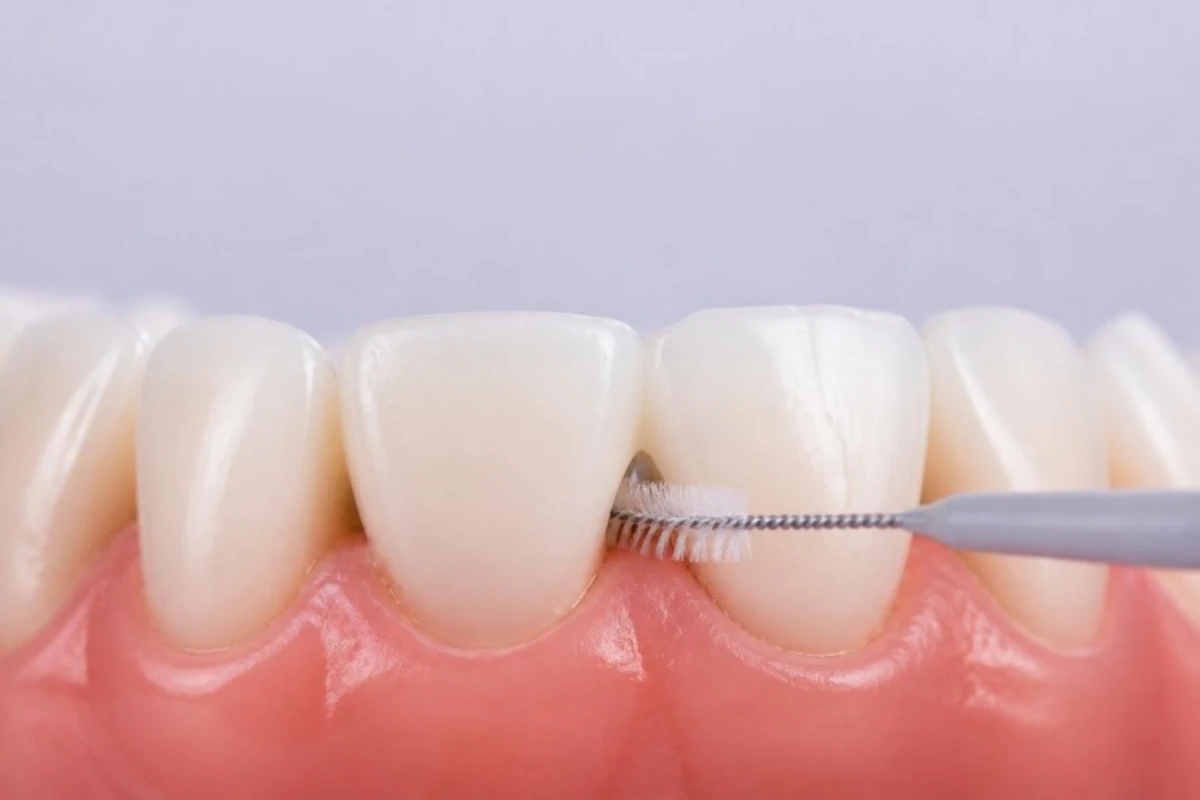
An interdental brush is a tiny bottle brush on a handle. The key is size. The NHS says the brush should fit snugly, and Thai dental faculty guidance suggests a brush slightly larger than the gap: the bristles should brush the tooth surfaces on both sides as you move it. If you have to push hard, it is too big. If it slides through without touching, it is too small.
Finding your size
- Start with the smallest size and move up until the brush fills the gap with light resistance.
- Front teeth usually need a smaller size than back teeth, so many people use two or three sizes.
- Sizes are not labelled the same way by every maker. A study of more than 2,300 brushes found sizes from 0.6 to 5.2 mm, with only a third of makers stating the standard ISO size, so ask your dentist to note your sizes.
- If even the smallest brush will not go in without force, use floss in that space.
Using it
- Insert the brush gently at the gum line, straight in between the teeth. Bend the neck slightly for back teeth if needed.
- Move it in and out a few times, angling it slightly toward one tooth and then the other.
- Where you can, clean the same space from the tongue side too.
- Rinse the brush and let it dry. Replace it when the bristles flatten or the wire bends.
Floss before or after brushing, and how long to brush
The NHS recommends flossing before brushing. A small trial with 25 dental students supports this: cleaning between the teeth first and then brushing removed more plaque between the teeth, and left more fluoride there, than brushing first. If you find it easier to remember after brushing, doing it at all matters more than the order.
The Thai Department of Health promotes the 2-2-2 rule: brush at least twice a day, for at least 2 minutes each time, and avoid eating or drinking for 2 hours after brushing. Two minutes feels longer than most people think. A study that timed real brushing found most people brushed for about 45 seconds, and that brushing for 2 minutes removed about a quarter more plaque. The NHS adds two useful details: use a fluoride toothpaste, and spit after brushing rather than rinsing, so the fluoride stays on the teeth.
Braces, bridges, implants and children
| Your mouth | What usually works well | Tips |
|---|---|---|
| Fixed braces with brackets | Interdental brushes, floss with a stiff threader end, a single-tuft brush; a water flosser as an extra | A trial in orthodontic patients found threader-type floss and a water flosser reduced plaque equally well. |
| Bridge | Threader floss or floss with a spongy section under the false tooth; interdental brushes beside the support teeth | The space under the false tooth collects plaque, so clean it every day. |
| Dental implant | Interdental brushes with a coated wire, or floss | Avoid sharp or hard metal tools on the implant. A 2024 trial found interdental brushes cleaned around implants well regardless of hand dexterity. |
| Gum recession or after gum treatment | Interdental brushes in two or three sizes | Gaps are larger, so brushes fill them better than floss. |
| Young children | Daily flossing done by a parent | The Thai Department of Health advises parents to brush and floss for young children and to keep checking until about age 7 to 8. |
Implants need the same daily care as natural teeth. At our clinic we recommend a cleaning every 6 months and an implant check once a year. GBT cleaning is well suited to the areas around implants, crowns, bridges and braces, and the dentist adjusts the settings for each surface.
How long do dental implants last, and how do you look after them?
Your first two weeks: what is normal
Bleeding when you start is common and usually a sign that the gum between the teeth is inflamed, not that you are doing harm. In a study of twins, adding daily flossing to brushing reduced bleeding between the teeth by about 40 percent in two weeks, while brushing alone did not. The NHS lists bleeding when brushing or flossing as a sign of gum disease, so if it carries on, a check-up is the next step.
| Time since starting | What you might notice | Your next step |
|---|---|---|
| First 3 days | A little bleeding and tenderness between some teeth | Keep going gently once a day; check that the brush size is not too big. |
| Days 4 to 10 | Bleeding usually lessens and the gums feel firmer | Keep the habit; give extra attention to spots that still bleed. |
| After about 2 weeks | Most spots have settled | If bleeding continues, book a check-up and cleaning. |
Common myths and the facts
| Myth | Fact |
|---|---|
| Bleeding means I should stop flossing. | Gentle daily cleaning usually reduces bleeding within a couple of weeks. Bleeding that continues is a reason for a check-up. |
| Flossing makes gaps between teeth. | Used gently, floss slides through the contact without moving teeth. Gaps that appear are usually from gum swelling going down, and a dentist can check any new gap. |
| A water flosser replaces floss and brushes. | It is a helpful extra. Cleveland Clinic advises pairing it with floss, because the sticky plaque film needs to be wiped off. |
| Waxed floss cleans less well. | Studies comparing waxed and unwaxed floss found no real difference in cleaning. Choose the one that is comfortable. |
| A bigger interdental brush cleans better. | The right size fills the gap with light resistance. Forcing a large brush can hurt the gum. |
| Brushing well is enough. | Brushing does not reach between teeth. National and international advice is to clean between the teeth every day as well. |
When to show a dentist
- Bleeding between the teeth that continues after about two weeks of gentle daily cleaning.
- Floss that catches or shreds at the same spot.
- Food packing into one space every meal.
- Gums that look swollen, have pulled back, or a tooth that feels loose.
- Hard, rough deposits between the teeth that floss cannot remove, which is usually tartar.
At the clinic: a check-up, a cleaning and a personal plan
- Check-up: the dentist examines your teeth, gums and fillings, and takes X-rays if needed.
- Cleaning: tartar, plaque and stains are removed with the method your dentist recommends, then the teeth are polished.
- With GBT, plaque is first stained so you can see it. Older, thicker plaque shows a darker color, and the dentist points out the spots to brush better.
- Advice: the dentist shows the areas to brush or floss better and explains any treatment that may be needed, such as a filling or gum treatment.
Bring your floss or interdental brushes to the visit if you like, and ask the dentist to check the sizes. Most people have a check-up and cleaning about every six months, and the dentist may suggest a different interval depending on your gums.
If this sounds like you: what to do
These are example situations, not patient stories, to help you find the next step that fits.
- You tried floss, saw blood and stopped: start again gently once a day for two weeks. If bleeding carries on, book a check-up.
- Your teeth are very tight and brushes will not go in: use floss, and ask your dentist whether any space suits the smallest brush.
- You had gum treatment and now have small gaps: interdental brushes in two or three sizes usually suit you well.
- You wear braces: interdental brushes and threader floss each day, and a water flosser as an extra if you like.
- You have an implant: a brush with a coated wire, or floss, every day, plus a cleaning every 6 months and an implant check once a year.
- Your hands are stiff or you are helping an older parent: floss picks or interdental brushes with a longer handle are easier to hold.
Frequently asked questions about floss and interdental brushes
How often should I clean between my teeth?
Once a day is the usual advice from the NHS, MedlinePlus and the Thai Department of Health. Many people find the evening, before brushing at bedtime, easiest to keep up.
Is an interdental brush better than floss?
Where a brush fits, research suggests it removes plaque between the teeth well and may reduce gum inflammation more than floss. In tight spaces where a brush cannot pass, floss is the right tool. Many people use both.
Should I floss before or after brushing?
The NHS suggests before, and a small trial found floss first, then brushing, removed more plaque. Doing it every day matters more than the order.
What size interdental brush should I buy?
The size that fills the gap with light resistance, without forcing. Start small and work up. Different gaps often need different sizes, and a dentist can tell you which ones suit you.
Will flossing make my teeth gappy?
Used gently, floss slides between the teeth without moving them. If a gap seems to appear, it is often because swollen gum has settled, and a dentist can check it.
Can a water flosser replace floss?
It is a good extra, especially with braces and bridges, and research shows it can help the gums. Cleveland Clinic advises using floss as well, because the sticky plaque film needs to be wiped off.
Should children use dental floss?
Yes. The Thai Department of Health advises parents to brush for young children twice a day and floss for them every day, and to keep helping and checking until about age 7 to 8. We see children from the time the first tooth comes in.
How long should I brush my teeth?
About 2 minutes, twice a day, with a fluoride toothpaste. That is the 2-2-2 rule from the Thai Department of Health, together with not eating or drinking for 2 hours after brushing.
Summary
Cleaning between the teeth once a day reaches the surfaces a toothbrush misses. Use floss in tight contacts and interdental brushes wherever they fit, sized so they fill the gap without forcing.
- Floss: about 30 to 45 cm, a C shape around each tooth, gently under the gum line.
- Interdental brushes: start small, move up until it fills the gap with light resistance.
- Floss before brushing if you can, and brush 2 minutes twice a day.
- Some bleeding at first is common and usually settles within about two weeks.
- Braces, bridges and implants need their own tools; your dentist can help you choose.
References
NHS (UK): How to keep your teeth clean
Cleveland Clinic: Oral Hygiene
MedlinePlus (US National Library of Medicine): Gingivitis
CDC (US): Oral health tips for adults
Department of Health, Thailand: Oral health care for pregnant women and children aged 0 to 5 (Thai)
Faculty of Dentistry, Naresuan University: Tools for cleaning between the teeth (Thai)
Faculty of Dentistry, Naresuan University: Cleaning between the teeth with different aids (Thai)
Worthington HV et al. Home use of interdental cleaning devices. Cochrane Review, 2019
Slot DE et al. The efficacy of interdental brushes: a systematic review. Int J Dent Hyg, 2008
Creeth JE et al. The effect of brushing time and dentifrice on plaque removal. J Dent Hyg, 2009
Biesbrock A et al. The effects of flossing on gingival bleeding in twins. J Periodontol, 2006
Lamberts DM et al. Comparison of waxed and unwaxed floss. J Periodontol, 1982
Sekundo C, Staehle HJ. Mapping the sizes of interdental brushes. Oral Health Prev Dent, 2020
Sawan N et al. Threader-type floss versus a water flosser in orthodontic patients. Int J Dent, 2022