

You smile for a photo, look at it later, and the first thing you notice is your teeth: they look more yellow than you remember. Or a friend with very white teeth stands next to you, and suddenly you hold back your smile. Many people then try lemon, charcoal or a whitening toothpaste from the shop, and are disappointed when nothing much changes.
The reassuring part: yellow teeth are very common and are usually not a sign that your teeth are unhealthy. Natural teeth are not pure white. The enamel on the outside is slightly see-through, and the dentin underneath is naturally yellowish, so every tooth has some yellow in it. What makes teeth look more yellow is usually one of three things: surface stains from food, drinks or tobacco; plaque and tartar; or changes inside the tooth, such as thinner enamel with age. Each of these has a different answer, which is why one product rarely fixes everyone.
This article helps you find your cause first and then the option that fits. Inside you will find a quick self-check, a color guide to what different shades usually mean, tables of causes and options from cleaning and whitening to bonding and veneers, a 4-week home plan, common myths checked against evidence, the signs that mean you should see a dentist, and what happens at the clinic.
In short: yellow from surface stains often improves with a professional cleaning and better daily habits. Yellow that comes from inside the tooth usually needs whitening, which only works on natural teeth. Brown, gray or very uneven colors may need bonding, veneers or a crown instead. A dental check first tells you which group you are in.
Which kind of yellow do you have? A quick self-check
Likely surface stains: start with cleaning and habits
- The yellow or brown is darker along the gum line, between the teeth or on the inside of the lower front teeth.
- You drink coffee, tea, cola or red wine most days, or you smoke.
- Your last cleaning was more than about 6 months ago.
- Your teeth looked brighter right after your last cleaning.
Likely color from inside the tooth: whitening may suit you
- All your teeth are an even, light yellow, and cleaning did not change them much.
- Your teeth have slowly become more yellow as you have grown older.
- The edges of your front teeth look slightly see-through or gray-blue, and the middle looks more yellow.
Worth a dental check soon
- One tooth is darker than the others, or turned gray or brown after a knock or an injury.
- You see brown or black spots with small holes, or chalky white patches that are new.
- The color change comes with pain, sensitivity, swelling or bad breath.
- You have bands, lines or patches of color that you have had since childhood.
If you are in the last group, the color may be a clue to something that needs treatment first, such as decay or a tooth whose nerve has been damaged. The warning signs section below explains these in more detail.
Why teeth look yellow
A tooth has layers. The outer enamel is hard and slightly translucent, a little like frosted glass. Under it is the dentin, which is softer and naturally light yellow. The color you see is a mix of both: the thicker and more opaque the enamel, the whiter the tooth looks; the thinner the enamel, the more of the yellow dentin shows through.
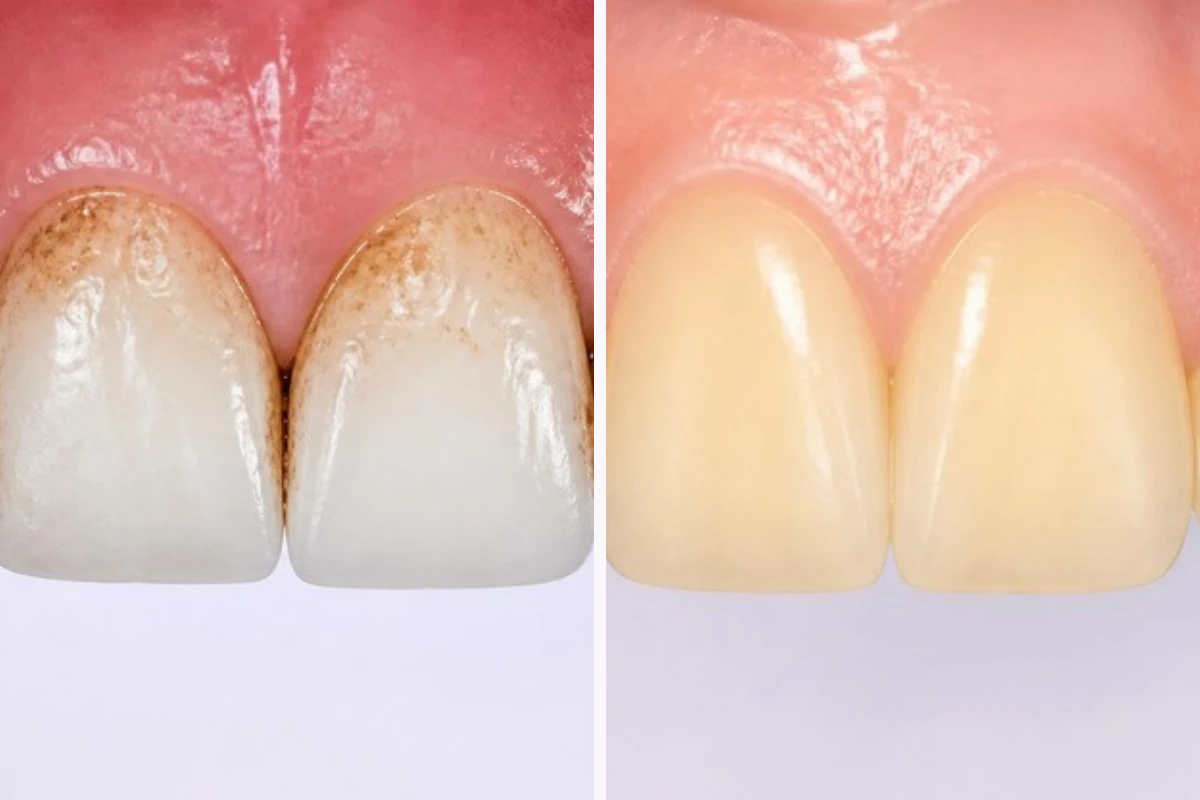
Dental guidance separates tooth color changes into two main groups. Extrinsic stains sit on the surface: pigments from coffee, tea, red wine, cola and soy sauce, and tar and nicotine from tobacco, stick to the thin protein film that covers the enamel. Plaque holds these pigments, and tartar, which is hardened plaque, is rough and takes up stain even more easily. Intrinsic color is inside the tooth: in the dentin or in the enamel itself.
Inside color comes from several sources. With age, enamel slowly wears thinner and the dentin underneath becomes thicker and darker, so most people become gradually more yellow over the years. A tooth that has been knocked, or whose nerve has died, can turn gray or darker. Some medicines taken while teeth are forming, such as tetracycline antibiotics before about age 8, can leave gray or brown bands. Too much fluoride while the permanent teeth are forming causes dental fluorosis, which shows as white flecks or, when stronger, brown patches.
Fluorosis is a local topic in northern Thailand. The Department of Health has reported that some groundwater sources in the north, including areas of Chiang Mai, contain more fluoride than the recommended limit, and that switching to low-fluoride water sources reduced fluorosis in children in those communities. Fluorosis is permanent once the enamel has formed, but its appearance can often be improved with cosmetic treatment.
Knowing which group your color belongs to matters, because surface stains can be removed physically, while inside color can only be lightened chemically with whitening, or covered with bonding, veneers or a crown.
Causes of yellow teeth and how to tell them apart
Start with the surface causes, which are the most frequent and the easiest to change. Then look at the causes from inside the tooth, especially if cleaning did not help or only some teeth are affected.

Surface causes (extrinsic stains)
| Cause | How to tell | What to do |
|---|---|---|
| Coffee, tea, cola, red wine, curry and soy sauce | Yellow to brown film, darker near the gums and between teeth | Cleaning removes it; rinse with water after dark drinks |
| Smoking or chewing tobacco | Yellow-brown to dark brown stain, often behind the front teeth | Cleaning removes the stain; stopping smoking keeps it away |
| Plaque and tartar | Dull yellow layer, hard deposits behind the lower front teeth, bleeding gums | Professional cleaning plus better daily brushing |
| Some mouthrinses, such as chlorhexidine, used for weeks | Brown stain that appears while using the rinse | Ask your dentist; the stain can be polished off |
| Iron supplements or iron-containing liquids | Dark or black lines near the gums, often in children | Usually removed with a cleaning |
Causes from inside the tooth (intrinsic color)
| Cause | How to tell | What to do |
|---|---|---|
| Natural tooth color and age | Even light yellow on all teeth, slowly increasing over the years | Whitening usually works well on yellow |
| Thin or worn enamel, including from acidic drinks | Yellow shows through more, edges look see-through, teeth may be sensitive | Check first; protect enamel before thinking about whitening |
| A tooth with a damaged or dead nerve | One tooth turns gray, brown or darker, often after a knock | Dental check and X-ray; may need root canal treatment, then internal whitening |
| Tetracycline-type antibiotics in early childhood | Gray, brown or yellow bands across several teeth | Longer whitening can help; veneers if the bands stay |
| Dental fluorosis (too much fluoride while teeth form) | White flecks or lines, or brown patches, on matching teeth on both sides | Brown patches may lighten with whitening; bonding or veneers for the rest |
| Decay, or old fillings that have changed color | Brown or black spots, sometimes with a small hole; gray around old metal fillings | Treat the decay or replace the filling; whitening does not change fillings |
| Some illnesses and treatments | Color change during or after cancer treatment, liver disease or a very high fever while teeth were forming | Talk to your dentist and your doctor before any whitening |
A color guide: what the shade usually means
Color is only a clue, not a diagnosis, but it helps you guess which group you are in before your check.
| Color you see | Often linked to | Usual next step |
|---|---|---|
| Even light yellow | Natural color, age, everyday food and drink | Cleaning, then whitening if you want it lighter |
| Yellow-brown, darker at the gum line | Tea, coffee, tobacco, tartar | Professional cleaning |
| Purple-red tint | Frequent red wine | Cleaning, rinse with water after drinking |
| Gray, one tooth | Damaged nerve, often after a knock | Dental check and X-ray first |
| Gray or brown bands | Tetracycline-type medicine in childhood | Longer whitening or veneers |
| White flecks or chalky patches | Fluorosis, or early decay if new | Dental check; bonding or veneers if wanted |
| Black or dark brown spot with a hole | Decay | Filling or other treatment |
Ways to brighten yellow teeth, compared
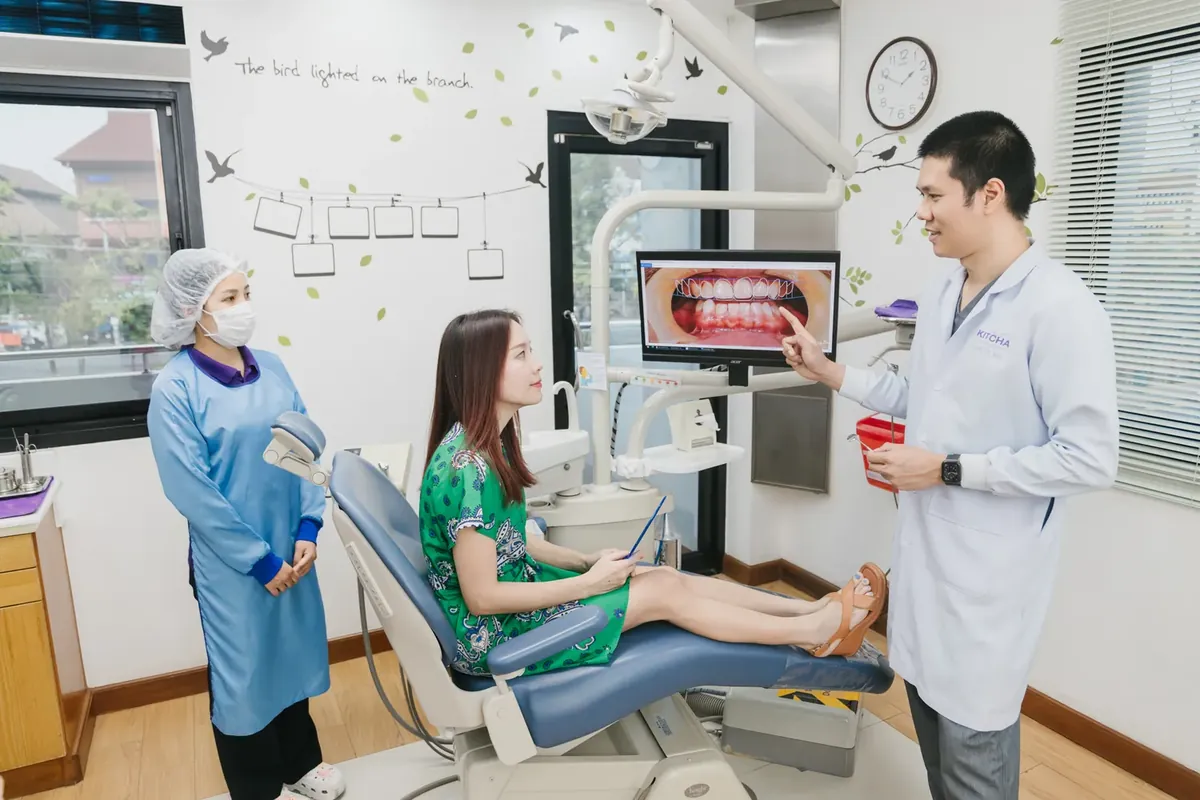
There are eight main ways to brighten yellow teeth, from what you do at home to treatments that cover the tooth. They are listed here from the least to the most change to the tooth itself.
| Whitening option | Suits whom | Good to know about whitening |
|---|---|---|
| 1. Daily care and whitening toothpaste | Light surface stains; keeping results | Removes surface stain with mild abrasives; does not change the natural color |
| 2. Professional cleaning, Airflow or GBT | Stains from drinks and tobacco, tartar | Often the first step, and the base for any whitening |
| 3. Home whitening with custom trays | Yellow from inside; people who prefer a gradual change | Dentist-prescribed gel over 1 to 4 weeks; trays can be reused for touch-ups |
| 4. In-office whitening | Yellow from inside; people who want a change in one visit | Gums protected, gel activated in cycles under supervision |
| 5. Internal whitening of one tooth | One tooth darkened after root canal treatment | Done from inside the tooth, usually over 1 to 3 visits |
| 6. Bonding or composite veneers | Small spots, white flecks, a chip with a stain | Little or no drilling, often one visit; composite can stain over time |
| 7. Porcelain veneers | Color that whitening cannot lift, with shape changes | Stain-resistant, but usually needs some enamel removed, which cannot be undone |
| 8. Crowns | A dark tooth that is also broken or heavily filled | Covers and protects the whole tooth |
How to choose
- Start with a check and a cleaning. Many people find their teeth are a shade or two lighter once stains and tartar are gone, and whitening works better on clean teeth.
- If your teeth are evenly yellow and healthy, whitening is usually the next step. Yellow tends to respond well; brown responds less; gray may respond little.
- If you have crowns, veneers or tooth-colored fillings on your front teeth, plan around them: whitening only changes natural teeth, so they may need replacing afterwards to match.
- If you are planning new crowns or veneers, whitening usually comes first, so the new work can be matched to your lighter shade.
- If the color is in spots, bands or one tooth, ask about bonding, internal whitening or veneers rather than whitening everything.
A 4-week home plan for yellow teeth
Home care cannot change the color inside your teeth, but it can remove fresh surface stain, slow new stain and protect your enamel. It also keeps the result longer if you have a cleaning or whitening.
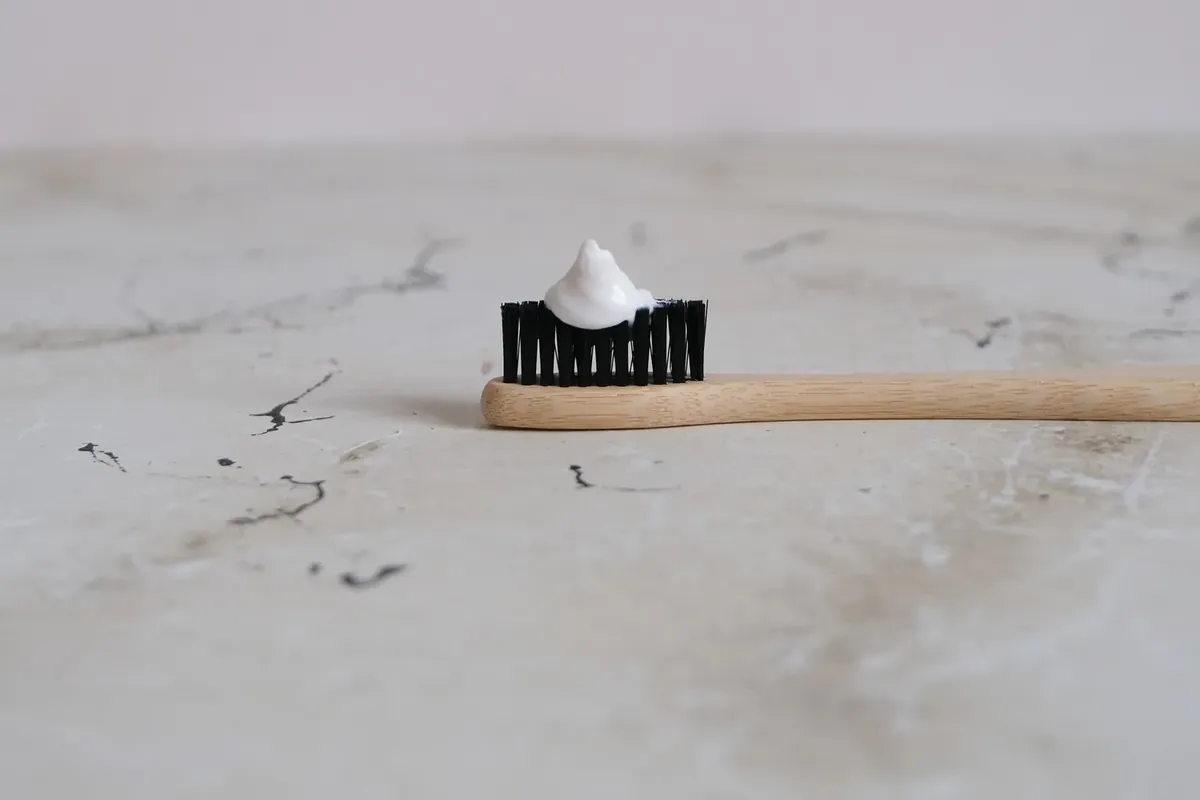
- Week 1, notice your stain sources: for a few days, write down how often you drink coffee, tea, cola or red wine, and whether you smoke. Frequency matters more than one cup.
- Week 1, fix your brushing: brush for 2 minutes, twice a day, with a fluoride toothpaste and a soft brush, angled toward the gum line. Clean between your teeth once a day, because stain builds up there first.
- Week 2, change how you drink: drink dark drinks in one sitting instead of sipping all day, use a straw for iced coffee and tea, and rinse with plain water afterwards.
- Week 2, protect your enamel: after acidic food or drinks such as citrus, soda or sour candy, wait about an hour before brushing, so you do not brush softened enamel.
- Week 3, choose products carefully: a whitening toothpaste can help with light surface stain. Skip charcoal powders, lemon and vinegar rubs. If you want to try an over-the-counter kit, ask your dentist first.
- Week 3, if you smoke, make a plan to cut down or stop. It is the single habit that most affects both stain and gum health.
- Week 4, look again in daylight: compare with a photo from week 1. If the yellow is mostly gone, keep the habits. If it has not changed, the color is probably inside the tooth or in tartar, and a check and cleaning is the next step.
This plan follows the general advice to brush twice a day for 2 minutes with fluoride toothpaste, which Thailand Department of Health summarizes as the 2-2-2 rule.
Common myths about yellow teeth
| What people say about yellow teeth | What the whitening evidence says |
|---|---|
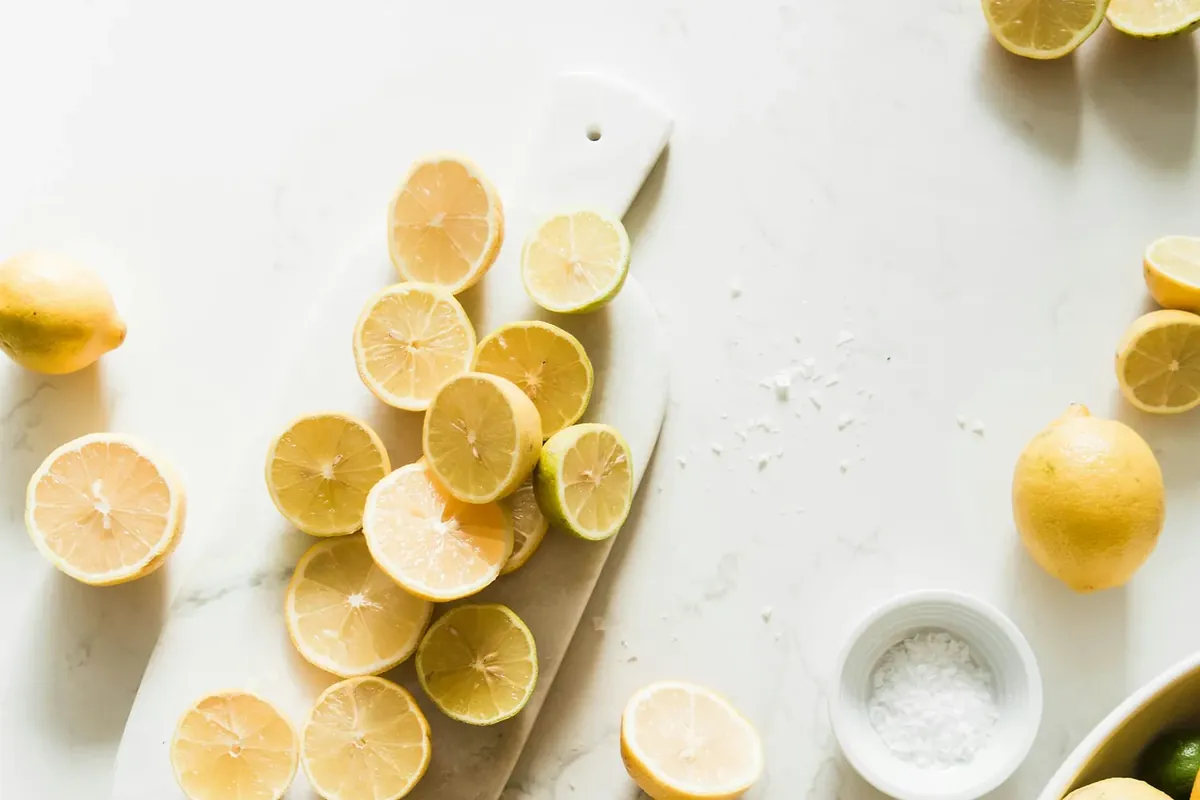
| Rubbing lemon on your teeth makes them whiter. | Lemon is acidic. In a lab study, an acidic juice softened enamel far more than a whitening gel. Thinner enamel shows more yellow, so acid can make teeth look worse. |
| Charcoal powder whitens teeth naturally. | Reviews found too little evidence that charcoal products work or are safe, and lab studies show they are more abrasive and whiten less than other options. |
| Baking soda ruins enamel. | Toothpastes with baking soda have low abrasiveness and are considered safe. The risk comes from home mixtures, especially with lemon or vinegar, and from scrubbing hard. |
| Whitening toothpaste bleaches teeth. | Most work by removing surface stain. Trials show some color change compared with regular toothpaste, but they do not change the natural color the way whitening gel does. |
| Whitening makes teeth thin and weak. | When used as directed, peroxide whitening is considered safe and effective. The usual side effects are temporary sensitivity and gum irritation. Overuse can harm enamel and gums, so follow your dentist. |
| Whiter teeth are healthier teeth. | Color and health are different things. A slightly yellow tooth can be very healthy, and a white tooth can have decay or gum disease. A check looks at both. |
| Whitening will also lighten my crowns and fillings. | Whitening only works on natural teeth. Crowns, veneers and fillings keep their color, which is why the order of treatment matters. |
| Oil pulling with coconut oil removes yellow. | Dental reviews list oil pulling among home methods that lack evidence for whitening. It does not replace brushing and cleaning between the teeth. |
When a color change needs a dental check
Most yellow teeth are a cosmetic matter, and there is no rush. A few color changes, though, are worth a check before any whitening, because they can point to something that needs treatment first.
- One tooth becomes darker than its neighbors, especially after a knock or a fall.
- A brown or black spot with a small hole, or food catching in a spot that used to be smooth.
- New chalky white patches near the gum line, which can be early decay.
- Color change together with pain, lingering sensitivity to hot or cold, swelling or a bad taste.
- Several teeth change color over a short time with no clear reason, or during an illness or a new medicine. Tell your doctor as well.
- Strong sensitivity, white patches on the gums or sore gums while using a whitening product. Stop using it and ask your dentist.
None of these is a reason to worry in advance. They are simply signs that the color is telling you something, and that a check gives a clearer answer than a stronger product.
Is teeth whitening safe? What to expect
Whitening gels contain hydrogen peroxide or carbamide peroxide, which breaks down into hydrogen peroxide. The peroxide passes through the enamel into the dentin and breaks colored molecules into smaller, lighter ones. That is why whitening can change color that sits inside the tooth, which toothpaste cannot reach.
- Sensitivity is the most common side effect. In dental guidance it can affect up to two out of three people early in treatment, and it is usually mild and temporary. Tell your dentist if your teeth are already sensitive.
- Gum irritation usually comes from gel touching the gums, for example with poorly fitting trays. Custom trays and gum barriers reduce this.
- Results vary from person to person and are not permanent. Food, drinks and smoking bring some color back over time, and touch-ups with home trays can help.
- Whitening is not usually offered to children and teenagers for cosmetic reasons; in the UK, the NHS lists people aged 17 or under among those who should not have it.
- If you are pregnant or breastfeeding, tell your dentist, who will plan your care with you. Many people choose to wait with cosmetic whitening until later.
- Products sold freely contain much lower peroxide levels. Without trays made for your teeth, gel can spread onto the gums, which is one reason dental faculties advise asking a dentist first.
What happens at the clinic for yellow teeth, step by step
At Kitcha Dental Clinic, the dentist checks your teeth first and explains which option suits your color, your teeth and your schedule. A visit for yellow teeth usually looks like this.
- Check: the dentist examines your teeth, gums and fillings, and takes X-rays if needed. Decay, gum problems or very sensitive teeth are treated or managed first.
- Cleaning: tartar and stains are removed with ultrasonic and hand instruments, an Airflow spray of powder, air and water, or GBT, which first colors the plaque so it can be seen and removed. Many people see a brighter smile at this step.
- Shade and plan: your starting shade is recorded, and the dentist explains what result to expect, because it varies from person to person.
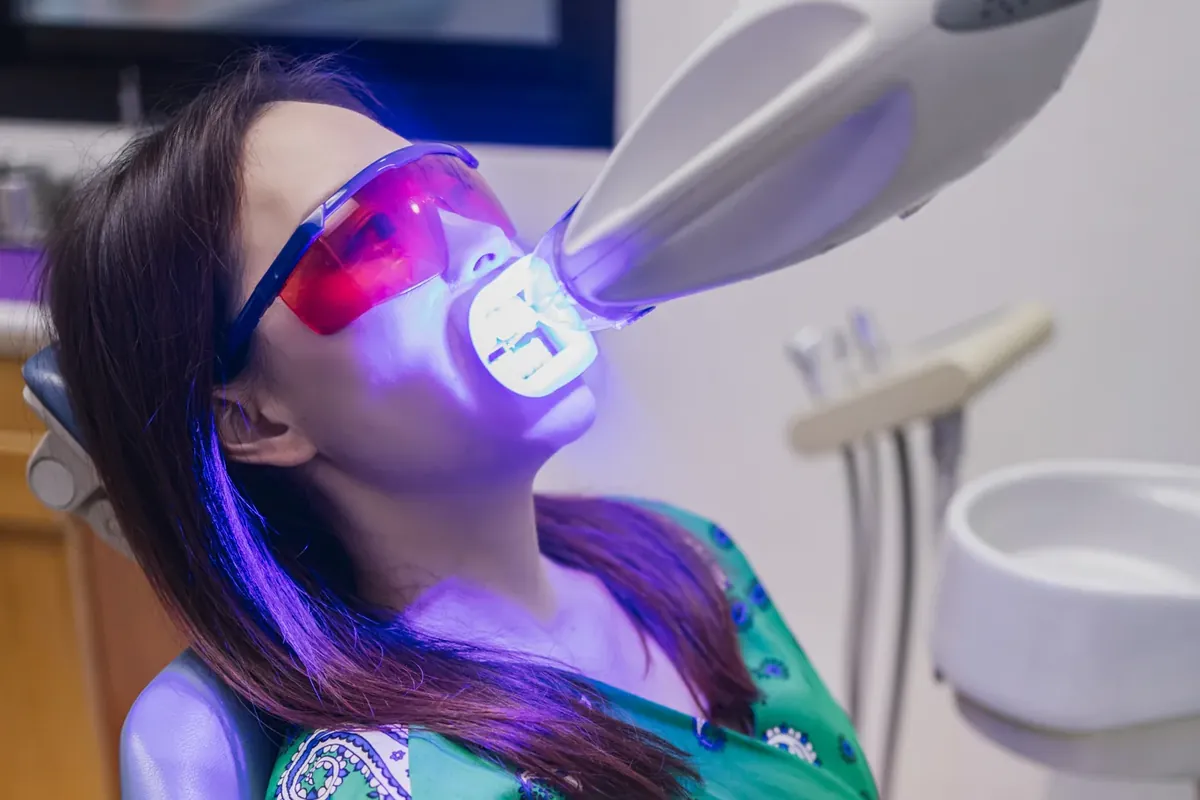
- In-office whitening, if chosen: in one visit, with a cheek retractor, eye protection and a barrier over the gums, gel is applied to the front of the teeth and activated with a whitening lamp in several cycles. A Philips Zoom session takes about one and a half hours. PolaWhite is another in-office option.
- Home whitening, if chosen: the dentist scans or takes an impression of your teeth to make clear trays, usually ready a couple of hours later or the next day. You use Opalescence gel in the strength your dentist prescribes, at home, over 1 to 4 weeks. Keep the gel cool, ideally in the refrigerator.
- One dark tooth after root canal treatment: it can be whitened from the inside, usually over 1 to 3 visits. If the tooth also needs protection, the dentist may suggest a crown or veneer instead.
- Sensitivity care: tell your dentist about any sensitivity. A relief gel can be prescribed, and a desensitizing treatment can also be applied at the clinic.
- Aftercare: avoid coffee, tea, red wine and smoking for at least the first few hours, and limit them afterwards to keep the result longer.
When whitening is not enough, for example with gray bands, deep spots or teeth that also need a new shape, the dentist may suggest bonding or veneers. Bonding uses tooth-colored composite, needs little or no drilling and is often done in one visit, although composite can stain or chip over time. Porcelain veneers made by our ISO-certified partner laboratory resist staining better, but usually need some enamel removed, which cannot be undone. Veneers are planned with photos, a digital scan and Digital Smile Design where it helps. For porcelain veneers, we usually recommend one trip with a stay of about 10 to 14 days; a shorter stay may be possible depending on your case and how complex it is.
Prices for cleaning, in-office and home whitening, and veneers are listed on our prices page. Your dentist confirms the fee after checking your teeth.
If this sounds like you: yellow teeth situations
These are example situations, not patient stories, to help you find the next step that fits.
- You drink three iced coffees a day and the yellow is darker near the gums: start with a cleaning and the habit changes in the 4-week plan. Whitening can wait until you see how much the cleaning alone changes.
- Your teeth are evenly yellow and you have a wedding in two months: book a check and cleaning now. That leaves time for either in-office or home whitening, and for any sensitivity to settle before the day.
- One front tooth turned gray a few years after a fall: have it checked with an X-ray first. If it has had root canal treatment, internal whitening of that one tooth may be enough.
- You grew up drinking well water and have white and brown patches on matching teeth: this pattern fits fluorosis. Ask about whitening for the brown areas and bonding or veneers for the white ones.
- You have two crowns on your front teeth and the teeth beside them look yellow: plan the order with your dentist. Whitening the natural teeth first, then matching new crowns, avoids a mismatch.
- Your teeth are sensitive already and you want them whiter: tell your dentist. Sensitivity care first, and a gentler home whitening plan, may suit you better than a single in-office session.
- You are visiting Chiang Mai and want veneers to change both color and shape: send clear smile photos before you travel, and plan a stay of about 10 to 14 days for porcelain veneers.
- You are pregnant and unhappy with yellowing: keep up gentle brushing and cleanings, tell your dentist that you are pregnant, and your dentist will plan your care, including when cosmetic whitening fits.
Frequently asked questions about yellow teeth
I brush every day. Why are my teeth still yellow?
Brushing removes fresh plaque and some surface stain, but it cannot remove tartar or change the color inside the tooth. Enamel also thins with age, which lets more yellow dentin show. Brushing too hard can make this worse by wearing the enamel. A cleaning shows how much of the yellow is on the surface; what remains is usually inside the tooth.
Will a cleaning make my teeth whiter?
A cleaning removes surface stain and tartar, so teeth often look cleaner and brighter. It does not change the natural color of your teeth. If you want them lighter than their natural shade, whitening is the next step, and it works better on freshly cleaned teeth.
Do whitening toothpastes really work?
They help with surface stain. A systematic review found some color improvement compared with regular toothpaste, mostly from mild abrasives and stain-removing ingredients. They do not lighten the color inside the tooth the way dentist-prescribed whitening gel does. They are useful for keeping results after a cleaning or whitening.
Does whitening damage teeth?
When it is checked and used as directed, peroxide whitening is considered safe and effective. The usual side effects are temporary sensitivity and gum irritation. Problems come mainly from overuse, poorly fitting trays or strong products used without guidance, which is why a dental check comes first.
How long does whitening last?
It is not permanent, and it varies from person to person. Coffee, tea, red wine, curry and smoking bring some color back over time. Good daily care, regular cleanings and touch-ups with home trays, when your dentist advises, help the result last longer.
Can stains from medicine or fluorosis be whitened?
Sometimes, partly. Brown stains from tetracycline or fluorosis may respond to whitening, but often need a longer course, and white flecks tend to respond less. When whitening is not enough, bonding or veneers can cover the color. Your dentist can tell you what is realistic after looking at the pattern.
Can I whiten teeth that have crowns or fillings?
You can whiten the natural teeth around them, but the crowns, veneers and fillings will keep their color. If they are on your front teeth, your dentist plans the order with you, often whitening first and then replacing the visible work to match the new shade.
Why is only one tooth yellow or dark?
A single darker tooth is often linked to a past knock, a damaged or dead nerve, decay, an old filling or previous root canal treatment. It is worth a check and an X-ray before any whitening, because the cause may need treatment first. Once that is settled, internal whitening, a veneer or a crown can match it to the others.
Summary
Yellow teeth are common and usually cosmetic. The right fix depends on whether the color is on the surface, inside the tooth, or in one tooth or a pattern.
- Surface stain from drinks, tobacco and tartar improves with a professional cleaning and better daily habits.
- Even yellow from inside the tooth usually responds well to whitening, which only changes natural teeth.
- Lemon, charcoal and harsh scrubbing can wear enamel and make teeth look more yellow, not less.
- Gray, brown or one darker tooth deserves a check before whitening.
- Bonding, veneers or crowns can cover color that whitening cannot change.
References
American Dental Association: Tooth Whitening (Oral Health Topics)
American Dental Association (MouthHealthy): Teeth Whitening
Cleveland Clinic: Tooth Discoloration
MedlinePlus (US National Library of Medicine): Tooth, abnormal colors
Faculty of Dentistry, Naresuan University (Fun Talk radio script): How tooth whitening agents work
Department of Health, Thailand (Anamai Media): The 2-2-2 brushing rule
Watts A, Addy M. Tooth discolouration and staining: a review of the literature. Br Dent J, 2001
Carey CM. Tooth whitening: what we now know. J Evid Based Dent Pract, 2014
Brooks JK et al. Charcoal and charcoal-based dentifrices: a literature review. J Am Dent Assoc, 2017