

Every group photo shows the same thing: a band of pink gum above your top teeth. Some people start smiling with their lips closed, or cover their mouth when they laugh, and then search late at night for answers. Can the gums be trimmed? Does it hurt? Will the gum simply grow back?
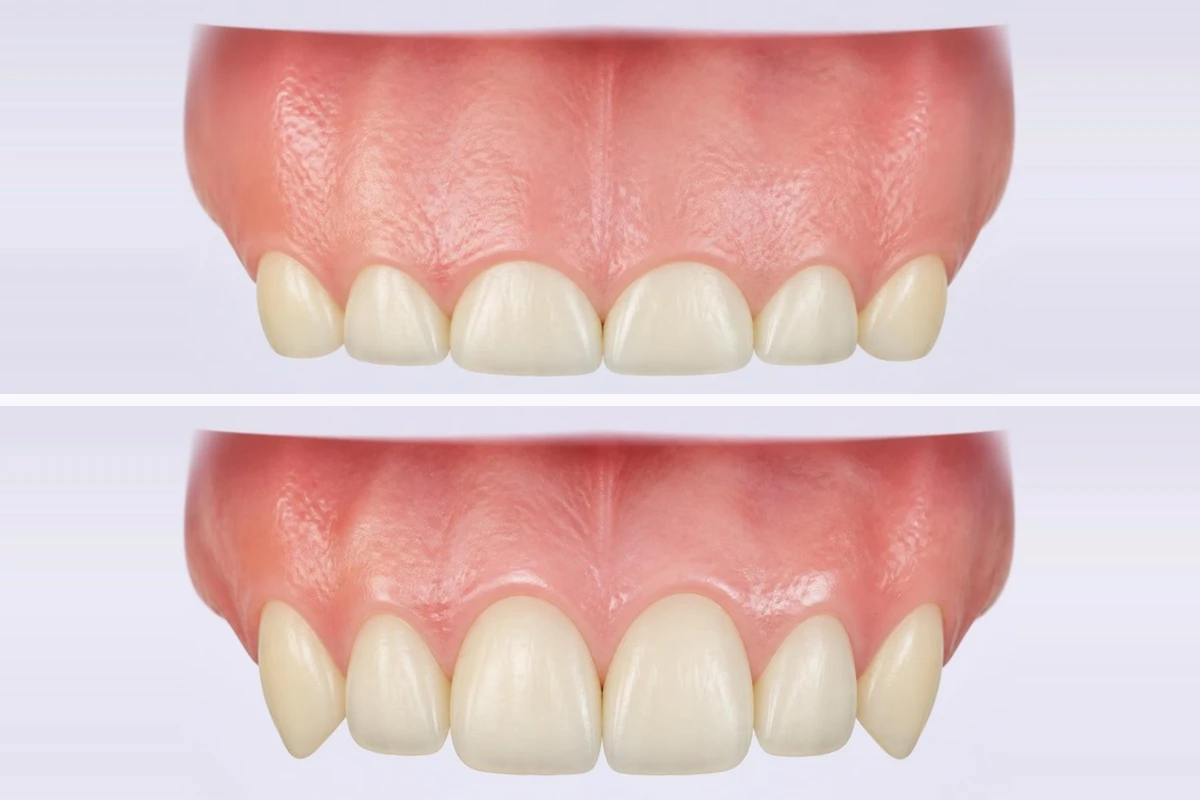
The short answer is that a gummy smile can often be improved, but not every gummy smile is solved by trimming the gums. The extra gum you see can come from several places: gum that covers too much of the tooth, bone that sits too close to the edge of the enamel, teeth that have worn shorter, an upper lip that lifts high when you smile, or an upper jaw that is longer. Many people have more than one of these. The right treatment depends on where your cause is.
This article helps you understand your own smile before you see a dentist. You will find a mirror self-check, a table of causes and how to tell them apart, a comparison of gum contouring and crown lengthening, the checks a dentist makes, the steps from consultation to a settled gum line, aftercare, common myths, the signs to contact a dentist about, and what happens when you come in to discuss it.
In short: when a gummy smile comes from gum covering too much of the teeth, trimming and reshaping the gum often helps. When the bone also sits too close to the edge of the teeth, crown lengthening reshapes the gum and a little bone. When the cause is the lip or the jaw, your dentist assesses it and recommends suitable options. So the first step is finding the cause, not trimming straight away.
How much gum do you show? A mirror self-check
Stand in front of a mirror in good light and smile naturally, or record a short video while you laugh. Look at the strip of gum between the lower edge of your upper lip and the gum line of your two upper front teeth. A review from the Faculty of Dentistry at Mahidol University summarizes that showing about 0 to 2 millimeters of gum when smiling is considered acceptable, and many experts call a smile gummy when more than 2 millimeters shows. Some studies use 3 millimeters instead, so the number is a guide, not a line that says you need treatment.
Mostly a matter of preference: no rush
- You see a little gum only when you laugh fully, and hardly any in an everyday smile.
- Your gums are pale pink and firm, and they do not bleed when you brush.
- Your front teeth look a normal length, the gum line is even on both sides, and the look does not bother you.
Likely linked to the gums or teeth: worth a consultation
- Your front teeth look short and square, as if the gum covers part of each tooth.
- The gum line of your front teeth sits at different heights, so the teeth look uneven in length.
- Your front teeth have worn down or chipped, so the gum looks more prominent than before.
- You are planning veneers or crowns on your front teeth and want the gum line to look right as well.
- You notice more gum during or after orthodontic treatment.
Have your gum health checked first
- Your gums are swollen or red, or they bleed when you brush.
- Your gums have grown over more of your teeth within a few months, especially after starting a new medicine, such as some blood pressure medicines like amlodipine.
- Your gums are enlarging and you also bruise easily, bleed easily, have a fever or feel unusually tired.
The last group is about the health of your gums and body, which comes first. Reshaping the gums for appearance is done once the gums are healthy. If the change in your gums came with a new medicine, tell the doctor who prescribed it and do not stop the medicine on your own.
Why some smiles show more gum
A smile is made of three parts that move together: the lips, the teeth and the gums. When you smile fully, the upper lip usually rises by about 6 to 8 millimeters from its resting position. A classic study of smiles found that an average smile shows close to the full length of the upper front teeth. If the lip lifts a normal amount, the teeth are a normal length and the gum edge sits where it should, you see the teeth and only a thin line of gum. When one of these parts is different, more gum shows.
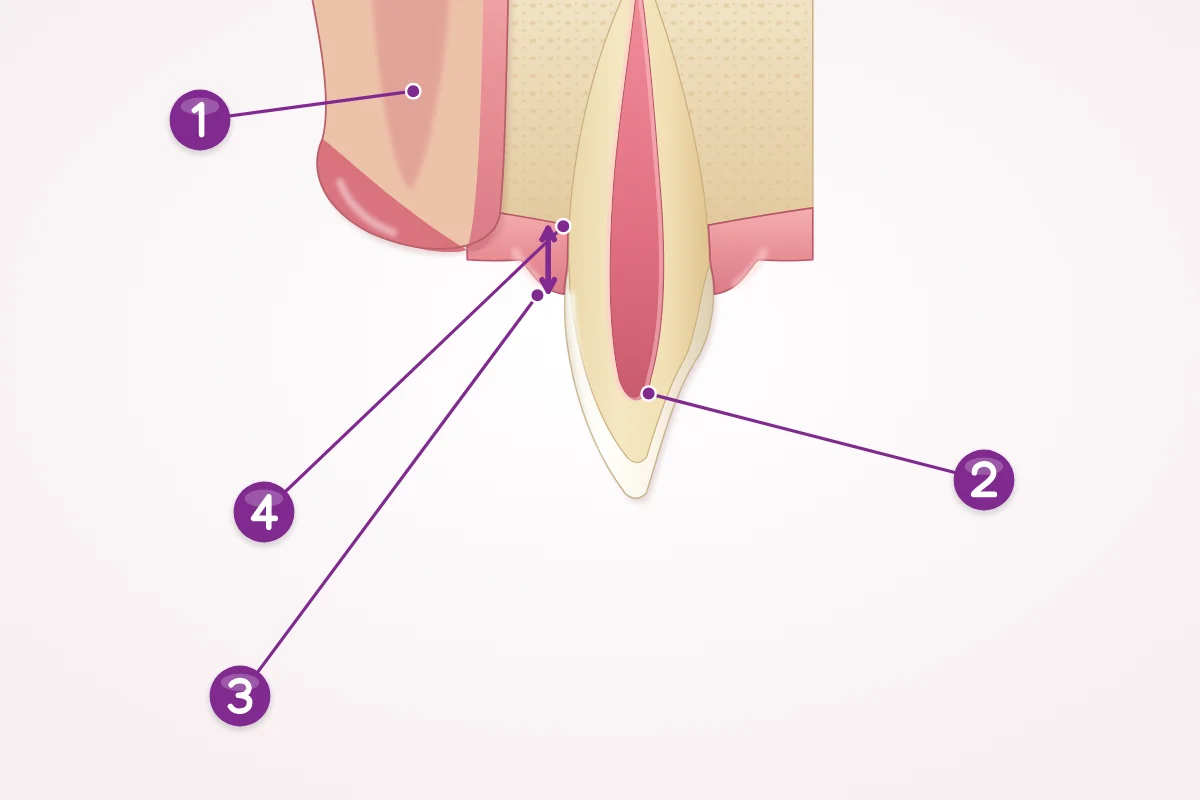
When a tooth comes through, the gum normally moves back toward the line where the enamel meets the root. In some people the gum stops early and stays over part of the enamel. Dentists call this altered passive eruption: the teeth look short and square even though the tooth underneath is a normal size. In some of these people, the bone under the gum also sits close to that line. The Mahidol review cites a prevalence of about 12 percent for this condition in the general population.
Causes often overlap. A study from Thammasat University examined 86 Thai people with a gummy smile using clinical checks, CBCT scans, photographs and digital scans. About 56 percent had altered passive eruption, and most of them also had an upper lip that lifted more than usual. The authors concluded that about half of people with a gummy smile need care from more than one field of dentistry. This is why the cause is checked first, before anyone picks up an instrument.
Gum also needs a little room above the bone to stay healthy. The Mahidol review describes healthy gum as having roughly 3 millimeters from the gum edge down to the bone crest. If gum is trimmed but the bone sits too close underneath, the gum tends to grow back toward where it was. In a 12-month study of crown lengthening, the gum edge crept back over the following year, more so in people with thick gums. In another study of front teeth, the gum line stayed close to stable at 6 months when about 3 millimeters or more was left between the gum edge and the bone at the time of surgery. Dental researchers have also warned that simply trimming gum, with a blade or a laser, without checking the bone can create new problems. That is why the bone level matters so much in planning.
How much gum is too much is also personal. In a well-known study comparing how people judge smiles, orthodontists noticed a gum-to-lip distance from about 2 millimeters, while the general public rated it noticeably less attractive only at about 4 millimeters. The Mahidol review also notes that gummy smiles are seen more often in women than in men. If you are happy with your smile, there is nothing you need to change.
Causes of a gummy smile and how to tell them apart
The table below groups the usual causes. Use it to understand what your dentist is looking for. Telling some of them apart, especially the position of the bone, needs measurements or X-rays that cannot be done at home.
| Cause | How to tell | What usually helps the gums |
|---|---|---|
| Gum covering too much of the tooth (the gum did not move back fully after the tooth came in) | Front teeth look short and square, the gum looks thick, the lip lifts a normal amount | Gum contouring, when the bone sits far enough from the edge of the tooth |
| Bone sitting close to the edge of the enamel as well | Looks the same as the row above from outside; the difference is the bone, found by measuring or on X-rays | Crown lengthening, which reshapes the gum and a little bone together |
| Gum enlargement from inflammation, some medicines, hormones or braces | Gums look puffy, soft or red, or have grown over more of the teeth within a short time | Treat the gum inflammation and the underlying cause first, then reassess |
| Front teeth worn or chipped shorter | Biting edges look flat or shorter than before, often in people who grind their teeth | Restoring the teeth to a better length, sometimes with gum reshaping as part of a veneer or crown plan |
| An upper lip that lifts high when you smile, or a short upper lip | At rest your teeth look normal; when you smile the lip rises much more than usual, while the teeth and gum line look normal | Your dentist assesses this and recommends suitable options. |
| A longer or forward-set upper jaw | The lower part of the face looks long, teeth show a lot even at rest, the lips may not close easily | Your dentist assesses this and recommends suitable options. |
Many people have a mix, for example gum that covers the teeth together with a lip that lifts high. Gum treatment improves the part that comes from the gums. Knowing how much of your smile comes from each cause helps you set realistic expectations before you decide.
Gum contouring or crown lengthening: what is the difference
When the cause is in the gums, there are two main approaches. Both are done under local anesthesia and both aim for an even gum line that suits your teeth and lips. The difference is whether the bone needs reshaping too.
| Topic | Gum contouring (gingivectomy) | Crown lengthening |
|---|---|---|
| What is done | Extra gum is removed and the gum edge is shaped | The gum and a little of the bone under it are reshaped, so the gum edge sits far enough from the bone |
| Suits | Thick gum covers the teeth, but the bone sits far enough from the edge of the tooth | The bone sits close to the edge of the enamel, or more tooth length is needed |
| Instruments | A blade or a dental laser | The gum is opened gently so the bone can be shaped, then closed |
| Stitches | With a laser, stitches are often not needed | Usually stitched |
| Healing time and number of visits | Your dentist tells you for your case | Your dentist tells you for your case |
| Points to plan around | Gum can grow back if the bone was too close and was not addressed | Teeth may feel sensitive for a while, and the teeth will look longer, which is the aim |
| Often combined with | Veneers or crowns, when the shape or color of the teeth is changing too | Veneers or crowns, or a crown on a tooth that is broken near the gum |
Crown lengthening is not only cosmetic. It is also used when a tooth is broken or decayed below the gum line and needs a crown, because the crown edge needs healthy tooth above the bone to hold well. In a gummy smile, the same idea is used to show more of a healthy tooth.
Where the dental laser fits
At Kitcha Dental Clinic, the Waterlase dental laser can be used to trim extra gum a little at a time along a planned line. In many soft-tissue procedures there is little bleeding, so the dentist sees the gum line clearly, and in many cases no stitches are needed. Before trimming, your dentist checks the bone level, because some cases need crown lengthening surgery instead. The laser is a tool added to the plan, not a different diagnosis.
What a dentist checks before suggesting treatment
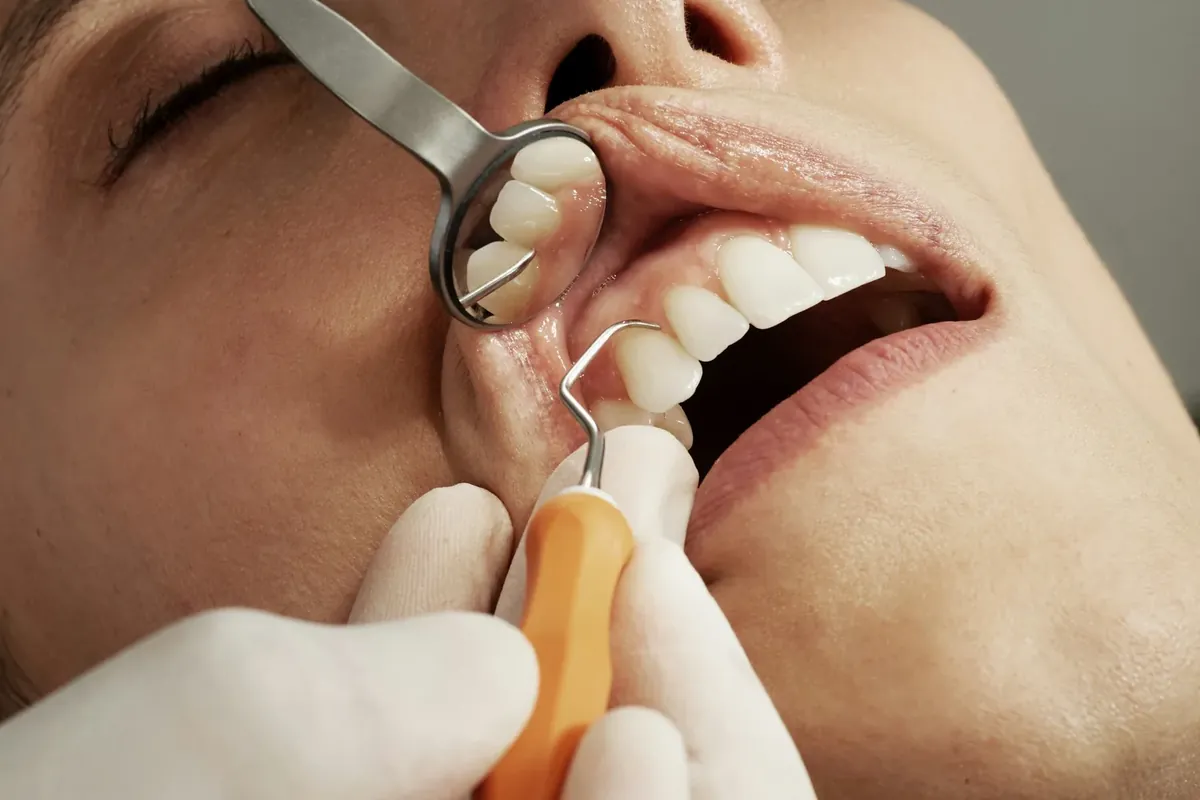
A good plan comes from a few simple measurements put together. These are the things a dentist usually looks at, and what each one helps decide.
| What is checked | How | What it helps decide |
|---|---|---|
| How much gum shows when you smile | Looking at your natural smile, photos and a short video | Whether the gum shows evenly across the teeth or only at some |
| Upper lip length and movement | Comparing the lip at rest and in a full smile | How much of the gummy smile comes from the lip |
| Length and proportions of the front teeth | Measuring length against width, and looking for wear | Whether the teeth are truly short or partly covered by gum |
| Gum pockets and the position of the bone | Gentle measurements around the teeth, and X-rays | Gum contouring or crown lengthening |
| Gum health | Checking for swelling, bleeding and tartar | Whether gum inflammation needs treating first |
| Face proportions and bite | Looking at the lower face and how much tooth shows at rest | Whether the jaw plays a part |
For reference, the Mahidol review gives an average upper lip length of about 20 millimeters in women and 23 millimeters in men. These are population averages, so your dentist looks at how your own lips, teeth and gums work together rather than at one number.
From first consultation to a settled gum line
Every plan is individual, but most gum reshaping follows a similar path. Knowing it in advance helps you plan work, travel and events.
- Look at your smile at home: take a few photos and a short video of your natural smile and laugh. They help you explain what bothers you.
- Consultation and examination: the dentist checks your gums, teeth, lips and bone level, as in the table above.
- Healthy gums first: if there is gum inflammation or tartar, a cleaning and home care come before any reshaping.
- Design the new gum line: the planned line is marked, sometimes with a trial smile or a digital design, so you can see the idea before treatment.
- Treatment day: local anesthesia, then gum contouring or crown lengthening according to the plan.
- The first days: some tightness or soreness, soft foods and gentle cleaning, following the aftercare you are given.
- Follow-up: the dentist checks healing and how the gum line is settling.
- Veneers or crowns, if planned: made once your dentist finds the gums ready, so the edges sit at the new gum line.
Caring for your gums after the procedure
The table below summarizes general aftercare advice from Cleveland Clinic. Your own dentist tells you how long healing takes in your case and gives instructions for the work you had, which come first.
| When after treatment | What is common | What helps healing |
|---|---|---|
| The day of treatment | Numbness wears off within a few hours, then mild tightness or soreness | Soft, cool foods; a cold compress on the outside of the face; pain relief as your dentist advises |
| The first 2 to 3 days | Some swelling, bruising or sensitive teeth, usually easing day by day | Brush other teeth as usual and the treated area gently as instructed; avoid hard exercise for at least 2 days |
| The first week | The surface of the gum heals | Avoid hard, crunchy or spicy food; do not touch the area with your tongue or fingers; avoid smoking |
| The following weeks | The gum line gradually settles | Keep follow-up visits; good daily cleaning helps the result last |
Common myths about gummy smiles and gum trimming

| Myth | Fact |
|---|---|
| Every gummy smile can be fixed by trimming the gums. | Trimming helps the part that comes from the gums. When the cause is the lip or the jaw, your dentist assesses it and recommends suitable options. |
| With a laser, the bone does not need checking. | The bone level is checked first whatever the instrument. If the bone sits too close, trimming the gum alone tends to let it grow back. |
| Trimmed gums always grow back. | When the cause is diagnosed correctly and enough space is left between the gum edge and the bone, results are usually stable. Some settling over the first months is normal. |
| A gummy smile means the gums are unhealthy. | Most gummy smiles are about proportions. Swollen, red or bleeding gums are a separate issue, gum inflammation, which is treated first. |
| You always need veneers after gum reshaping. | Often the tooth under the gum is a normal size, so it simply shows more once the gum settles. Veneers are for when you also want to change shape or color. |
| A gummy smile is something that must be fixed. | It is a matter of preference. In research, the general public noticed it only at about 4 millimeters. If you like your smile, there is no need to change it. |
| Gums that grow during braces always need surgery. | Puffy gums during braces often improve with better brushing and cleaning between the teeth. What remains after treatment can then be assessed. |
When to contact a dentist or doctor
Most people heal from gum reshaping without problems, and a gummy smile on its own is not an emergency. These are the situations worth acting on.
Before any treatment
- Gums that enlarge quickly together with easy bruising, bleeding, fever or unusual tiredness: see a doctor for a check-up.
- Gums that grow after starting a new medicine: tell the doctor who prescribed it, and keep taking it until they advise otherwise.
- Gums that are swollen, bleeding or sore: book a gum check, since inflammation is treated before any cosmetic work.
After gum reshaping
- Bleeding that does not stop after pressing on it with clean gauze for a while.
- Fever, pus, or swelling that is getting bigger after the first few days instead of smaller.
- Pain that keeps increasing or does not ease with the pain relief your dentist advised.
- Swelling spreading to the face or neck, or difficulty swallowing or breathing: go to a hospital emergency department straight away.
For the first three situations after treatment, contact the clinic. We are open every day from 09:00 to 20:00, and our team can arrange a check with your dentist.
Emergency dentist in Chiang Mai
What happens when you come in about a gummy smile
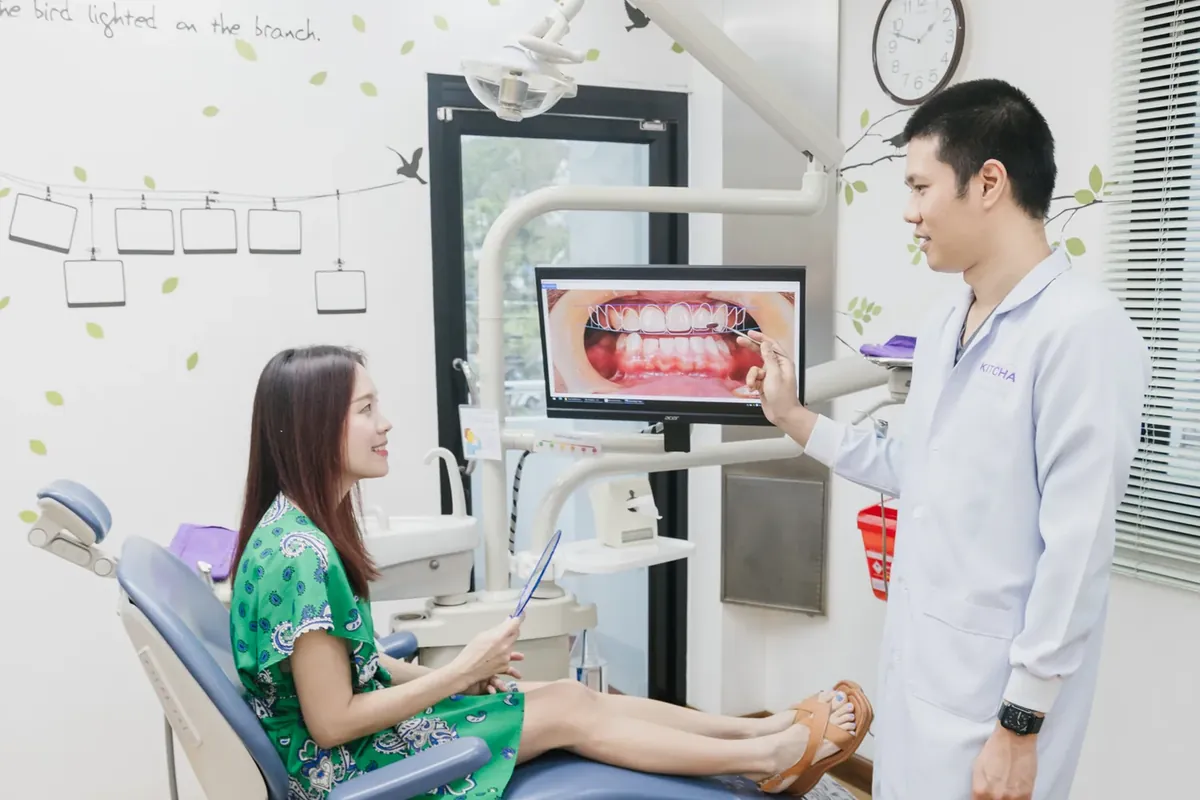
At Kitcha Dental Clinic, gum treatment is planned by dentists with postgraduate training in periodontics, including an MSc in Periodontology and a PhD in Dental Science. When gum reshaping is part of a plan for veneers or crowns, the gum dentist and the restorative dentist plan the treatment together. This is what a consultation usually looks like.
- Your goals and history: what you would like to change, your health conditions, every medicine you take, and whether you are pregnant. If you take a blood thinner or antiplatelet medicine, do not stop it yourself. In some cases it does not need to be stopped; in others, your dentist may first consult the doctor who looks after you.
- Examination: the dentist checks your gums and measures the pockets around the teeth, and takes X-rays to check the bone.
- Smile records when needed: photos, short videos of your smile and a digital scan of your teeth, used to plan how the teeth and gum line should look. An on-screen design is a plan to discuss, not a promise that the result will look exactly the same.
- Explaining the cause: if it is the gums, the dentist explains whether gum contouring or crown lengthening suits you. If part of the cause is the lip or the jaw, your dentist assesses it and recommends suitable options.
- Plan and estimate: you receive a treatment plan and cost estimate before anything starts.
- Treatment day: the area is numbed with local anesthesia. If the Waterlase laser is used, you sign a consent form first, and you, the dentist and the assistant all wear protective glasses. You feel a fine cool water spray and may hear a rhythmic popping sound, which is normal for this laser. You can raise your hand to pause at any time.
- Aftercare and follow-up: you receive care instructions for the work you had and a follow-up appointment. Healing time and the number of visits: your dentist tells you for your case.
Gum reshaping and crown lengthening fees are listed under gum treatment on our prices page, and laser gum contouring has its own per-tooth price in the laser section. Your dentist confirms the plan and estimate after examining your smile and gums.
If this sounds like you: what to do
These are example situations, not patient stories, to help you find the next step that fits.
- Your front teeth look short and square, and your lip moves normally: book a consultation. This pattern often comes from gum covering the teeth, and the bone check decides between gum contouring and crown lengthening.
- Your gum line is uneven on one or two front teeth: ask whether evening out those teeth alone is enough. Small adjustments are sometimes all that is needed.
- You are planning veneers and your teeth look short: ask for the gum line to be planned together with the veneers, so the length of the new teeth suits your face.
- You see a lot of gum only when you laugh, and your teeth look normal: your lip may be the main cause. Your dentist assesses it and recommends suitable options.
- Your gums grew while wearing braces: focus on brushing along the gum line and cleaning between the teeth, and ask your orthodontist. Any gum that remains after treatment can be assessed later.
- Your gums are red and bleed when you brush: start with a gum check and cleaning. Reshaping comes later, once the gums are healthy.
- You are travelling to Chiang Mai for treatment: share photos of your smile before you book, and ask your dentist how many visits your plan needs, so you can plan your stay.
Frequently asked questions about gummy smiles and gum contouring
Does gum contouring hurt?
The area is numbed with local anesthesia before treatment, so you should feel pressure and movement rather than sharp pain. After the numbness wears off, the gums may feel tight or sore for a few days, and your dentist advises on pain relief and care. With a laser, you feel a cool water spray and hear a popping sound.
How long does it take to heal, and when can I go back to work?
Healing depends on what is done. Trimming gum only is a smaller procedure than crown lengthening, where the bone is also reshaped and the gum line needs longer to settle before veneers or crowns are made. For your own treatment, the healing time, the number of visits and when you can go back to work are something your dentist tells you for your case.
Will the gum grow back? Is the result permanent?
When the cause is diagnosed correctly and enough space is left between the gum edge and the bone, results are usually stable. Gum tends to creep back when the bone sits too close and only the gum was trimmed, which is why the bone is checked first. Good daily cleaning, not smoking and regular check-ups help the result last.
What is the difference between laser and blade gum contouring?
Both remove extra gum along a planned line. With a laser, there is often little bleeding and in many cases no stitches are needed. The choice of instrument does not change the most important step, which is checking the bone level. If the bone needs reshaping, crown lengthening is planned whichever instrument is used on the gum.
What can I eat after gum contouring, and can I brush?
For the first few days, choose soft foods such as rice porridge, eggs, yogurt, soft noodles and cooked vegetables, and avoid hard, crunchy or spicy food until your dentist says the area has healed. Brush your other teeth as usual and clean the treated area gently, exactly as your dentist shows you. Keeping the area clean helps it heal.
My smile became gummier during braces. Can it be corrected?
Often, yes. Gums can become puffy during braces when plaque collects around the brackets, and this often improves with better cleaning. A Thai dental review also explains that some tooth movements can increase gum display, which is why orthodontists plan for it. After braces, your dentist checks what remains and whether it comes from the gums, the teeth or the lip, then recommends suitable options.
Should gum contouring come before or after veneers?
Usually before. The gum line is reshaped first and given time to settle, then the veneers or crowns are made so their edges sit at the new gum line. Planning both together from the start helps the final teeth have a length and shape that suit your face.
Will my teeth feel sensitive or look too long afterwards?
Some sensitivity to cold can happen for a while, especially when bone was reshaped, and it usually eases as the area heals. The new gum line is designed in advance from your smile, lips and tooth proportions, so the aim is teeth that look in proportion, not as long as possible. Ask to see the planned line before treatment.
Summary
A gummy smile is common and usually a question of proportions, not health. The right treatment depends on where the extra gum comes from.
- More than about 2 to 3 millimeters of gum in a smile is often called gummy, but whether to change it is your choice.
- Gum covering the teeth is often improved with gum contouring; when the bone is close too, crown lengthening is used.
- The bone level is checked before any trimming, with a blade or a laser, so the gum line stays where it was planned.
- When the lip or the jaw is part of the cause, your dentist assesses it and recommends suitable options.
- Healthy gums come first, and good daily cleaning helps the result last.
References
Cleveland Clinic: Gum Contouring
Cleveland Clinic: Gingivectomy
Mele M et al. Esthetic treatment of altered passive eruption. Periodontol 2000, 2018
Aroni MAT et al. Esthetic crown lengthening in the treatment of gummy smile. Int J Esthet Dent, 2019
Tjan AH, Miller GD, The JG. Some esthetic factors in a smile. J Prosthet Dent, 1984