

Food that always catches in the same gap. Floss that shreds between two overlapping teeth. A lower front tooth that has slowly turned, even though you had braces years ago. Or simply a smile you would rather not show in photos. Crowded and crooked teeth are among the most common reasons people look into braces.
The good news is that crowding is very treatable, at almost any age. There is no upper age limit for braces, and many people who have orthodontic treatment are adults. The main question is not whether crowding can be corrected, but how the space for the teeth will be made, and which type of braces or aligners fits your teeth, your routine and how visible you would like the treatment to be.
This article explains it step by step: a quick self-check, why teeth crowd, the ways orthodontists make space, a comparison of metal, ceramic and Damon braces and Invisalign, what research says about retainers, common myths, how treatment works at the clinic, and answers to frequent questions.
In short: crowding happens when there is less room in the jaw than the teeth need. Orthodontists make space by expanding the arch, gently polishing a little enamel between teeth, moving teeth, or sometimes removing teeth, depending on your records. Metal, ceramic and Damon braces all move teeth the same way, and Invisalign uses removable clear trays. Retainers afterward keep the result.
How crowded are my teeth? A quick self-check
Mild: a small overlap or turn
- One or two teeth overlap slightly or are a little turned.
- Floss passes through every gap, though one spot is tight.
- Your bite feels comfortable and the back teeth meet evenly.
Moderate: worth an orthodontic consultation
- Several front teeth overlap, or a tooth sits outside or inside the line of the others.
- Food traps in the same places and floss shreds or is hard to use.
- A canine sits high in the gum, or an adult tooth came in behind a baby tooth.
- Teeth that were straight after braces have started to move.
Good to check soon
- Gums bleed around crowded teeth or the gum is pulling back.
- A child lost a baby back tooth early and the space seems to be closing.
- A tooth has not come through long after the one on the other side.
- Crowding comes with jaw pain, clicking or teeth that are wearing down.
Why teeth become crowded
Crowding is mostly a question of space. Cleveland Clinic notes that most bite problems are inherited, and that malocclusion can happen when teeth are too large, or too crowded, for the mouth. Tooth size and jaw size are inherited separately, so a child can have larger teeth and a smaller jaw. Other causes act during childhood or later in life. For example, a study of more than 1,000 young children in Hong Kong linked daily thumb or pacifier sucking for more than a year with changes in how the front teeth meet.
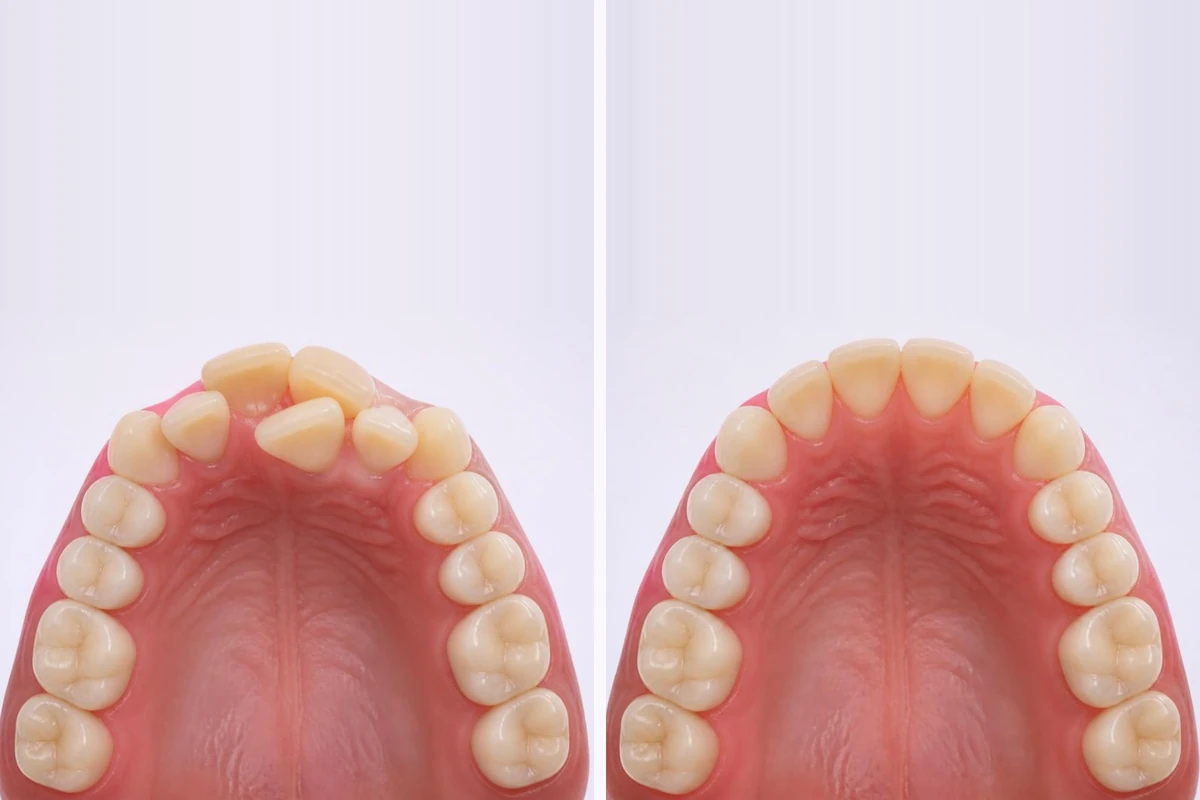
| Cause | How to tell | What it means for you |
|---|---|---|
| Teeth larger than the space in the jaw | Overlapping or turned front teeth from the time they came in. | Space is made with expansion, enamel polishing or, in some cases, extractions. |
| Early loss of baby teeth | A baby back tooth removed early because of decay, then neighboring teeth drift into the gap. | A space maintainer may be suggested. Treating decay early helps prevent it. |
| Habits in childhood | Long-term thumb or pacifier sucking, or mouth breathing, affecting how the arches develop. | Stopping the habit comes first, and some children benefit from early guidance. |
| Teeth that do not come through normally | A canine stuck high in the gum, an extra tooth, or a missing tooth. | X-rays guide the plan, sometimes with oral surgery. |
| Changes in adult life | Lower front teeth slowly crowd, especially if retainers were not worn after braces. | A short course of treatment and retainers may help. |
| Gum disease and missing teeth in adults | Teeth drift or fan out as bone support is lost or gaps appear. | Gum treatment comes first, then tooth movement if suitable. |
Early loss of baby teeth is one cause parents can help prevent. A review of space changes after baby back teeth were lost early found that most of the space was lost in the first three months, and space maintainers were recommended in most cases, especially after early loss of a lower second baby molar. Keeping baby teeth healthy until they fall out naturally helps the adult teeth come in with the room they need.
Does crowding affect your gums and teeth?
Cleveland Clinic lists decay and gum disease among the possible effects of a poor bite, and overlapping teeth are simply harder to clean. That said, many people with crowding keep healthy gums with careful cleaning, and crowding alone does not mean gum disease. A practical rule: if you cannot clean a spot well, that spot deserves extra attention now, whether or not you choose braces.
Read about orthodontics at the clinic
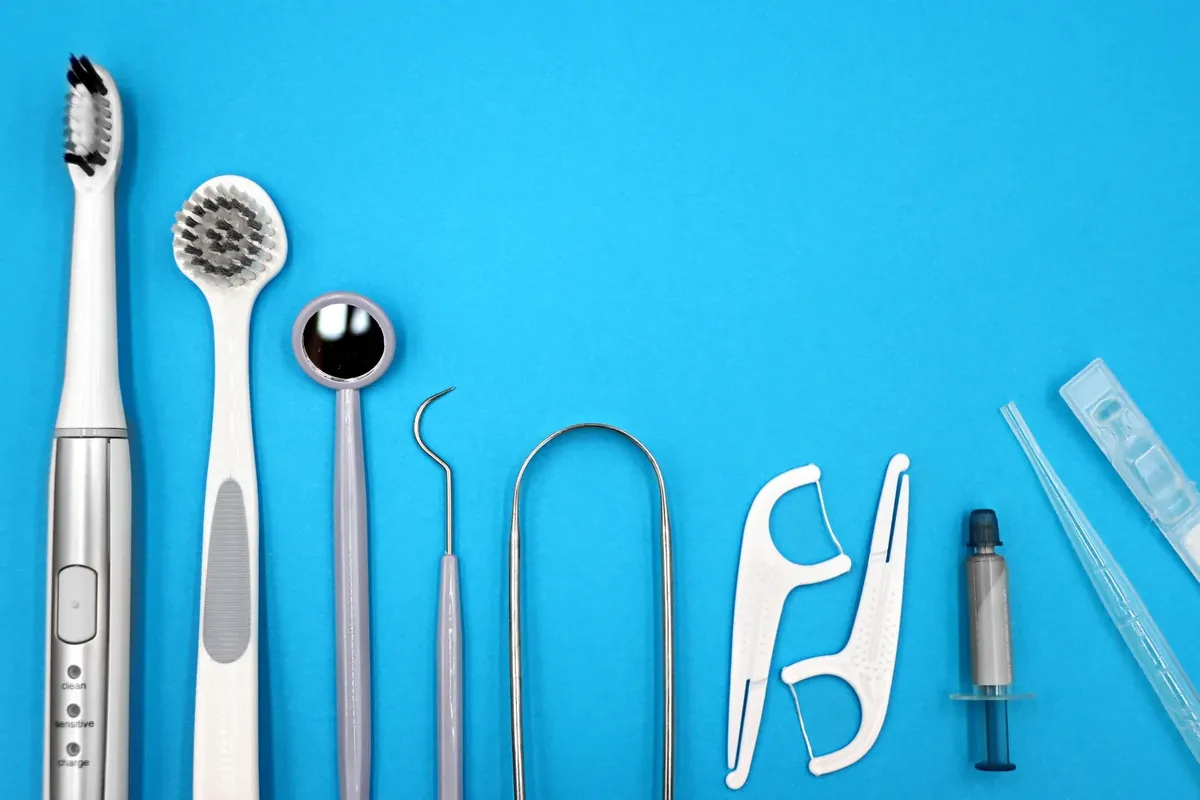
Cleaning crowded teeth well, with or without braces
- Brush for 2 minutes twice a day with fluoride toothpaste, angling the brush into the overlaps rather than just across the front.
- Use floss where teeth are tight, and an interdental brush where there is a small gap. A Cochrane review suggests interdental brushes may help gum health more than floss, though the evidence is limited.
- A small single-tuft brush can reach a tooth that sits inside or outside the line of the others.
- Keep regular check-ups and cleanings, so tartar in hard-to-reach spots is removed.
- Mention any spot where food always traps. It may need attention before or during braces.
Crowding in children: when to start?
Some crowding of the lower front teeth is common when the adult incisors first come in, because adult teeth are larger than baby teeth. Part of this can settle as the jaws grow and the baby back teeth are replaced. That is why the timing of orthodontic treatment for children is a judgment based on X-rays and growth, not on how the teeth look on one day.
- The AAO suggests a first orthodontic check by about age 7. Many children only need monitoring at that visit.
- For some children, early treatment such as a palatal expander can guide the jaws while they are still growing.
- Braces are often started once most of the adult teeth have come through.
- Keeping baby teeth healthy until they fall out naturally protects the space the adult teeth need.
- If a baby back tooth must be removed early, ask whether a space maintainer is needed.
How orthodontists make space for crowded teeth
Straightening crowded teeth needs room. Your orthodontist measures the space available and the size of your teeth from X-rays and a digital scan or model, then chooses one or more of these methods.
| Method | How it works | Good to know |
|---|---|---|
| Widening the arch | Braces or aligners round out a narrow arch. In growing children, a palatal expander can widen the upper jaw. | How much is possible depends on the bone and gums. |
| Polishing a little enamel between teeth | A small amount of enamel is polished from the sides of some teeth to make room. | A systematic review found no increase in decay, sensitivity or gum problems, though study quality was low. |
| Moving teeth into better positions | Tipping or moving teeth gains space, for example by uprighting teeth that are tilted. | Planned digitally for aligners, or step by step with braces. |
| Removing some teeth | When crowding is severe, removing teeth, often premolars, gives the space needed. | Decided from your records, not by default. Your orthodontist explains why. |
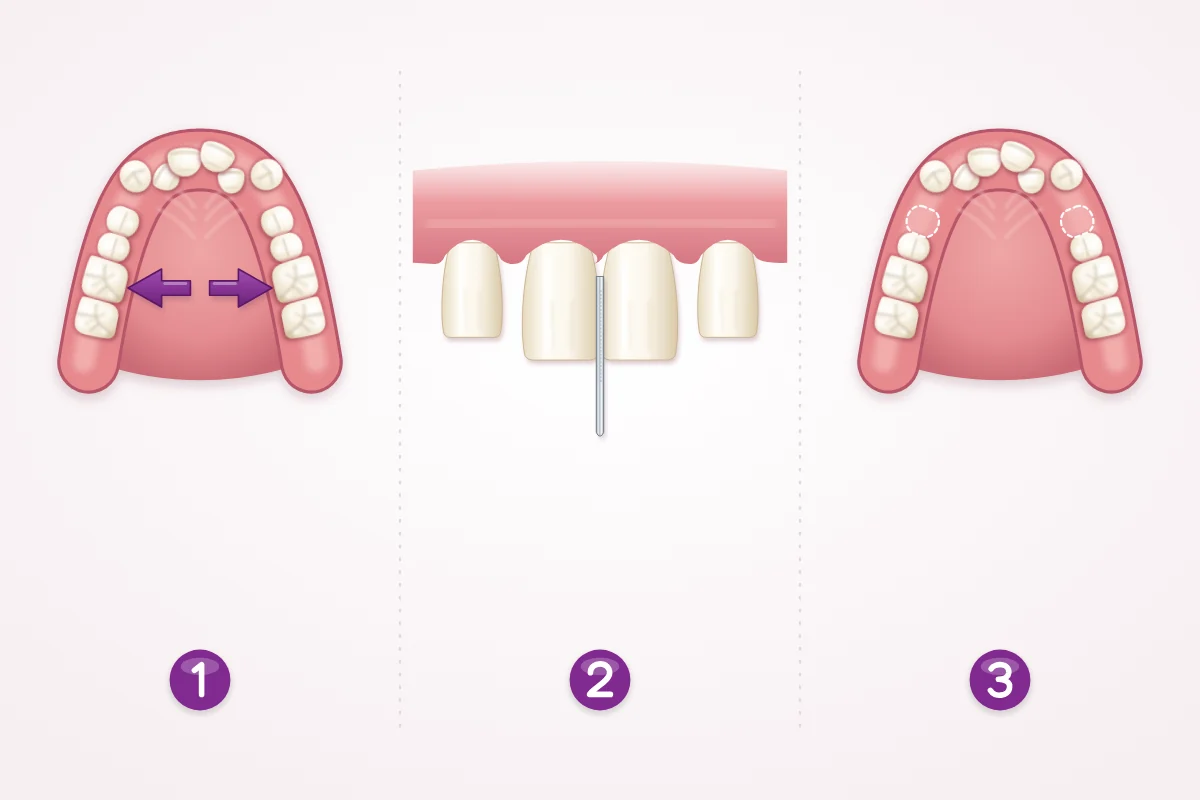
With Invisalign, small amounts of enamel may be polished between some teeth to make space if your plan needs it, and the planned movements are shown to you in ClinCheck, Invisalign planning software, before the aligners are made.
Which braces suit crowded teeth?
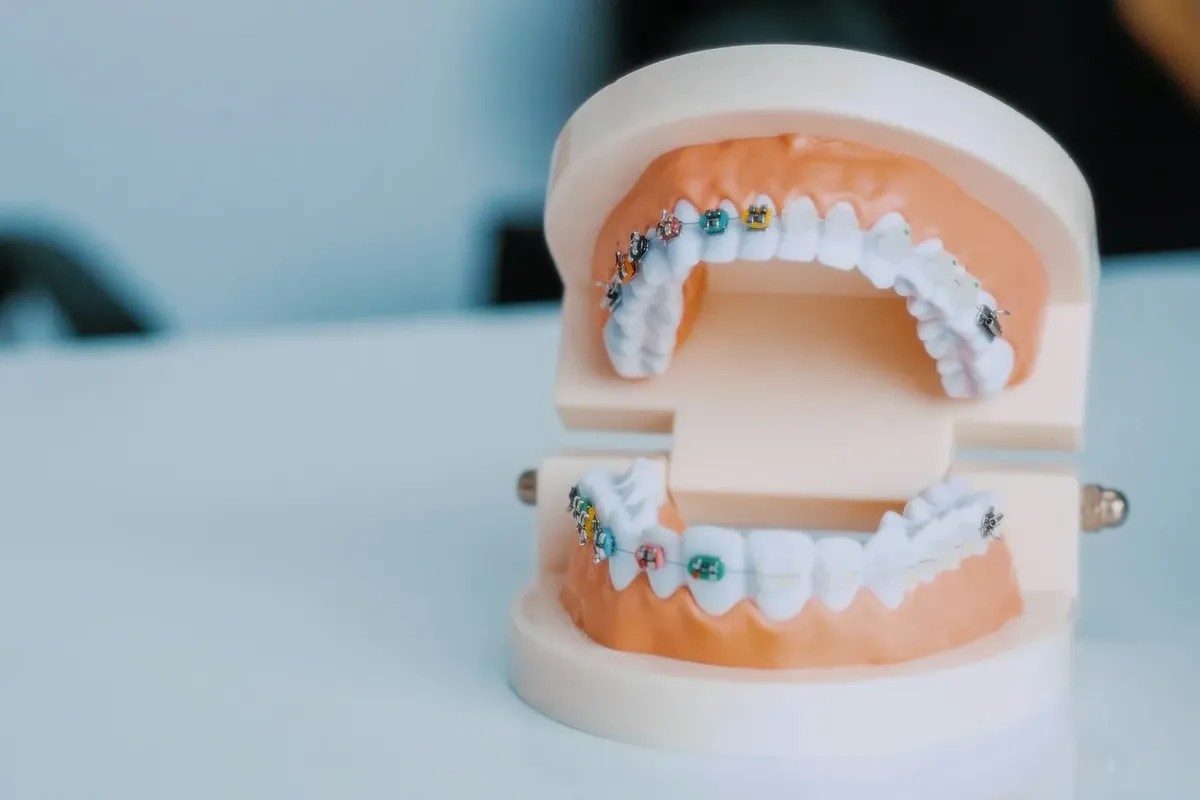
Metal, ceramic and Damon braces all move teeth in the same way, with brackets and a wire. Invisalign moves teeth with a series of removable clear trays. The differences are mostly about visibility, daily routine and how often you come in.
| Type | How it looks and works | Suits people who |
|---|---|---|
| Metal braces | Metal brackets joined by a wire. The standard fixed braces. | Want a reliable fixed option and do not mind them showing |
| Ceramic braces | Tooth-colored brackets. Small elastic rings, which can be clear, hold the wire. | Want fixed braces that show less |
| Damon self-ligating braces | Brackets with a built-in clip that holds the wire, so no elastic rings are needed. | Prefer brackets without elastic rings |
| Invisalign clear aligners | Clear trays changed every 1 to 2 weeks, with small tooth-colored attachments on some teeth. | Can wear them 20 to 22 hours a day and like to take them out to eat |
| Point | Fixed braces | Invisalign |
|---|---|---|
| Visits | About every 4 to 6 weeks | About every 6 to 8 weeks |
| Eating | Avoid very hard or sticky food that can loosen a bracket | Take aligners out to eat and drink, then brush before putting them back |
| Keeping teeth clean | Brush around each bracket and clean between teeth daily | Brush teeth normally, rinse and gently brush the aligners daily |
| What decides results | Keeping appointments and looking after the brackets | Wearing the aligners for the hours and in the order given |
Your orthodontist explains which option suits your bite, as some tooth movements are planned differently with aligners and with braces. For some bite problems, fixed braces may be recommended instead of aligners.
Questions worth asking at your consultation
- Is my crowding mainly from tooth size, jaw size or something that changed later?
- How will the space be made, and would any teeth need to come out? What would the plan look like without extractions?
- Do braces or aligners suit the movements my teeth need, and why?
- How often will I need to come in, and what happens if I travel?
- What should I do before braces, such as cleaning, fillings or gum care?
- Which retainer will I have afterward, and how long should I wear it?
- What is included in the fee, and how are payments made during treatment?
Treatment for crowded teeth, step by step
- Consultation and records: examination of teeth and bite, panoramic and cephalometric X-rays, and a digital scan or study model.
- A plan for making space, the type of braces or aligners, the likely treatment time and the fee, explained before you decide.
- Treatment before braces: any cleaning, fillings or extractions the plan needs.
- Fitting: brackets and wire are placed, or the first aligners are given with attachments bonded to some teeth.
- Regular visits to adjust the wire, change elastic rings, or check progress and give the next aligners.
- Finishing: braces or attachments removed, final X-rays taken, and retainers made, including clear retainers when suitable.
Treatment time depends on how much space is needed, how the teeth need to move and the type of braces or aligners. Your orthodontist gives you an estimate before you start. If you live outside Chiang Mai, tell the clinic before you start, so the regular visits can be planned.
Living with braces or aligners
- Teeth may feel tender for a few days after fitting and after adjustments, or with each new set of aligners. This then eases.
- Brush carefully around each bracket, and clean between the teeth every day. An interdental brush helps under the wire. The ADA suggests avoiding popcorn, corn on the cob, whole apples, gum and other sticky food with braces.
- With aligners, wear them 20 to 22 hours a day, take them out only to eat, drink and clean, and brush before putting them back.
- If a bracket comes loose, a wire pokes your cheek or an aligner cracks or does not fit, contact the clinic.
- Keep regular check-ups and cleanings with your dentist during treatment.
Retainers: keeping crowded teeth straight
Teeth that were crowded have a tendency to move back toward where they started. A Cochrane review of 47 studies explains that without a retention phase, teeth tend to relapse, and that retention is achieved with fixed or removable retainers. The review found that the evidence comparing types of retainers is low certainty, so no single type can be called better for everyone. What matters most is wearing your retainer as your orthodontist instructs.
| Retainer | Points from the review | Daily care |
|---|---|---|
| Fixed wire behind the teeth | Stays in place without needing to remember it. Can come loose and needs cleaning around it. | Floss or interdental brush around the wire. Tell the clinic if it feels loose. |
| Clear plastic retainer | In one trial, gums were healthier than with a fixed wire, but these retainers failed more often. | Rinse and brush gently, keep in its case, avoid heat. |
| Wire and acrylic retainer | In one trial, failed less often than clear plastic, though it was less comfortable at first. | Brush gently, keep in its case, bring it to check-ups. |
The clinic makes removable or fixed retainers when braces come off, and clear Vivera retainers from the makers of Invisalign are available for Invisalign patients. The clinic also makes new retainers, removable or fixed, for people who had braces elsewhere.
Common myths about crowded teeth
| Myth | Fact |
|---|---|
| Wisdom teeth are the main cause of crowded front teeth. | Crowding is mainly about tooth and jaw size, and changes over life. Wisdom teeth are assessed on their own merits. |
| Adults are too old for braces. | There is no upper age limit. Gums and teeth are checked first. |
| Crowded teeth always need extractions. | Many cases are treated with expansion, enamel polishing or tooth movement. Extraction is decided from your records. |
| Polishing enamel between teeth ruins them. | A review found no increase in decay, sensitivity or gum problems after this step, though more research is needed. |
| Clear braces are weaker than metal braces. | Ceramic and Damon braces move teeth the same way and suit most problems metal braces can treat. |
| Devices that speed up tooth movement shorten treatment a lot. | A Cochrane review of vibration and light devices found no clear evidence that they shorten treatment. |
| Once straight, teeth stay straight. | Teeth tend to move back. Retainers keep the result. |
When to contact a dentist soon
- Gums around crowded teeth bleed, are swollen, or are pulling back.
- A child lost a baby back tooth early because of decay: ask about keeping the space.
- During treatment, pain lasts more than a few days, or a bracket, wire or aligner breaks.
- A fixed retainer feels loose, or teeth start to shift after braces.
- Crowded teeth start to hurt, or a tooth that has not come through causes swelling.
Your orthodontic consultation, step by step
- Tell the coordinator what you would like to change, and send a photo of your smile if you like. A time is booked with an orthodontist.
- Your orthodontist examines your teeth and bite and takes panoramic and cephalometric X-rays and a digital scan or study model.
- You hear how much space is needed and how it can be made, which braces or aligners suit you, and the likely treatment time and fee.
- For Invisalign, your teeth are scanned with an iTero intraoral scanner and the planned movements are shown in ClinCheck before you confirm.
- Cleaning, fillings or extractions the plan needs are done first, then braces or aligners are fitted, with regular visits after that.
- At the end, retainers are made, and you bring them to your check-ups.
If radiation worries you: at our clinic, X-rays inside the mouth are digital, taken with phosphor plates and sensors that help lower the dose compared with film. Our Planmeca ProMax CBCT has an Ultra Low Dose mode, your dentist chooses the mode that suits each case, and X-rays are taken only when they are needed.
Dental X-ray radiation: how much is it, and how we keep it low
Every orthodontic case at the clinic is treated by an orthodontist, a dentist with postgraduate training in orthodontics. Fees are per case and depend on the type of braces or aligners and how complex your bite is. Price ranges are on the prices page, and your orthodontist confirms the fee at the consultation.
If this sounds like you: what to do
These are example situations, not patient stories, to help you find the next step that fits.
- You have mild crowding of the lower front teeth and do not want visible braces: ask whether Invisalign or ceramic braces suit your bite.
- Your teeth were straight after braces as a teenager but have crowded again: bring your old retainer if you have one. A short course and new retainers may help.
- Your child lost a baby molar early and the gap is closing: book a check soon. A space maintainer may be suggested.
- Your crowding is severe and you were told teeth may need to come out: ask why, and what the plan would look like with and without extractions.
- Your gums bleed around overlapping teeth: start daily cleaning between the teeth and book a gum check before planning braces.
- You travel a lot for work: aligners with fewer visits may suit you, as long as you can wear them for the hours needed. Tell the clinic your schedule before you start.
- You plan veneers for crooked front teeth: ask whether aligning the teeth first would save tooth structure and give a better result.
Frequently asked questions about crowded teeth
Can crowded teeth be fixed without braces?
Clear aligners such as Invisalign straighten teeth without brackets, for suitable cases. Veneers can change how mildly crooked teeth look but do not move them. Your orthodontist explains which suits your teeth.
Do crowded teeth always need extractions?
No. Space can often be made by widening the arch, polishing a little enamel between teeth or moving teeth. Extraction is considered when crowding is severe, and the decision comes from your records.
Which is better for crowding, braces or Invisalign?
Both can treat crowding. The choice depends on your bite, how the teeth need to move, and whether you can wear aligners for 20 to 22 hours a day. Your orthodontist explains which suits your case.
Why are my lower front teeth getting crowded as an adult?
Teeth can shift over life, and teeth straightened earlier tend to move back without retainers. Gum disease or missing teeth can also let teeth drift. A check shows the reason and the options.
Does fixing crowded teeth hurt?
Most people feel tenderness or pressure for a few days after fitting, adjustments or a new set of aligners, which then eases. Tell your orthodontist if something rubs or the discomfort lasts longer.
Can wisdom teeth make my teeth crowded?
Crowding mainly comes from tooth and jaw size and changes over life. Wisdom teeth are assessed for their own reasons, such as infection, decay or damage to the neighboring tooth.
Is it too late to straighten my teeth?
There is no upper age limit for braces, and many patients are adults. Your gums and teeth are checked first, and any gum treatment or fillings are done before treatment starts.
How long do I need to wear a retainer?
Teeth tend to move back after treatment, so retainers are worn as your orthodontist instructs, and many people keep wearing them long term in some form. Bring them to your check-ups.
Summary
Crowded teeth are very treatable at almost any age. The plan for making space, and the type of braces or aligners, are chosen from your records.
- Crowding is mainly a space problem, from tooth and jaw size, early loss of baby teeth or changes over life.
- Space can be made by widening, polishing a little enamel, moving teeth or, in some cases, extractions.
- Metal, ceramic and Damon braces move teeth the same way. Invisalign uses removable trays worn 20 to 22 hours a day.
- Clean carefully around crowded teeth now, whether or not you choose braces.
- Retainers keep the result, so wear them as instructed.
References
Cleveland Clinic: Malocclusion (Misaligned Bite)
NHS (UK): Braces and orthodontics
American Association of Orthodontists: When should my child see an orthodontist?
Worthington HV et al. Home use of interdental cleaning devices. Cochrane Review, 2019