

It often starts as a dull ache. A day or two later there is a tender lump on the gum, the tooth feels taller when you bite, and there may be a salty or bitter taste in your mouth. Some people notice a small yellow-white bump that bursts and then comes back. Others wake up with one cheek bigger than the other.
Pus in the gum means there is an infection that the body is trying to wall off. The reassuring part is that most dental abscesses are treated well at an ordinary dental visit, and the tooth can often be kept. The part to take seriously is that an abscess does not heal by itself: even when the pain fades or the bump drains, the source is still there until a dentist treats it.
This article helps you judge how urgent your situation is and what to do next. You will find a quick self-check, the three main types of abscess and the look-alikes, safe care while you wait, what antibiotics can and cannot do, the signs that mean you should go to a hospital now, what happens at the dental visit, and how to keep it from coming back.
In short: a swollen gum with pus needs dental treatment, usually within a day or two. Use a cold compress on the cheek and ordinary pain relief as labeled, and do not squeeze or pierce it. Go to a hospital emergency department now if the swelling spreads toward the eye or neck, or you have trouble swallowing, breathing or opening your mouth, or a high fever.
How urgent is a swollen gum with pus? A quick self-check
Read from the top. The first group that matches you is the one to follow.
Go to a hospital emergency department now
- Swelling is spreading toward the eye, under the jaw or down the neck, or the floor of the mouth under the tongue is swollen.
- You find it hard to swallow, breathe or speak, or you are drooling because swallowing hurts.
- You cannot open your mouth properly, or an eye is swollen or painful, or your vision changes.
- You have a high fever, feel very unwell, confused or have a racing heart together with the swelling.
See a dentist today or tomorrow
- There is a painful, swollen lump on the gum, with or without visible pus.
- A throbbing toothache that pain relief only partly helps, or the tooth hurts when you bite.
- Your cheek or jaw is a little swollen, but you can swallow, breathe and open your mouth normally.
- A swollen, sore gum flap over a back tooth that is only partly through.
Book a dental check soon
- A small bump on the gum that comes and goes, drains a little and hardly hurts.
- A bad taste that keeps returning near one tooth, or a tooth that has turned darker than its neighbors.
- An old filling or crown, or a tooth that was hit in an accident, now feels different when you bite.
A bump that does not hurt is not an all-clear. It often means pus has found a small channel to drain through, which relieves the pressure but leaves the infection in place.
Why a gum swells and fills with pus
Inside every tooth is the pulp, a soft core of nerve and blood vessels that runs down to the tip of each root. When decay reaches the pulp, or a crack or knock lets bacteria in, the pulp becomes inflamed and can die. The infection then spreads out through the root tip into the bone, and pus collects there. This is the most frequent kind of dental abscess.
A second route starts from the gums. In gum disease, deep pockets form between the tooth and gum. If the opening of a pocket narrows, or food such as a seed husk is pushed in, bacteria are trapped and pus builds up beside the root. This is a periodontal abscess, and it is more likely in people who already have gum disease.
Pus is a mix of bacteria, white blood cells and broken-down tissue. It builds pressure in a tight space, which is why an abscess throbs and why the tooth can feel tall. If the pressure finds a way out, often through a small hole in the gum, the pain can ease suddenly. That relief is welcome, but the source inside the tooth or pocket is still there, which is why health services describe an abscess as something that does not clear up on its own.
Some things make an abscess more likely: untreated decay, a cracked or injured tooth, gum disease, a partly erupted wisdom tooth, dry mouth and a weakened immune system. Smoking is one of the clearest: one large hospital source reports that smokers are about twice as likely to develop a tooth abscess.
Swollen gum around a back molar or wisdom tooth
A swollen gum at the very back of the mouth is often linked to a wisdom tooth that has only partly come through. A flap of gum stays over part of the tooth, food and bacteria collect under it, and the flap becomes sore and puffy. Dentists call this pericoronitis. You may notice pain when you open wide or bite, a bad taste and a swollen cheek.
A swollen gum beside a back molar that is not a wisdom tooth more often comes from a gum pocket abscess, food packed between two teeth, or an infection at the root tip of that molar. The section on types of abscess further down shows how dentists tell these apart.
While you wait to be seen, brush the area gently with a soft brush, rinse with warm salt water and chew on the other side. The dentist cleans under the gum flap or treats the cause, and if the same wisdom tooth keeps flaring up, explains whether removing it would help.
How long does a swollen gum take to go down?
It depends on the cause. Gum that is sore from trapped food or a small scratch usually settles within a few days once the area is kept clean. A swelling with pus is different: the pus comes from an infection, and the source needs a dentist’s treatment, so it is a good idea to have it seen early.
Once the dentist drains the pus and treats the cause, the pain usually eases quickly. The tooth may stay tender to chew on for a while, and this usually improves within 2 to 3 days. If the swelling keeps growing, or you have a fever or trouble swallowing, read the warning signs further down this page.
Types of dental abscess and the look-alikes
Dentists usually group abscesses by where they start, because that decides the treatment. You do not need to work this out yourself, but it helps to understand what your dentist is looking for.
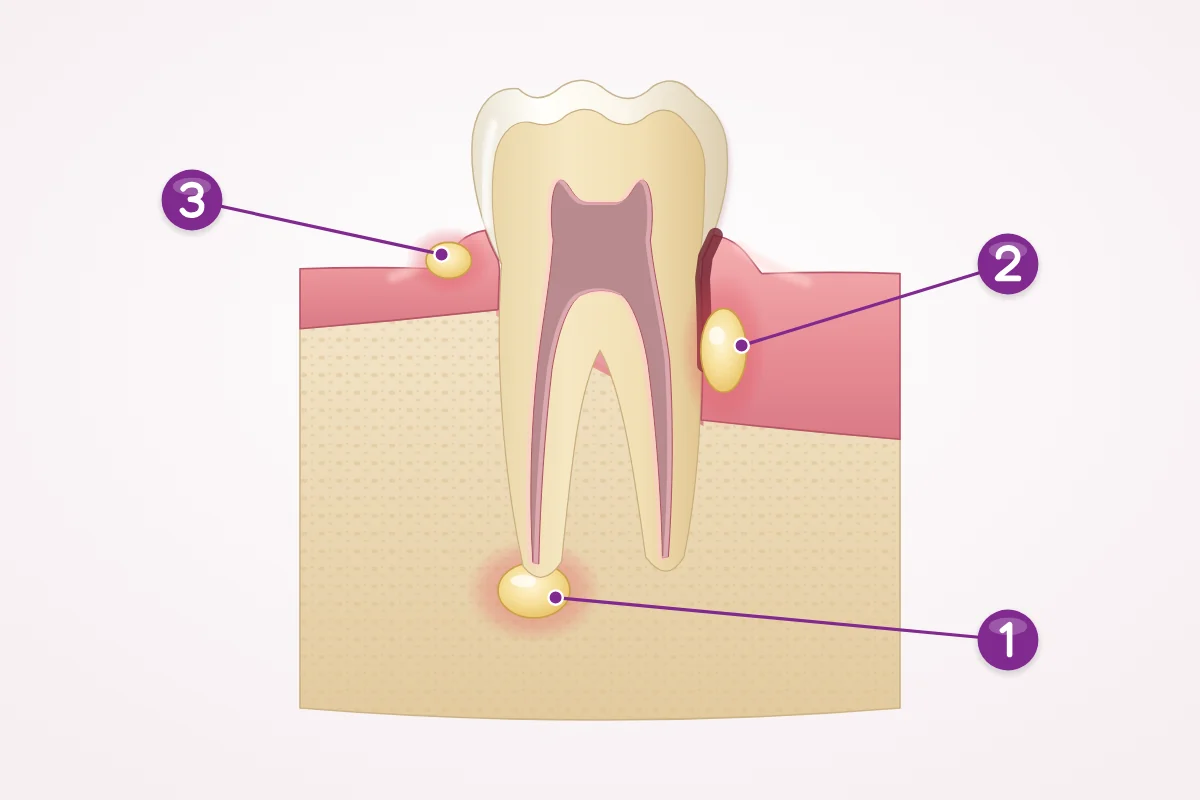
| Abscess type | Where it starts and why | Usual treatment |
|---|---|---|
| Abscess at the root tip (periapical) | Inside the tooth: deep decay, a crack or an old injury lets bacteria reach the pulp, which dies | Drain the pus, then root canal treatment to keep the tooth, or removal if it cannot be kept |
| Gum pocket abscess (periodontal) | Beside the root: a deep gum pocket from gum disease, or something stuck under the gum | Drain and clean the pocket, then gum treatment for the whole mouth |
| Gum surface abscess (gingival) | Only in the gum edge, often from a seed, bristle or fish bone pushed in | Remove the cause and drain; it usually settles quickly |
| Gum flap over a wisdom tooth (pericoronitis) | Food and bacteria trapped under the gum covering a partly erupted back tooth | Clean under the flap and ease the swelling, then plan removal if the tooth keeps causing trouble |
Things that can look like an abscess
| Cause | How to tell | What to do |
|---|---|---|
| Gums swollen from plaque (gingivitis) | Red, puffy gum edges that bleed when brushed, spread over several teeth, usually no pus | Gentle cleaning at the gum line and a scale and clean |
| Food stuck between the teeth | Pressure and soreness between two teeth after a meal, often with meat fibers or seeds | Floss gently; if a lump forms or the soreness stays, book a check |
If you are unsure which one you have, treat it as a possible abscess and have it checked. A dentist can usually tell within a few minutes with an examination and an X-ray.
What to do while you wait to see a dentist
Home care cannot cure an abscess, but it can make the wait easier and keep things from getting worse. These steps follow the advice of national health services and our emergency care page.

- Contact a dentist first. Describe where the swelling is, when it started, and whether you have a fever or trouble swallowing. A photo helps the team judge how soon you need to be seen.
- Use a cold compress on the outside of the cheek for 15 to 20 minutes at a time, with a cloth between the ice and your skin. Avoid heat on the face, because warmth can draw the swelling outward.
- Take ordinary pain relief such as paracetamol or ibuprofen exactly as the label or a pharmacist advises. Taking more than the recommended dose does not work better and can be harmful. Never place a tablet on the gum, because it can burn the tissue.
- Rinse gently with warm salt water a few times a day. It soothes and helps keep the area clean, but it does not replace treatment.
- Keep brushing with a soft brush, gently around the sore area, and clean the rest of your mouth as usual.
- Eat soft food such as soup, rice porridge, eggs or yogurt, chew on the other side, and avoid very hot or very cold food and drink.
- Drink water regularly and rest. Fever and pain take energy, and a dry mouth makes things worse.
- Write down the medicines you take and any allergies, and bring the list with you.
| Helpful | Better to avoid |
|---|---|
| A cold compress outside the cheek | A hot pack on the face, or heat rubs |
| Pain relief as labeled | Doubling the dose, or a tablet held against the gum |
| Warm salt water rinses | Squeezing, pricking or cutting the swelling yourself |
| Contacting a dentist the same day | Leftover antibiotics or antibiotics bought without advice |
| Soft food on the other side | Alcohol and smoking while it heals |
How a dental abscess usually unfolds
Every case is different, and an infection can spread over days, weeks or months, so these are typical patterns rather than promises.
| When it happens | What usually happens | What you can do at home |
|---|---|---|
| First signs | Ache, tenderness when biting, a tooth that feels tall, sometimes sensitivity to hot or cold | Contact a dentist; do not wait for a lump to appear |
| Swelling forms | A tender lump on the gum, throbbing pain, maybe a slightly swollen cheek | See a dentist within a day or two; cold compress and pain relief meanwhile |
| It drains | Salty taste, pain eases suddenly, a small hole or bump on the gum | Rinse with warm salt water and keep the appointment; the cause is still there |
| After the abscess is treated | Pain usually settles over the next few days; the tooth may be tender to bite on for a short time | Follow the care advice and come back for the next stage of treatment |
| Any time | Spreading swelling, trouble swallowing or breathing, high fever | Go to a hospital emergency department now |
Do you need antibiotics for a tooth abscess?
This is the question people ask most, and the answer surprises many: for an abscess that stays in one area, the treatment that clears it is removing the source, by draining the pus and treating the tooth or gum pocket. Antibiotics cannot reach well into pus or into a dead pulp, so on their own they tend to calm things only for a while.

An expert panel of the American Dental Association reviewed the evidence and recommended against antibiotics in most cases of dental pain and swelling that stays in the mouth, because the benefit is likely very small and the harms, such as side effects and resistance, can be large. They recommend antibiotics when the infection affects the whole body, for example with fever or feeling generally unwell, or when it is likely to spread. A Cochrane review found no clear difference in pain or swelling when antibiotics were added to dental treatment for a localized abscess, although the evidence is limited.
In Thailand, antibiotics are often called anti-inflammatory medicine, which leads many people to buy them for any swelling. A pharmacy faculty explains that antibiotics only act on bacteria, that every antibiotic has side effects such as diarrhea or rashes, and that unnecessary use breeds resistant bacteria. Pain and swelling relief comes from other medicines.
- If your dentist prescribes an antibiotic, take it exactly as directed and tell them about any allergy or other medicines.
- If you were given antibiotics elsewhere and the swelling went down, still have the tooth treated, because the source has not been removed.
- Do not use leftover antibiotics or share them; the wrong drug or a short course can hide the problem without fixing it.
Common myths about gum abscesses
| What people often believe | What the evidence says |
|---|---|
| The pain has stopped, so it has healed. | Pain can stop when the pus drains or the nerve dies. The infection can keep spreading quietly until the tooth is treated. |
| Antibiotics alone will fix it. | Antibiotics can calm it for a while, but removing the source by draining and treating the tooth or gum is what clears it. |
| Popping it at home lets the infection out. | Home piercing can push bacteria deeper or injure the gum, and it leaves the source behind. Drainage is done cleanly by a dentist. |
| A hot compress draws out the pus. | Heat on the face can draw the swelling outward. A cold compress outside the cheek is the safer choice. |
| A swollen tooth cannot be treated until the swelling goes down. | Dentists often start treatment while it is swollen, for example by draining the pus or opening the tooth, because that is what brings relief. |
| An abscessed tooth always has to come out. | Many abscessed teeth can be kept with root canal or gum treatment. Removal is one option when the tooth cannot be restored. |
| Salt water or mouthwash will make it go away. | Rinses soothe and keep the area clean while you wait. They cannot reach the infection inside the tooth or pocket. |
Warning signs: when to go to a hospital
Most abscesses stay in one area and are treated at a dental visit. Rarely, an infection spreads into the spaces of the face and neck. One example is a swelling of the floor of the mouth under the tongue, which can make it hard to swallow and breathe. It is treatable, and the key is getting to a hospital early, where the team can protect the airway, give medicine through a drip and drain the infection.
Go straight to a hospital emergency department, or call emergency services (1669 in Thailand), if you have any of the following. Ask someone else to drive you, and bring the medicines you take.
- Swelling that spreads toward the eye, under the jaw or down the neck, or that grows quickly over hours.
- Difficulty breathing, swallowing or speaking, a muffled voice, or drooling.
- A swollen floor of the mouth, or a tongue that is raised or pushed forward.
- A fever of 38 degrees Celsius or higher together with facial swelling, or feeling very unwell, confused or with a racing heart.
- A swollen or painful eye, or sudden changes in vision.
- Being unable to open your mouth.
For everything else, including a painful lump, toothache and mild swelling, a dental visit is the right place. Our emergency care page explains how to reach us quickly.
Emergency dentist in Chiang Mai
People with diabetes, a weakened immune system, or who are receiving cancer treatment should contact a dentist early, even for a small swelling, and tell the team about their condition.
What happens when you come in with a gum abscess
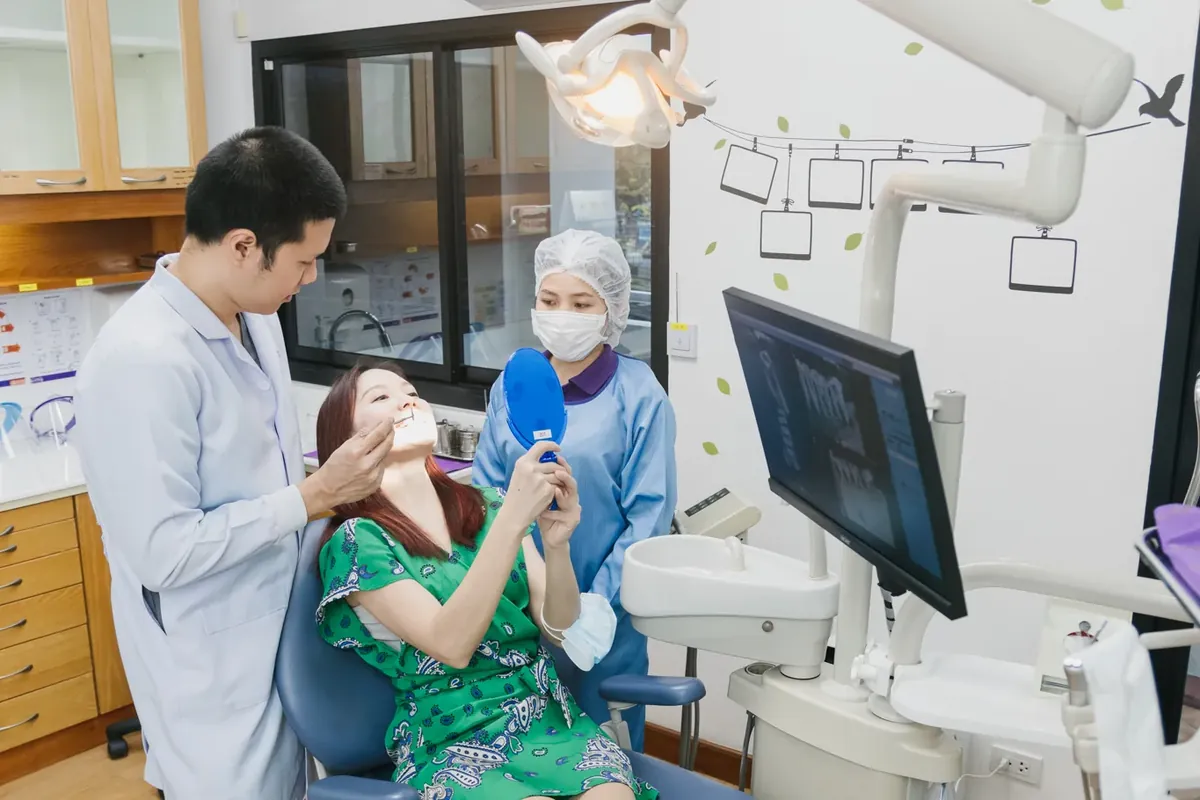
At Kitcha Dental Clinic, we are open every day from 09:00 to 20:00, except 31 December, 1 January and 13 to 15 April. You can call, or message us on WhatsApp, LINE or email, with your symptoms and a photo if you can. Our coordinators look for a time that matches how urgent your situation is, including the same day when possible. You can walk in, but the dentists see booked patients at their appointment times first, so you may need to wait for a while. Booking ahead gives you a confirmed time.
- History: your symptoms, when they started, any fever, your health conditions, whether you are pregnant, and every medicine you take, including blood thinners and antibiotics you have already started.
- Examination: the dentist looks at the swelling, checks how each tooth reacts to tapping and biting, and measures the gum pockets near the area.
- X-rays to find the source, and a pulp test when needed to see whether the nerve is still alive. A 3D CBCT scan of one or two teeth is used when the picture is unclear, for example with curved or extra canals or a suspected crack.
- Explanation and cost: the dentist explains what they found and the options, and tells you the cost before starting.
- Relief first: under local anesthesia, the first visit aims to relieve pain and control the infection, for example by draining the pus, opening and cleaning the tooth, or cleaning the gum pocket.
- Plan for what comes next: if more treatment is needed, such as completing a root canal, gum treatment, a crown or a removal, it is planned with a dentist in the right field at the clinic, at times that suit you.
If radiation worries you: at our clinic, X-rays inside the mouth are digital, taken with phosphor plates and sensors that help lower the dose compared with film. Our Planmeca ProMax CBCT has an Ultra Low Dose mode, your dentist chooses the mode that suits each case, and X-rays are taken only when they are needed.
Dental X-ray radiation: how much is it, and how we keep it low
| Abscess treatment option | When it fits | What comes next |
|---|---|---|
| Root canal treatment | The abscess comes from inside a tooth that can still be restored | Some teeth are finished in one visit, others need two or more, with medicine placed between visits; back teeth usually need a crown or onlay afterward |
| Drainage and gum treatment | The abscess comes from a deep gum pocket | Deep cleaning below the gum, usually under local anesthesia and over more than one visit, then regular maintenance visits |
| Removing the tooth | The tooth is badly broken, cracked down the root, or cannot be kept | The dentist explains options to replace the tooth later, such as an implant, a bridge or a denture |
| Root-end surgery | Infection at the root tip continues after root canal treatment or retreatment | Planned by dentists with postgraduate training in endodontics, with CBCT to guide the plan |
Root canal treatment at the clinic is planned and carried out by dentists with postgraduate training in endodontics. A rubber dam, a thin sheet around the tooth, is used in every root canal case to keep the tooth clean and dry, and a dental operating microscope is used when a tooth needs it. If you started root canal treatment at another clinic or in your home country, you can continue it here; bring any X-rays or records you have.
After treatment, the tooth may be tender to chew on and your jaw may feel tired from keeping your mouth open; this usually improves within 2 to 3 days. If it gets worse after that, or the swelling returns, contact the clinic. After an extraction, the gum usually heals in about 2 weeks, and if you are traveling, tell us your flight date so the dentist can confirm when it is suitable for you to fly.
Root canal treatment in Chiang Mai
Examination, X-ray and treatment fees are listed on our prices page, and your dentist tells you the cost before starting. If you plan to claim from travel insurance, ask for an itemized receipt and a medical certificate in English.
See root canal treatment prices
How to keep an abscess from coming back
Most abscesses start from decay, cracks or gum disease that grew quietly for a long time. The same habits that protect your teeth in general also lower the chance of another abscess.

- Brush twice a day with fluoride toothpaste, spit rather than rinse afterward, and clean between your teeth every day.
- Have regular check-ups, so decay and deep gum pockets are found while they are still small and simple to treat.
- Have a chipped, cracked or knocked tooth checked soon, even if it does not hurt.
- Finish treatment that has been started: a temporary filling after root canal treatment only protects the tooth for a short time.
- If you have gum disease, keep up maintenance visits. Many people come every 3 to 6 months, and your dentist recommends the interval that suits you.
- Stopping smoking and keeping diabetes well controlled both help the gums resist infection.
If this sounds like you: next steps for a gum abscess
These are example situations, not patient stories, to help you find the next step that fits.
- A bump on your gum burst this morning and the pain is much better: good news for today, but the source is still there. Rinse with warm salt water and book an appointment in the next few days.
- Your cheek is swelling and you are going on a trip in two days: contact a dentist today and mention your travel date, so the first visit can focus on relief and the plan can fit your schedule.
- You bought antibiotics at a pharmacy and the swelling went down: the infection has been calmed, not removed. Have the tooth examined and treated so it does not come back.
- The gum over your back wisdom tooth is swollen and it hurts to open wide: clean gently around it, rinse with warm salt water and see a dentist soon. If you cannot open your mouth or swallowing is hard, go to a hospital.
- You take a blood thinner or antiplatelet medicine: keep taking it and do not stop it on your own. Tell the dentist the name and dose. In some cases it does not need to be stopped; in others, the dentist may first consult the doctor who looks after you.
- You are pregnant and a gum has swollen up: an abscess is worth treating promptly. Tell the dentist that you are pregnant, and the dentist will plan your care.
- A tooth that had root canal treatment years ago now has a small bump nearby: have it checked with an X-ray. The options may include retreatment or root-end surgery, and the dentist explains which suits your tooth.
- It is evening, the swelling is mild and you can swallow and breathe normally: use a cold compress and pain relief as labeled tonight, message us with a photo, and come in the next day.
Frequently asked questions about a swollen gum with pus
Will a swollen gum with pus go away on its own?
The swelling and pain can go down by themselves, especially if the pus drains, but the infection does not clear without treatment of its source. That is why it often comes back in the same place. A dentist needs to drain it and treat the tooth or gum pocket.
Is a tooth abscess dangerous?
Most abscesses stay in one area and are treated well at a dental visit. It becomes dangerous when the infection spreads into the face, neck or bloodstream, which is uncommon but possible. Treating it early, and knowing the hospital warning signs above, keeps the risk low.
Can I pop or drain the abscess myself?
It is better not to. Needles and pins can push bacteria deeper and injure the gum, and the source stays behind. If it drains by itself, rinse gently with warm salt water and still see a dentist.
Can a tooth with pus be pulled out right away?
Sometimes, and sometimes it is better to drain and calm it first. It depends on the tooth, how far the swelling has spread, whether you can open your mouth, and your health. Many abscessed teeth can also be kept with root canal treatment. Your dentist explains the options after the examination and X-rays.
Which antibiotic is used for a tooth abscess?
There is no single answer to use at home, and many abscesses do not need antibiotics once the source is treated. When they are needed, for example with fever or spreading swelling, the dentist or doctor chooses the drug and dose based on your allergies, other medicines and health. Please do not buy them on your own.
What helps the pain at night?
Take pain relief as labeled before bed, use a cold compress outside the cheek, and sleep with your head raised on an extra pillow, which can ease the throbbing. Avoid heat on the face. If the swelling spreads or swallowing becomes hard during the night, go to a hospital.
Is a small bump on the gum that does not hurt a problem?
It can be a drainage channel from an infection at a root tip, which is why it does not hurt. It is not an emergency, but it is worth a check with an X-ray, because the infection behind it can keep affecting the bone.
My gum is swollen around a back wisdom tooth. Is that an abscess?
It is often an infection of the gum flap over a partly erupted wisdom tooth. It is treated by cleaning under the flap and easing the swelling, and if it keeps coming back, the dentist may plan to remove the tooth. Trouble opening your mouth or swallowing is a reason to go to a hospital.
Summary
A swollen gum with pus is an infection that needs dental treatment of its source, and most cases are treated well at a dental visit, often keeping the tooth.
- Contact a dentist and aim to be seen within a day or two; send a photo and your symptoms.
- While you wait: cold compress outside the cheek, pain relief as labeled, warm salt water, soft food. Do not squeeze it or use heat.
- Antibiotics help when the infection affects the whole body or is spreading, but draining and treating the tooth or gum is what clears it.
- Go to a hospital now for spreading swelling, trouble breathing, swallowing or opening your mouth, or a high fever.
- Prevent the next one with daily cleaning, regular check-ups and finishing treatment that has been started.
References
nidirect (Northern Ireland government): Dental abscess
Cleveland Clinic: Abscessed Tooth
MedlinePlus (US National Library of Medicine): Tooth abscess
MedlinePlus (US National Library of Medicine): Ludwig angina
American Dental Association (MouthHealthy): Abscess
NHS (UK): Wisdom tooth removal
CDC (US): Antibiotic Stewardship Strategies, Outpatient Dental Settings, 2026
Faculty of Pharmacy, Mahidol University: When antibiotics are not needed