
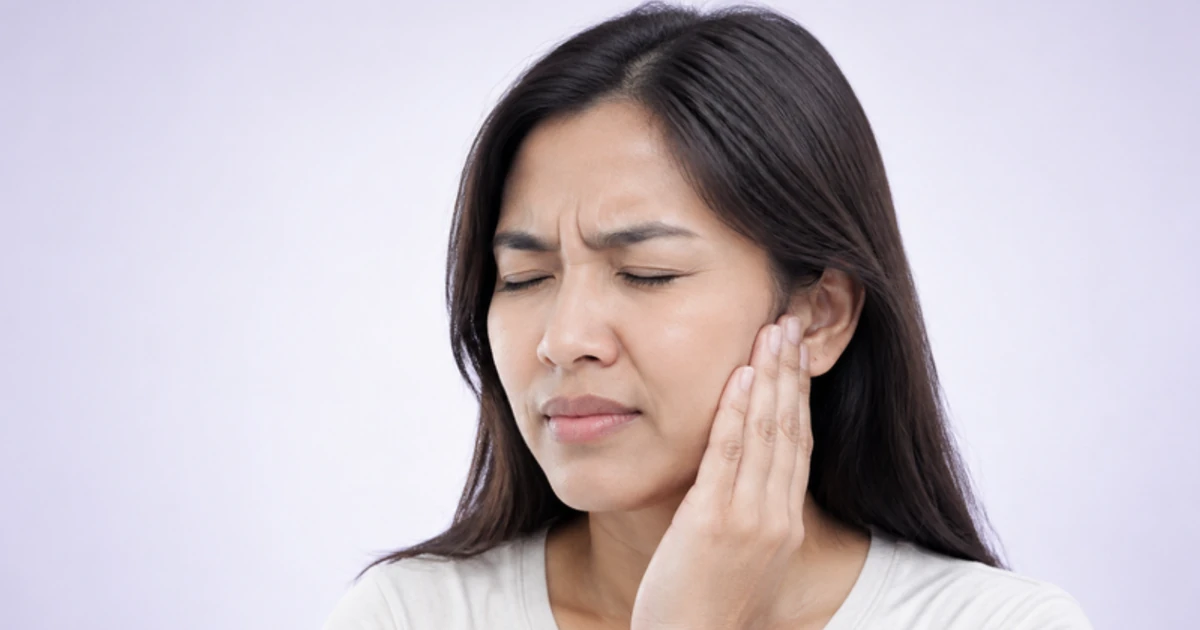
You wake up with a tight jaw. It hurts in front of your ear when you chew, or you can only open your mouth halfway. Many people start to worry that it’s something serious, and wonder whether to see a dentist, a doctor, or just wait for it to pass.
Here’s what a dentist can tell you straight away: most jaw pain comes from chewing muscles that have been working too hard, or from an irritated jaw joint. Both can be looked after. But a few situations shouldn’t wait. This article helps you work out which one you’re in, and who to see first.
Quick summary
- A dull ache in the jaw, tightness when you wake up, or tired muscles when chewing usually comes from the muscles or the joint. Book a dentist when it suits you
- Pain for more than 2 days, opening less than before, or a swollen, painful tooth or gum: see a dentist soon
- Swelling of the face or neck, trouble swallowing or breathing, jaw pain with chest pain or tightness, or a blow to the face: go to the emergency room straight away
- If you’re not sure, take the more cautious option
Self-care, a dentist, or the ER: which do you need?
Start with a quick self-check. There are three levels, depending on who you should see.
Look after it yourself for now, and book a dentist when it suits you if your jaw or temple aches, especially when you wake up or after chewing something hard. You can open your mouth normally or almost normally, there’s no swelling and no fever, the ache is dull, and it eases when you rest your jaw, eat soft food or use a warm compress. You may also be stressed or short on sleep lately. Or you had a wisdom tooth taken out a few days ago and your jaw feels a little tight, which your dentist said was normal.
See a dentist soon, within a few days if your jaw has hurt for more than 2 days, or painkillers aren’t helping. The same goes if you can clearly open less than before, or your jaw has shifted to one side. Or if one tooth hurts or is sensitive when you chew, your gum is swollen or you notice a bad taste, the gum right at the back around a wisdom tooth is red, swollen and sore, or pain after an extraction isn’t getting better after 2-3 days.
Go to the emergency room right away if swelling in your face is spreading down your neck, if there’s swelling under your tongue or near your eye, or if you’re finding it hard to swallow, breathe or speak. The same applies to a high fever with a swollen face, and to jaw pain together with chest pain or tightness, shortness of breath, sweating or nausea. Go too if your jaw is stuck open and won’t close and you’re struggling to breathe or bleeding heavily, or if you’ve been hit in the face and it’s painful and swollen and your teeth don’t meet the way they used to. And if jaw pain when chewing or talking comes with frequent severe headaches, a tender temple or scalp, or double vision, see a doctor urgently.
If you’re not sure which level you’re in, choose the more cautious one.
What causes jaw pain?
Most people assume it’s the joint, but the same symptom can come from several different places.
- Tired chewing muscles from clenching, grinding at night, or often chewing hard food. The pain is usually worst in the morning and eases through the day. Read more in teeth grinding at night
- The jaw joint causes pain in front of the ear, a clicking sound, and trouble opening wide
- Wisdom teeth and inflamed gum around them cause pain at the back of the jaw on the inside, swelling, and difficulty opening. See wisdom teeth and their removal
- Deep decay, an infected tooth or an abscess causes pain in one tooth that spreads into the jaw. Read about a swollen gum with pus
- A cracked tooth or broken molar hurts when you bite. See cracked tooth or broken molar
- The sinuses, the ear or the facial nerves can cause pain in the cheek and jaw. One kind feels like a brief, sharp electric shock on one side only
- A blow to the face or jaw: if your teeth don’t meet the way they did afterwards, the jaw bone or the joint may be involved, and you should see a doctor soon
- Rheumatoid arthritis can affect the jaw joint in some people, but it’s less common than the other causes
wisdom teeth and their removal
A simple clue: if the pain is on one side and you can point to one tooth or one spot on the gum, have the tooth checked first. If both sides hurt when you wake up and your jaw tires when you chew, the muscles or the joint are usually involved.
The jaw joint (TMJ and TMD)
Your jaw joints (the temporomandibular joints, or TMJ) sit just in front of each ear. When the joint or the muscles around it aren’t working well, the problem is called TMD (temporomandibular disorder). Symptoms include pain around the jaw, ear or temple, clicking or grating when you open, headaches around the temples, not being able to open fully, or a jaw that locks.
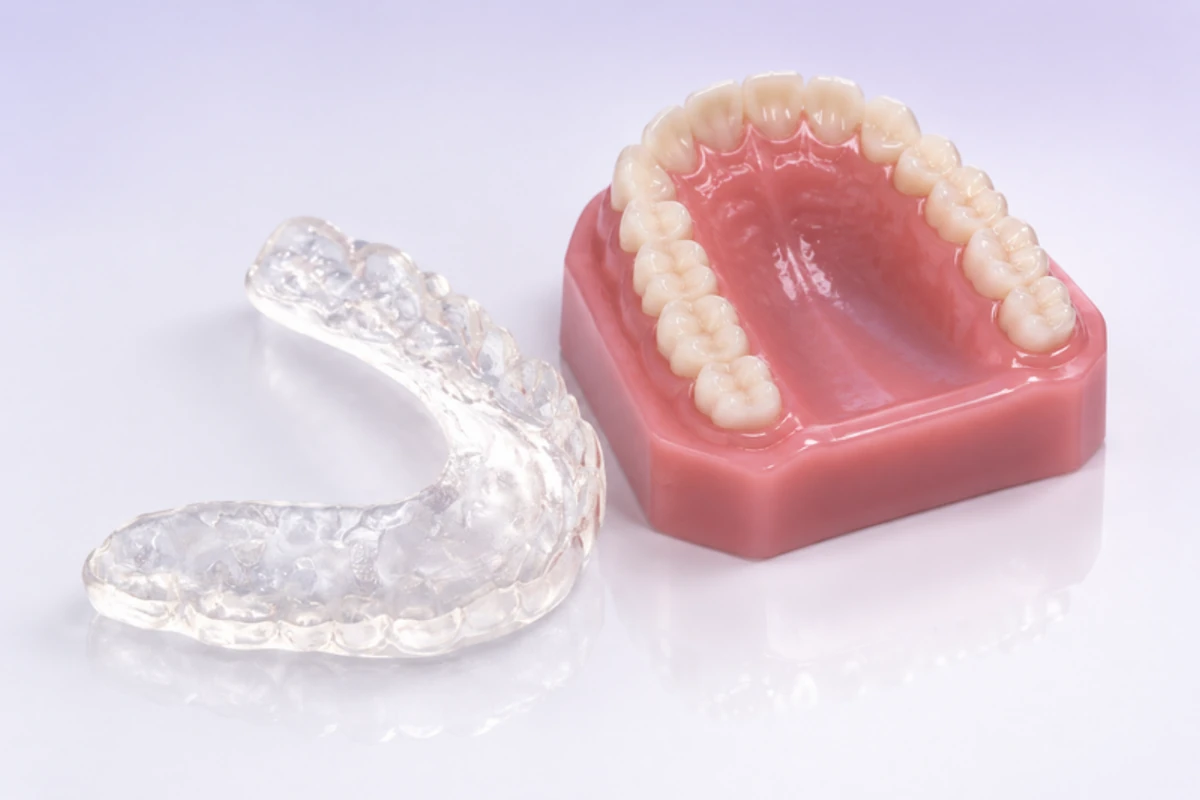
TMD is looked after with several things used together: self-care (soft food, a warm compress, clenching less), jaw exercises, and an occlusal splint (night guard) when it suits you. No single method is right for everyone. For jaw clicking, locking and exercises in detail, read jaw clicking or locking, or see our service page on jaw pain and TMD.
But not every jaw pain is the joint. If your jaw doesn’t shift to one side when you open, there’s no clicking and no pain in front of the ear, but a tooth or gum hurts, get your teeth checked first.
Two kinds of locked jaw
When people say “locked jaw”, they can mean two opposite things, and each is handled differently.
Can’t open your mouth means you can open less than before, or not at all. It comes from muscle tension, inflammation or a stiff joint. See a dentist. If you also have a fever, swelling or trouble swallowing, go to the emergency room.
Jaw stuck open and won’t close means your front teeth can’t meet, you may drool, and your jaw juts forward. The joint may have slipped out of place toward the front. It can happen after a big yawn, an injury or a dental procedure. Don’t try to push your jaw back in yourself. Let a doctor or dentist do it. Afterwards, avoid opening wide for a while, and support your chin with your hand when you yawn or sneeze, as your doctor advises.
Can’t open your mouth after dental treatment
This is common, and it’s usually temporary.
After a wisdom tooth or another tooth is taken out, your jaw may feel tight and sore and not open as far as usual at first. For some people this lasts up to two weeks. In some people, the day after a numbing injection in the lower jaw, the muscle tightens so they can’t open fully. This happens now and then, not to everyone. And if a treatment took a long time with your mouth held open, your jaw may simply be tired. It usually gets better gradually on its own.
What you can do: follow the instructions from the dentist who treated you (care after tooth extraction or wisdom tooth surgery), eat soft food, use a gentle warm compress as your dentist advises, and don’t force your mouth wide open to test it.
care after tooth extraction or wisdom tooth surgery
Contact the dentist who treated you if bleeding won’t stop, if pain and swelling are getting worse despite painkillers, if there’s pain with a bad taste or a fever, or if you feel more unwell.
Jaw pain and the heart
Sometimes jaw pain is part of a heart attack. The signs of a heart attack are a squeezing pain or tightness in the chest that can spread to the arm, neck and jaw, together with shortness of breath, nausea or sweating.
If you have jaw pain along with these symptoms, go to the emergency room right away. Don’t stop at a dentist first, and don’t drive yourself. Jaw pain on its own that is clearly linked to a tooth, to chewing or to opening your mouth is usually not about the heart. But if you already have heart disease and you’re unsure, check with your doctor.
There’s no need to be afraid every time your jaw hurts. Just know that jaw pain together with heart symptoms can’t wait.
How we examine you at the clinic
At Kitcha Dental Clinic, the dentist looks at your teeth, muscles and jaw joint together. We start by asking how long it has hurt, where, when you last had dental work or an injury, and whether you grind your teeth or snore. Then we examine the joint and chewing muscles: how wide and how smoothly you open, whether there’s any noise, and where it hurts when pressed. Then we check your teeth and gums to rule out decay, a cracked tooth, an infected tooth or a wisdom tooth. If needed, we take an X-ray, only as much as necessary. If you’re pregnant, please tell your dentist.
Once the cause is clear, your dentist explains what they found, the options likely to help, and what you can do yourself. If the problem lies outside the teeth and jaw, such as the ear, sinuses or nerves, your dentist will tell you and suggest seeing a doctor. When it’s the muscles and joint, care usually works well when several things are done together: self-care, jaw exercises, clenching less, and an occlusal splint when it suits you. See night guards and snoring mouthpieces and teeth grinding and night guard treatment.
night guards and snoring mouthpieces
teeth grinding and night guard treatment
For fees, see the jaw care category on the prices page. Your dentist always tells you the cost before starting.
Getting ready for your visit
Before you come, try to jot down the following. It helps your dentist focus the exam.
- When the pain started, and when it’s worst (when you wake up, when you chew, when you open your mouth)
- One side or both, exactly where, and whether you hear clicking
- When you last had a filling, an extraction, or a knock to the face
- Whether you grind or clench your teeth, or snore, especially when stressed
- The medicines you take and any health conditions
Frequently asked questions about jaw pain
For jaw pain, should I see a dentist or a general doctor?
If the pain is linked to your teeth, gums, chewing or opening your mouth, start with a dentist. If you have heart symptoms, swelling in your neck, trouble breathing, or a severe headache along with jaw pain, go to the emergency room or see a doctor first.
Can a locked jaw that won’t open get better on its own?
If it comes from muscle tension after dental treatment, it usually improves gradually. But if it doesn’t improve, or you have a fever, swelling or trouble swallowing, see a doctor.
What causes jaw pain on one side only?
Several things: one particular tooth, a wisdom tooth, the gum, the muscle, or the joint on that side. An exam will show whether it’s the tooth or the jaw.
Could morning jaw pain be from grinding my teeth at night?
It could, especially if the pain is worst when you wake up and eases through the day. Ask your dentist to check your teeth for signs of wear.
Can jaw pain really be a sign of a heart problem?
It can, and then it comes with chest pain or tightness, shortness of breath, sweating or nausea. If that’s the case, go to the emergency room right away.
Can an occlusal splint help jaw pain?
It helps some people, especially those who clench or grind, but it works better together with self-care and jaw exercises. Your dentist will tell you whether it suits you.
My jaw keeps slipping out of place. What should I do?
Don’t try to push it back in yourself. Let a doctor or dentist do it, and talk with your dentist about how to stop it happening again.
Will I need surgery for TMJ or jaw pain?
Most people don’t. Care without surgery helps most people. If your dentist thinks jaw surgery is needed, we refer you to a hospital and explain everything to you.
Summary
Most jaw pain comes from the muscles or the joint, and can be looked after. If it lasts more than 2 days, you can open less than before, or there’s a problem with a tooth or gum, see a dentist soon. But if there’s swelling of the face or neck, trouble breathing or swallowing, jaw pain with chest pain or tightness, or a blow to the face, go to the emergency room right away.
Not sure which group you’re in? Come and let a dentist take a look. You can book an appointment at Kitcha Dental Clinic, call +66 53 200 201, message us on LINE @kitchaclinic or WhatsApp +66 91 797 7888. See our service information at bite and jaw care.
The clinic is open every day, 09:00-20:00, except 31 December, 1 January and 13-15 April. Walk-ins are welcome, but our dentists see patients with appointments first, so you may have to wait a while. Booking ahead gives you a fixed time.
Sources for this article
- NIDCR (USA), information on TMD, and NHS (UK) on TMD
- MedlinePlus: Temporomandibular disorders, and Jaw – broken or dislocated
- Faculty of Medicine Siriraj Hospital, on diseases of the jaw joint and the muscles around it
- Schiffman et al., DC/TMD, 2014
- NHS: heart attack, toothache, sinusitis, facial nerve pain (trigeminal neuralgia), temporal arteritis, wisdom tooth removal
- Reviews of complications after wisdom tooth surgery (Bouloux, 2007) and of inflamed gum around wisdom teeth (Schmidt, 2021)
- The clinic’s own experience