

You bite into something and feel a sudden, sharp twinge from a back tooth, often just as you let go. Then it is fine for days, until it happens again. Cold drinks may sting on the same side. Or you bit on something hard and now a piece of a molar has broken off. A cracked or broken tooth can be confusing, because it often does not hurt all the time and it can be hard to tell which tooth it is.
The reassuring part is that most cracked teeth can be kept and work well for years when they are found and protected in time. A large practice-based study in the US followed close to 3,000 cracked back teeth for three years: more than 98 percent were still in the mouth, only about 3 percent broke, and many cracks that caused no symptoms simply needed watching. Not every crack needs a drill, but the ones that hurt when you bite usually do need attention.
This guide explains the warning signs, the five types of crack and what each means, why molars crack, how dentists find a crack that X-rays often miss, treatment step by step from the smallest crack to the deepest, what to do today if a tooth has broken, how to protect your other teeth, and a short note on worn necks of teeth.
In short: a cracked tooth often hurts briefly when you bite or let go, and may be sensitive to cold. Cracks are found by a careful exam, bite and cold tests, light and magnification, because X-rays often do not show them. Treatment depends on depth: from simply monitoring, to bonding, an onlay or a crown, root canal treatment and a crown if the nerve is affected, and removal only when the crack splits the tooth or runs deep into the root.
Signs of a cracked tooth: a quick check
The American Association of Endodontists describes the typical pattern: pain when chewing that comes and goes, especially when you release your bite, and pain with hot or cold. Use these lists to decide how soon to book.
Book a check soon
- A short, sharp pain from one back tooth when biting, especially as you let go.
- Brief sensitivity to cold on the same tooth that fades quickly.
- A fine line you can see on a tooth, or around an old large filling, with discomfort when chewing.
See a dentist within a day or two
- A piece of a tooth or filling has broken off, or a sharp edge is catching your tongue.
- Pain on biting that is getting more frequent, or lingering pain after hot or cold.
- A tooth that feels as if it moves in two parts when you bite.
Same-day care
- Pain that wakes you at night or does not settle.
- Swelling of the gum or face, or a bad taste from the gum near the tooth.
- A tooth broken by a blow to the face, especially with other injuries.
Five types of tooth crack, and what each means
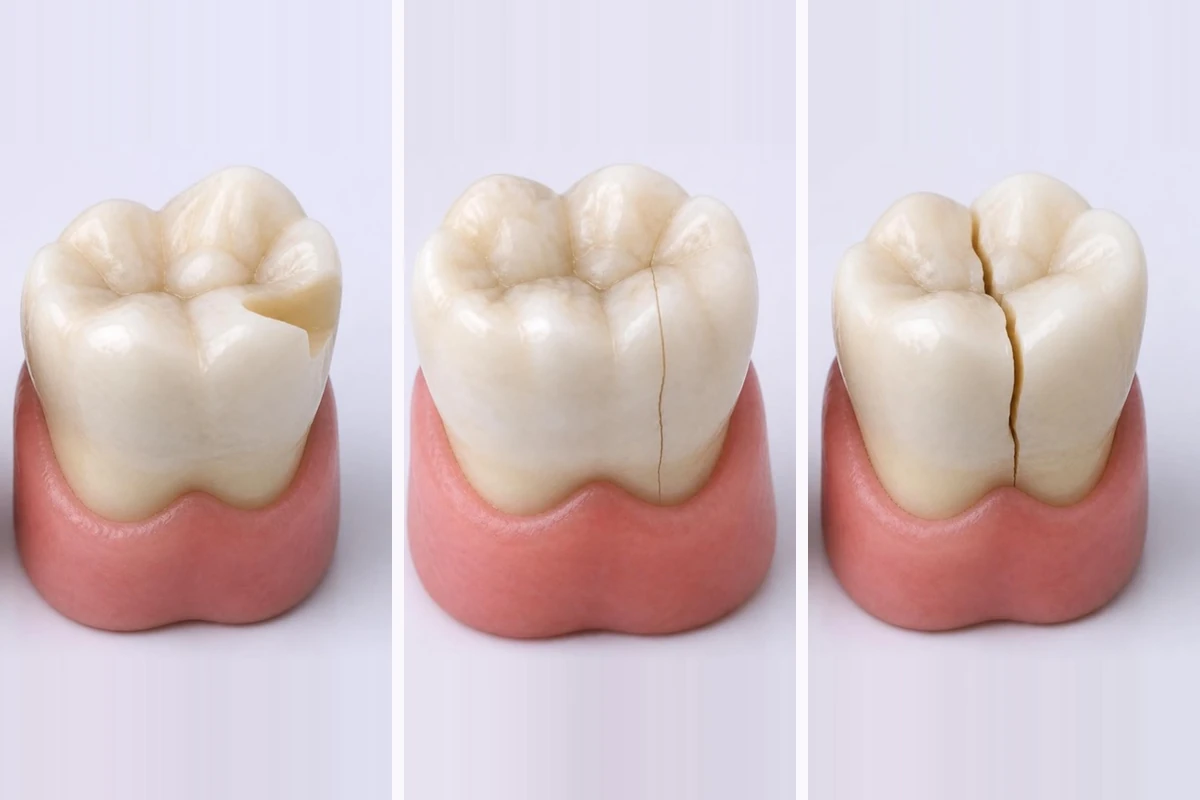
Not all cracks are the same. The AAE groups them into five types, from harmless surface lines to cracks that split a tooth. The type, and how deep the crack runs, largely decides the treatment and how well the tooth does.
| Crack type | Description | Usual approach |
|---|---|---|
| 1 Craze lines | Tiny lines in the outer enamel only. Very common in adults and usually cause no symptoms. | No treatment needed. Polishing or bonding only if you are bothered by the look. |
| 2 Fractured cusp | A pointed part of the chewing surface breaks off, often next to a large filling. Rarely affects the nerve. | A new filling, an onlay or a crown to cover and protect the cusp. |
| 3 Cracked tooth | A crack runs from the chewing surface down toward the root. The tooth is still in one piece but the crack can spread. | Usually a crown. Root canal treatment first if the crack reaches the nerve. Removal if it runs below the gum into the root. |
| 4 Split tooth | A long-standing crack has divided the tooth into separate parts. | The whole tooth usually cannot be kept. Sometimes part of it can be saved. |
| 5 Vertical root fracture | A crack that starts in the root, often with few symptoms until the gum or bone becomes infected. | Often removal. In some cases surgery removes the cracked root. |
Why teeth crack
Back teeth take most of the chewing force, and a crack usually builds up over time rather than appearing in one bite. Cracks are more common after about age 40, and the lower second molar is one of the teeth most often affected. A 2021 review lists the main risk factors below.
| Cause | Why it raises the risk | What to do |
|---|---|---|
| Grinding or clenching | Repeated force, many times stronger than normal chewing, night after night. | Ask about a custom night guard. |
| Large fillings | The remaining walls of the tooth become thin and can flex and crack. | Ask whether an onlay or crown would protect the tooth better. |
| Root canal treated back teeth | Treated teeth can become more brittle over time. | A crown or onlay after treatment, as advised. |
| Biting hard things | Ice, hard candy, bones, nut shells, unpopped popcorn or pens can overload one cusp. | Let ice melt, and keep hard foods for the knife, not the teeth. |
| Hot and cold together | Repeated hot and cold expands and shrinks the tooth surface. | Avoid crunching ice straight after hot drinks. |
| Contact sports | A blow to the jaw can crack or break teeth. | Wear a sports mouthguard. |
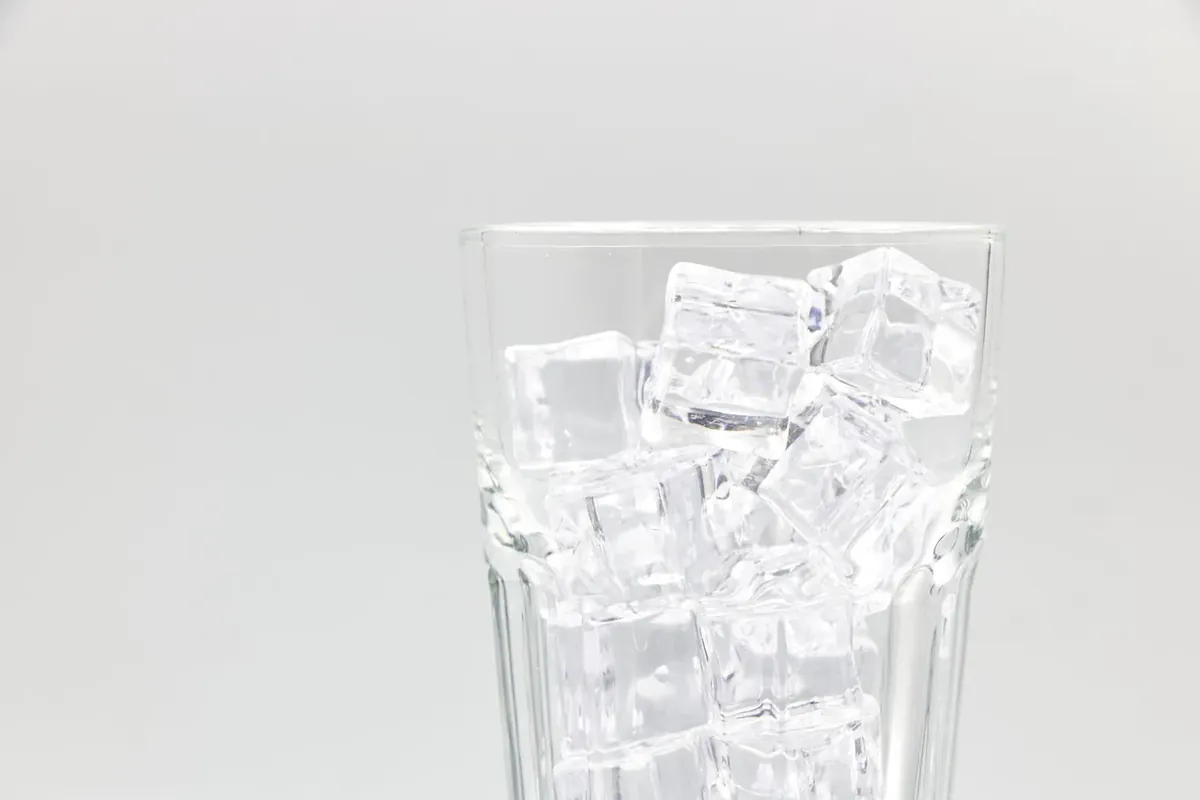
Crunching ice is a common habit in hot weather. Both the AAE and an article from King Chulalongkorn Memorial Hospital list hard items such as ice among the causes of cracked teeth. Letting ice melt in the drink, or choosing crushed ice and sipping, protects your molars without giving up a cold drink.
Why a cracked tooth hurts when you let go
When you bite, the two sides of a crack are pushed slightly apart. When you release, they snap back together. This small movement irritates the pulp, the soft tissue inside the tooth that contains the nerve, which is why the pain is sharp, short and often felt on release. Fluid movement inside the crack can also make the tooth sensitive to cold.
Symptoms are common but not universal. In the US Cracked Tooth Registry, about half of the cracked teeth that were examined caused symptoms, most often sensitivity to cold, then pain when biting, then pain on its own. Pain on biting was one of the strongest reasons dentists recommended treatment.
A cracked tooth is different from a cavity. Decay usually shows as a dark spot or hole and aches with sweets, while a crack is often invisible and hurts with pressure. They can happen together, and the registry found that decay in a cracked tooth was the strongest reason for treatment.
Sensitive teeth: causes and care
How dentists find a crack
Cracks are often too fine to see on an X-ray, especially when they run in the same direction as the X-ray beam. That is why diagnosis relies on several simple tests together. A manual from the Faculty of Dentistry, Prince of Songkla University, and a 2021 review describe the usual steps.
- Your story: which side, what kind of food, on biting or on release, cold or not.
- A close look at the teeth, old fillings and wear, and tapping the teeth.
- A bite test: you bite on a small plastic stick placed on one cusp at a time to find the exact cusp that hurts.
- A cold test to check how the nerve responds.
- Shining a bright light through the tooth. A crack blocks the light, while a harmless craze line lets it pass.
- Magnification, sometimes with a dental microscope, and checking under an old filling once it is removed.
- Measuring the gum next to the crack. A deep, narrow pocket can mean the crack has reached the root.
- X-rays, and a 3D X-ray (CBCT) of one or two teeth when needed, mainly to check the bone and root.
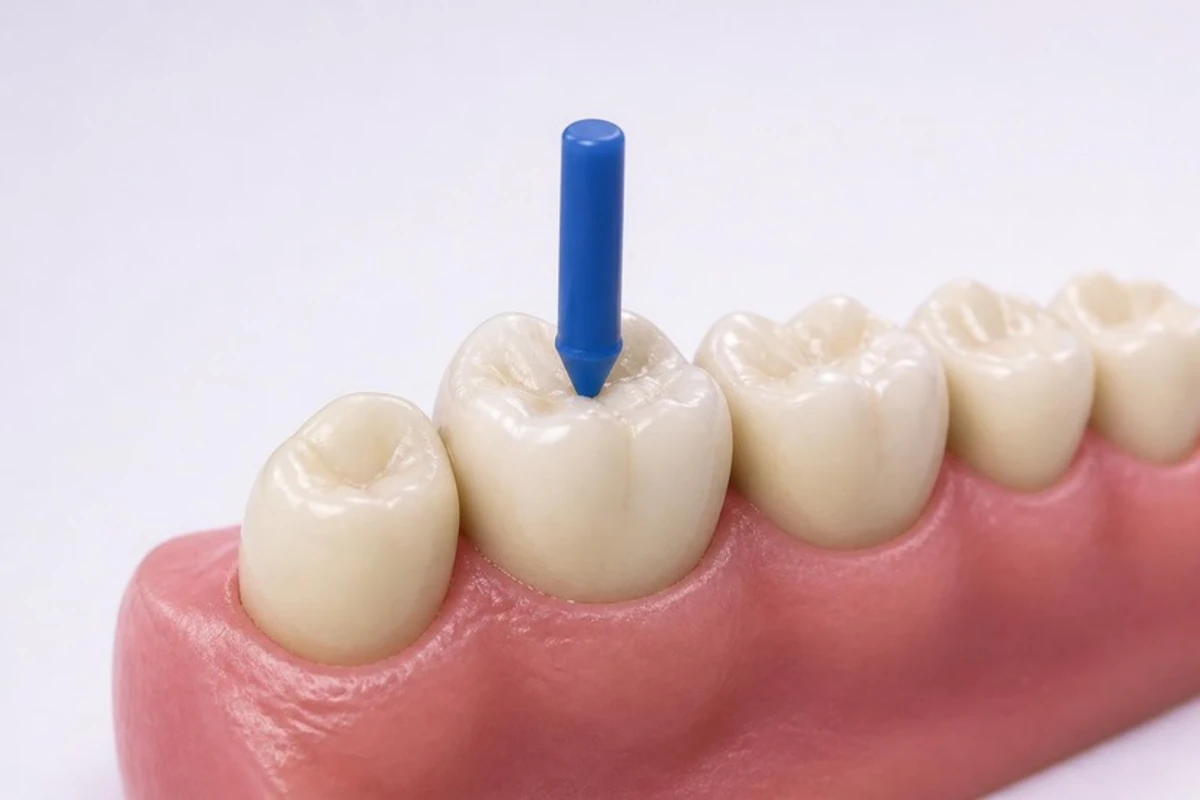
Even with all these tests, a crack is sometimes confirmed only during treatment. Your dentist may suggest protecting the tooth first, with a temporary crown or a band, and watching how the symptoms change, which the Prince of Songkla manual describes for a period of at least three months.
Microscope root canal treatment
Treatment, from the smallest crack to the deepest
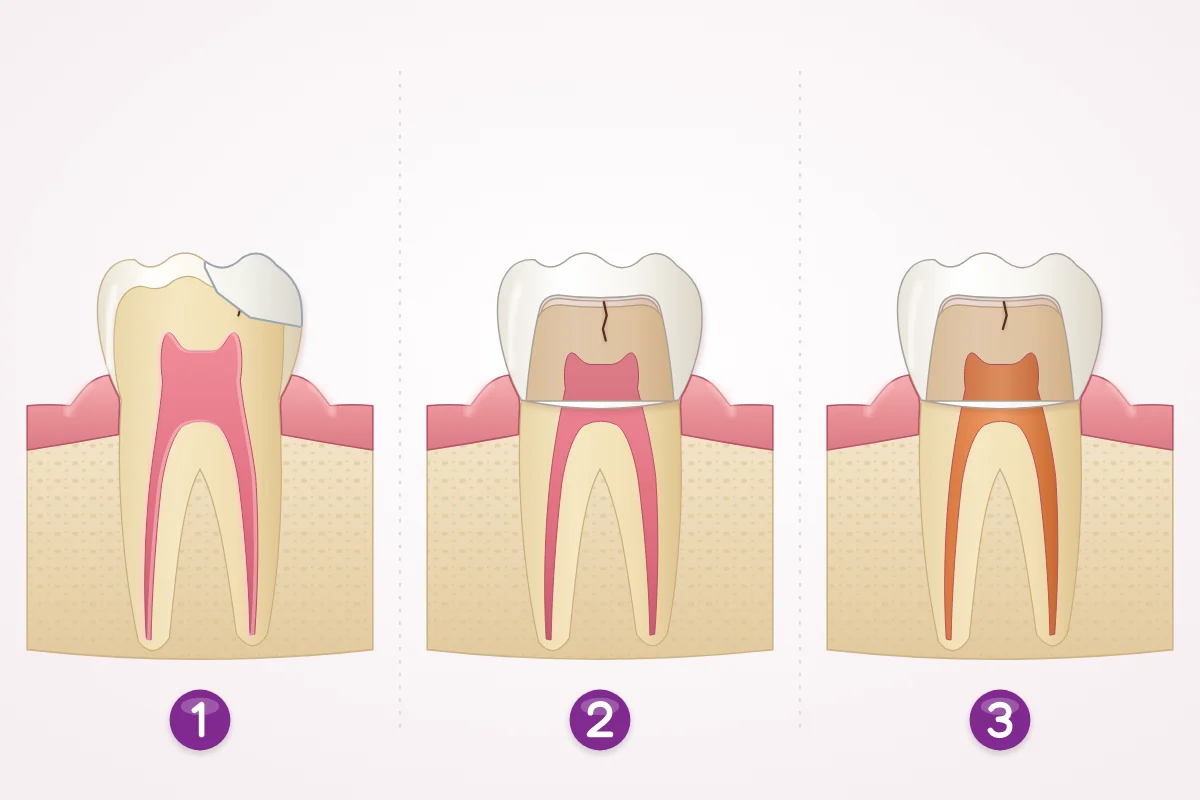
The aim is to hold the tooth together so the crack stops flexing, relieve the pain and keep the tooth. A crack does not heal like a broken bone, but covering the cusps spreads the biting force and protects the tooth.
| Situation | Treatment usually used | Good to know |
|---|---|---|
| Craze lines, or a crack with no symptoms | Monitor at check-ups. Night guard if you grind. | In the registry, most teeth that dentists chose to watch were still being watched after three years. |
| A small chip or a shallow crack | Bonding or a tooth-colored filling. | Often done in one visit. |
| A fractured cusp, or a crack under one cusp | An onlay that covers the cusp, or a crown. | A study of painful cracked teeth found fillings that covered the cusps did well over seven years. |
| A crack across the tooth, nerve healthy | A crown, sometimes after a temporary crown or band. | About 1 in 5 crowned cracked teeth later needed root canal treatment in one study. |
| Crack reaching the nerve | Root canal treatment, then a crown. | Outcomes are better when the gum next to the crack is not deeply pocketed. |
| Split tooth or crack deep in the root | Usually removal, then a plan to replace the tooth. | Sometimes part of a split back tooth can be saved. |
What the research shows
In the US Cracked Tooth Registry, dentists recommended treatment for about a third of cracked teeth, almost always a restoration such as a crown. Among people who had pain on biting or pain on its own, 92 to 99 percent no longer had that pain at follow-up. For cracked teeth that need root canal treatment, a review of seven studies found that 88 percent were still in place after one year, and a large Korean study found 90 percent after two years. In both, a deep gum pocket next to the crack lowered the chances, which is one more reason to have a painful tooth checked early.
A Thai-led study published in 2026 of cracked back teeth treated with root canal treatment found that more than 99 percent were still in place at two years, and that a night guard for people who grind and a full crown were linked with better results than an onlay or a filling alone.
Filling, inlay, onlay or crown: what is the difference?
If a tooth cracks or breaks today
- Rinse gently with warm water.
- Keep any broken piece of tooth or filling and bring it with you. The NHS suggests keeping a piece of tooth in milk or saliva.
- A cold pack on the outside of the cheek can ease swelling.
- Chew on the other side, and avoid very hot, cold or hard food.
- If you need pain relief, use a pain reliever by mouth as the label or pharmacist advises. The AAE advises against putting pain relief medicine directly on the gum.
- Book a dental visit, and mention if a sharp edge is catching your tongue so the team can find a suitable time.
Emergency dentist in Chiang Mai
Protecting your teeth from cracks
- Let ice melt rather than crunching it, and avoid biting hard candy, bones, nut shells and pens.
- If you grind or clench, or wake with a tired jaw, ask about a custom night guard. It spreads the force across all your teeth.
- Back teeth with large fillings or root canal treatment often do better with an onlay or crown. Ask at your next check-up.
- Wear a sports mouthguard for contact sports.
- Keep regular check-ups, so a crack can be found while it is small.
Teeth grinding and night guards
Worn necks of teeth: are they related to cracks?
A V-shaped notch near the gum line is called a worn neck of the tooth, or a non-carious cervical lesion. The Faculty of Dentistry at Naresuan University explains that it usually has several causes together: brushing hard with a stiff brush or a rough toothpaste, acid from food and drink, and a heavy or uneven bite. Reviews note that the idea of bite force flexing the tooth neck, called abfraction, comes mostly from laboratory models, and clinical evidence is still limited.
A small worn neck without symptoms often needs nothing more than a soft brush and gentle brushing. Sensitivity can be eased with a fluoride or sensitivity toothpaste, and a deeper notch can be filled with tooth-colored material. If you grind your teeth, the dentist looks at cracks and worn necks together.
Common myths and the facts
| Myth | Fact |
|---|---|
| If the X-ray is clear, the tooth cannot be cracked. | Most cracks do not show on X-rays. Bite tests, light and magnification find them. |
| A crack will heal on its own. | Teeth do not heal like bone. A crack can be held together and protected, but it does not close by itself. |
| Every cracked tooth needs root canal treatment. | Most are treated with a crown or onlay. Root canal treatment is needed when the crack affects the nerve. |
| A cracked tooth always has to come out. | In a large US study, more than 98 percent of cracked teeth were still in place after three years. |
| Every line on a tooth is a dangerous crack. | Fine craze lines in the enamel are very common in adults and usually need no treatment. |
At the clinic, step by step
- The dentist asks about your symptoms, examines the teeth, and tests biting, tapping and cold.
- Digital X-rays, and a 3D X-ray of one or two teeth when a crack is suspected and more detail is needed.
- If root canal treatment is needed, a dental microscope with its magnification and light can help show some cracks that are hard to see, and a rubber dam is used in every case.
- The dentist explains the findings and the options, such as an onlay or a crown, and the costs before starting.
- Crowns are usually two visits, with a temporary crown in between. Crowns are made by an ISO-certified partner lab or with CAD/CAM, and are usually fitted 3 to 5 days after the tooth is prepared.
- Crowns, onlays and inlays come with a one-year warranty on the work, subject to conditions. If you grind your teeth, the dentist may suggest a night guard to protect the new work.
Root canal treatment in Chiang Mai
If this sounds like you: what to do
These are example situations, not patient stories, to help you find the next step that fits.
- A lower molar twinges when you bite on rice grains and let go, but cold is fine: book a check soon and mention the release pain. A bite test usually finds the cusp.
- A corner of a molar with a big old filling broke off while eating, and it does not hurt: keep the piece, avoid chewing on that side, and book within a day or two. An onlay or crown is often suggested.
- You crunch ice every afternoon and now have short pains on one side: let ice melt from now on, and have the tooth checked.
- Your partner hears you grind at night and you can see fine lines on your front teeth: these may be craze lines. Ask about a night guard at your next check-up.
- A root canal treated molar without a crown now hurts when you bite: book soon. A crown is usually recommended for treated back teeth.
- A tooth throbs at night and the gum beside it is swollen: seek same-day care, as the crack may have reached the nerve.
Frequently asked questions about cracked teeth
Can a cracked tooth heal on its own?
No. Teeth do not heal like bone, but symptoms can settle and many small cracks stay stable. A crack that hurts when you bite should be protected with an onlay or crown so it does not spread.
Will a cracked tooth show on an X-ray?
Often not. Cracks are usually too fine, and in one large study they were visible on X-rays in only a few percent of cases. Dentists rely on bite and cold tests, light and magnification, and use X-rays mainly to check the root and bone.
Why does it hurt when I let go after biting?
Biting pushes the two sides of the crack apart, and releasing lets them snap back. This movement irritates the nerve inside the tooth, which gives the typical short, sharp pain on release.
Does a cracked tooth always need root canal treatment?
No. Most cracked teeth that need treatment are protected with a crown or onlay. Root canal treatment is needed when the crack has affected the nerve, for example with lingering pain or pain at night. In one study, about 1 in 5 crowned cracked teeth needed root canal treatment later.
My molar broke in half. Can it be saved?
It depends on how far the break runs. If it stops above the gum, the tooth can often be rebuilt with a crown, sometimes after root canal treatment. If it splits the tooth down into the root, the tooth usually has to come out, although part of a back tooth can sometimes be kept. Keep any pieces and see a dentist soon.
Is it a cracked tooth or a cavity?
A cavity is a soft, often dark area of decay that tends to ache with sweets. A crack is a line through the tooth that tends to hurt with biting pressure. They can happen together, and only an examination can tell.
Does a molar treated with root canal treatment need a crown?
Usually yes. Back teeth take strong chewing forces and can become more brittle after treatment, so a crown or onlay is usually recommended to help protect them from cracking.
What causes worn necks of teeth, and do they need filling?
Usually a mix of hard brushing, acid and bite forces. Small worn areas without symptoms often need only gentler brushing with a soft brush. Sensitive or deeper notches can be eased with sensitivity toothpaste or filled with tooth-colored material.
Summary
A cracked tooth is common, often hard to see, and usually treatable when it is found early.
- A short, sharp pain when you bite or let go, and brief cold sensitivity, are the classic signs.
- There are five types of crack, from harmless craze lines to split teeth, and depth decides the treatment.
- X-rays often miss cracks, so bite tests, light and magnification matter.
- Most cracked teeth that need treatment are kept with an onlay or crown, with root canal treatment only when the nerve is affected.
- Let ice melt, protect grinding teeth with a night guard, and cover large fillings and treated molars when advised.
References
American Association of Endodontists: Cracked teeth
NHS (UK): Chipped, broken or cracked tooth
King Chulalongkorn Memorial Hospital: Cracked teeth (Thai)
Faculty of Dentistry, Naresuan University: Worn necks of teeth (PDF, Thai)
Ferracane JL et al. Observable characteristics coincident with internal cracks in teeth. JADA, 2018
Michael JA et al. Abfraction: separating fact from fiction. Aust Dent J, 2009