
You are pregnant, your gums have started to bleed when you brush, and a tooth that was fine before now feels sensitive. Then the worry starts: is it safe to see a dentist now, should you wait until after the baby is born, and could anything you do affect your baby?
Here is what major health bodies say. The American College of Obstetricians and Gynecologists states that women should be told about the safety and importance of oral health care during pregnancy. The US Centers for Disease Control and Prevention states that regular and emergency dental care is safe at any stage of pregnancy. So the short answer is yes, and keeping your mouth healthy is part of looking after yourself during these months.
This article explains why pregnancy affects your gums and teeth, how to care for them at home, what to do about morning sickness, what to tell your dentist, the signs to have checked, and the questions expectant parents ask most. At Kitcha Dental Clinic, the guidance is simple: tell your dentist that you are pregnant, and your dentist plans your care.
In short: health bodies such as ACOG and the CDC consider dental care safe during pregnancy. Gums often become more sensitive and bleed more because of hormones, so gentle, thorough cleaning matters. After vomiting, rinse with water and wait before brushing. Tell your dentist that you are pregnant, and your dentist plans your care.
Your mouth in pregnancy: a quick checklist
Common, and usually manageable at home
- Gums bleed a little when you brush or floss.
- Gums look a little puffier or redder than usual.
- Brushing the back teeth triggers nausea.
Book a dental check
- Bleeding has not settled after a couple of weeks of careful cleaning.
- A tooth is sensitive, or food keeps getting stuck in one place.
- A soft, red lump has appeared on the gum.
- You have not had a dental check for a long time.
Contact a dentist soon
- Toothache, swelling of the gum or face, or a bad taste with pain.
- Swelling with fever: seek care promptly and tell the team that you are pregnant.
Why pregnancy affects your gums and teeth
Pregnancy hormones make the gums react more strongly to plaque. An NHS patient leaflet explains that hormonal changes make the gums more vulnerable to plaque, resulting in inflamed and bleeding gums. Thailand Department of Health adds that early gum disease often has no obvious symptoms, so many people do not notice it until it has progressed.
How common is it? A review of 20 studies found bleeding when the gums were gently probed in about two thirds of pregnant women, and signs of gum disease that increased as pregnancy progressed. The CDC notes that pregnant women are more likely to develop gingivitis, and that changing hormones can make it worse.
| Change | Reason | What helps |
|---|---|---|
| Bleeding, puffy gums | Hormones make gums react more to plaque | Gentle brushing at the gum line and daily cleaning between teeth |
| A soft red lump on the gum | A harmless growth of small blood vessels, linked to pregnancy hormones | Have it checked. Pregnancy-related lumps usually disappear after delivery |
| Enamel softened by stomach acid | Vomiting with morning sickness | Rinse with water, do not brush straight away |
| More decay risk | Frequent snacks, sweet drinks and cravings | Keep sweet foods to mealtimes and drink water between meals |
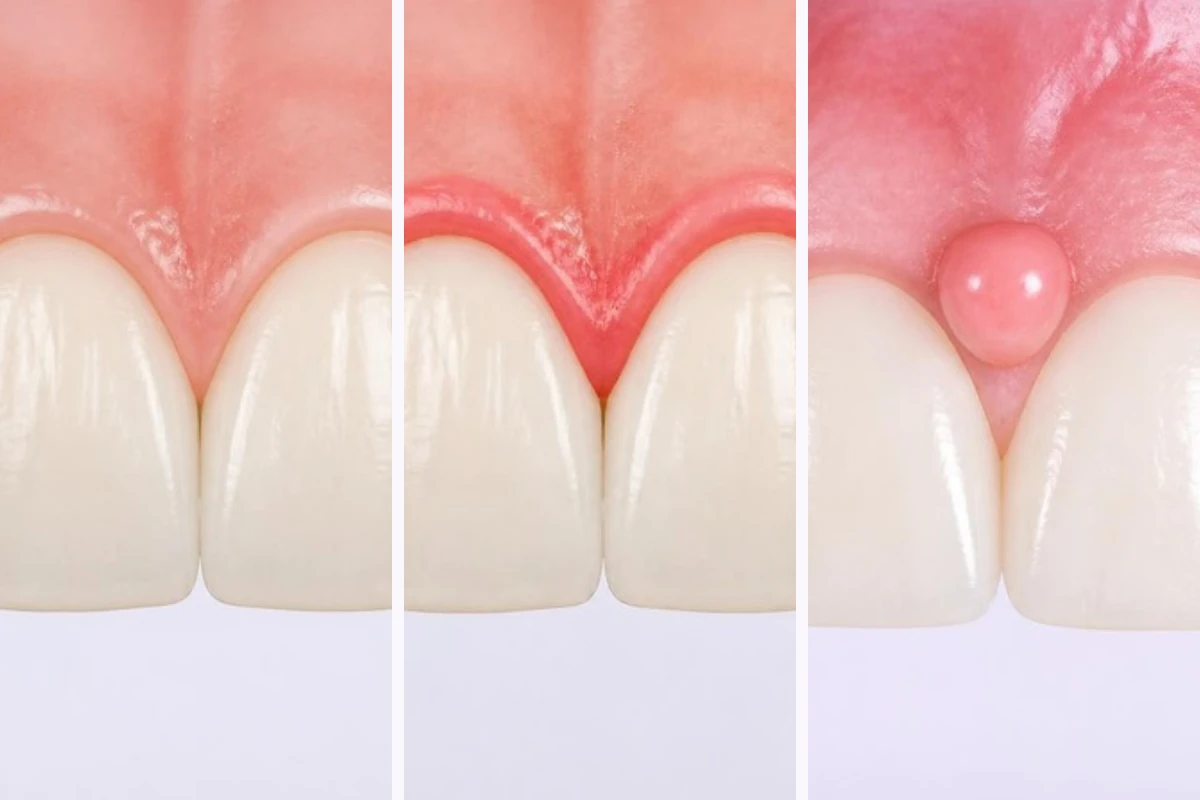
The soft red lump has a name: pyogenic granuloma, sometimes called a pregnancy tumor, although it is not cancer. The American Dental Association notes that these growths usually appear in the second trimester and often look red and raspberry-like. Cleveland Clinic describes it as a noncancerous growth of small blood vessels that bleeds easily and is common in pregnancy, and notes that lumps linked to pregnancy usually disappear after delivery. Any new lump in the mouth is still worth showing to a dentist.
A home routine for your teeth and gums in pregnancy
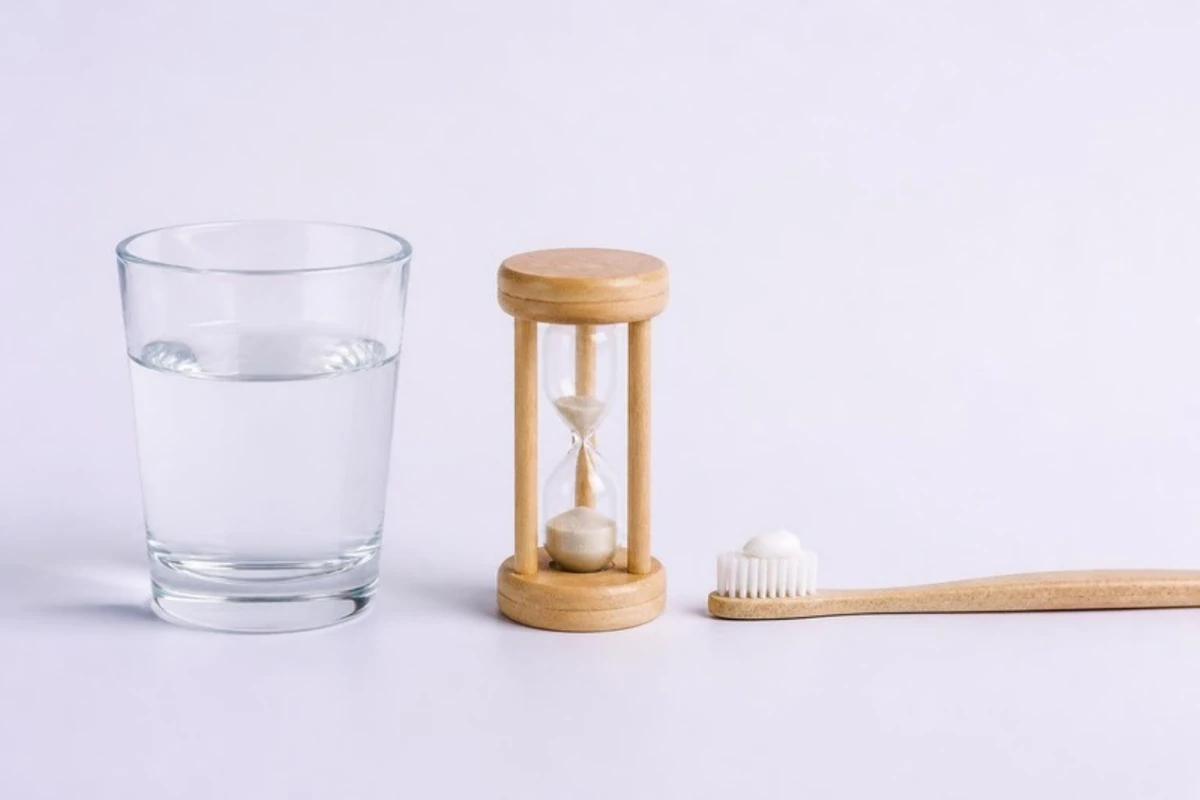
Thailand Department of Health recommends the 2-2-2 routine for pregnant women: brush twice a day, after breakfast and before bed, for 2 minutes, with fluoride toothpaste, avoid food and drinks for at least 2 hours after brushing, and floss at least once a day.
- Use a soft brush and angle it toward the gum line, where plaque collects and gums bleed.
- Keep brushing even when gums bleed. Bleeding usually settles as plaque is removed.
- Clean between your teeth every day with floss or an interdental brush.
- Spit out the toothpaste and do not rinse, so the fluoride keeps working, as the NHS leaflet advises.
- If brushing the back teeth makes you gag, use a small-headed brush, brush slowly, and try a mild-tasting toothpaste.
- Keep sweet snacks and drinks to mealtimes, and drink water between meals. Even no-added-sugar drinks can still cause decay, the NHS leaflet notes.
- If you smoke, pregnancy is a good time to stop. It helps your gums and your baby.
Morning sickness and your teeth
Stomach acid can soften the surface of the teeth. Brushing straight after vomiting can wear away the softened enamel. The NHS leaflet advises rinsing your mouth with plain water each time after being sick, and not brushing immediately afterward.
The good news is that morning sickness usually eases with time. The NHS says it usually clears up by weeks 16 to 20 of pregnancy, and suggests sipping fluids such as water little and often, and eating small, frequent meals of plain foods.
| When | What to do | Why |
|---|---|---|
| Right after vomiting | Rinse with plain water | Washes acid off the teeth |
| For a while afterward | Wait before brushing | Enamel is softened and can wear |
| Through the day | Sip water, choose plain snacks to ease nausea | Fewer sugary snacks while managing nausea |
| Twice a day | Brush with fluoride toothpaste | Fluoride helps harden enamel |
What to tell your dentist

Tell your dentist that you are pregnant, and your dentist plans your care.
The American Dental Association advises telling your dental team right away, even before you are completely sure, with how far along you are and your due date, because this helps them plan appropriate care. It also helps to have this information ready.
- How many weeks pregnant you are, and your due date.
- Any pregnancy complications, or advice your obstetrician has given you.
- Every medicine and supplement you take, including vitamins.
- Any allergies, and health conditions such as diabetes or high blood pressure.
- What you have noticed in your mouth, such as bleeding gums, sensitivity or a lump.
- If you feel more comfortable sitting more upright or need short breaks, say so.
An NHS leaflet notes that some fillings and X-rays may be delayed until after the baby is born. Your dentist decides what is right for you, so the most useful step is simply to tell your dentist that you are pregnant.
Dental X-rays during pregnancy
Yes. A dental X-ray is not off-limits during pregnancy. We take one only when the image helps your dentist find the problem or treat it.
How much radiation is it?
Very little. One dental X-ray gives about the same radiation as one day of the natural background radiation we all receive in everyday life. The beam is aimed at the tooth, not at your tummy.
When we take an X-ray
- Toothache, or pain when biting.
- Swelling of the gum or face, or a suspected infection.
- A knock, a broken tooth or another injury.
Check-up X-rays when you have no symptoms can wait until after the birth.
Treating an infected tooth early matters more than avoiding the X-ray. The American Dental Association and the American College of Obstetricians and Gynecologists agree that urgent treatment such as an extraction, root canal treatment or a filling can be done during pregnancy, and that putting it off can make the problem more complicated.
How we keep the dose low
If radiation worries you: at our clinic, X-rays inside the mouth are digital, taken with phosphor plates and sensors that help lower the dose compared with film. Our Planmeca ProMax CBCT has an Ultra Low Dose mode, your dentist chooses the mode that suits each case, and X-rays are taken only when they are needed.
For expectant mothers, we aim the beam only at the area we need to see, and we put a thyroid collar and a radiation-protection apron on you every time, as extra care for your peace of mind.
Dental X-ray radiation: how much is it, and how we keep it low
What you can do: tell your dentist that you are pregnant, or might be, and how many weeks. Your dentist plans your care.
Common myths about dental care in pregnancy
| Myth | Fact |
|---|---|
| You cannot see a dentist while pregnant. | The CDC states that regular and emergency dental care is safe at any stage of pregnancy. |
| Bleeding gums in pregnancy are normal, so they can be ignored. | They are common, but they are a sign of inflamed gums. Gentle, thorough cleaning helps, and a check is worthwhile if they do not settle. |
| Brushing right after vomiting protects the teeth. | Rinse with water first. Brushing straight away can wear softened enamel. |
| Dental X-rays are forbidden during pregnancy. | Not forbidden. Your dentist takes one when it helps with diagnosis or treatment. |
| Treating gum disease in pregnancy is proven to prevent premature birth. | A Cochrane review found it is not clear whether gum treatment in pregnancy affects preterm birth. Healthy gums still matter for your own comfort and health. |
| A lump on the gum in pregnancy is always serious. | A soft red lump is often a harmless pyogenic granuloma that usually disappears after delivery. Have it checked to be sure. |
When to contact a dentist or doctor
- Toothache, or pain when biting.
- Swelling of the gum or face, especially with fever: seek care promptly and say that you are pregnant.
- A lump in the mouth, a mouth ulcer or a red patch that does not heal, which the NHS lists among reasons for an urgent dental appointment.
- A mouth ulcer that lasts more than 3 weeks, which the NHS advises having checked by a doctor or dentist.
- Very sore or swollen gums, or teeth that feel loose.
- Vomiting so often that you cannot keep food or fluids down for a whole day: the NHS advises contacting your midwife or doctor.
Booking a dental visit while pregnant

- When you book, tell the coordinator that you are pregnant.
- Tell your dentist that you are pregnant, and your dentist plans your care.
- Bring a list of your medicines and supplements, and any advice from your obstetrician.
- Mention anything you have noticed, such as bleeding gums, sensitivity or a lump.
The clinic is open from 09:00 to 20:00 every day except 31 December, 1 January and 13 to 15 April. Fees depend on the care you need, and the prices page explains how fees work.
After the birth: your teeth and your baby
ACOG notes that good oral hygiene around the time of birth may reduce the amount of decay-causing bacteria passed to the baby through everyday habits such as sharing spoons. Thailand Department of Health adds that baby teeth start to form early in pregnancy, and recommends wiping the baby gums with a clean, damp cloth before teeth appear, then brushing with a smear of fluoride toothpaste from the first tooth.
- Keep up your own check-ups after the birth. Life gets busy, and gum problems are easier to treat early.
- Avoid sharing spoons or cleaning a pacifier in your mouth.
- Bring your baby for a first dental visit once the first tooth appears.
If this sounds like you: what to do
These are example situations, not patient stories, to help you find the next step that fits.
- Your gums bleed more since you became pregnant: clean gently but thoroughly every day. If it does not settle in a couple of weeks, book a check and tell your dentist that you are pregnant.
- You have morning sickness several times a day: rinse with water after each episode and wait before brushing. Brush twice a day with fluoride toothpaste at other times.
- A soft red lump has appeared on your gum: it is often harmless, but have it checked, and tell your dentist that you are pregnant.
- A tooth starts to ache: contact a dentist. Dental pain is worth seeing to. Tell your dentist that you are pregnant, and your dentist plans your care.
- You crave sweets all day: keep them to mealtimes, drink water between meals, and brush before bed.
- You are planning a pregnancy: a dental check beforehand lets small problems be treated early.
Frequently asked questions about dental care in pregnancy
Can I see a dentist while pregnant?
Yes. The CDC states that regular and emergency dental care is safe at any stage of pregnancy, and ACOG advises that women be told about the safety and importance of oral health care in pregnancy. Tell your dentist that you are pregnant, and your dentist plans your care.
Can I have a dental X-ray while pregnant?
Yes, when it helps with diagnosis or treatment, such as toothache or swelling. Check-up X-rays can wait until after the birth, and we put a thyroid collar and a radiation-protection apron on expectant mothers every time.
Why do my gums bleed more during pregnancy?
Pregnancy hormones make the gums react more strongly to plaque, so they can swell and bleed. Gentle brushing at the gum line and daily cleaning between the teeth usually help.
Should I brush right after vomiting?
Rinse with plain water first, as the NHS leaflet advises, then wait a while before brushing, because the acid softens the enamel for a while.
Can gum disease affect my baby?
Some studies have found an association between gum disease and preterm birth, but a Cochrane review found it is not clear whether treating gum disease during pregnancy changes that. ACOG notes that these studies raised no concern about the safety of dental care during pregnancy. Keeping your gums healthy matters for your own health either way.
What should I tell my dentist?
That you are pregnant, how many weeks, any complications, and every medicine and supplement you take. Your dentist plans your care with this information.
Is a lump on my gum during pregnancy dangerous?
A soft, red lump that bleeds easily is often a pyogenic granuloma, which is not cancer and usually disappears after delivery, according to Cleveland Clinic. Show any new lump to a dentist to be sure.
How can I care for my teeth when brushing makes me gag?
Try a small-headed soft brush, brush slowly, lean forward, and use a mild-tasting toothpaste. Brushing at a time of day when nausea is lighter can also help.
When should my baby first see a dentist?
Once the first tooth appears. Until then, wipe the gums with a clean, damp cloth, as Thailand Department of Health recommends.
Summary
Health bodies such as ACOG and the CDC consider dental care safe and important during pregnancy. Tell your dentist that you are pregnant, and your dentist plans your care.
- Bleeding, puffy gums are common in pregnancy because of hormones. Clean gently but thoroughly every day.
- Brush twice a day with fluoride toothpaste and clean between your teeth.
- After vomiting, rinse with water and wait before brushing.
- A dental X-ray is not off-limits in pregnancy. We take one only when it helps with diagnosis or treatment.
- Have toothache, swelling or a new lump checked, and say that you are pregnant.
- After the birth, keep up your check-ups and bring your baby once the first tooth appears.
References
CDC (US): Pregnancy and oral health facts
NHS (UK): Vomiting and morning sickness
American Dental Association (MouthHealthy): Pregnancy and your dental health
Cleveland Clinic: Pyogenic Granuloma
Prevalence of periodontal disease in pregnancy: systematic review and meta-analysis. J Dent, 2022
NHS (UK): Mouth cancer, symptoms
American Dental Association: Oral Health Topics, Pregnancy (updated 14 July 2025)
US Food and Drug Administration: X-Rays, Pregnancy and You
RadiologyInfo (ACR and RSNA): Radiation dose in X-ray and CT exams (reviewed 15 April 2025)