

Before choosing an implant, almost everyone asks the same question: how long will it last? It is a fair question. An implant takes several months, more than one visit and a real investment, so you want to know that it will still be there, working well, far into the future.
The honest answer is that it depends more on what happens after the implant is placed than on the day of surgery. An implant cannot decay the way a natural tooth can, but the gum and bone around it can become inflamed, the crown on top can wear or chip, and a small screw can loosen. Research on implant gum disease shows that the people who keep their implants healthy are mostly those who clean around them well every day and come back for regular checks.
This article explains each part of an implant and what can happen to it, the factors that help an implant last or put it at risk, the early signs of implant gum disease, a daily to yearly care plan with cleaning technique, common myths, when to come in sooner, and what happens at an implant check.
In short: how long an implant lasts depends on your gums, your general health, your bite and your care, so your dentist assesses it for you personally. Clean around the implant every day, do not smoke, protect it if you grind your teeth, and keep your check-ups. Our clinic recommends a cleaning every 6 months and an implant check once a year, and your dentist may suggest more frequent visits.
How is your implant doing? A quick self-check
Looks healthy: keep up your routine
- The gum around the implant is pink and firm, and it does not bleed when you brush.
- The tooth feels solid when you chew, and your bite feels the same as when it was fitted.
- You clean around and between the implant every day, and you have had a check in the last year.
Book a check in the next few weeks
- The gum around the implant bleeds when you brush or clean between the teeth.
- The gum looks red or puffy, or food keeps packing next to the implant.
- There is a bad taste or bad breath that seems to come from that area.
- The crown feels slightly different when you bite, or you have chipped it.
- It has been more than a year since your last implant check.
Come in soon
- The implant tooth moves or clicks when you touch or bite on it.
- There is pus, a swelling or a small bump on the gum next to the implant.
- The gum has pulled back and you can see metal or a gray line.
- There is pain, a fever or swollen glands under the jaw together with any of the signs above.
Many early changes around an implant do not hurt, which is why bleeding is worth noticing. The warning signs section below explains what to do in each case.
The parts of an implant tooth and what can happen to each

When people ask how long an implant lasts, they usually mean the whole tooth. In fact an implant tooth has several parts, and each part ages in its own way. Knowing this makes the answer much clearer.
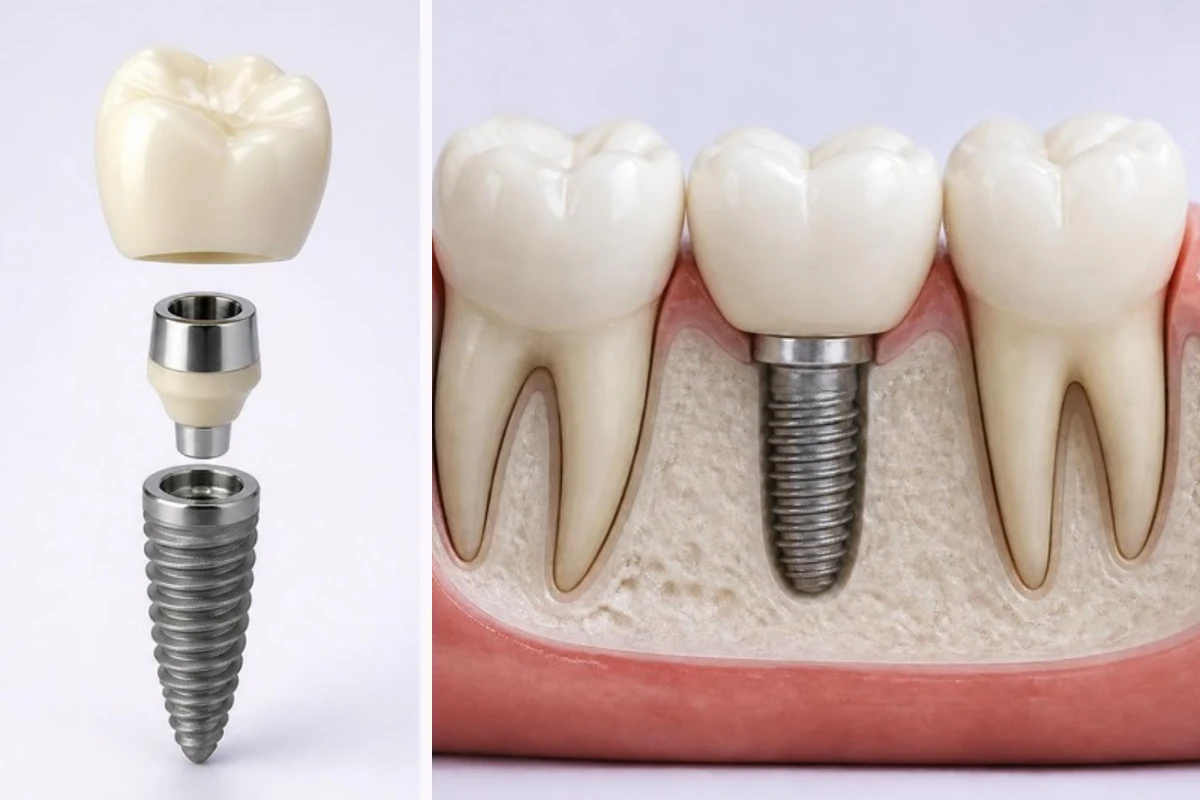
- The implant itself is a small post placed in the jawbone. Once the bone has grown onto it, it works like the root of a tooth.
- The abutment is the connector that joins the implant to the tooth on top. It is usually held by a small screw.
- The crown is the visible tooth. On an implant it is often made of zirconia, matched to the color of your other teeth.
- The gum and bone around the implant hold everything in place. They are living tissue, so they respond to plaque, smoking and general health.
| Part | What can happen over time | How it is looked after |
|---|---|---|
| Implant post in the bone | Does not decay. Problems usually start in the gum and bone around it rather than in the post | Keep the gum around it clean and healthy, and have regular checks |
| Abutment and screw | The screw can loosen, especially with heavy biting or grinding, and the tooth may feel slightly loose | Come in early if the tooth moves; it can often be tightened or replaced |
| Crown | Can wear, chip or come loose over time, like crowns on natural teeth | Avoid using your teeth as tools, protect them if you grind, and let your dentist check the bite |
| Gum and bone around the implant | Can become inflamed by plaque, and in time the bone can be lost | Clean around the implant every day and keep your professional cleanings |
This is why the question has two answers. The post, when the gum and bone stay healthy, is meant to stay for the long term. The crown and small parts on top are more like the parts of a car that may need maintenance or replacement along the way. Replacing a worn crown does not mean the implant has failed.
Large health organizations describe implants in the same way: with good care the implant can stay for a very long time, while the crown, bridge or denture on top may need replacing at some point. How long each part lasts varies from person to person, which is why we do not quote a fixed number of years. Your dentist looks at your gums, bone, bite and health and tells you what to expect in your case.
Why some implants last longer than others
After an implant is placed, the bone grows tightly onto its surface. This bond is what lets the implant carry chewing forces. Once it has formed, the main threats are no longer about the surgery. They are about the living tissue around the implant and the forces on the tooth.
Plaque forms on an implant crown just as it does on natural teeth. If it is left along the gum line, the gum around the implant becomes inflamed. This early stage is called peri-implant mucositis. It is similar to gingivitis around a natural tooth: the gum bleeds, may look red or swollen, and there is no bone loss yet. Studies show that it can settle once plaque is removed thoroughly again, although the gum may take more than 3 weeks to look healthy.
If the inflammation continues, it can spread to the bone that holds the implant. This is called peri-implantitis. The gum pockets deepen, there may be bleeding or pus, and X-rays show bone loss. A major international review found that peri-implantitis can start early after treatment and tends to progress faster as time goes on, which is why finding it early matters.
The same review found strong evidence for three risk factors: a history of gum disease, poor plaque control, and not coming back for regular maintenance after the implant is finished. It also found that bone loss around an implant without any signs of gum inflammation is rare. In other words, most of what decides the long-term outcome is something that can be seen, measured and managed.
What helps an implant last, and what puts it at risk
Some factors are about your mouth, some about your general health, and some about how the implant was planned. The table below lists the ones supported by research or by dental school guidance, and what you can do about each.
| Factor | Why it matters for an implant | What you can do |
|---|---|---|
| Daily cleaning around the implant | Plaque is the cause of implant gum inflammation | Brush twice a day and clean between the teeth with the tools your dentist shows you |
| Regular maintenance visits | Reviews link regular maintenance with fewer implant gum problems | Keep your cleaning and implant check appointments |
| A history of gum disease | Strong evidence of a higher risk of peri-implantitis | Have gum disease treated and stable, and come for maintenance more often if advised |
| Smoking or vaping | Linked to more implant failures, more infection after surgery and more bone loss | Stopping smoking helps before surgery and for the long term |
| Diabetes and high blood sugar | Linked to a higher risk of peri-implantitis in a systematic review | Keep your blood sugar under control with your doctor and tell your dentist |
| Teeth grinding or clenching | Linked to more technical problems such as loose screws and chipped crowns | A night guard protects the implant tooth; ask your dentist whether you need one |
| Some medicines and conditions that weaken immunity | Dental school guidance lists them among the factors that affect implant outcomes | Tell your dentist every medicine you take and every health condition |
| An implant tooth that is hard to clean around | Limited evidence links it with peri-implantitis, as it lets plaque build up | Ask your dentist to show you which brush reaches each side |
Not every factor works the same way in every study. For smoking and diabetes, the large 2017 review called the evidence for peri-implantitis inconclusive, while other systematic reviews found a link with failures and bone loss. The safe message is the same either way: these factors are worth managing, and your dentist takes them into account when planning and maintaining your implant.
Healthy gum, mucositis and peri-implantitis
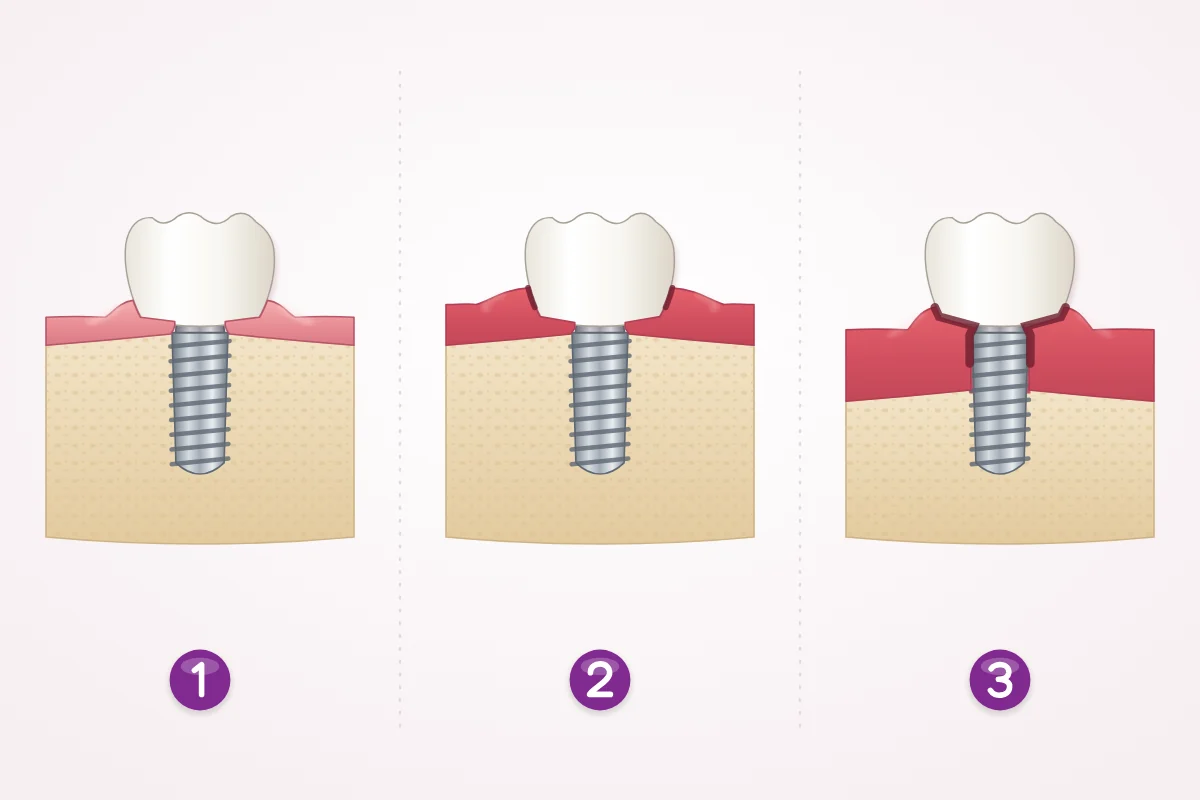
An international workshop in 2017 set out clear definitions for the health of the tissue around implants. You do not need to diagnose yourself, but knowing the stages helps you understand what your dentist is checking.
| Stage | Signs around the implant | What usually helps |
|---|---|---|
| Healthy tissue around the implant | No redness, swelling, bleeding or pus | Daily cleaning and regular checks to keep it this way |
| Peri-implant mucositis | Bleeding when cleaned or gently probed, sometimes redness or swelling; no bone loss | Professional cleaning and better home cleaning; it can settle |
| Peri-implantitis | Bleeding or pus, deeper pockets, gum pulling back, bone loss on X-ray | Treatment planned by the dentist, sometimes including gum surgery, then closer follow-up |
The same workshop recommended recording a baseline measurement and X-ray once the implant crown is finished. Later checks are compared with this starting point, which makes small changes easier to spot.
A care plan for your implant: daily, every 6 months and yearly
An implant does not need special products. It needs the right tools in the right places, every day, plus a professional check that catches what you cannot see.

| When | What to do | Why it helps |
|---|---|---|
| Every morning and night | Brush for 2 minutes with a soft brush, angled at the gum line around the implant | Removes plaque where implant gum inflammation starts |
| Once a day | Clean between the teeth next to the implant with an interdental brush of the right size or floss | A toothbrush cannot reach the sides between teeth |
| Every night, if you grind | Wear your night guard and clean it each morning | Protects the crown and screw from grinding forces |
| Every 6 months | Professional cleaning and a check of your teeth and gums | Removes tartar and finds early inflammation |
| Once a year | An implant check: gum, bite, crown and screw, with X-rays when your dentist needs them | Compares with the starting point and catches changes early |
| Any time something changes | Bleeding, swelling, a loose tooth or a change in bite: book a visit rather than waiting | Problems found early are usually simpler to manage |
How to clean around an implant, step by step
- Use a soft manual or electric toothbrush. Both are safe for implants when used correctly.
- Place the bristles where the crown meets the gum, angled toward the gum, and make small gentle movements. Do this on the cheek side and the tongue side.
- For the back of the last tooth or an awkward angle, a small single-tufted brush helps.
- Slide an interdental brush of the right size between the implant and the next tooth, in and out a few times. Your dentist can tell you which size fits each gap.
- If the gaps are tight, use floss and curve it around the implant crown below the contact point.
- Some people also use a water flosser as an extra aid. Ask your dentist whether it suits your implant, and use it in addition to brushing, not instead of it.
- Look in the mirror once a week. Healthy gum around an implant does not bleed, so bleeding is a reason to clean more carefully and book a check.
Right after implant surgery the routine is different. Follow the instructions you receive for the first days, including when to start brushing the area again.
Care guide after implant surgery
Common myths about how long implants last
| Myth | Fact |
|---|---|
| An implant cannot get any disease, so it needs no care | It cannot decay, but the gum and bone around it can become inflamed. Daily cleaning and checks are what keep it healthy |
| If it does not hurt, it is fine | Gum inflammation around an implant often causes no pain. Bleeding and regular measurements tell more than pain does |
| A little bleeding around an implant is normal | Healthy gum around an implant does not bleed. Bleeding is a sign to clean more carefully and book a check |
| Brushing hard or using an electric brush can damage the implant | A soft manual or electric brush used correctly is safe. Gentle technique at the gum line matters most |
| Smoking only matters on the day of surgery | Smoking is linked with more infection and bone loss around implants over time, so stopping helps in the long term too |
| If the crown has to be replaced, the implant has failed | The crown and small parts on top can wear and be replaced while the implant in the bone stays |
| The body can reject an implant like a transplanted organ | Implants are not rejected that way, and allergy to implant materials is rare. Problems usually come from infection, smoking, poorly controlled diabetes or difficulty cleaning |
Signs to come in sooner than your next check
Most implant problems develop slowly and can be managed well when they are found early. These signs are a reason to book a visit, not a reason to panic.
- Bleeding from the gum around the implant that does not settle after a week of careful cleaning.
- Pus, a bad taste, or a small swelling or bump on the gum next to the implant.
- The implant tooth feels loose, moves or clicks. Often this is the crown or screw, which can usually be fixed, but it needs a look soon.
- The gum has receded and you can see metal, or the implant area looks different from before.
- The crown is chipped or cracked, or your bite feels different.
If you also have a fever, swollen glands under the jaw, or a swelling that is spreading across your face, see a dentist the same day. Our clinic is open every day from 09:00 to 20:00. If the swelling makes it hard to swallow or breathe, go to the nearest hospital emergency department straight away.
Emergency dentist in Chiang Mai
What happens at an implant check, step by step
At Kitcha Dental Clinic, implant treatment is planned and carried out by dentists with postgraduate training in implant dentistry, prosthodontics and oral surgery, and implants are planned with a 3D CBCT scan. Looking after the implant afterwards is part of the same plan. This is what a typical check looks like.
- Your update: any bleeding, looseness, changes in bite, new health conditions, new medicines, and whether you smoke or grind your teeth.
- Gum check: the dentist looks at the gum around the implant, checks for bleeding or pus, and measures gently when needed, comparing with earlier records.
- Crown, screw and bite: the dentist checks that the tooth is firm, the crown is intact and the bite is even, especially if you grind.
- X-rays when your dentist needs them, to compare the bone level with earlier images.
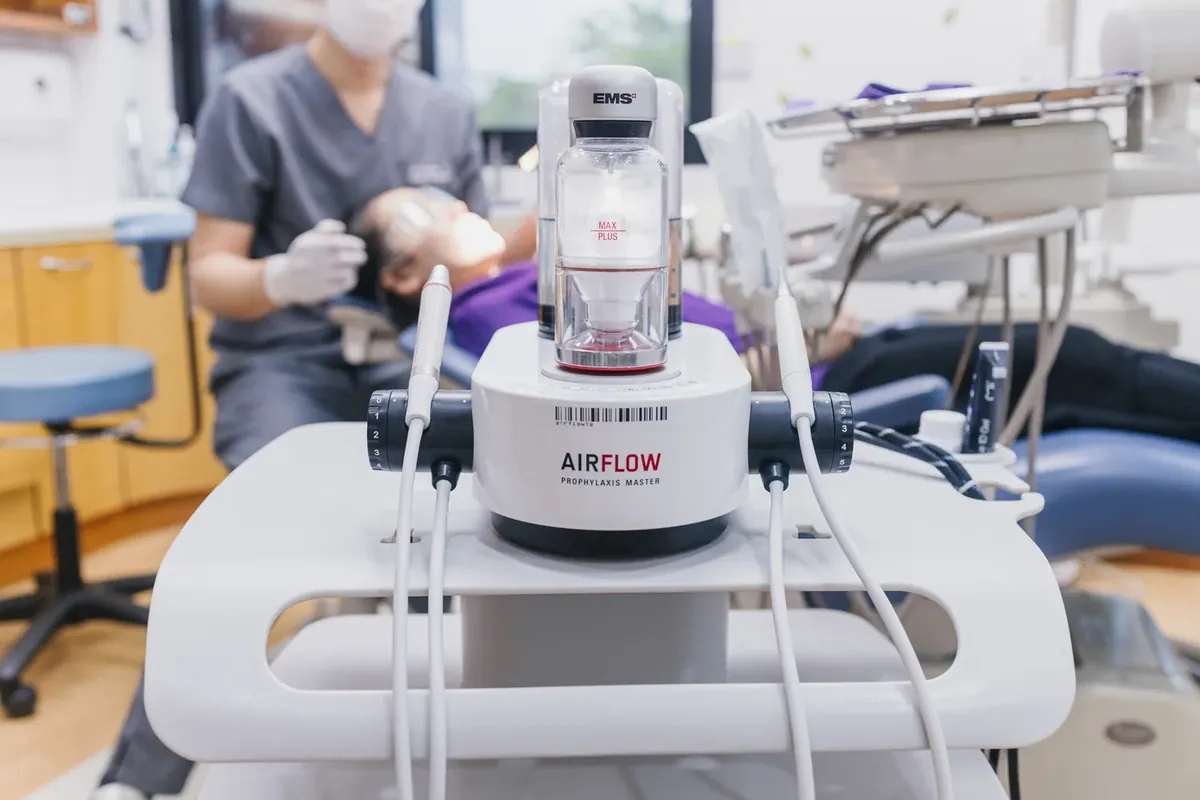
- Cleaning around the implant: depending on your mouth, this may include GBT, which colors the plaque and removes it with a fine spray of powder, air and water. GBT is suitable around implants, crowns and bridges, and the dentist chooses the settings for each surface.
- Advice and your next visit: the dentist shows you which brushes reach your implant most easily and suggests when to come back.
Our clinic recommends a professional cleaning every 6 months and an implant check once a year. Depending on your gums, your dentist may suggest coming more often. Many people with implants or a history of gum disease come every 3 to 4 months.
If you grind or clench, your dentist may recommend a night guard. It is custom made from a scan or impressions of your teeth and helps protect crowns and implant restorations from grinding forces. Bring it to your check-ups so the bite on it can be checked too.
Implant work done at our clinic comes with a 1-year warranty, terms apply. It covers the implant components and laboratory work done at our clinic and is used at our clinic in Chiang Mai. Your dentist explains the details with your treatment plan.
Implant fees for each system are listed on our prices page. If you live abroad, you can send a recent X-ray or photo first, and your dentist reviews it and explains your options before you travel.
If this sounds like you: what to do next
These are example situations, not patient stories, to help you find the next step that fits.
- You are deciding whether to have an implant and want it to last: ask your dentist about your own risk factors, such as gum disease, smoking, diabetes and grinding, and about the maintenance plan that comes after the tooth is fitted.
- You have had gum disease before: have it treated and stable first, and expect your dentist to suggest more frequent maintenance visits for both your teeth and your implant.
- You smoke and are planning an implant: stopping before surgery and staying stopped gives the implant a better environment. Tell your dentist honestly, so the plan fits you.
- You wake up with tired jaws or your partner hears you grinding: mention it at your next visit. A night guard may protect your implant crown and screw.
- The gum around your implant bleeds when you floss: clean that area carefully every day for a week. If it still bleeds, book a check, because early inflammation can usually be settled.
- Your implant crown feels slightly loose: avoid chewing on that side and book a visit soon. A loose screw or crown is often straightforward to fix when it is seen early.
- You have diabetes: keep your blood sugar under control with your doctor, tell your dentist about any changes in your treatment, and keep your implant checks.
- You live abroad and had your implant fitted on a trip: plan your cleanings and implant checks into future visits, or keep regular cleanings with a dentist where you live and bring your implant details with you.
Frequently asked questions about how long implants last
Can a dental implant last a lifetime?
With healthy gums and bone, good daily cleaning and regular maintenance, an implant is meant to stay for the long term, and health organizations describe implants as long-lasting when they are cared for. No one can promise a fixed number of years for every person, because gum health, general health, smoking and grinding all play a part. Your dentist can tell you how these factors look in your case.
Does the crown on an implant need replacing?
It may at some point. The crown is the part that does the chewing, so it can wear, chip or come loose, like crowns on natural teeth. Replacing or repairing it is usually done without removing the implant in the bone. Protecting your teeth from grinding and having the bite checked helps the crown last.
Can an implant get a cavity?
No. The implant and its crown cannot decay. But plaque still sticks to them, and it can inflame the gum and bone around the implant. Your natural teeth next to the implant can also still decay, so they need the same care.
Can an implant fail after many years?
It can, most often because of peri-implantitis, the inflammation that slowly destroys the bone around the implant. Research shows it can begin at any stage after treatment and tends to speed up over time. Regular checks are designed to find it while it is still small, when it is easier to manage.
What are the signs that an implant has a problem?
The common signs are bleeding or swelling of the gum around the implant, pus or a bad taste, the gum pulling back, and a tooth that feels loose or bites differently. Pain is often a late sign or absent, so do not wait for it. Book a check if you notice any of these.
Can I use an electric toothbrush or a water flosser with implants?
Yes. Powered and manual toothbrushes are both safe for implants when used correctly. A water flosser can be an extra aid, but it does not replace brushing and cleaning between the teeth. Your dentist can suggest the combination that cleans your implant most thoroughly.
Can I have an implant if I smoke or have diabetes?
Often yes, but the risks are higher, so they need to be planned for. Smoking is linked with more implant failures and bone loss, and diabetes with a higher risk of peri-implantitis. Your dentist assesses these before treatment. Stopping smoking and keeping blood sugar well controlled give the implant a better chance.
How often should I have my implant checked?
Our clinic recommends a professional cleaning every 6 months and an implant check once a year. People with a history of gum disease or other risk factors may be advised to come more often, and many people with implants come every 3 to 4 months. A review of maintenance studies also supported a recall of about every 5 to 6 months as a minimum.
Summary
How long an implant lasts depends mostly on the health of the gum and bone around it, your general health, your bite and your care, so your dentist assesses it for you personally rather than quoting a fixed number of years.
- The implant in the bone is meant for the long term; the crown and small parts on top may need repair or replacement along the way.
- Plaque is the main threat. Brush twice a day and clean between the teeth around the implant every day.
- Bleeding around an implant is not normal. It is an early sign worth acting on.
- Gum disease history, smoking, diabetes and grinding raise the risk, and each can be managed with your dentist and doctor.
- Keep a cleaning every 6 months and an implant check once a year, or more often if your dentist advises.
References
Cleveland Clinic: Dental Implants
Guys and St Thomas NHS Foundation Trust (UK): After having a dental implant
American Academy of Periodontology: Dental Implant Procedures
Faculty of Dentistry, Naresuan University (Thailand): How long can an implant be used (radio script)
Heitz-Mayfield LJA, Salvi GE. Peri-implant mucositis. J Periodontol, 2018