

The filling is done, the numbness wears off, and then it starts: a sharp twinge when you sip cold water, an ache when you chew on that side, or a dull throb in the evening. Many people wonder whether the filling went wrong, whether the decay is still there, or whether the tooth will now need root canal treatment.
The reassuring part first: some sensitivity after a filling is common, especially after a deep or large filling, and in most people it fades over days to a few weeks as the tooth settles. When it does not settle, the cause is usually one that a dentist can find and fix, such as a filling that sits a little high. A smaller group of teeth has an inflamed nerve or a crack, and these are worth checking early.
This article helps you tell these apart. You will find a one-minute self-check, a table of causes, a symptom table that matches what you feel to what it often means, a normal recovery timeline, a day-by-day care plan, common myths, the signs that mean you should call the clinic, and what the dentist checks when you come back.
In short: brief sensitivity to cold or biting that gets a little better each day is usually part of normal healing. Pain when you bite after the numbness has gone often means the filling needs a small adjustment. Pain that lingers after hot or cold, throbs on its own, wakes you at night, or comes with swelling should be checked by a dentist.
Is this pain after a filling normal? A one-minute self-check
Usually part of normal healing: look after it at home first
- A quick twinge with cold drinks, cold air or sweet food that stops within a few seconds.
- Mild tenderness of the gum next to the tooth, or a slightly sore jaw from keeping your mouth open.
- A little tenderness after a deep filling that is clearly less each day.
Contact the clinic for a check in the next few days
- Biting on the tooth hurts once the numbness has worn off, or the tooth feels like it touches first when you close.
- Sensitivity is no better, or is worse, after about one to two weeks.
- A sharp pain when you bite on something, or when you let go after biting.
- The filling feels rough, chipped, too high or loose, or food now catches between the teeth.
Contact the clinic promptly
- Pain lingers for a while after hot or cold, instead of stopping within seconds.
- The tooth throbs or aches on its own, or the pain wakes you at night.
- Pain relievers taken as the label directs do not control the pain.
- There is swelling of the gum or face, a bad taste, or a fever.
If swelling spreads toward your eye or neck, or you find it hard to breathe or swallow, go to a hospital emergency department straight away rather than waiting for a dental appointment.

Why a tooth can hurt after a filling
Under the hard outer enamel is dentin, a layer full of tiny fluid-filled tubes that lead toward the pulp, the soft tissue in the center of the tooth that holds the nerve and blood vessels. Decay opens these tubes. Removing decay, especially when it is deep, means working close to the pulp, and the pulp reacts with a short period of irritation, much like skin around a small wound.
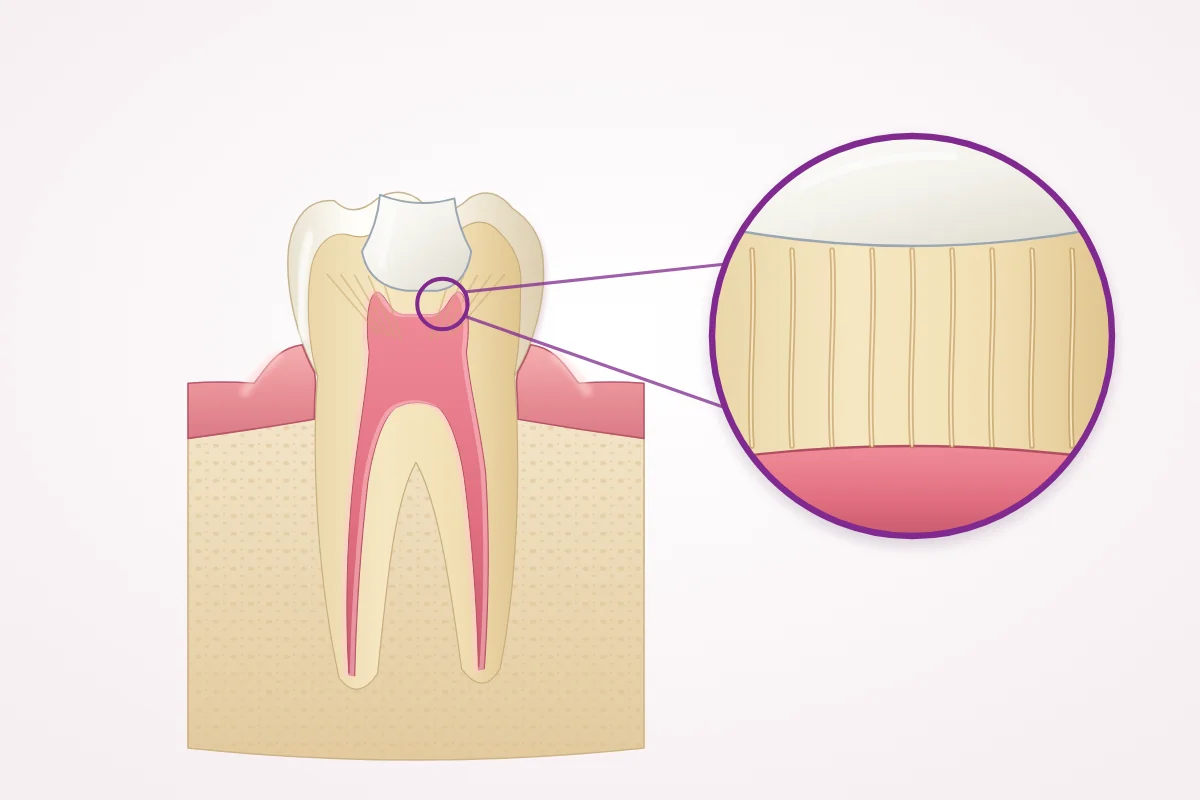
Studies of tooth-colored composite fillings in back teeth show this clearly. In one study of nearly 300 fillings, sensitivity the next day was more frequent in larger fillings that covered more surfaces of the tooth, and it decreased for every group over the following weeks. In another trial of deep fillings, sensitivity in the first week was common, and at the one-year check no one reported it. In other words, a bigger or deeper filling makes short-term sensitivity more likely, but it usually settles.
Composite resin is placed in layers and hardened with a curing light. As it hardens it shrinks very slightly, which puts a small stress on the tooth, and modern materials and bonding methods are designed to keep this under control. Research comparing bonding methods has not found that one particular method removes sensitivity, which is why dentists focus on careful technique, a well-fitted bite and time.
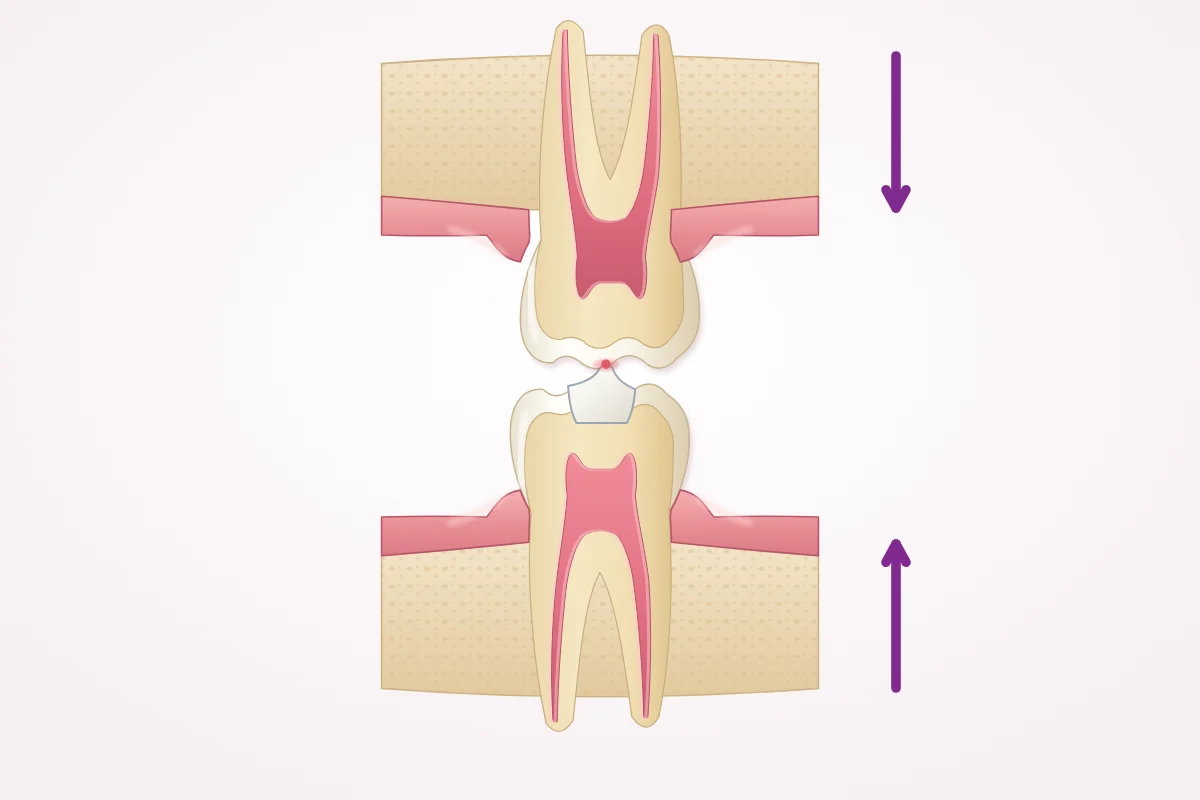
A second, very different reason is the bite. While your mouth is numb, it is hard to feel whether a new filling is even a fraction of a millimeter too high. Once feeling returns, every time you close, that one spot takes all the force first. The ligament that holds the tooth in the bone becomes bruised, and the tooth starts to ache on biting. The good news is that this is usually solved in minutes by reshaping the filling.
A third group is less common: the pulp was already inflamed before the filling, or the decay was so close that the pulp cannot recover, or the tooth has a crack. These cases behave differently, and the symptom table below shows how.
Causes of pain after a filling and how to tell them apart
Most pain after a filling comes from the first two rows. The rest are worth knowing so that you can describe your symptoms clearly when you call.
| Cause | How to tell | What to do |
|---|---|---|
| Normal irritation of the pulp after the filling (common) | Brief twinges with cold, sweet food or air that stop within seconds and ease each day | Use the home care plan below and give it time |
| A filling that is slightly high | Pain or a bruised feeling when you bite, the tooth seems to touch first, starts once the numbness wears off | Contact the clinic for a quick bite check and adjustment |
| Inflamed pulp that is struggling to recover | Pain lingers after hot or cold, throbs on its own or wakes you at night; often after very deep decay | Have the tooth checked; root canal treatment may be needed to keep the tooth |
| A crack in the tooth | Sharp pain on biting certain foods or when you release the bite, comes and goes, hard to tell which tooth | Have it checked; the dentist may test the bite on each part of the tooth and suggest protecting it |
| Pain felt in a different tooth (referred pain) | The filled tooth tests normal but the ache spreads along the jaw, to the ear or to the other jaw | The dentist checks the neighboring teeth with tests and X-rays |
| Grinding or clenching | Teeth or jaw feel sore in the morning, several teeth are sensitive, worn edges | Tell your dentist; a night guard may protect the teeth and fillings |
| Sore gum or jaw from the visit | Tender gum where the injection was given or where instruments rested, a tired jaw for a day or two | Warm salt-water rinses and soft food; it usually settles within days |
Two rarer causes are sometimes mentioned online: a small electric taste or zing when two different metal fillings touch, and an allergy to a filling material. Both are uncommon. If you notice something unusual, tell your dentist what you feel and when.
Match what you feel to what it often means
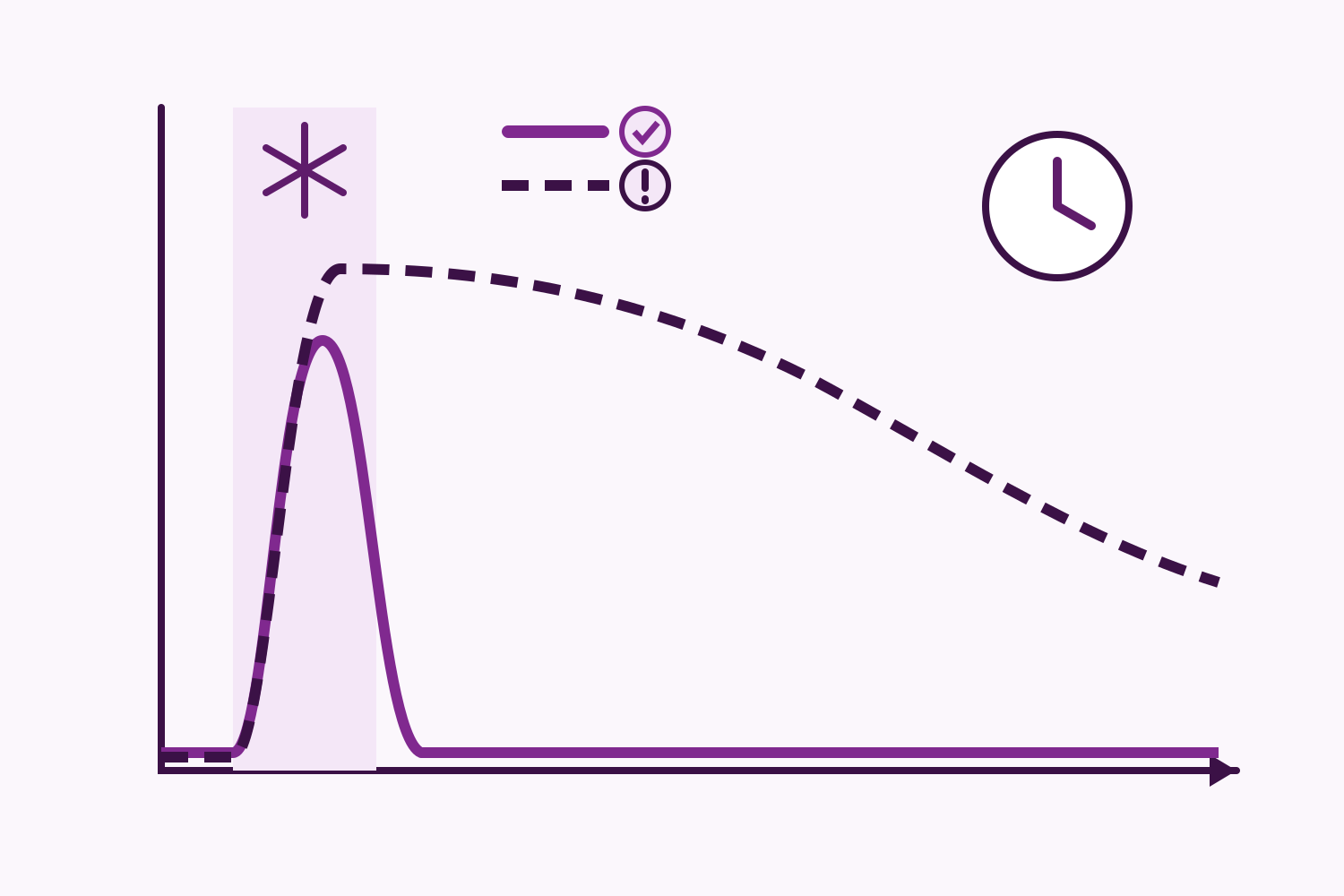
The single most useful clue is how long the pain lasts after the trigger is gone. A twinge that disappears within a second or two usually means the pulp is irritated but healthy. Pain that keeps going after the cold drink has gone, or that starts on its own, suggests deeper inflammation.
| What you feel | What it often means | What to do |
|---|---|---|
| A quick twinge with cold that is gone within seconds | Irritated but healthy pulp, part of normal healing | Home care; expect it to ease over days to weeks |
| Pain only when you bite down on the tooth | A high spot on the filling, sometimes a crack | Contact the clinic for a bite check |
| Sharp pain when you let go after biting | Often a crack in the tooth | Have it checked and chew on the other side meanwhile |
| Pain that lingers after hot or cold | Deeper inflammation of the pulp | Have it checked soon |
| Throbbing that starts on its own or wakes you at night | Inflamed pulp that may not recover | Contact the clinic promptly; root canal treatment is often the answer |
| A dull ache spreading to the ear, temple or other jaw | Referred pain from this or another tooth, sometimes clenching | A dentist can test each tooth to find the source |
| Swelling, a pimple on the gum, a bad taste or fever | Possible infection | Contact the clinic the same day; for spreading swelling go to hospital |
Pain spreading to other teeth is common with an inflamed pulp. Research in people with this kind of toothache found that those whose pain spread elsewhere tended to have stronger pain overall, which is one reason a dentist tests several teeth rather than only the one you point to.
How long does pain after a filling last?
Every tooth is different, but the general pattern described by dental and medical sources is that soreness and sensitivity after a filling are temporary and fade within about a week or two, sometimes longer after a deep filling. The direction matters more than the exact number of days: a tooth that improves a little each day is healing, while a tooth that is getting worse needs a look.
| Time after the filling | Common and expected | Contact the clinic if |
|---|---|---|
| The first few hours | Numb lip, tongue or cheek; mild soreness as it wears off | You bit your lip or cheek while numb and it is very swollen |
| Days 1 to 3 | Twinges with cold or sweet food, tender gum, a tired jaw | Biting on the tooth hurts, or it feels like it touches first |
| Week 1 to 2 | Sensitivity gets less often and milder | Pain lingers after hot or cold, or is getting worse |
| Week 2 to 4 | Occasional mild twinges after a deep filling | There has been no improvement at all since the filling |
| Any time | Not applicable | Throbbing, night pain, swelling, fever, or the filling breaks or falls out |
Waiting a few days is sensible for mild sensitivity. Waiting is not useful for a high filling: the tooth will keep getting bruised every time you bite, so a quick adjustment is the faster route to comfort.
Looking after the tooth at home, day by day
These steps help an irritated tooth settle. They are not a substitute for a check if your symptoms are in the contact-the-clinic groups.

On the day of the filling
- Wait until the numbness has fully worn off before eating, so you do not bite your lip, tongue or cheek.
- Composite fillings are hardened with a light before you leave, so you can eat once the numbness has gone. Start with soft food and chew on the other side.
- Once feeling returns, close your teeth together gently. If the filled tooth seems to touch first, note it and tell the clinic.
- If you need a pain reliever, follow the label or a pharmacist, and do not put tablets on the gum.
Days 1 to 7
- Brush twice a day with a soft brush and fluoride toothpaste, gently around the filled tooth, and keep cleaning between your teeth.
- A toothpaste for sensitive teeth can help. It works gradually and usually needs several days of regular use.
- Avoid very cold, very hot and very sweet food and drinks for a few days, and drink cold drinks through a straw if that is more comfortable.
- Avoid biting very hard food, ice or bones on the filled tooth.
- Keep a short note each evening: what triggered the pain, how long it lasted, and whether it was better than yesterday.
Week 2 and after
- Look back at your notes. If the twinges are less often and milder, keep going: this is the usual path.
- If nothing has changed, or it is worse, contact the clinic and bring your notes. They help the dentist a great deal.
- If you grind or clench, or wake with a sore jaw, mention it. Grinding adds force to fillings and teeth.
For general toothache while you wait for an appointment, health services also suggest soft food, avoiding chewing on the sore side, and rinsing with warm salt water. Children should not rinse with salt water in case they swallow it, and children under 16 should not take aspirin.
Common myths about pain after a filling
| Myth | Fact |
|---|---|
| Pain after a filling means the dentist did something wrong. | Short-term sensitivity is common, especially after deep or large fillings, and it usually settles. A high spot is easy to adjust. |
| If it hurts, the filling must be replaced. | Often the filling only needs reshaping, or the tooth only needs time. Replacing a filling is decided after an examination. |
| Any pain after a filling means you need root canal treatment. | Most teeth settle without it. Root canal treatment is for a pulp that cannot recover, shown by lingering or spontaneous pain and by the tests. |
| If the pain goes away, the problem has healed for sure. | Usually yes. But a tooth that had severe throbbing pain that suddenly stopped should still be checked, because a pulp that has died may stop hurting for a while. |
| Avoid brushing the filled tooth so it can heal. | Keep brushing gently with a soft brush. Plaque around a new filling is what you want to avoid. |
| Tooth-colored fillings cause more pain than other fillings. | Sensitivity is linked mostly to how deep and large the filling is. Modern composites and bonding methods perform similarly in studies. |
When to contact the clinic after a filling
None of these signs is common, and each has a clear next step. Calling early usually means a simpler fix.
- Biting hurts after the numbness has gone, or the bite feels different from before.
- Sensitivity has not improved after about one to two weeks, or is getting worse.
- Pain lingers after hot or cold, throbs on its own, or wakes you at night.
- There is swelling, a pimple on the gum, a bad taste or a fever.
- The filling feels rough, chipped or loose, or part of it has come out.
If a filling or part of it falls out, keep the piece in a small box and bring it, do not glue it back yourself, and avoid chewing on that side until you are seen. When you contact us, say which tooth it is, when the pain started and what triggers it, and send a photo if you can.
Emergency dentist in Chiang Mai
What the dentist checks when a filled tooth hurts
At Kitcha Dental Clinic, fillings are made with tooth-colored composite resin. For deeper cavities the tooth is numbed with local anesthesia, the composite is placed in layers and hardened with a curing light, then shaped and polished, and your bite is checked for high spots before you leave. When a filled tooth is uncomfortable afterward, the visit usually follows these steps.
- Your story: which tooth, when it started, what triggers it, how long it lasts and whether it is improving. Your notes help here.
- Bite check: the dentist uses thin marking paper to find any high spot and reshapes the filling if needed.
- Tapping and biting tests on this tooth and its neighbors, and a test of whether the pulp responds normally when needed.
- An X-ray to look at the depth of the filling, the root and the bone around it. When a crack or a complex root is suspected, a 3D scan of one or two teeth may be suggested.
- Explanation and plan: the dentist explains what they found and the options, with the fee, before anything starts.
What the options can be
- Adjusting a high filling, usually in a few minutes.
- Applying a desensitizing agent to the tooth at the clinic, and advice on toothpaste for sensitive teeth.
- Replacing a filling that is broken, leaking or has decay under it. For a large cavity, an inlay, an onlay or a crown may protect the tooth better than a large filling.
- Root canal treatment when the pulp cannot recover. Molars treated this way usually need a crown or an onlay afterward.
- A night guard if grinding or clenching is adding force to the teeth.
Root canal treatment at the clinic is carried out by dentists who have continued their studies in endodontics, under a rubber dam, with a dental microscope and 3D imaging available when the tooth needs them. Some teeth are finished in one visit and others need two or more, and the dentist explains the plan at the first visit.
Root canal treatment in Chiang Mai
Filling, inlay, onlay and crown fees are listed on our prices page. Your dentist explains the treatment and the fee before starting. You can use Thai Social Security for fillings: you pay at the clinic, the clinic issues a medical certificate and a receipt, and you then claim the amount from Social Security yourself.
See filling, inlay and crown prices
If this sounds like you: what to do
These are example situations, not patient stories, to help you find the next step that fits.
- You had a deep filling three days ago and cold water still gives a quick twinge, but less than on day one: this is the usual pattern. Use a sensitive toothpaste, avoid very cold drinks for a while and keep a note. Contact the clinic if it stops improving.
- Everything was fine until the numbness wore off, and now the tooth hurts every time you bite: the filling is probably a little high. Contact the clinic for a bite check. Waiting tends to make the tooth more bruised, not less.
- A week later the tooth aches on its own in the evening and the pain lasts for minutes after a cold drink: this suggests the pulp is inflamed. Contact the clinic promptly so the dentist can test the tooth.
- You feel a sharp zing only when biting on certain foods, or when you let go: think of a crack. Chew on the other side and have it checked. Cracks are easier to manage when found early.
- The filled tooth feels fine now, but the ache seems to move between your upper and lower teeth: pain can be felt away from its source. A dentist can test each tooth to find which one is responsible.
- You wake up with a sore jaw and several teeth feel sensitive, not just the filled one: grinding or clenching may be part of the picture. Mention it; a night guard can protect your teeth and fillings.
- You are visiting Chiang Mai and a filling done elsewhere is now painful: contact the clinic with the tooth, the date of the filling and any X-rays you have. The dentist examines it and explains the options and fee before starting.
- The pain was severe and throbbing for days and then suddenly stopped: that is not always a sign of healing. Have the tooth checked even if it feels better.
Frequently asked questions about pain after a filling
How many days does pain after a filling last?
Mild soreness and sensitivity usually ease within about a week or two and keep improving day by day. After a deep filling, occasional mild twinges can last a few weeks. Contact the clinic if there is no improvement, if it is getting worse, or if biting hurts.
Why does my tooth throb after a filling?
Throbbing that starts on its own, or that wakes you at night, usually means the pulp is inflamed, often because the decay was very deep. It is different from a short twinge. The dentist tests the tooth and takes an X-ray, and if the pulp cannot recover, root canal treatment is usually the way to keep the tooth.
It hurts when I bite after a filling. Do I need to go back?
Yes, it is worth a short visit. Pain on biting that starts once the numbness wears off is often a high spot on the filling. The dentist finds it with marking paper and reshapes it, which usually takes only a few minutes and often brings relief within a day or two.
My tooth is sensitive to cold after a filling. What helps?
Use a toothpaste for sensitive teeth regularly, brush gently with a soft brush, and avoid very cold and very sweet food and drinks for a while. If it is not easing after one to two weeks, the dentist can check the filling and the bite and can apply a desensitizing agent at the clinic.
Which pain reliever can I take after a filling?
Common over-the-counter pain relievers such as paracetamol or ibuprofen are often used for dental soreness. Follow the label or ask a pharmacist, especially if you have other conditions or take other medicines, and do not put tablets on the gum. Children under 16 should not take aspirin. If pain relievers are not controlling the pain, contact the clinic.
Will I need root canal treatment if it still hurts?
Not usually. Most teeth settle with time, a bite adjustment or a desensitizing treatment. Root canal treatment is considered when the tests show the pulp cannot recover, for example with lingering pain after hot or cold, spontaneous throbbing, night pain or signs of infection. Your dentist explains the findings before suggesting it.
Why do I feel pain in my ear or another tooth after a filling?
Pain from a tooth can be felt somewhere else, such as along the jaw, in the ear, at the temple or in the opposite jaw. A sore jaw from holding your mouth open or from clenching can feel similar. If it does not settle in a few days, the dentist tests the teeth one by one to find the source.
When can I eat after a filling?
Composite fillings are hardened with a light during the visit, so you can eat once the numbness has worn off. Until then, avoid hot drinks and chewing so you do not burn or bite yourself. For the first few days, soft food on the other side and avoiding very hard, very cold or very sweet food helps a sensitive tooth.
Summary
Pain or sensitivity after a filling is usually short-term and improves day by day. The way it behaves tells you what to do next.
- A short twinge with cold that is getting less each day is normal healing: use a sensitive toothpaste and give it time.
- Pain when biting after the numbness has gone often means a high filling, which is quick to adjust.
- Lingering pain after hot or cold, spontaneous throbbing or night pain should be checked, as the pulp may be inflamed.
- Sharp pain on biting or on release can be a crack; chew on the other side and have it checked early.
- Swelling, fever or spreading swelling needs prompt care; go to a hospital if it affects breathing or swallowing.
References
Cleveland Clinic: Dental Fillings
American Dental Association (MouthHealthy): Sensitive Teeth
American Association of Endodontists: Cracked Teeth
MedlinePlus (US National Library of Medicine): Toothaches
MSD Manual (Consumer Version): Pulpitis
Kakka A et al. Treatment of cracked teeth: a comprehensive narrative review. Clin Exp Dent Res, 2022