
A tooth that has had root canal treatment can become sore or infected again, for example when a canal was missed, the seal has leaked, or new decay has reached the root. There are three main ways forward: retreating the canals, root-end surgery, or removing and replacing the tooth. Your dentist explains which suits your tooth after an examination, X-rays and a 3D scan.

Root canal retreatment
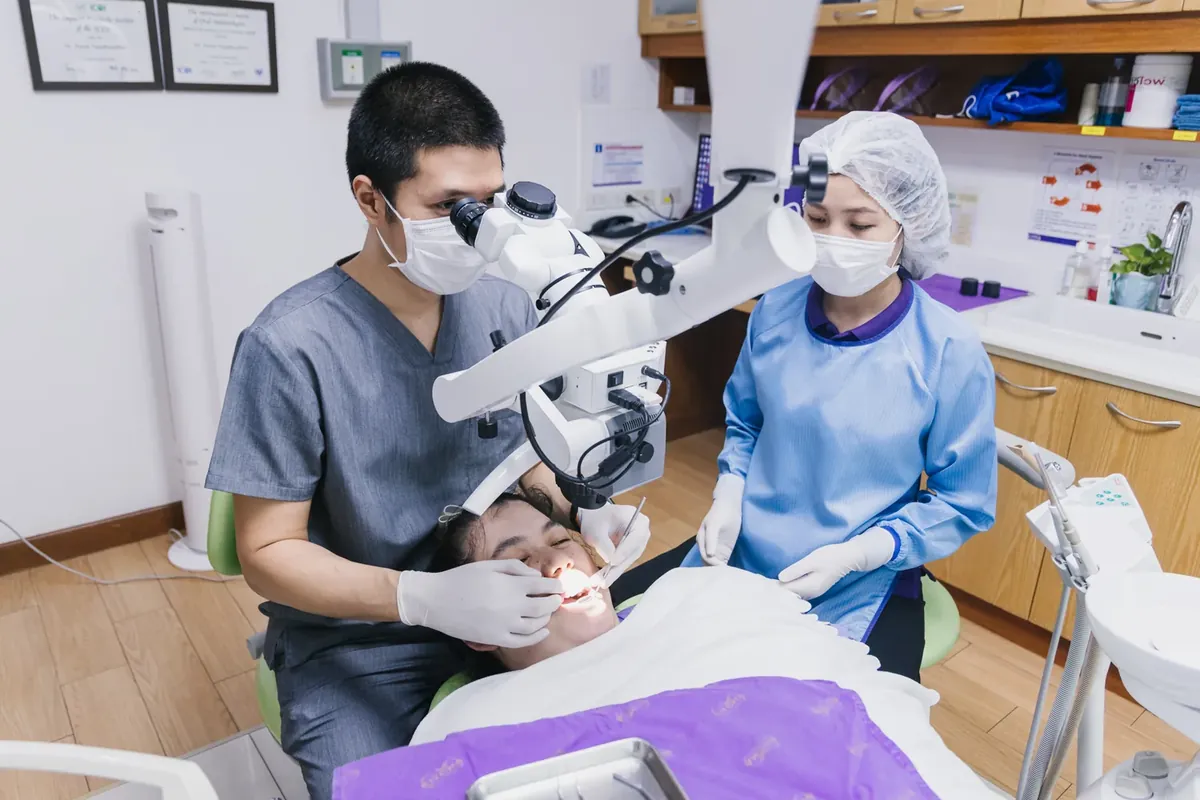
Retreatment means removing the old filling material, and sometimes an old post, from inside the tooth, then cleaning, disinfecting and sealing the canals again. Your dentist may use the dental operating microscope, a CBCT scan or bioceramic materials, and may ask a colleague with endodontic specialty training to treat or advise.
What root-end surgery (apicoectomy) involves
In root-end surgery, also called root resection or apicoectomy, the dentist opens a small area of gum, removes the inflamed tissue and the tip of the root, and seals the root end with a root-end filling. The rest of the tooth, including its crown, stays in place. At the clinic it is carried out by an endodontist under a dental operating microscope, with a CBCT scan before every surgery.
If radiation worries you: at our clinic, X-rays inside the mouth are digital, taken with phosphor plates and sensors that help lower the dose compared with film. Our Planmeca ProMax CBCT has an Ultra Low Dose mode, your dentist chooses the mode that suits each case, and X-rays are taken only when they are needed.
Dental X-ray radiation: how much is it, and how we keep it low
Root-end surgery (apicoectomy)
How dentists decide
- Retreatment is usually considered first when the canals can be reached again from inside the tooth.
- Root-end surgery is considered when infection at the root tip continues after treatment or retreatment, or when reaching the canals would mean removing a well-made crown or post, or a canal is blocked.
- When a crack in the root is suspected, the dentist may need to look at the root directly before deciding.
- If the tooth cannot be kept, it can be removed and replaced with an implant or a bridge.
Your dentist explains the steps and costs of each option, with a written estimate, so you can choose.
After treatment
After root-end surgery you receive written aftercare instructions and a follow-up visit for review and stitch removal, then X-ray checks of the healing bone over the following months. If the tooth needs a new crown afterwards, your dentist plans it with you.