

You are halfway through a meal with friends and you feel the lower denture lift. Or you laugh, and the upper one drops a little. Many people quietly start avoiding certain foods, cover their mouth when they smile, or buy a tube of denture adhesive and hope it solves the problem. Then the questions follow: is adhesive safe every day, how much should I use, and does a loose denture mean I need a new one?
The reassuring part first: a loose denture is very common, and it is rarely a sign that you did something wrong. The gums and bone that a denture rests on keep changing slowly after teeth are lost, so a denture that once fitted well can gradually feel loose. Adhesive is safe when used as the label directs, and research shows it can make a denture that still fits fairly well feel steadier when you eat and speak. When the fit itself has changed, a reline, a repair or a new denture usually solves the problem more completely than extra adhesive.
This article helps you decide which situation you are in. You will find a quick self-check, why dentures loosen, a comparison of adhesive forms, a step-by-step guide to applying and removing adhesive, the zinc caution in plain words, a table of fixes from adjustment to implants, a daily care routine, common myths, the signs that mean you should see a dentist soon, and what happens at a denture check.
In short: denture adhesive can help a denture that still fits feel more secure. Use a small amount as the label directs and clean it off your denture and gums every day. If you need more and more adhesive, need it to eat at all, or have sore spots, the denture itself needs checking: a reline, repair or new denture usually fixes the cause.
Can adhesive help, or is it time for a denture check?
Adhesive can be a reasonable help
- The denture stays in place at rest and only moves a little with sticky or hard food.
- It feels comfortable, with no sore spots, ulcers or rubbing.
- You want extra confidence for a meal out, a meeting or a long day of talking.
- Your mouth feels dry, so the denture does not grip as well as it used to.
- A small amount, once a day, is enough to keep it steady.
Book a denture check in the next few weeks
- You need more adhesive than before, or you reapply it more than once a day.
- Without adhesive you cannot eat or speak comfortably.
- Food keeps slipping under the denture, or it rocks when you bite on one side.
- It clicks when you talk, or your face or bite looks different from before.
- You had teeth removed a few months ago and the denture you got on that day now feels loose.
- The teeth are worn flat, stained, or the pink base has small cracks.
See a dentist soon about your denture
- You have a sore spot or ulcer under the denture that has not healed after about 2 weeks, even after leaving the denture out.
- The denture has cracked or broken, a tooth has come off, or a clasp has snapped.
- The denture is so loose that it drops while you eat, and you worry about swallowing a piece.
- You feel numbness or tingling in your hands or feet and you have been using a lot of adhesive for a long time.
The last item needs a doctor as well as a dentist. It is uncommon, and it is explained in the zinc section below.
Why dentures become loose over time
A full denture is not glued or screwed in place. It stays on mainly because it fits the shape of your gums closely, and a thin film of saliva between the denture and the gum creates suction, a little like two wet sheets of glass sticking together. Your cheeks, lips and tongue also help hold it, which is a skill you learn over the first weeks. A partial denture also uses clasps or a metal framework that grips your remaining natural teeth.
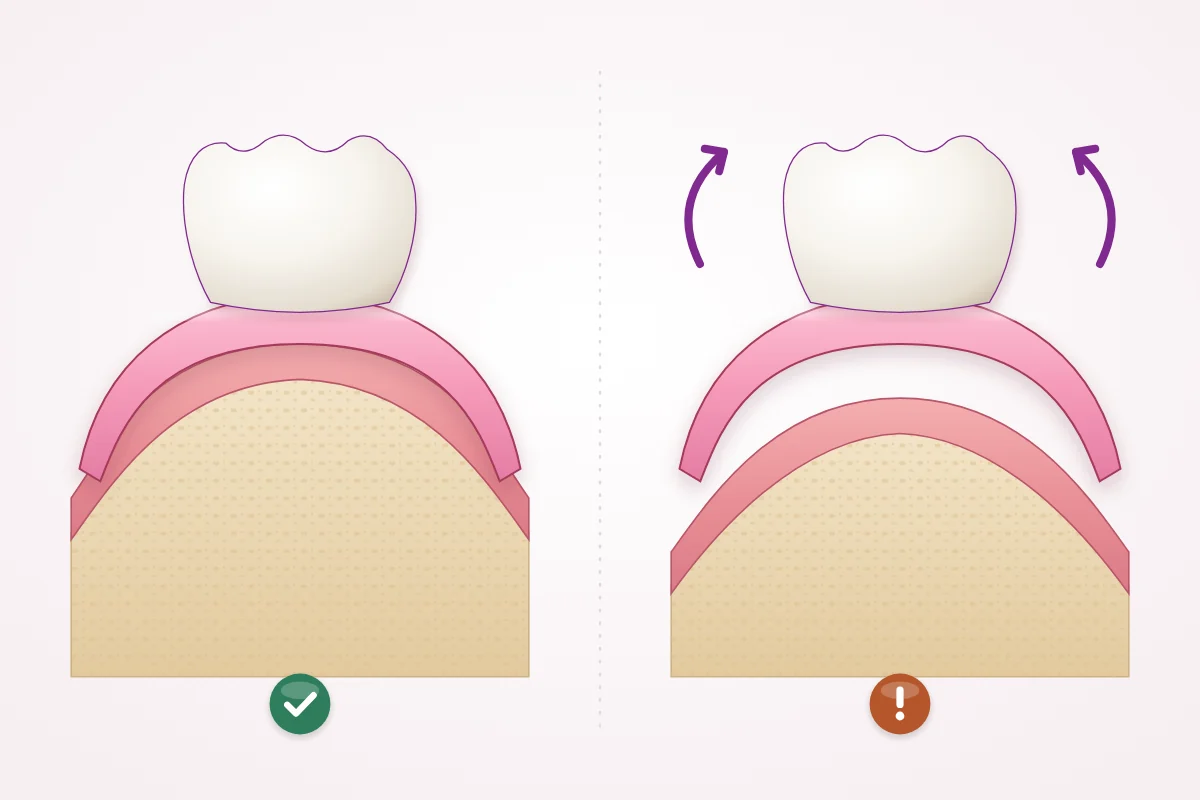
After teeth are lost, the ridge of bone that held them slowly shrinks, because it no longer gets the signals from tooth roots that keep it in shape. Dentists call this residual ridge resorption. It is fastest in the first months after extractions and continues more slowly for many years, and the lower jaw is usually affected more than the upper. Each small change opens a gap between the denture and the gum, so the suction weakens and the denture starts to rock or lift.
That is why a denture made right after extractions loosens noticeably as the gums heal, and why dentists plan to reline or replace it. It is also why the American College of Prosthodontists advises that dentures are checked regularly, and lists needing adhesive to eat, or using it more than once a day, as signs that the denture should be assessed for a reline or replacement.
Common causes of a loose denture
| Cause | How to tell | What to do |
|---|---|---|
| Gums and bone shrinking slowly over time | A denture that used to fit well gradually needs more adhesive; the lower one often lifts first | A denture check; a reline often restores the fit |
| An immediate denture after extractions | Fits well at first, then loosens over the following weeks and months as the gums heal | Expected; keep your review visits for adjustment, a reline or a long-term denture |
| Weight loss or illness | The denture feels loose after you lost weight or were unwell for a while | A denture check; the fitting surface may need to be adapted |
| A dry mouth, often linked to medicines | Less saliva, so the suction is weaker, especially in the morning or after talking a lot | Sip water often; adhesive can help; tell your dentist and doctor about the dryness |
| A worn or damaged denture | Teeth worn flat, a crack in the base, or a bent or broken clasp on a partial denture | Stop using it if it is broken and bring all the pieces; do not glue or bend it yourself |
| A new denture still being adjusted | The first weeks feel awkward, with some sore spots or movement when eating | Return for adjustment visits; practice with soft food cut into small pieces |
What denture adhesive can and cannot do
Denture adhesives are creams, powders or thin strips that you place on the fitting surface of a clean denture. When they meet saliva they swell into a sticky layer that fills small gaps between the denture and the gum. That layer improves suction and acts as a cushion, so the denture moves less and less food gets underneath.
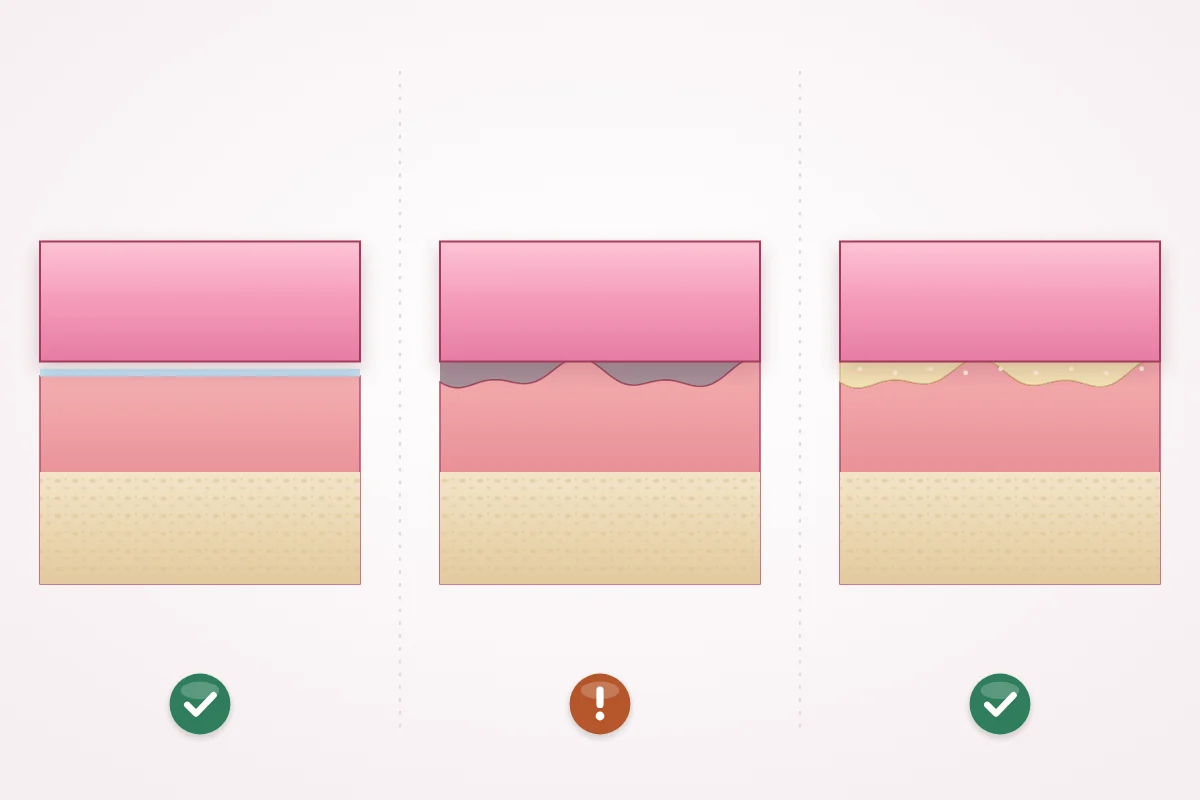
Research supports this. A systematic review of the published studies found that most clinical trials showed adhesives improve how well a denture stays in place, how steady it is, and how well people can chew. In a randomized study in people whose dentures already fitted well, adhesive reduced how often the denture came loose while eating an apple and improved comfort and confidence. People in these studies were generally satisfied with adhesives that met their needs.
What adhesive cannot do is change the shape of the denture. Both the US Food and Drug Administration (FDA) and dental guidance say that adding more and more adhesive does not fix a denture that no longer fits, and that wearing a poorly fitting denture for a long time can lead to sore spots and may contribute to further bone loss. Think of adhesive as a helpful extra for a denture that fits, not as a repair for one that does not.
Comparing the forms of adhesive
| Adhesive form | Often suits | Keep in mind |
|---|---|---|
| Cream or paste | Most full dentures; a familiar choice that spreads to fill small gaps | Easy to use too much; keep the strips short and away from the edges so it does not ooze |
| Powder | People who dislike a thick feel; a denture that fits well and needs only a little extra grip | A thin, even layer on a wet denture; tap off the excess; usually easier to clean off |
| Strips, pads or cushions | People who want a measured amount each time and less mess | Trim to the shape of the denture if the label allows; replace each day; not a fix for a large gap |
Look at the label for the ingredients and the amount to use. Many products now state that they contain no zinc. If you are unsure which form suits your denture, your dentist can suggest one when they check the fit.
How to use denture adhesive, step by step
Adhesive grips well on a clean denture and in a clean mouth, and in small amounts. Follow the instructions on your product first; the steps below describe the usual method for a cream.
Applying it
- Clean the denture and remove any old adhesive. Rinse your mouth and gently brush your gums and tongue with a soft brush.
- Dry the fitting surface of the denture with a clean towel. A cream grips better on a dry surface; a powder is sprinkled on a slightly wet one.
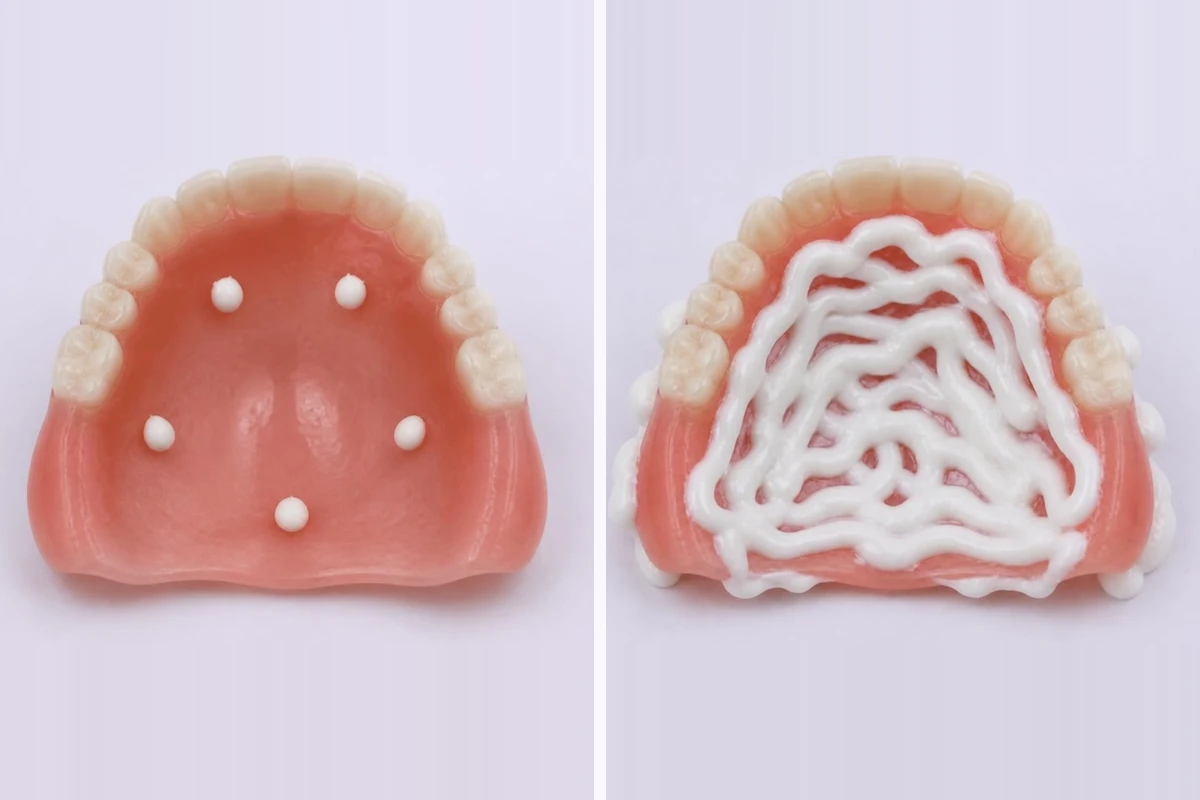
- Apply a small amount: three or four short strips or pea-sized dots, spread over the denture and kept away from the edges.
- Put the denture in, press it firmly into place and bite gently for a few seconds.
- Wait a few minutes before eating or drinking anything hot, as the label directs.
- If adhesive squeezes out onto your gums or into your mouth, you used too much. Use less next time.
Removing it every day
- Take the denture out over a basin of water or a folded towel, so it does not break if it slips.
- Rinse with warm water, never hot or boiling, to soften the adhesive.
- Wipe and brush the remaining adhesive off the denture with a soft brush.
- Remove adhesive from your gums with a damp cloth, gauze or a soft brush, and rinse your mouth well.
- Clean the denture and store it in water or cleaning solution overnight.
Adhesive left on the denture or gums from day to day traps bacteria and fungi, which can irritate the gums. Daily removal is part of using adhesive safely, not an optional extra.
The zinc caution, in plain words
Some denture creams contain zinc to improve grip. Zinc is a normal part of the diet, but large amounts taken in over a long time can lower copper levels in the body and cause nerve problems, mainly numbness and tingling in the hands and feet. Doctors have reported this in a small number of people who used very large amounts of zinc-containing denture cream for years. The FDA notes that in those reports people used at least two tubes a week, while a typical tube is meant to last about seven to eight weeks for upper and lower dentures together.
- Use the amount on the label, and no more. Note on a calendar the day you open a tube and the day it runs out.
- Check whether your product contains zinc. Products without zinc are widely available, and the American College of Prosthodontists suggests choosing them as a precaution.
- If you also take zinc supplements, tell your doctor and dentist.
- If you develop numbness or tingling in your hands or feet, stop the adhesive and see a doctor.
The FDA has not found conclusive evidence of harm when adhesive is used as labeled. The message is simple: a little adhesive is fine; a lot of adhesive is a sign that the denture needs attention.
Adhesive signs worth noticing
| What you notice | What it may mean | Next step |
|---|---|---|
| Adhesive oozes out at the edges | Too much adhesive for this denture | Use smaller dots, further from the edges |
| You need to reapply during the day | The fit has probably changed | Book a denture check |
| A tube runs out in a couple of weeks | Much more than the label intends | Check the denture fit; choose a product without zinc |
| Red, sore or burning gums under the denture | Irritation, rubbing or a fungal infection under the denture | Leave the denture out at night, clean well, and see your dentist |
Fixing a loose denture: from adjustment to implants
Once a dentist has checked the denture and your gums, the right fix becomes clear. Many loose dentures need only a small adjustment or a reline. The table below lists the usual options from the simplest to the most involved.
| Option | When it fits the situation | What to know |
|---|---|---|
| Adhesive | The denture still fits fairly well and you want extra security | A small amount once a day; it does not change the fit |
| Adjustment | A sore spot, a rough edge, a clasp that has loosened, or the bite feels uneven | Often done at the check-up; do not file or bend the denture yourself |
| Reline | The teeth and base are still in good shape but the denture no longer hugs the gums | New material is added to the fitting surface so it matches your gums again |
| Repair | A crack, a broken base, a tooth that came off or a broken clasp | Bring every piece; a denture with a thin or aged base may crack again after repair |
| A new denture | The teeth are worn, the base is aged or stained, or the shape has changed too much to reline | Usually several visits: impressions, a try-in, fitting and adjustments; digital full dentures are another way to make one |
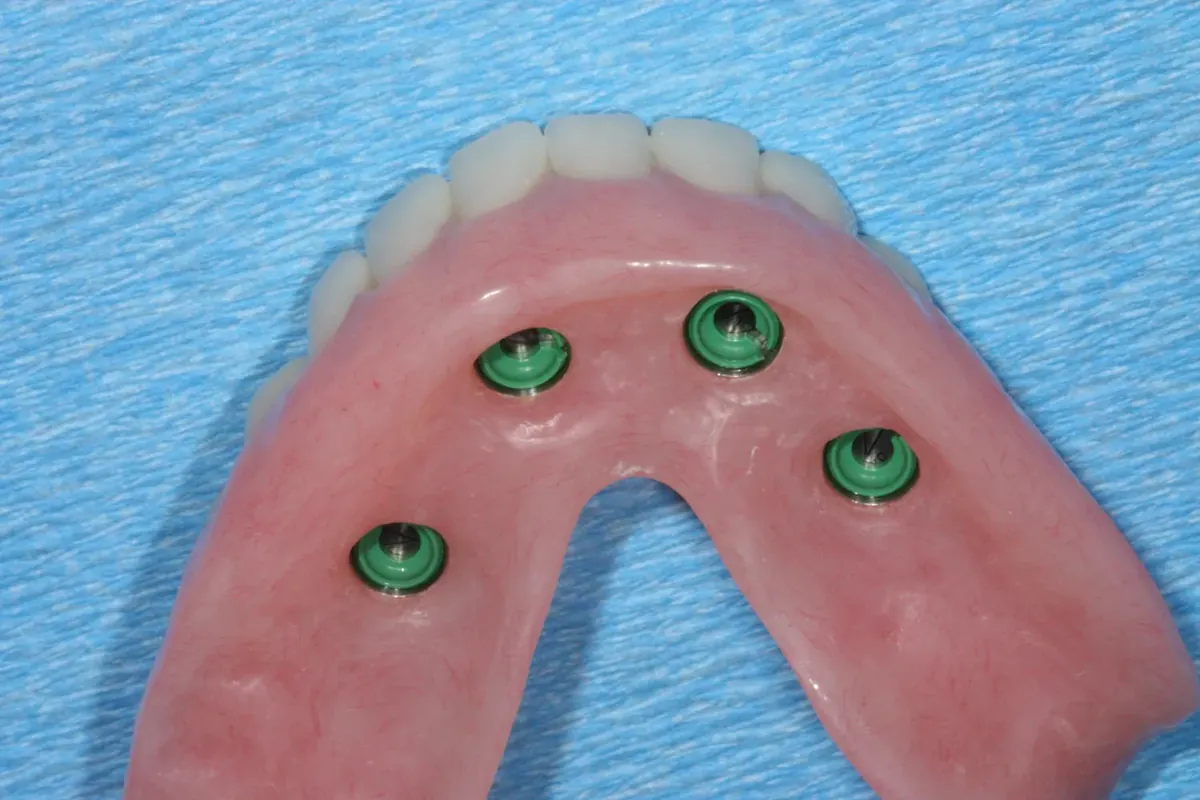
| A denture held by implants | The denture still moves too much, especially a lower full denture | It clips onto a few implants and moves less; you still take it out to clean; it needs surgery and enough bone |
A reline can be done on a denture made at another clinic, as long as the denture is in a condition that allows it. Bring the denture so your dentist can check it.
Removable dentures, fixed bridges or implants: how to choose
A daily routine for denture wearers
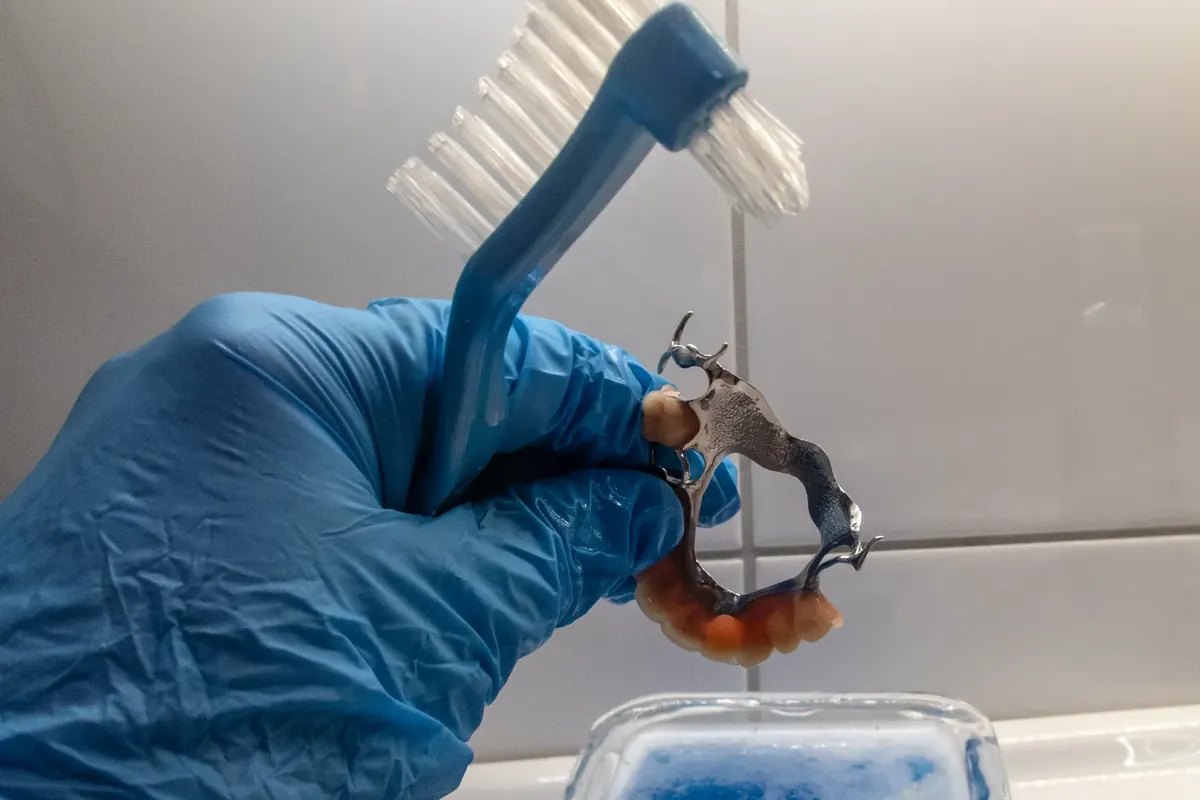
A clean denture fits and feels better, and clean gums are healthier gums. The routine below brings together advice from the American Dental Association, the NHS and Thai dental school guidance. It takes only a few minutes a day.
| When | Daily step |
|---|---|
| Morning | Brush your gums, tongue, the roof of your mouth and any natural teeth with a soft brush before putting the denture in; brush natural teeth with fluoride toothpaste |
| After meals | Take the denture out and rinse it under running water; rinse your mouth |
| Evening | Remove all adhesive; brush every surface of the denture with a soft brush and mild soap or a denture cleanser, over a basin of water |
| Overnight | Leave the denture out so your gums can rest; keep it in water or cleaning solution so it does not dry out or warp |
| Once a week | Look at the denture in good light for cracks, worn teeth or a loose clasp, and at your gums for sore spots |
| About every 6 months | A dental check of your mouth, gums and denture fit; bring the denture with you |
What to avoid
- Hot or boiling water, which can warp the denture so it no longer fits.
- Bleach, scouring powder and gritty toothpaste, which scratch or weaken the base.
- Soaking a denture with metal parts in vinegar, which can corrode the metal.
- Household glue or home repair kits on a broken denture, which can change the fit and leave loose pieces that could be swallowed.
- Sleeping with the denture in, unless your dentist has advised it for a specific reason.
Leaving the denture out at night matters more than many people think. A study of community-living adults aged 85 and older in Japan found that those who wore dentures while sleeping had more plaque, more gum inflammation and more Candida, and were associated with about twice the risk of pneumonia over three years. The study shows an association rather than proof of cause, but it is one more good reason to give your gums a rest.
Common myths about loose dentures and adhesive
| Myth | Fact |
|---|---|
| Needing adhesive means the denture was badly made. | Not necessarily. Gums and bone change after teeth are lost, and some people simply want extra confidence or have a dry mouth. A denture that fits well can still benefit from a little adhesive. |
| More adhesive gives a better hold. | A small amount works well. Extra adhesive oozes, lifts the denture off the gum, is harder to clean, and with zinc products, overuse can be harmful. |
| Once you have full dentures, you no longer need dental check-ups. | Your gums, tongue, cheeks and the fit of the denture still need checking. Dentists also look for sore spots and unusual patches in the soft tissues. |
| Wearing the denture at night helps you get used to it faster. | Your gums need a rest. Leaving the denture out overnight lowers the build-up of plaque and fungi under it. |
| A cracked denture can be fixed at home with strong glue. | Household glue can be harmful in the mouth, changes the fit and can fail suddenly. Thai health authorities advise against repairing dentures yourself. |
| A loose denture always has to be replaced. | Many loose dentures can be adjusted or relined. A new denture is recommended when the denture is worn, damaged or has changed too much. |
Signs that mean you should see a dentist soon
Most denture problems are about comfort and fit. A few signs are worth acting on sooner. None of them is a reason to panic; each one simply has a clear next step.
- A sore spot, ulcer, lump or patch that has not healed in about 2 weeks: leave the denture out as much as you can and have it checked. Dentists look at any change that lasts longer than this.
- Red, swollen or burning gums under the denture, or white patches: this may be denture stomatitis, a common inflammation linked to plaque and Candida. Leave the denture out at night and see your dentist.
- Cracks at the corners of your mouth: this can be linked to a denture that has worn down or to infection. Have the fit and bite checked.
- A broken denture, a lost tooth from the denture or a broken clasp: stop wearing it, keep every piece and book a repair.
- Swallowing or breathing in a piece of a denture: seek medical care straight away.
- Numbness or tingling in the hands or feet while using a lot of adhesive: stop the adhesive and see a doctor.
What happens at a denture check, step by step
At Kitcha Dental Clinic, dentures are planned by dentists with postgraduate training in prosthodontics, the field of crowns, bridges and dentures, and made by our ISO-certified partner laboratory. A visit for a loose denture usually follows these steps.
- Bring your denture and your adhesive: tell the dentist how long you have had the denture, how much adhesive you use, and what you find hard to eat. Bring your list of medicines too.
- Examination: the dentist checks the denture, your gums, the bite and any natural teeth, and looks at the soft tissues of the mouth, including the cheeks, tongue and gums, to screen for unusual changes. X-rays are taken when they are needed.
- Explanation and options: the dentist explains why the denture is loose and which option suits it, such as an adjustment, a reline, a repair, a new denture, or a denture held by implants, and gives you an estimate before anything starts.
- Treatment: sore spots and the bite can be adjusted. For a reline, new material is added to the fitting surface so it hugs the gums again. A new denture usually needs at least 3 to 4 visits for impressions, a try-in, fitting and adjustments.
- Follow-up: after a reline or a new denture, a review visit is used to fine-tune any sore spots. Bring the denture to every check-up so the fit can be checked as your gums change.
We also reline dentures made at other clinics, depending on the condition of the denture. If you are thinking about implants to hold a denture, the dentist checks your bone and general health with an examination and a CBCT scan before recommending an option.
Relines, repairs, new dentures and dentures held by implants are listed on our prices page. The fee depends on the type of work and the material, and your dentist confirms it after checking the denture. New dentures made at our clinic have a 1-year warranty, terms apply.
If you use Thai Social Security for dentures, you pay at the clinic, the clinic issues a medical certificate and a receipt, and you then claim the amount from Social Security yourself.
Social Security dentures: how to use your benefit
If this sounds like you: what to do
These are example situations, not patient stories, to help you find the next step that fits.
- Your new denture is two weeks old and rubs one spot: adhesive is not the answer here. Leave it out for a while if it hurts, and come back for an adjustment; the first weeks usually need a few.
- You had teeth removed and wore a denture the same day, and now, a few months later, it rocks: this is expected as the gums heal. Keep your review visits; a reline or a long-term denture is the usual next step.
- Your upper full denture is fine but the lower one floats: this is very common, because the lower jaw offers less area for suction. A little adhesive may help; if it still moves too much, ask about a lower denture held by implants.
- A tube of adhesive now lasts you only two weeks: that is much more than intended. Book a denture check, and switch to a product without zinc in the meantime.
- Your mouth is dry since you started a new medicine and the denture slips: sip water often, try a little adhesive, and tell your doctor and dentist about the dryness.
- The clasp of your partial denture feels loose: do not bend it yourself, as it can snap or put pressure on the tooth. The dentist can adjust it and check the tooth it holds.
- Your denture was made elsewhere, perhaps in another country, and has become loose: bring it in. A reline is possible depending on the condition of the denture.
- You have used a lot of zinc-containing cream for a long time and notice tingling in your feet: stop the adhesive and see a doctor, then have the denture fit checked.
Frequently asked questions about loose dentures and adhesive
Is denture adhesive safe to use every day?
Yes, when you use the amount on the label and clean it off every day. The concern is long-term overuse of products that contain zinc, which has been linked to nerve problems in people using very large amounts. Choose a product without zinc if you are unsure, and if you find yourself needing more over time, have the denture checked.
Can I use adhesive with a partial denture?
Some people do, but a partial denture is held mainly by clasps or a framework on your natural teeth. If it feels loose, the clasps or the teeth they grip may have changed, and that is better adjusted by a dentist than covered with adhesive. Ask your dentist before using adhesive on a partial denture.
How often should I apply denture adhesive?
Ideally once a day, in the morning, on a clean denture. How long it holds depends on the product, your saliva and what you eat. If you regularly need to reapply during the day, the American College of Prosthodontists treats this as a sign that the denture should be checked for a reline or replacement.
Is it harmful to swallow denture adhesive?
A small amount reaching your throat during normal use is expected. The issue is swallowing large amounts every day over a long time, especially from products with zinc. If adhesive keeps oozing into your mouth, you are using too much: use less and have the fit checked.
Can I sleep with my dentures in?
It is better to take them out. Your gums need time without pressure, and leaving the denture out overnight reduces plaque and fungal build-up underneath. A study in very elderly adults linked sleeping in dentures with a higher risk of pneumonia. Keep the denture in water or cleaning solution overnight, unless your dentist has advised otherwise for a specific reason.
My denture is loose. Do I need a new one?
Not always. Gums and bone change shape over time, so a denture that used to fit can become loose. Many can be adjusted or relined to fit again. A new denture, or using implants to hold one, may suit better when the denture is worn, damaged or has changed too much. Your dentist explains the options after checking it.
Can I fix a broken denture with household glue?
It is safer not to. Household glues are not made for use in the mouth, a home repair usually changes the fit, and a weak joint can break again while you eat. Thai health authorities advise seeing a dentist rather than repairing a denture yourself. Keep all the pieces and bring them to your appointment.
Can you reline a denture that was made at another clinic?
Yes, depending on the condition of the denture. Bring it with you so the dentist can check the base, the teeth and the fit, and explain whether a reline, a repair or a new denture suits it better.
Summary
A loose denture is common and usually comes from gums and bone changing over time. Adhesive can help a denture that still fits, but it does not change the fit.
- Use a small amount of adhesive, once a day, as the label directs, and clean it off your denture and gums every day.
- Needing more adhesive, reapplying during the day, or not being able to eat without it are signs to have the denture checked.
- Choose a product without zinc if unsure, and stop and see a doctor if numbness or tingling appears.
- Many loose dentures can be adjusted or relined, including dentures made elsewhere; a new denture or implants may suit when that is not enough.
- Take the denture out at night, clean it daily, and have a check about every 6 months; sore spots that last about 2 weeks need a dentist.
References
US Food and Drug Administration: Denture Adhesives
American Dental Association: Dentures (Oral Health Topics)
American Dental Association (MouthHealthy): Dentures
NHS (UK): Dentures (false teeth)
MedlinePlus (US National Library of Medicine): Dentures
Oral Health Foundation (UK): Dentures
Papadiochou S et al. Denture adhesives: a systematic review. J Prosthet Dent, 2015
Gendreau L, Loewy ZG. Epidemiology and etiology of denture stomatitis. J Prosthodont, 2011