
Maybe you, or someone in your family, are coming to Chiang Mai and thinking, “While I’m there, I might as well finally get my teeth seen to.” But you haven’t booked flights yet, because you don’t know how many days off work you need or how many nights to stay. Too short, and the work might not be finished. Too long, and you lose days you wanted for sightseeing.
Whether you’re visiting Chiang Mai, living here for a while, or a Thai person living overseas coming home for dental work in Thailand, almost all of these questions can be answered in advance, and most of the planning can be done from home. This article explains roughly how long each treatment takes, what to send the dentist before you travel, and what to bring, so you can book your flights with confidence.
Quick summary
- You can send X-rays or photos of your teeth to the dentist before you book flights, whether you’re Thai or from another country
- Check-ups, cleanings and fillings can be finished during a short stay. Crowns and veneers need extra days while the lab makes them
- Dental implants are done in 2 rounds, with a waiting period at home in between
- The price is the same for Thai and international patients, and the dentist tells you the cost before treatment starts
Why people choose a dentist in Chiang Mai
People who search for a “dentist in Chiang Mai” or “dental clinic Chiang Mai” before a trip usually have one of a few reasons. Some have a tooth they’ve been putting off and want to deal with it while they’re in Thailand. Some live abroad and want a clinic in Thailand where they can talk through the plan and the cost in advance, which is what many people mean by “dental tourism Thailand.” Others have moved to Chiang Mai long term and want a regular dentist.
They tend to ask the same three things: how long do I have to stay, what will it cost, and what happens if there’s a problem after I go home? At Kitcha Dental Clinic, we can answer all three before you fly. Send your X-rays or photos to the dentist first. The price is the same for Thai and international patients. And if there’s a problem with your work after you go home, you can send photos and talk to the dentist.
The clinic is opposite Chiang Mai Gate, near the Wualai Walking Street. It’s easy to reach from hotels and guesthouses in the Old City, and once your appointment is done you can carry on with your trip.
Treatments visitors ask about most
These are the treatments traveling patients ask about most. Tap through to read more on anything that interests you.
- Dental implants Both titanium implants and ceramic implants for people who prefer to avoid metal. These are planned in two rounds. For the overview, read dental implants in Chiang Mai
- All-on-4 and All-on-6 For people who have lost almost all of their teeth. Read more at All-on-4 and All-on-6 dental implants
- Crowns, bridges and porcelain veneers These are made in a lab, so you need to allow time to wait. Read about dental crowns
- Root canal treatment For people who want to keep their own tooth rather than have it taken out
- Teeth whitening, check-ups, cleanings and fillings Quick treatments that suit a short stay
- Dental laser The Waterlase laser helps with several kinds of treatment, such as root canal treatment and gum care. Read about dental laser treatment
All-on-4 and All-on-6 dental implants
If you have several things to deal with, tell the dentist at the start. They’ll help you put them in order, what should be done first and what can wait, so you get the most out of the time you have.
Which kind of trip is yours?
People who have dental work during a trip usually fall into one of three groups.
The first is a short stay, when you want a check-up, a cleaning or a filling or two. This can usually be finished while you’re here. If the exam shows another tooth that needs treatment, the dentist will tell you whether it can be done straight away or should wait.
The second is a single trip with a custom-made piece, such as a crown, bridge or veneers. There’s a gap between the first appointment and the fitting while the piece is made, so you need to allow extra days.
The third is treatment in stages, such as implants, bone grafting or restoring several teeth. There’s a healing period while the gum settles and the bone fuses with the implant, and you can spend that time at home. That’s why these are usually planned as two trips.
It’s perfectly normal to fall between groups. A cracked tooth might start in the first group and move to the second once the dentist has examined it. Sending photos or X-rays ahead of time shows you which way things are likely to go before you buy a ticket.
What to send the dentist before you book flights
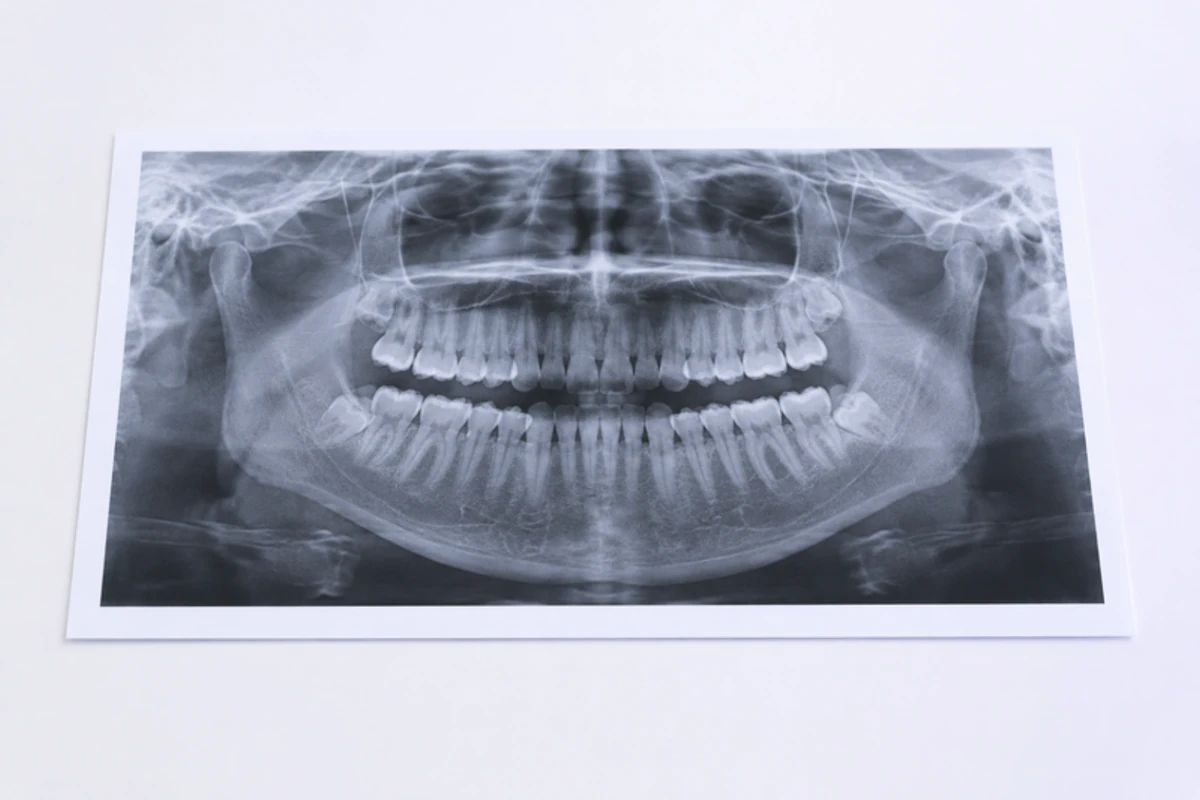
You can send old X-rays to the dentist before your appointment, whether you’re Thai or international, so send yours before you fly. These help the dentist most.
- A panoramic X-ray One image showing your upper and lower jaws and all your teeth. Your dentist at home can usually give you a copy
- Small X-rays of the problem tooth If you’ve had one taken recently, send it too
- A 3D scan (CBCT) If you’ve had one, the file is usually in DICOM format, which ordinary photo viewers can’t open. If you have a download link or a disc, send that
- Photos of your teeth Take them in good light: one of your full smile, and two or three close-ups of the spot that bothers you
- A short message saying what you’d like treated and roughly when you’re coming
You can send these by WhatsApp +66 91 797 7888, LINE @kitchaclinic, or email ap*********@****************ic.com. Our staff reply in Thai or English, and we have a Chinese-speaking coordinator. All our contact channels are on the contact us page.
Old images help the dentist see the likely direction and plan your days, but a dentist can’t make a diagnosis or settle the final plan from images alone. That needs an exam of your mouth at the first appointment.
How many days does each treatment take?
The figures below are typical time frames, not promises. The dentist will confirm your plan after examining you.
- Check-up, cleaning, fillings Can be finished during a short stay
- Root canal treatment Some teeth are done in one visit, but most need 2-3 visits. The dentist can tell you more clearly after seeing the X-ray
- Crowns and bridges There are 2 appointments: one to shape the tooth and one to fit the piece. The lab-made piece takes about 3-7 days. In some cases a digital crown can be ready the next day
- Porcelain veneers We suggest allowing about 10-14 days, because we prefer not to rush this kind of work
- Tooth extraction Most people can travel 2-3 days after an extraction, and there’s usually a check of the wound about 7 days afterwards
- Dental implants The first round takes about 1-2 weeks (exam, scan and surgery). Then you wait at home, generally 2-6 months, and come back for another 1-2 weeks to fit the crown. If you need a bone graft or a sinus lift (adding bone under the sinus in the upper jaw), the waiting period is longer
- All-on-4 / All-on-6 Planned in two rounds, just like single implants. Most people get a temporary fixed set of teeth after surgery
- Full-mouth restoration Many appointments, over several weeks to several months. It may need more than one trip
Can you fly after surgery? Most people can travel about 2-3 days after implant surgery or an extraction, but the dentist confirms this case by case. After a sinus lift, don’t fly until the dentist says the area has healed well enough.
If you’re having an implant placed on the same day a tooth is taken out, read more at immediate dental implants after extraction.
immediate dental implants after extraction
From your first message to your flight home
It starts when you message us with what you’d like treated, your images, and roughly when you plan to come. The dentist gives you a first opinion, which we aim to do within one day, or within 48-72 hours if dentists from several specialties need to look. Then tell us your travel dates before you book flights, and we’ll arrange appointments around your stay. If you have insurance, contact us before you travel so we can check your coverage.
Your first appointment in Chiang Mai starts with an exam and any X-rays the dentist needs. You then get a cost estimate before treatment begins, and treatment goes ahead step by step. Before you fly home, the dentist confirms you’re ready to travel and explains how to look after yourself. If your plans change, let us know. We can move or adjust your appointments to suit your flight.
Documents and things to bring
Prepare as you would for any medical visit abroad, and keep everything together in your hand luggage.
- Passport or ID card to register at the clinic
- A list of the medicines you take, including those for other conditions. Write down the generic names and doses
- Medical conditions and drug allergies Tell the dentist about both. If you’re pregnant, tell us that too, and the dentist will plan around it
- Results for any condition you’re being treated for, such as a recent blood sugar or blood test result, if the dentist asks for it
- X-rays and earlier treatment records, if you have them. Bring them even if you’ve already sent them
- Insurance details Your policy number, your insurer’s contact number, and the approval letter if you already have one
- A smile photo on your phone If you have a picture from before your teeth changed, it helps the dentist see what’s different
If you take blood thinners (anticoagulants), tell our staff and the dentist before you travel. In some cases you don’t need to stop the medicine, and in others the dentist may ask to talk to the doctor who looks after you. Don’t stop your medicine on your own.
Insurance and paying for treatment
The price is the same for Thai and international patients. The actual cost depends on what the dentist finds, and the dentist always explains it and gives you an estimate before starting. You can see price ranges on the dental prices page.
You can pay by cash, credit card (Visa, Mastercard, Amex, UnionPay, JCB), PromptPay, Alipay, WeChat Pay or bank transfer, with no extra fees. Card payments are subject to the amount conditions listed on the prices page.
If you have international health insurance, we can bill Cigna, Allianz, International SOS and April directly for eligible patients, once your coverage has been checked and prior approval obtained. Your policy has to cover the dental treatment. If you’re not sure, ask your insurer before you travel and let us know, and we’ll help check your coverage.
Crowns, bridges, veneers and the teeth placed on implants made at the clinic come with a 1-year warranty on the work, subject to conditions, which you use at our clinic in Chiang Mai.
Getting to the clinic, and choosing your dates
Kitcha Dental Clinic is at 7/2-3 Changloa Road, Haiya, Mueang Chiang Mai, opposite Chiang Mai Gate and near the Wualai Walking Street. The clinic has its own parking, with no parking charge. The entrance has no steps, the treatment rooms are on the ground floor, and there’s a lift and a wheelchair-accessible toilet.
The clinic is open every day, 09:00-20:00, except 31 December, 1 January and 13-15 April, which is Songkran. If your trip falls in those periods, count those three days as days the clinic is closed.
Walk-ins are welcome, but our dentists see patients with appointments first, so you may have to wait a while. If your trip is short, booking ahead gives you more peace of mind.
On timing: if your treatment needs several days, such as veneers or a crown, choose dates that still give you enough days once the clinic’s closed days are taken out. And remember that New Year and Songkran are busy travel times, so book a little further ahead to get the dates you want.
Toothache during your stay, and after you go home
If you get a toothache while you’re staying in Chiang Mai, call or message us on WhatsApp, LINE or email and tell us your symptoms. Our staff will find a time that matches how urgent it is, or you can simply walk in.
After you’ve gone home, if you have a question or you’re unsure about a symptom, send a photo with a short description by WhatsApp or LINE, and the dentist can advise you. If you’re worried about understanding us, for example if an English accent is hard to follow, just tell us. We can explain again, or send the explanation in writing by email or WhatsApp.
The medicines you should always tell the dentist about are blood thinners (anticoagulants). Don’t stop them on your own. Ask the doctor who prescribed them first, and bring your medicine list with you.
Common misunderstandings
“Once I send photos, I’ll get the final plan and price straight away.” Photos and X-rays show the dentist the likely direction. The final plan and price are confirmed after an exam of your mouth at the first appointment.
“Any dental work needs a two-week stay.” Check-ups, cleanings and fillings fit into a short stay. Veneers take about 10-14 days, and implants are split into two rounds, so you don’t have to stay for months at a time.
“An implant can be finished in a single trip.” Generally it can’t, because an implant needs time to fuse with the bone. In some cases an implant can be placed on the same day as the extraction, but the permanent crown is made after the bone has healed. See immediate implants after extraction.
immediate implants after extraction
“International patients pay a different price from Thai patients.” At Kitcha Dental Clinic, everyone pays the same price.
“I have to wait until the wound has healed completely before I can fly.” Most people can fly about 2-3 days after implant surgery or an extraction. The dentist confirms this case by case.
“I take blood thinners, so I must stop them before seeing the dentist.” Don’t stop them on your own. Tell the dentist, who may ask to talk to your own doctor first.
Planning examples
These examples are made up to give you a picture. They are not stories about real patients, and the dentist will confirm your own plan.
A five-day holiday and a filling that feels rough. She sends close-up photos ahead of time. The dentist thinks one filling probably needs replacing, and that a cleaning would help too, so the appointment is on the second day of her trip. Both are done in one visit, and she carries on with her holiday.
An expat living in Chiang Mai who needs a crown. He has ten days. A lab-made crown takes about 3-7 days and two appointments, so the tooth is shaped early in the week and the crown is fitted toward the end of the following week.
A Thai person living overseas who wants veneers. She wants to come home in April. She knows veneers need 10-14 days and that the clinic is closed 13-15 April, so she picks dates that leave enough days after the closure, and books well ahead.
A traveler missing a back tooth. He sends a panoramic X-ray first. The dentist can see that an implant is the likely route, so he plans the first round of about 1-2 weeks now, and a return trip several months later.
A family bringing their father, who takes blood thinners, for an extraction. They tell our staff about the medicine before booking flights. He doesn’t stop it on his own, and the dentist decides whether to talk to his own doctor first.
What to ask before you decide
If you’re comparing several places, try asking each clinic these questions.
- Who is the dentist who will treat me, and can they explain the plan in a language I understand?
- What does the price you quoted include, and when do I pay?
- If there’s a problem with the work after I go home, who do I contact, and where do I use any warranty?
- How long is the warranty on the work, and what are the conditions?
- If I need to come back, how long do I have to leave between visits?
And ask the dentist about your own plan: which tooth has to be done first, which can wait, how many appointments you’ll need, and, if your time is limited, what can be left out without affecting the long-term result.
Frequently asked questions about dental trips to Chiang Mai
How much does dental treatment in Chiang Mai cost?
You can see the price range for each group of treatments on the dental prices page. The actual cost depends on what the dentist finds, you get an estimate before treatment starts, and the price is the same for Thai and international patients.
How far ahead should I book dental treatment in Chiang Mai?
If your days are limited, booking ahead gives you more peace of mind, especially around New Year and Songkran. If your treatment needs several days, such as veneers, tell us before you book flights.
How long do teeth whitening, a cleaning and a check-up take?
These can be finished during a short stay. If the exam shows a tooth that needs more treatment, the dentist will tell you whether it can be done straight away or should wait. If you’re looking for teeth whitening in Chiang Mai, ask about it when you book.
How many days should I stay in Chiang Mai?
It depends on the treatment. A check-up and cleaning may take only a few days, a crown about a week, veneers about 10-14 days, and implants need two trips. Send photos to the dentist first, then book your flights.
Can I finish dental implants in Thailand in a single trip?
Generally not. An implant needs several months to fuse with the bone before the permanent crown goes on, so the treatment is planned in two rounds: surgery first, then the crown.
Can I get a price from photos?
The dentist can give a first opinion and a price range from images, but the actual price depends on the exam at your first appointment. You get an estimate before treatment begins.
I don’t have a recent X-ray. What should I do?
That’s fine. Send photos of your teeth first, and the dentist will take new X-rays at your first appointment.
Can I fly after dental surgery?
Most people can, about 2-3 days after implant surgery or an extraction, though the dentist confirms this case by case. After a sinus lift, wait until the dentist says it has healed well.
Do I need an appointment?
Walk-ins are welcome, but if your days are limited, booking ahead gets you a fixed time.
Can my insurer pay the clinic directly?
Yes, for eligible patients with Cigna, Allianz, International SOS and April, once your coverage has been checked and prior approval obtained.
What should I do if there’s a problem after I go home?
Send a photo with a short description by WhatsApp or LINE, and the dentist will advise you. If you need an exam of your mouth, you would need to come back to the clinic.
Summary
Dental work in Chiang Mai during a trip, or on a visit home from abroad, can be planned almost entirely from home. Send your X-rays or photos to the dentist before you book flights, and you’ll know roughly how many days to allow. Check-ups, cleanings and fillings don’t take long, crowns and veneers need extra time while the lab makes them, and dental implants are planned in two rounds. The price is the same for everyone, and the dentist tells you the cost before starting.
You don’t have to decide before you come. Send your X-rays to the dentist first. You can book an appointment at Kitcha Dental Clinic, call +66 53 200 201, message us on LINE @kitchaclinic or WhatsApp +66 91 797 7888. Information for international patients is at international patients.
Sources for this article
- Advice for people traveling abroad for treatment from the NHS (United Kingdom) and the CDC (United States), on telling your insurer in advance and agreeing how you will communicate with your clinician
- American Dental Association (ADA) and FDA, guidance on the use of dental X-rays
- The clinic’s own experience of caring for patients