

You have lost a few teeth and the dentist mentions a removable partial denture. Then come the choices: a pink plastic one, one with a thin metal frame, or a flexible one with no metal clasps. Someone in the family says plastic is fine, a friend says metal lasts longer. What is the real difference, and which one fits your situation?
The honest answer is that neither is better for everyone. They suit different situations. An acrylic, or plastic, partial denture is quicker to make, easy to add teeth to and often used as a first or transitional denture. A metal-framework partial denture is thinner and more rigid, and a Thai dental school article notes that metal-based dentures last longer and chew better, which is why they are often chosen as long-term dentures. Flexible dentures avoid metal clasps. At Kitcha Dental Clinic, acrylic partial dentures are used as temporary dentures, for example right after an extraction or while you wait for longer-term treatment, and for long-term use the clinic recommends a metal-framework or flexible denture. Your remaining teeth, gums and bone, and how you want the denture to feel and look, decide which of these fits.
This article lays out the differences side by side: a quick decision checklist, how each type holds in the mouth, a comparison table, what research says about how long they last, the visits involved, getting used to a new denture, daily care, common myths, the signs to see a dentist, and answers to frequent questions.
In short: acrylic partial dentures are quick to make and easy to adjust or add to, but thicker and more likely to break. Metal-framework partial dentures are thinner, cover less of the palate and in a large study lasted longer. Flexible dentures have no metal clasps. Regular maintenance helps any denture last. At the clinic, acrylic is used as a temporary denture, and a metal framework or flexible denture is recommended for long-term use.
Which partial denture might suit you? A quick checklist
A temporary acrylic partial denture may suit you if
- You need teeth soon, for example right after an extraction or while gums are still healing.
- Some teeth may need to come out soon, so a temporary denture is worn while the plan settles, then a long-term one is made.
- You plan implants or a bridge later and want something in between.
A metal-framework partial denture, for long-term use, may suit you if
- Your remaining teeth are healthy and stable, and you want a long-term denture.
- You would like less plastic over the palate and gums, so the denture feels thinner.
- You chew firmly and want a denture that flexes less.
A flexible partial denture, for long-term use, may suit you if
- Visible metal clasps on front teeth bother you.
- Your dentist finds that your remaining teeth and gums suit this material.
Whichever you are leaning toward, the examination decides. A bridge or implants may also suit you, and your dentist explains those options too.
How each type holds in your mouth
A partial denture has to stay in place while you chew and speak, without harming the teeth that hold it. It does this in two ways: by resting on the gums and palate, and by gripping the remaining teeth. The balance between the two is the main difference between acrylic and metal designs.
- An acrylic partial denture spreads the chewing load mainly over the gums and palate, so it needs a wider, thicker base. Simple wire clasps help hold it.
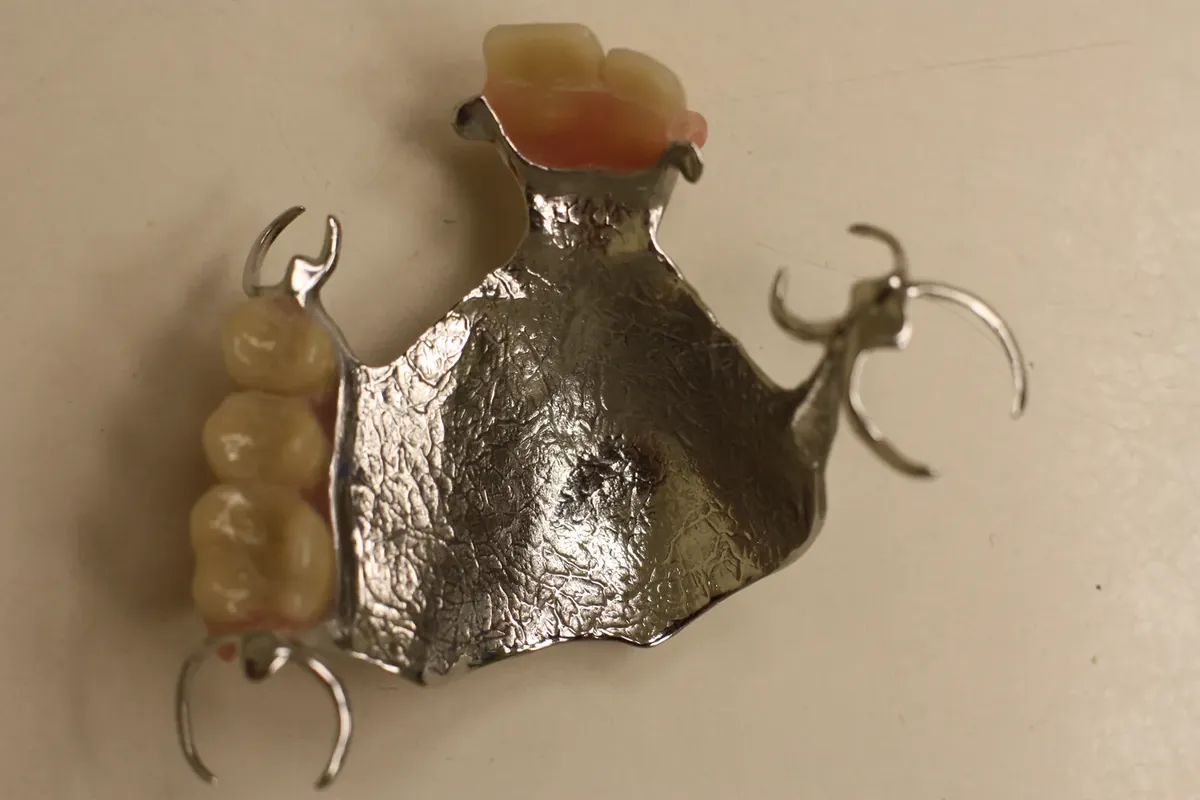
- A metal-framework partial denture uses a thin, rigid cobalt-chromium frame. Small rests sit on the remaining teeth and clasps grip them, so more of the load goes to the teeth and less plastic is needed.
- A flexible partial denture uses a flexible resin that grips the teeth and gums with tooth-colored or pink edges instead of metal clasps.
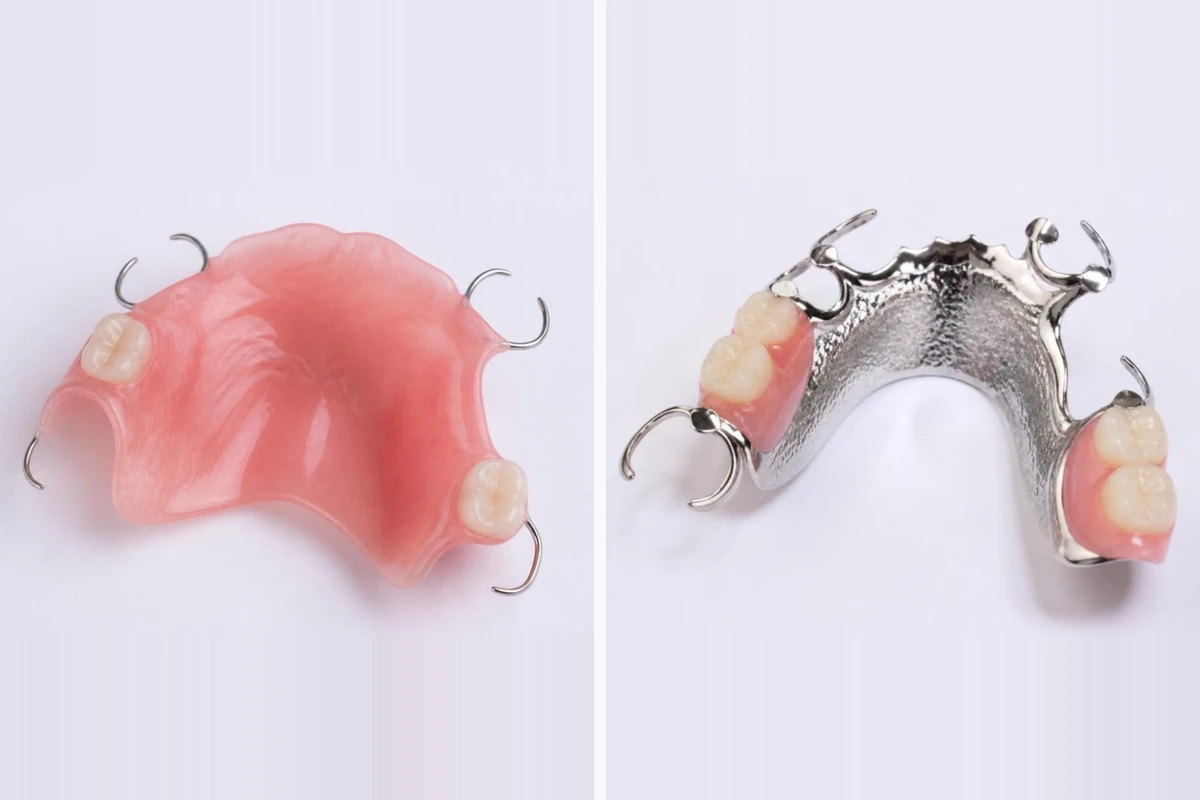
Because a partial denture rests against your own teeth, those teeth need to be healthy, and they need extra cleaning around the clasps. That is why an examination, X-rays and any fillings or gum care come first.
Acrylic, metal and flexible partial dentures compared
| Point | Acrylic (plastic) base | Metal framework |
|---|---|---|
| Thickness and feel | Thicker, covers more of the palate and gums | Thinner, covers less, often feels less bulky |
| Strength | More likely to crack if dropped or bitten hard | Rigid and strong |
| How long it lasts | Shorter on average in a large study | Longer on average in the same study |
| Adding a tooth later | Usually easy | Possible in some designs, more involved |
| Making it | Fewer steps, often quicker | Framework made first, then tried before the teeth are set |
| Typical use | First or transitional denture, or when more teeth may be lost | Long-term denture when remaining teeth are stable |
Flexible dentures sit somewhere else again. They have no metal clasps and many people like how they look and feel. A study of patient satisfaction found flexible partial dentures were rated more satisfying than metal ones in that group, though the type and position of missing teeth also made a difference. Your dentist explains whether your teeth and gums suit them.
How long do they last? A ten-year study of almost 1,900 partial dentures found that metal-based dentures lasted noticeably longer than acrylic ones. It also found that people who came back for more maintenance visits kept their dentures longer. So whichever you choose, regular checks and adjustments matter.
Read about dentures at the clinic
How partial dentures are made, and how many visits
| Step | What to do | Good to know |
|---|---|---|
| 1. Examination and planning | Teeth, gums and bone are checked with X-rays, and the options are explained. | Fillings or gum care may come first. |
| 2. Impressions and bite records | Impressions or a digital scan and jaw measurements are sent to the laboratory. | Full payment is requested on the day of the impression. |
| 3. Try-in | You try the denture or framework so color, shape and fit can be checked and changed. | Say what you would like changed now. |
| 4. Fitting and adjustments | The finished denture is fitted and your bite is checked. Follow-up visits adjust any sore spots. | Most dentures need at least 3 to 4 visits. |
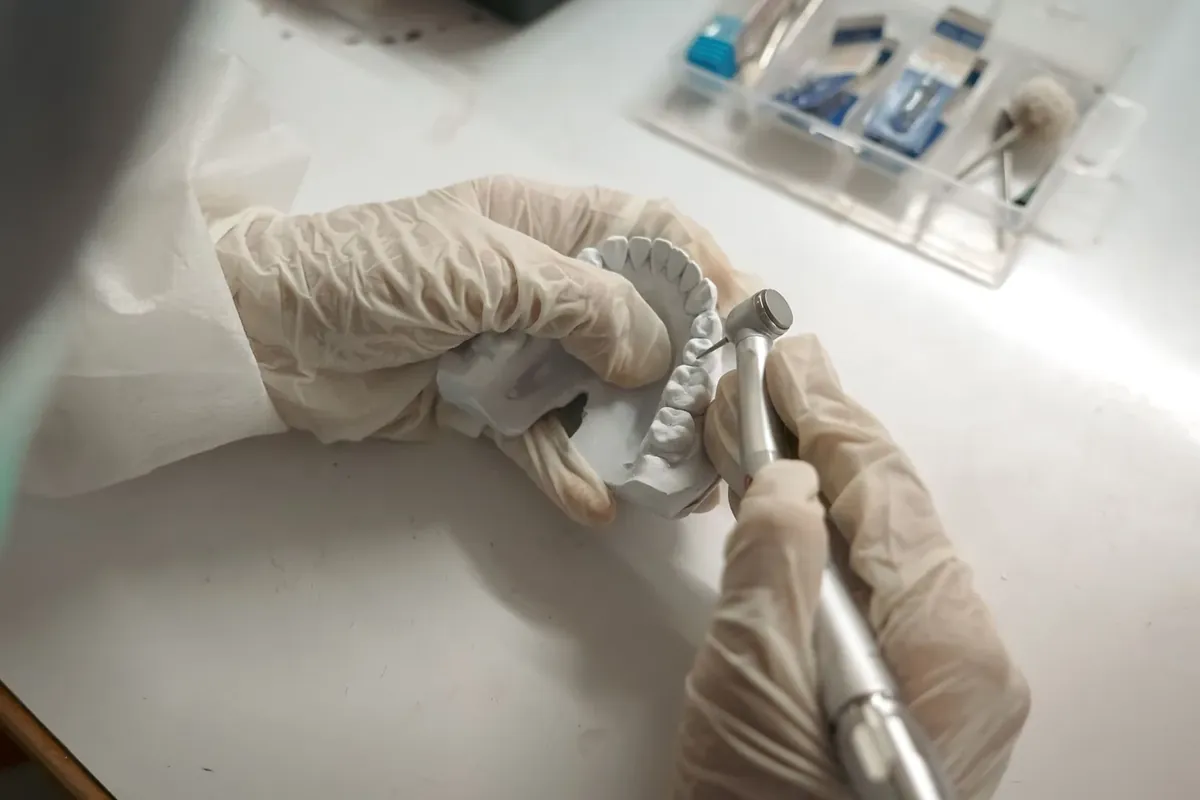
Full dentures usually need more visits than partial dentures. If you are traveling, tell the clinic your dates so the visits can be planned. Dentures are planned by dentists with postgraduate training in prosthodontics and made by the clinic partner laboratory, which is ISO-certified. Dentures and other laboratory work have a 1-year warranty on the restoration, terms apply.
What affects the fee
- The type and material: acrylic, metal framework, flexible or digital.
- How many teeth are replaced.
- Treatment needed first, such as fillings, gum care or extractions.
- Later maintenance, such as relines or repairs, which are charged when needed.
Denture prices are listed on the prices page as ranges, and your dentist confirms the fee after the examination. Payment for dentures is requested in full on the day of the impression.
Eating with a partial denture
Chewing with a new partial denture is a skill that comes back step by step. The Naresuan University article advises small pieces of soft food at first, chewing slowly, and avoiding biting or tearing food with the front denture teeth, because that can tip the denture out.
| Stage | Easier foods | Go slowly with |
|---|---|---|
| First week | Rice porridge, soft eggs, tofu, steamed fish, soft fruit | Anything sticky or hard |
| Next weeks | Cooked vegetables, minced meat, noodles, bread without hard crust | Tough meat, whole apples, corn on the cob |
| Once settled | Most everyday food, cut into small pieces | Very sticky sweets and hard nuts, which can loosen or crack a denture |
Getting used to a new partial denture
New dentures can feel strange for the first few weeks. The ADA notes that minor irritation, soreness and extra saliva are common at first and fade. A Naresuan University dental school article adds practical advice from experience: removable dentures usually need at least two or three adjustment visits, and patients should not try to adjust a denture themselves.
| Weeks | What is common | What helps |
|---|---|---|
| First days | Feels bulky, extra saliva, speech sounds different. | Swallow rather than spit, read aloud to practice words, wear it during the day. |
| First weeks | Sore spots where the denture presses. | Come back for adjustment. Do not file or bend it yourself. |
| Eating | Hard or sticky food is difficult at first. | Soft food cut small, chew slowly on both sides, avoid biting with front denture teeth. |
| After a few weeks | Most people feel used to it. | Keep regular check-ups so the fit is checked. |
Daily care for partial dentures
- Take the denture out and rinse it after meals.
- Brush it daily with a soft brush and water or a denture cleaner, not toothpaste, which can scratch it. Clean over a basin of water or a towel in case you drop it.
- Brush your own teeth with fluoride toothpaste, paying extra attention to the teeth the clasps hold, and clean your gums and tongue.
- Take it out at night to rest your gums, and keep it in water or a cleaning solution so it does not dry out. Never use hot water, which can warp it.
- For metal-framework dentures, avoid soaking in vinegar or harsh cleaners that can corrode metal parts, as the Naresuan University article advises.
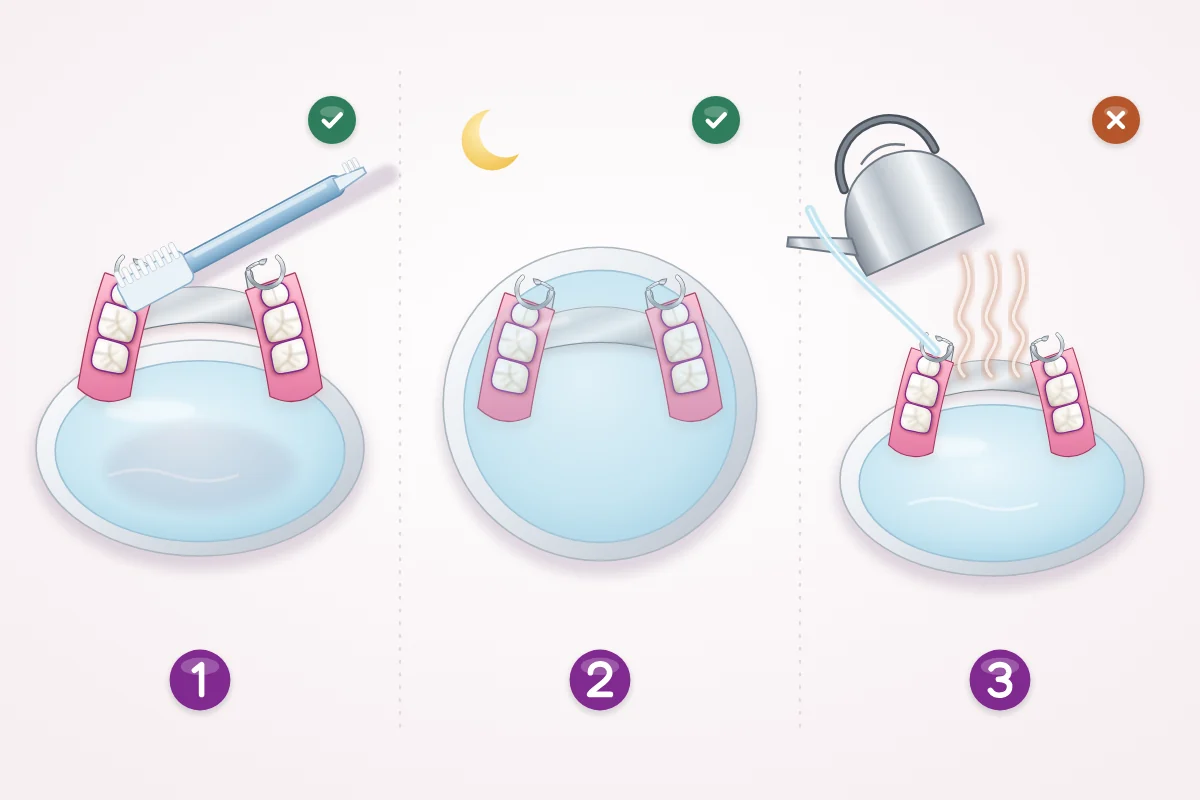
Why the night break matters: a review of denture stomatitis, a common redness of the gums under a denture, links it with plaque on the denture and with wearing dentures overnight. The NHS gives the same advice to take dentures out at night unless your dentist recommends otherwise, and the ADA advises removing dentures at night and cleaning them thoroughly before wearing them the next morning.
Partial denture, bridge or implant?
A partial denture is one of several ways to replace missing teeth. Before choosing a material, it helps to see where a denture sits among the options. Your dentist explains which suit you after an examination and X-rays.
| Option | How it works | Often considered when |
|---|---|---|
| Removable partial denture | Replacement teeth on a base that you take out to clean. | Several teeth are missing, or you prefer a removable option before deciding on implants. |
| Bridge | Joined crowns fixed to the teeth next to the gap. | One or two teeth are missing and the neighboring teeth are strong. |
| Implant crown | A crown on an implant placed in the jawbone. | Bone and general health suit implants, and you prefer a fixed tooth. |
| Denture that clips onto implants | A removable denture held by implants, so it moves less. | A denture moves too much and implants are possible. |
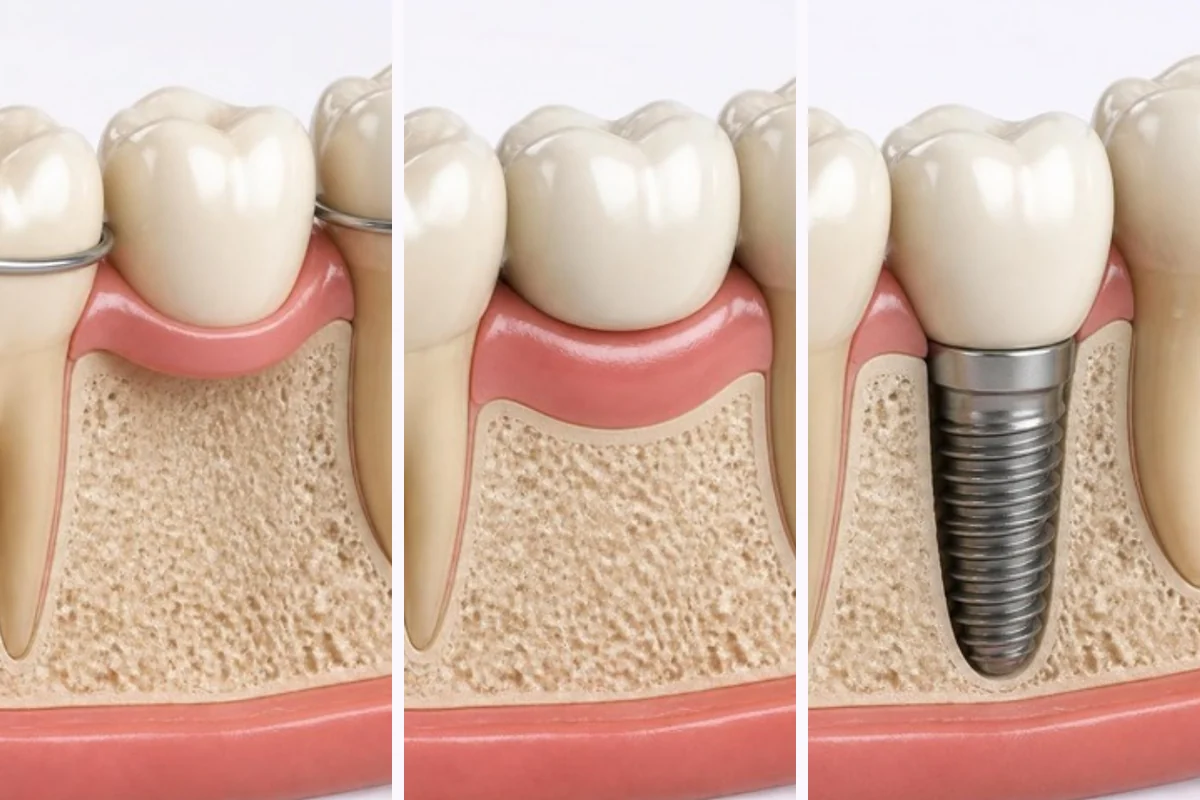
Many people start with a removable denture and change later, and some combine options, such as implants on one side and a partial denture elsewhere. There is no wrong starting point; the plan can grow with you.
Helping an older parent with a partial denture
A Naresuan University dental school article notes that older adults often lose several teeth and that dentures help chewing, keep neighboring teeth from tipping into gaps, and support confidence. Families can help a lot with daily care.
- Help take the denture out each night and put it in water or a cleaning solution.
- Brush the denture over a basin of water so it does not break if dropped.
- Look at the gums under the denture for redness or sore spots, and at the teeth the clasps hold.
- Notice if eating has become harder or the denture seems loose, and book an adjustment.
- Bring the denture to every dental visit, so the fit can be checked.
Common myths about partial dentures
| Myth | Fact |
|---|---|
| Metal dentures are always better. | They do different jobs. Acrylic is useful as a temporary denture, and a metal framework or flexible denture is recommended for long-term use. |
| Plastic dentures are poor quality. | Acrylic is a standard denture material. It is thicker and breaks more easily, which is a design trade-off. |
| Dentures can be worn day and night. | Taking dentures out at night lets the gums rest and lowers the risk of gum inflammation under the denture. |
| Toothpaste is fine for cleaning dentures. | Toothpaste can scratch dentures. Use water, soap or a denture cleaner. |
| Once a denture fits, it fits forever. | Gums and bone change over time, so dentures may need relining, repair or adjustment. |
| Adhesive can fix any loose denture. | Adhesive helps when the denture still fits well. A loose denture often needs relining or adjustment. |
When to see a dentist
- The denture rubs, causes a sore spot, or clicks when you talk.
- It slips, feels loose, or food collects under it more than before.
- A clasp is bent or broken, or the denture has a crack. Bring broken parts with you.
- Gums under the denture are very red, bleeding or sore, or you have bad breath that does not go away. The NHS lists problems with dentures among reasons to see a dentist about bad breath, and MedlinePlus lists dentures among dental causes of breath odor.
- A sore or ulcer in the mouth that has not healed after about 3 weeks, even after adjustment. The NHS advises having a mouth ulcer that lasts more than 3 weeks checked.
- A tooth that holds a clasp becomes loose, sensitive or decayed.
Choosing and making a partial denture at the clinic
- Tell the coordinator which teeth are missing and whether you already wear a denture. A time is booked with a dentist.
- Your dentist checks your teeth, gums and bone with X-rays and explains the options, including bridges and implants.
- For long-term use, your dentist recommends a metal framework in cobalt-chromium or a flexible Valplast denture, based on your remaining teeth, gums and bone and how you would like it to feel and look. An acrylic denture is used as a temporary denture while you wait.
- Impressions or a digital scan, a try-in, then fitting and adjustment visits follow. Most dentures need at least 3 to 4 visits.
- If a tooth is being removed and you want teeth straight away, an immediate acrylic denture can be fitted in suitable cases. It is adjusted as the gums heal and is usually replaced after a few months.
- If you would like your denture to move less, a denture that clips onto implants may be an option. Your dentist checks with an examination and a CBCT scan whether implants suit you.
If your current denture was made elsewhere and has become loose, the clinic can reline it depending on its condition. If you use Thai Social Security for dentures, you pay at the clinic, the clinic gives you a medical certificate and a receipt, and you claim the amount yourself.
If this sounds like you: what to do
These are example situations, not patient stories, to help you find the next step that fits.
- A back tooth was just removed and you want teeth while it heals: an immediate acrylic denture can be worn while it heals, and a metal-framework or flexible denture is made for the long term later.
- You are missing several back teeth on both sides and your other teeth are healthy: a metal-framework partial denture is the usual long-term choice.
- You dislike a visible metal clasp on a front tooth: ask whether a flexible denture suits your teeth and gums.
- Some of your remaining teeth are weak and may need to come out: a temporary acrylic denture can be worn in the meantime, then a long-term metal-framework or flexible denture is made once the plan is settled.
- Your old denture from another clinic has become loose: bring it in. It can be relined depending on its condition, or a new one discussed.
- You want your denture to move less when you eat: ask whether a denture that clips onto implants is possible for you.
- You are caring for an older parent who wears a partial denture: help with nightly removal and cleaning, and check the gums under it for redness.
Frequently asked questions about partial dentures
Is a plastic or metal partial denture better?
They do different jobs. Acrylic is quick to make and easy to adjust, so the clinic uses it as a temporary denture. For long-term use, metal-framework dentures are thinner, more rigid and tend to last longer, and flexible dentures avoid metal clasps. Your dentist recommends a long-term option based on your remaining teeth and gums.
Which is more comfortable?
Many people find a metal framework less bulky because it covers less of the palate and gums. Flexible dentures also feel comfortable to many people. Comfort depends on fit, so adjustment visits matter for every type.
How many visits does a partial denture take?
Most dentures need at least 3 to 4 visits, including impressions, a try-in and fitting, plus follow-up adjustments. Your dentist gives you a visit plan after the examination.
Will people see the metal clasps?
It depends on where the clasps need to go. On back teeth they are often hard to see. If a clasp would show on a front tooth, ask whether a flexible denture or another design suits you.
Can I sleep with my denture in?
Taking it out at night is better, unless your dentist recommends otherwise. It rests the gums and lowers the risk of inflammation under the denture. Keep it in water or a cleaning solution overnight.
My denture is loose. What can be done?
A loose denture can often be relined or adjusted, including dentures made elsewhere, depending on their condition. If it still moves too much, a denture that clips onto implants may help. Adhesive can help when the denture still fits well.
Can I use Social Security for dentures?
Yes, by claiming it yourself. You pay at the clinic, the clinic gives you a medical certificate and a receipt, and you submit them to claim the amount.
Can a partial denture damage my other teeth?
Plaque can collect around clasps, so the teeth that hold the denture need careful cleaning. With good cleaning, a well-fitting denture and regular check-ups, the remaining teeth can stay healthy.
Summary
Acrylic, metal-framework and flexible partial dentures each suit different situations. Your remaining teeth, gums and bone, and how you want the denture to feel, decide which fits.
- Acrylic: quick to make and easy to adjust, thicker and breaks more easily, used at the clinic as a temporary denture.
- Metal framework: thinner, more rigid, and lasted longer on average in a large study.
- Flexible: no metal clasps, suits some teeth and gums.
- Clean daily without toothpaste, take it out at night, and keep it in water.
- Come back for adjustments and regular checks. Maintenance helps any denture last longer.
References
American Dental Association (MouthHealthy): Dentures
Longevity of acrylic and cobalt-chromium removable partial dentures: a ten-year study. J Dent, 2024
Patient satisfaction with removable partial dentures, metal versus flexible. Cureus, 2024
Denture stomatitis: causes, cures and prevention. Prim Dent J, 2017
American Dental Association (MouthHealthy): Bad Breath