

The implant is in, the gauze is in your mouth and you have a care sheet in your hand. Now the everyday questions start. What can I eat tonight? When can I brush near it? Can I wear my denture tomorrow? And months later, once the new crown is on, how do I keep it clean so it stays healthy?
The good news is that implant care is simple once you know which stage you are in. Each stage has one main job: on the first day you protect the wound, in the first week you keep swelling down and the mouth clean, during the healing months you let the bone grow onto the implant, and after the crown is fitted you clean around it every day and keep your check-ups. Research on implant gum health keeps coming back to the same two habits: daily cleaning and regular professional care.
This guide follows those stages in order. It is based on the written care sheet our dentists give after implant surgery, and on guidance from dental hospitals and international research. You will find what is normal at each stage, Thai soft food ideas, how to brush and rinse, what to do with a denture or a temporary tooth, how to clean around the new crown, and a clear table of signs that mean you should contact us.
In short: on the first day, bite on the gauze as your dentist says, use cold packs, rest with your head raised and avoid rinsing or spitting hard. For the first week, eat soft food on the other side, brush your other teeth gently, start warm salt water rinses from the next day and stay off cigarettes for at least a week. While the bone heals over the next 2 to 6 months, avoid biting hard on the implant and keep the area clean. After the crown is fitted, clean around it every day, have a scale and clean every 6 months and an implant check once a year.
The four stages of implant aftercare
Most implant treatment happens in two parts a few months apart: the surgery to place the implant, and later the crown on top. Aftercare follows the same rhythm. Knowing the stage you are in tells you what is normal and what to focus on.
| Aftercare stage | How long this stage lasts | What matters most |
|---|---|---|
| 1. Surgery day | The first hours until the next morning | Let a blood clot form and keep the wound still |
| 2. The first week | Day 2 to about day 7, when stitches are checked | Get through the swelling comfortably and keep the mouth clean |
| 3. Waiting for the bone | Usually 2 to 6 months, longer after a bone graft or sinus lift | Let the bone grow onto the implant without heavy biting |
| 4. After the crown | From the day the crown is fitted, for the long term | Clean around it every day and keep your check-ups |
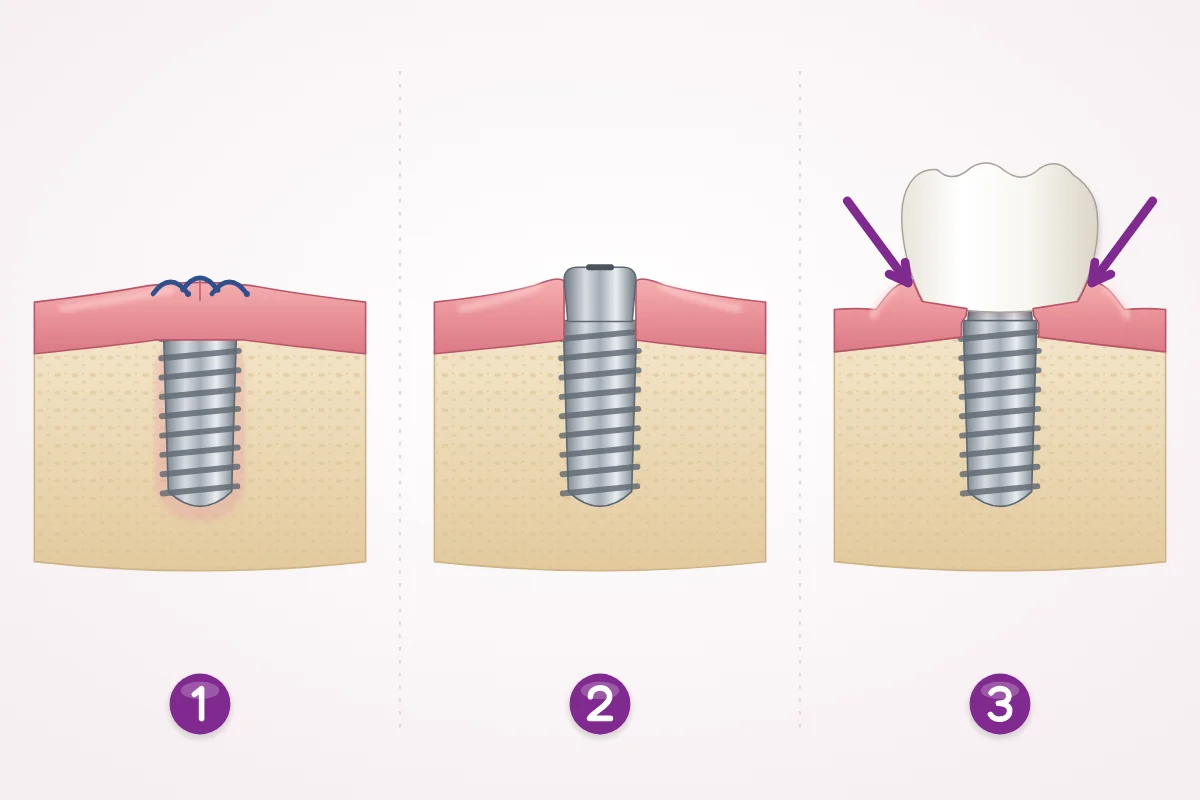
Some implants are covered by the gum after surgery, and some have a small metal healing cap that sits through the gum from the start. Both are normal. Your dentist tells you which one you have, because it changes how you clean the area in the first weeks.
Surgery day: what to do and when
The first day is about the blood clot and the stitches. Our implant care sheet asks for the same few things as dental hospital leaflets: firm pressure on gauze, cold on the cheek, medicines as prescribed and a quiet mouth. Soreness and swelling usually build up over the first one to two days and then settle.
| Time | What is normal | What to do |
|---|---|---|
| Right after surgery | Light oozing while the clot forms. The lip and cheek are still numb. | Bite firmly on the gauze for as long as your dentist says, usually about 1 hour, and keep biting for up to 2 hours if it still oozes. Swallow your saliva. |
| The first few hours | The numbness wears off and a dull ache begins. Swelling starts. | Take the medicines your dentist prescribed. Put a cold pack wrapped in cloth on the cheek for 15 to 20 minutes at a time. |
| Meals that day | Chewing near the wound feels uncomfortable. | Wait until the numbness has gone. Choose soft food that is cool or lukewarm, and chew on the other side. |
| Evening and night | A little pink on the pillow is common. | Rest with your head raised on an extra pillow. Brush your other teeth gently and leave the wound alone. Avoid rinsing or spitting hard. |
Gentle habits that protect the wound
- Talk a little less on the first day, and keep your tongue and fingers away from the stitches.
- Skip alcohol and coffee for now. Our care sheet lists both, because they can slow healing.
- Keep cigarettes and vaping out of the picture for at least one week after surgery. Our care sheet asks for one week before and after.
- Plan an easy day. Rest at home and leave heavy exercise for later.
If the gauze is soaked, fold a fresh clean piece into a small thick pad, place it right on the wound and bite steadily. A little blood mixed with a lot of saliva looks like more than it is. Bleeding that keeps flowing for more than 2 hours despite firm pressure is a reason to contact the clinic.
Our care sheet after implant surgery
Dental implant surgery: what it feels like and how long to rest
The first week: swelling, food, brushing and medicines
Swelling, a little bruising and soreness are normal in the first days, and they are usually at their peak around day 2 to 3. Our care sheet notes that the lips, chin or cheek can feel numb or tingly for a while, especially after surgery in the lower jaw. Each day after the peak should feel a little better than the one before.
| Time | What is normal | What to do |
|---|---|---|
| Day 2 | Swelling builds. Saliva may still be slightly pink. | Keep using cold packs. Start gentle warm salt water rinses after meals and before bed. Soft food only. |
| Days 3 to 4 | Swelling is at its peak and then starts to go down. Bruising may turn yellow. | Carry on with soft food and rinses. Light daily activity is fine. |
| Days 5 to 7 | Clearly better each day. Stitches may feel loose. | Come for your wound check. Stitches are usually removed at about 7 days, within 5 to 10 days, unless they dissolve by themselves. |
What to eat: a Thai soft food plan
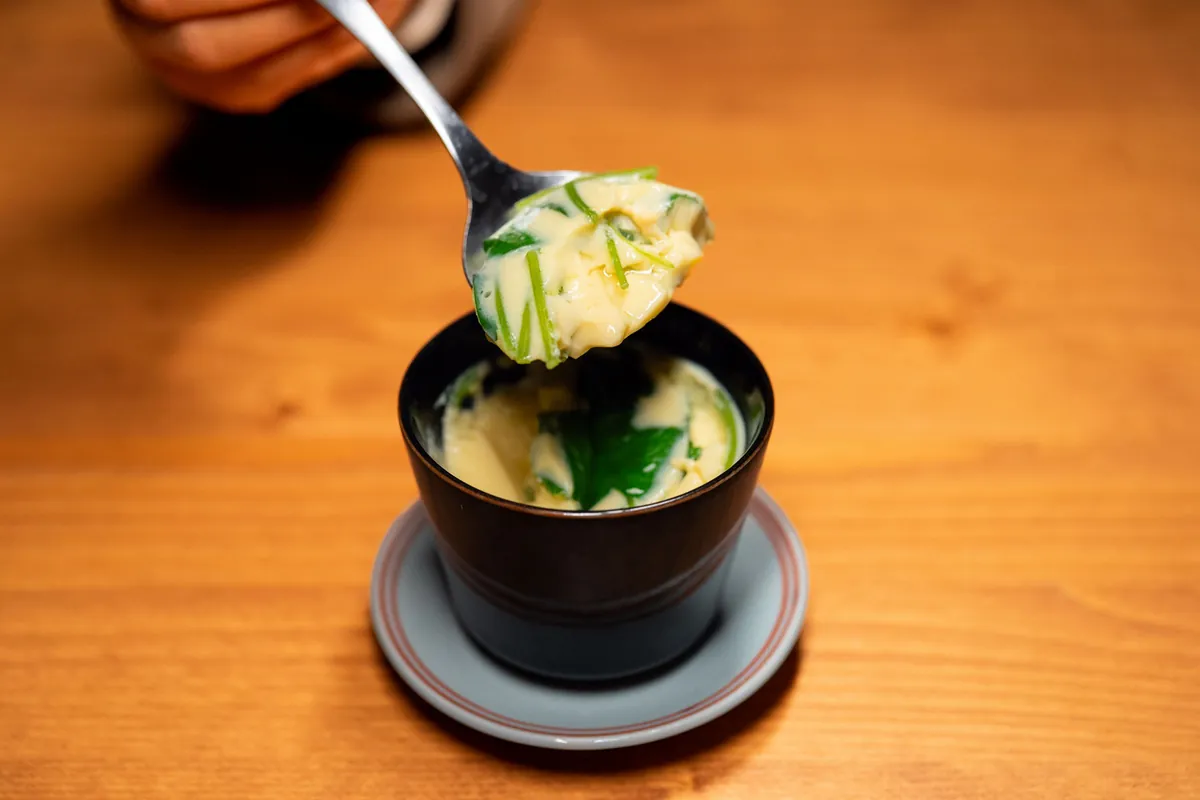
Our care sheet suggests soft food that is cool or lukewarm, and asks you to avoid food that is very hot, spicy, sticky or hard. Chew on the other side and keep food away from the stitches. Many Thai dishes fit well with a small change.
- Steamed egg, soft omelette in clear soup, or silken tofu.
- Rice porridge or boiled rice with minced pork or fish, left to cool a little.
- Clear soups with soft vegetables such as gourd, and noodles cooked soft.
- Yogurt, soft banana, papaya and pudding, eaten with a spoon.
- Leave crunchy, chewy or seeded food, chili and very hot drinks until the wound has settled.
Brushing and rinsing
A clean mouth heals better, so keep brushing. From the first evening, brush your other teeth with a soft brush and leave the wound itself alone. Our care sheet asks you not to rinse or spit forcefully for the first day. From the next day, rinse gently with warm salt water after meals and before bed, and let the water fall out of your mouth instead of spitting hard. Rinsing with warm salt water as your care sheet describes is enough; use a medicated mouthwash only when your dentist prescribes one.
A healing cap or the gum over the implant can be cleaned gently once your dentist says so, usually after the wound check. A very soft brush, held lightly, is all it needs.
Medicines after implant surgery
Take the medicines your dentist prescribed, following the label. If antibiotics are part of your plan, finish the course. If you notice a rash, itching, vomiting or difficulty breathing after a medicine, stop it and contact the clinic straight away. If you take regular medicines, including a blood thinner, keep taking them as your dentist and doctor have advised and do not stop them on your own.
Information on the medicines the clinic dispenses
Dentures and temporary teeth
If you wear a removable denture over the area, our care sheet asks you not to wear it there until your dentist has checked that it will not press on the wound. Bring it to your follow-up visit so it can be adjusted. A UK dental hospital tells patients this can take up to 2 weeks. If you had an implant placed right after an extraction, a temporary tooth can be fitted in some cases, and your dentist explains how to look after it.
If you also had a bone graft or sinus lift
Adding bone usually means more swelling and bruising in the first days, and a longer wait before the crown. Avoid biting hard food over the graft while it heals. You may notice a few small grains in your mouth, which can be normal after grafting; mention it at your check.
A sinus lift in the upper back jaw has its own care sheet. The key points are to avoid blowing your nose for the first weeks, to sneeze with your mouth open, to avoid straws and any sucking action, and to ask your dentist before you fly. Follow the sheet you are given, because the timing depends on your surgery.
Our care sheet after a sinus lift
Waiting for the bone: the healing months
Once the stitches are out, most people feel nothing at all from the implant. Underneath, the bone is slowly growing onto its surface. This is called osseointegration, and it is what will later let the implant carry chewing forces. At our clinic this usually takes 2 to 6 months, and longer if bone was added or the sinus was lifted. Your dentist confirms your own timeline from the 3D CBCT scan.
| Area | What helps during healing | Why this helps |
|---|---|---|
| Eating | Eat normally on the other side, and keep hard food off the implant until the crown is fitted. | Heavy biting before the bone has grown on can disturb the healing. |
| Keeping it clean | Brush your teeth twice a day. Clean the healing cap or the gum over the implant gently with a soft brush once your dentist says so. | Plaque around the healing gum keeps it inflamed. |
| Cigarettes and vaping | Stay off cigarettes and vaping while the bone heals, and ideally for good. | A review of more than 80,000 implants found failure about twice as common in smokers. |
| Health conditions | Keep diabetes and other conditions under control with your doctor, and tell your dentist about any new medicine. | Healing is slower when blood sugar is high. |
| Travel | Most people can travel 2 to 3 days after implant surgery. Your dentist confirms this for your case. | After a sinus lift, wait until your dentist says the area is ready for flying. |
A temporary tooth, if you have one, is for looks and light use only. Treat it gently, avoid biting into hard food with it, and if it feels loose, contact the clinic rather than waiting for the crown appointment. If the healing cap feels loose or comes out, keep it and call us, so the dentist can put it back or replace it before the gum closes over.
After the crown is fitted: the first weeks
The day the crown goes on is usually quick and comfortable. The new tooth may feel a little strange for a few days, much like any new filling or crown, and your tongue soon gets used to it. You can chew with it as your dentist advises, starting with softer food and building up over the first week or two.
- If the bite feels high, or you notice the new tooth first when you close, contact the clinic for a quick adjustment.
- Food may collect next to the new tooth at first. Clean it out the same day with an interdental brush, and mention it if it keeps happening.
- A little tenderness of the gum around the crown for a day or two is common. It should settle quickly.
- Ask your dentist to show you which brush sizes fit around your implant, while you are still in the chair.
Cleaning around the implant every day
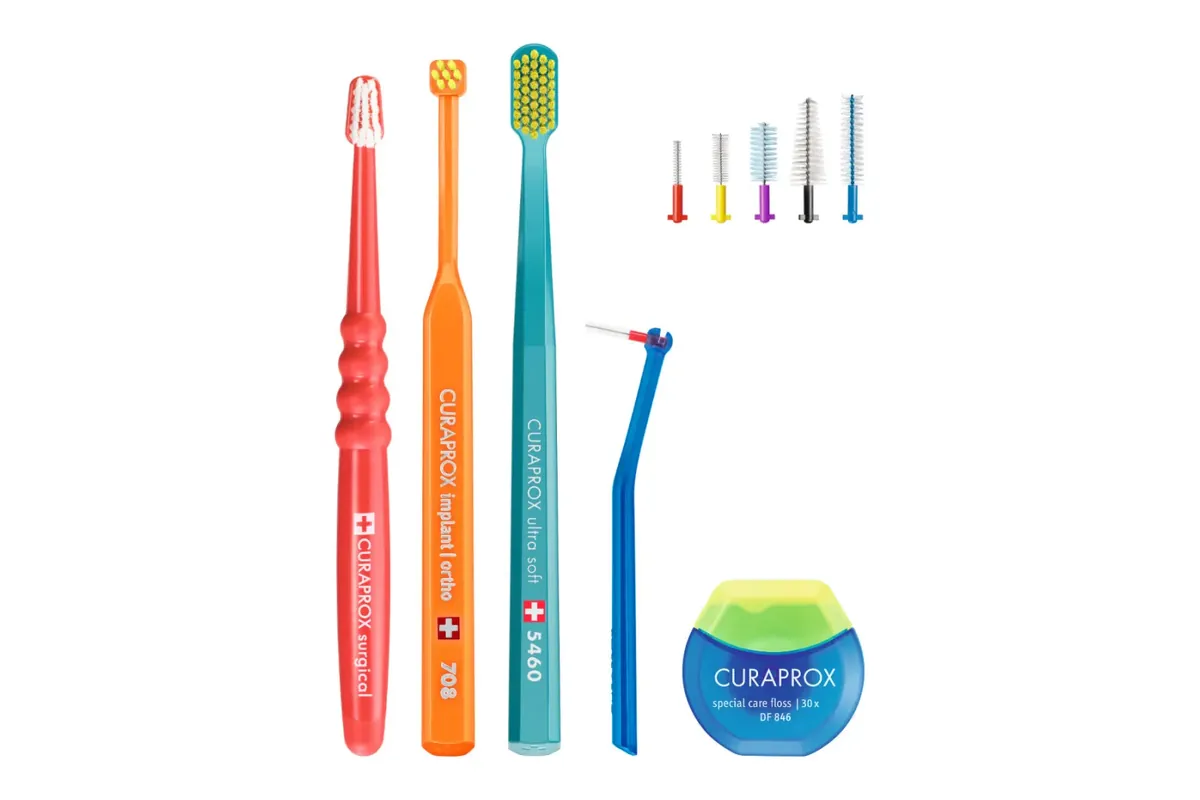
An implant crown cannot decay, but plaque sticks to it just as it does to natural teeth. The British Society of Periodontology and Implant Dentistry advises brushing twice a day for two minutes, cleaning between the teeth with interdental brushes, and using a single-tufted brush for hard-to-reach areas. A soft manual or electric toothbrush is safe for implants when used correctly.
| Where to clean | Tool and how | Tip |
|---|---|---|
| Where the crown meets the gum, cheek side | Soft toothbrush, angled toward the gum, small gentle movements | This is where plaque collects first. |
| Where the crown meets the gum, tongue side | Toothbrush turned upright, or a small-headed brush | The side most people miss. |
| Between the implant and the next tooth | Interdental brush of the size your dentist chose, in and out a few times | Many people need two sizes for different gaps. |
| Behind a last tooth or an awkward angle | Small-headed or single-tufted brush | Trace slowly around the crown, like drawing a circle. |
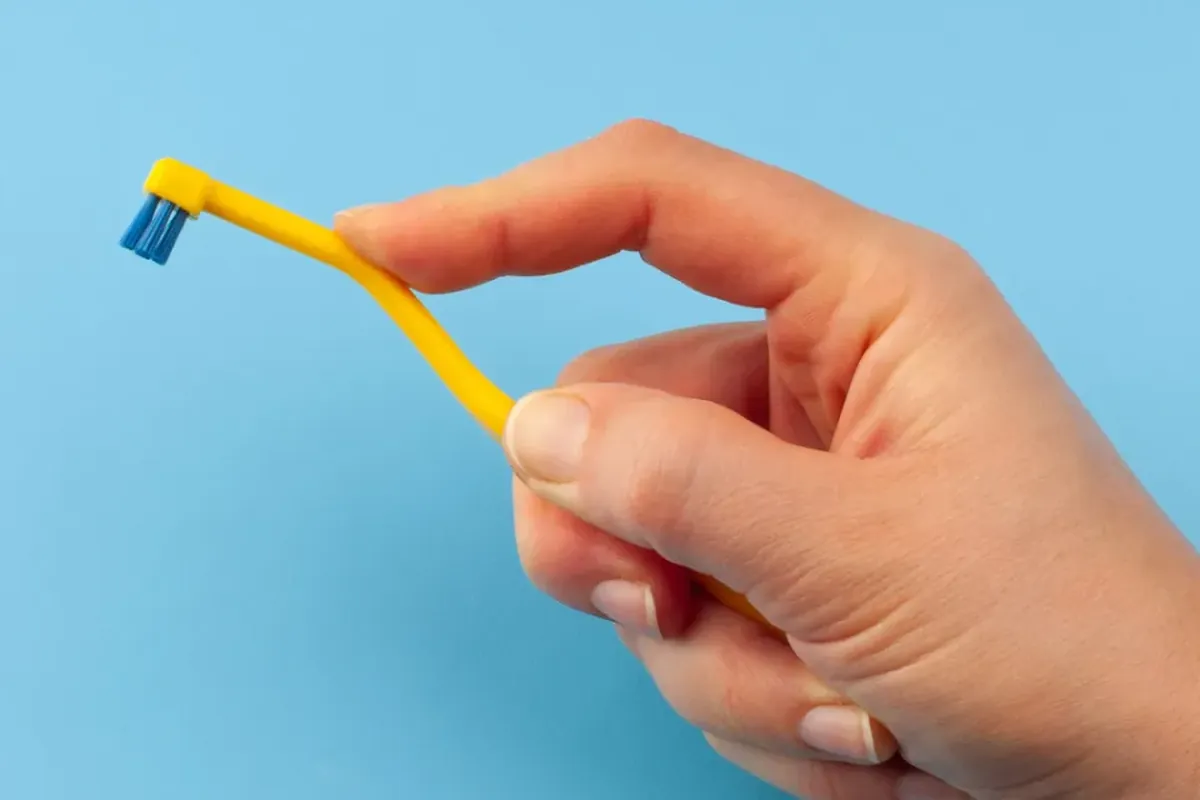
Floss and water flossers can also be useful, but they work well as part of a plan your dentist makes for your mouth. A water flosser is an extra, not a replacement for brushing and interdental cleaning. Once a week, look in a mirror: healthy gum around an implant is pink and firm and does not bleed when you clean it.
Dental floss and interdental brushes: how to use them and which to choose
Check-ups and the habits that keep an implant healthy
Our clinic recommends a scale and clean every 6 months and an implant check once a year. Your dentist may suggest coming more often if you have had gum disease or other risk factors. An international guideline from the European Federation of Periodontology describes the same idea: once the implant is in use, a structured programme of supportive care with regular checks of the tissue around it.
- Daily cleaning comes first. In a study where people stopped cleaning for 3 weeks, the gum around implants became inflamed, and it improved again once cleaning resumed.
- If you grind or clench, a night guard helps protect the crown and the small screw that holds it. Ask your dentist whether you need one.
- Stopping smoking helps for the long term, not only around surgery.
- Keep diabetes well controlled. A systematic review linked diabetes with a higher risk of inflammation and bone loss around implants.
- Bring any changes to your next visit: bleeding, a different bite, new medicines or a new health condition.
Bleeding around an implant is the earliest sign worth acting on. At that stage, called peri-implant mucositis, the bone is not affected and careful cleaning with a professional clean usually settles it. Our article on how long implants last explains the stages of gum health around implants and the risk factors in more detail.
How long do dental implants last, and how do you look after them?
Teeth grinding and night guards
Common myths about implant aftercare
| Myth | Fact |
|---|---|
| Rinsing hard with mouthwash on the first day keeps the wound cleanest. | The first day is for keeping the wound still. Gentle warm salt water rinses start the next day, and a medicated mouthwash is used only when your dentist prescribes it. |
| You should not brush at all for a week after implant surgery. | Brush your other teeth gently from the first evening. Only the wound itself waits until your dentist says it is ready. |
| A metal post showing through the gum means something went wrong. | A healing cap is often placed on purpose, so the gum heals in the right shape for the crown. |
| If nothing hurts, there is no need to come back for the check. | The wound check is when stitches come out and healing is confirmed, and later checks catch changes that do not hurt. |
| A denture can go back over the area the next day, as long as it feels fine. | Wait until your dentist checks that it does not press on the wound, and bring it to your follow-up visit. |
Normal healing or time to call? A clear guide
Most recoveries follow the pattern above. These signs are uncommon, and contacting us early lets the dentist check things while they are simple to manage.
| What you notice | What to do next |
|---|---|
| Pink saliva, mild swelling or a bruise in the first days, getting better after day 3 | Normal. Keep following your care sheet. |
| Bleeding that keeps flowing for more than 2 hours despite firm pressure on gauze | Contact the clinic now. |
| Pain or swelling that gets worse after the third day instead of better | Contact the clinic the same day. |
| Fever, chills, pus, or a bad smell or taste from the wound | Contact the clinic the same day. |
| Numbness of the lip, chin or tongue still there the day after surgery | Let the clinic know, so the dentist can follow it up. |
| The healing cap, a temporary tooth or the crown feels loose, moves or clicks | Avoid chewing on it and book a visit soon. A loose part is often simple to fix when seen early. |
| After the crown: gum around the implant that bleeds when you clean, looks red or puffy, or has a small bump | Clean carefully for a week. If it still bleeds, book a check. |
| Difficulty breathing or swallowing, or swelling spreading to the eye or neck | Go to the nearest hospital emergency department straight away. |
Emergency dentist in Chiang Mai
How the clinic supports you after implant surgery
- On the day: you receive the written care sheet, medicines as prescribed, and the date of your wound check before you leave.
- About 7 days later: the dentist checks the wound and removes stitches when appropriate. If you live abroad, the wound is checked before you travel.
- During the healing months: contact us any time something feels different, by phone, LINE or WhatsApp. The clinic is open every day from 09:00 to 20:00.
- The crown visit: the dentist checks the implant, takes an impression or a digital scan, fits the crown and shows you how to clean around it.
- After that: a scale and clean every 6 months and an implant check once a year, with a night guard if you grind your teeth.
Implant work done at our clinic comes with a 1-year warranty, terms apply. It covers the implant components and laboratory work done at our clinic and is used at the clinic in Chiang Mai. Your dentist explains the details with your treatment plan.
Before dental implant treatment: checks, visits and costs
If this sounds like you: what to do
These are example situations, not patient stories, to help you find the next step that fits.
- It is the evening of surgery and the gauze is still pink: fold a fresh piece, bite steadily for another hour with your head raised, and call if it is still flowing at 2 hours.
- You wear a partial denture over the implant area: leave it out as your dentist advised and bring it to the follow-up visit for adjustment.
- It is day 4 and the swelling is bigger than yesterday: contact the clinic the same day so the dentist can check it.
- You smoke and the surgery is next week: use this week to stop, and stay off cigarettes and vaping while the bone heals. Ask your doctor or a stop-smoking service for help.
- The healing cap came out while you were brushing: keep it in a clean bag and call the clinic, so it can be put back before the gum closes.
- Your new crown traps food every evening: clean it out with an interdental brush and ask at your next visit whether the contact or the brush size needs adjusting.
- You live abroad and the crown was fitted on your second trip: plan cleanings and implant checks into future visits, or keep regular cleanings at home and bring your implant details.
Frequently asked questions after implant surgery
When can I brush near the implant?
Brush your other teeth from the first evening. Clean the implant area itself gently with a very soft brush once your dentist says so, usually after the wound check. A UK dental hospital, for example, asks patients to leave the implant site for about a week.
Can I use mouthwash after implant surgery?
Gentle warm salt water rinses from the day after surgery, as your care sheet describes, are enough for most people. Use a medicated mouthwash only when your dentist prescribes it, and follow the instructions you are given.
When can I drink coffee or alcohol again?
Our care sheet asks you to avoid both during the early healing. Hot coffee also warms the wound. Most people return to them once the wound has been checked; ask your dentist at that visit.
When can I exercise?
Rest on the day of surgery and keep to light activity for the first few days, because heavy effort can increase bleeding and swelling. After a sinus lift, the care sheet asks for at least a week without heavy lifting, bending forward or intense exercise. Ask your dentist at the wound check when you can return to your usual sport.
Can I eat normally while waiting for the crown?
Yes, on your other teeth. Keep hard and crunchy food off the implant area until the crown is fitted, so the bone can grow onto the implant undisturbed.
My new implant crown feels slightly loose. What should I do?
Avoid chewing on that side and contact the clinic soon. Often it is the small screw or the crown rather than the implant in the bone, and it is usually simpler to fix when it is seen early.
Do I need special products for an implant?
Not special, but the right tools for the right places: a soft toothbrush, interdental brushes of the sizes your dentist chooses, and a small-headed brush for awkward areas. A regular fluoride toothpaste also protects your natural teeth next to the implant.
How often should I come back after the crown is fitted?
Our clinic recommends a scale and clean every 6 months and an implant check once a year. Your dentist may suggest more frequent visits if you have had gum disease or other risk factors.
Summary
Implant aftercare is simple when you take it one stage at a time: protect the wound first, then let the bone heal, then clean around the crown every day for the long term.
- Surgery day: gauze as your dentist says, cold packs, medicines as prescribed, head raised, and no hard rinsing or spitting.
- First week: soft Thai food on the other side, warm salt water rinses from the next day, no smoking for at least a week, wound check at about 7 days.
- Healing months, usually 2 to 6: eat on the other side, keep the area clean, and call if a cap or temporary tooth comes loose.
- After the crown: brush the gum line, clean between with interdental brushes, and use a small-headed brush for awkward spots.
- For the long term: a scale and clean every 6 months, an implant check once a year, and a night guard if you grind.
References
Guys and St Thomas NHS Foundation Trust (UK): After having a dental implant
Cleveland Clinic: Dental Implants
Faculty of Dentistry, Naresuan University (Dr. Radjit Tantasen): Dental implants, part 2