

A click every time you open your mouth to eat. A pop when you yawn that the person next to you can hear. Or one morning your jaw will not open as far as it did yesterday, or after a big yawn it will not close. Jaw sounds and locking are unsettling, partly because the joint sits right in front of your ear, so you hear every noise it makes.
The reassuring part: a jaw that clicks without pain is very common and is usually harmless. A review of prevalence studies found jaw-joint conditions in about 3 in 10 adults, and another large review found that a displaced disc that clicks back into place is present in roughly a fifth to a third of people, and for most it stays a lifelong noise without pain. The US National Institute of Dental and Craniofacial Research states that clicking without pain does not need treatment. Locking and pain are different, and they deserve attention, but even then most people improve with simple, reversible care.
This article explains what is going on inside the joint, how to tell a harmless click from a problem worth checking, what to do if your jaw locks open or closed, a 3-week self-care plan with gentle exercises, what research says about splints, common myths, and what a jaw assessment at the clinic involves.
In short: clicking without pain is common and usually needs no treatment. Pain, a jaw that catches, or reduced opening are worth a dental check, and most cases improve with soft food, rest for the jaw, heat or cold, gentle exercises and, for some people, a splint. A jaw that is stuck open or cannot open after a yawn or a wide bite needs urgent care: contact the clinic, which sees it as an urgent case when possible.
My jaw clicks or locks: a quick self-check
Usually fine to watch
- A click or pop when opening or closing, with no pain.
- You can open wide enough to bite an apple, and eating feels normal.
- The sound has been the same for a long time.
Worth a dental check
- Aching in front of the ear, the jaw or the temples, often worse in the morning or after chewing.
- The jaw sometimes catches and you have to wiggle it to open fully.
- Opening has become smaller, or your jaw moves to one side as you open.
- You clench or grind your teeth, or your teeth look worn.
- A clicking jaw has started to hurt.
Needs urgent care
- Your jaw is stuck open after a yawn, a wide bite or a dental visit, and you cannot close your mouth.
- Your jaw suddenly cannot open more than a little and it is painful.
- Jaw pain after a blow to the face, with swelling, or teeth that suddenly do not meet as before.
- Jaw pain together with fever, swelling of the face, or difficulty swallowing or breathing: go to a hospital emergency department.
What causes clicking and locking
The jaw joint, just in front of each ear, is where the lower jaw meets the skull. Between the two bones sits a small, flexible disc that cushions and guides the movement. When you open wide, the head of the lower jaw slides forward and the disc moves with it. Problems in this joint and the muscles that move it are grouped under the name TMD, temporomandibular disorder, and dentists classify them using standard diagnostic criteria known as DC/TMD.
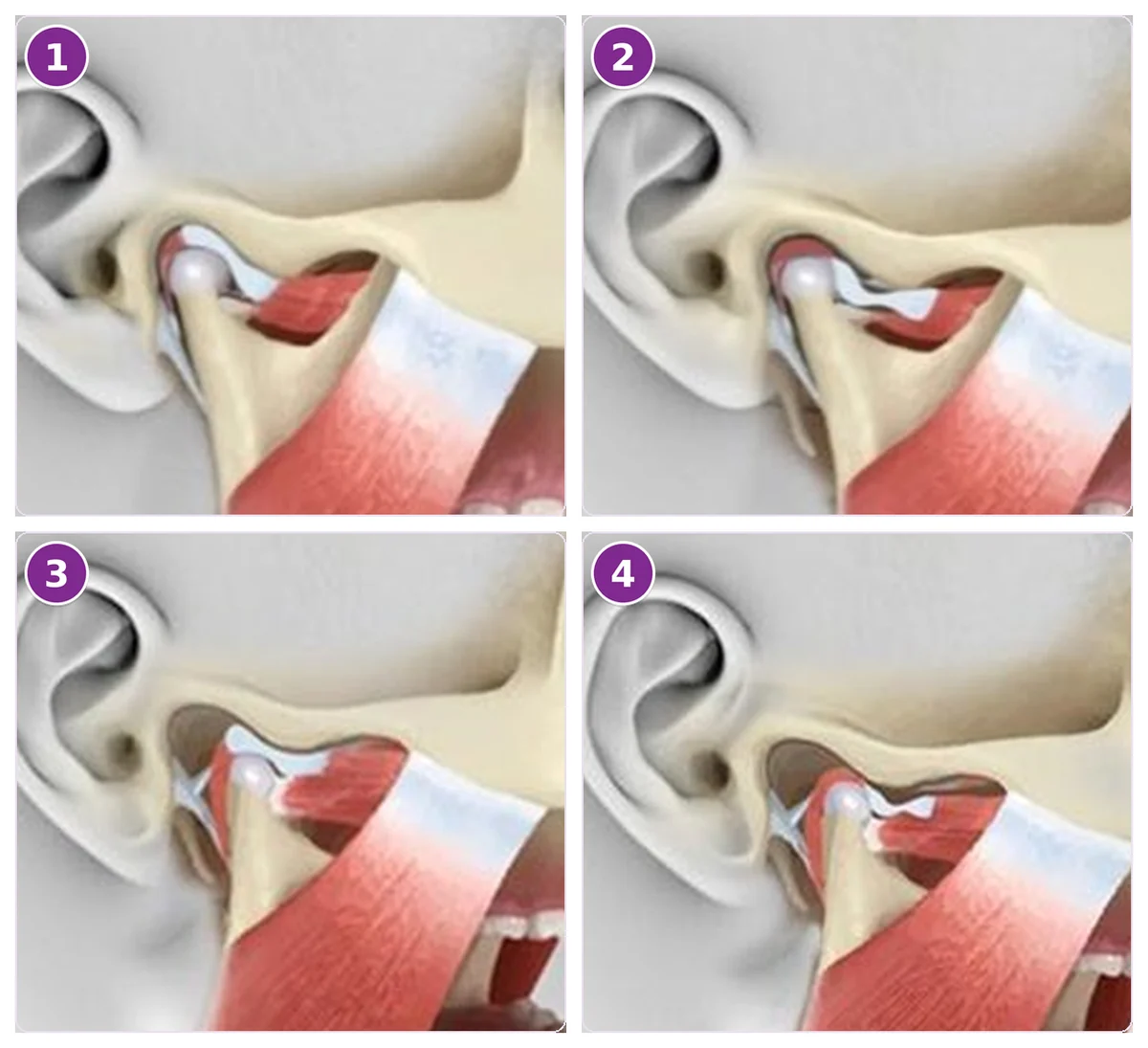
| What is happening | What you notice | How it usually goes |
|---|---|---|
| Disc slightly forward, clicking back into place | A click on opening, sometimes another on closing. No pain. | Mostly stable and without pain for life. Treatment is not needed unless it hurts. |
| Disc stays forward and blocks movement (closed lock) | The click stops, but opening is suddenly smaller and the jaw moves to one side. Often painful at first. | Tends to ease, and in many cases resolves within months with conservative care. |
| Jaw slides too far forward and cannot close (open lock) | Mouth stuck open after a yawn or wide bite, front teeth do not meet. | Needs urgent care to guide the jaw back into place. |
| Tired, overworked chewing muscles | Aching jaw, temples or cheeks, worse in the morning or with stress. | Often improves with self-care, less clenching and, for some, a splint. |
What sets it off? The clinic page on jaw pain lists clenching or grinding, during the day or in sleep, which overloads the muscles, along with stress, the way the teeth meet and some sleep problems. The NHS adds wear and tear on the joint and a blow to the head or face. A Siriraj Hospital article describes muscle overuse from chewing on one side or chewing hard food, and notes that some people have a history of grinding. NIDCR adds that in most cases the exact cause is unclear, and that genes, stress and how a person perceives pain may all play a part.
Jaw pain is not always from the jaw joint. It can also come from a tooth, the sinuses or the ear, which is why a dentist examines before suggesting any treatment.
Read about jaw pain and TMD care at the clinic
If your jaw locks: what to do now
Stuck open: cannot close your mouth
- Stay calm and breathe slowly through your nose. Tension in the muscles makes it harder to close.
- Support your jaw with your hand or a scarf to take the strain off the muscles.
- Do not force the jaw shut and do not let someone without training push it back. Cleveland Clinic also advises not to try to reposition it yourself.
- Contact the clinic straight away. A jaw stuck open is seen as an urgent case when possible. If you cannot reach the clinic, go to a hospital emergency department.
- Afterward, avoid wide yawns and big bites for a while, and support your chin when you yawn.
Stuck closed: cannot open fully
- Do not force your mouth open. Choose soft food you can manage with a small opening.
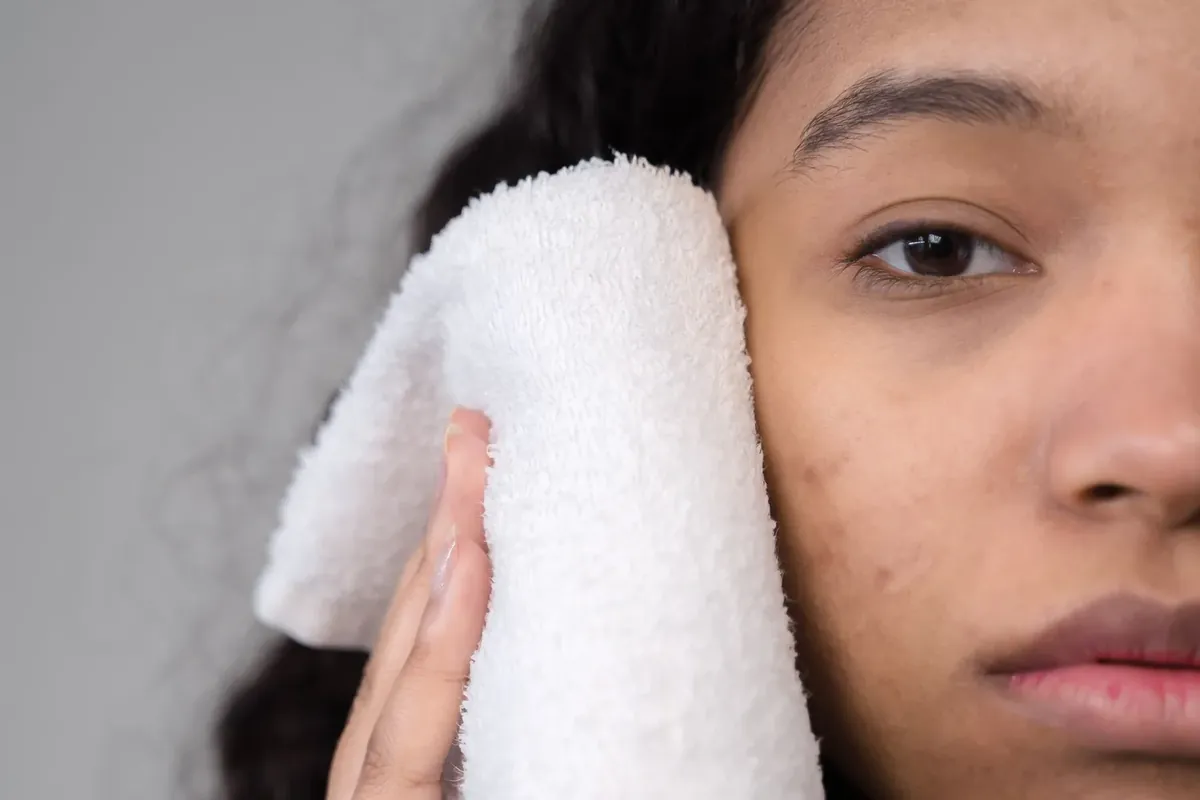
- Use a warm pack on the side of the face for 10 to 15 minutes a few times a day, or cold if it feels better.
- Take a pain reliever you normally use safely, following the label.
- Book a dental assessment soon. Most closed locks ease over time with conservative care, and a dentist can guide gentle movement.
Jaw stuck open? Contact the clinic
A 3-week self-care plan for a painful or clicking jaw
NIDCR recommends starting with conservative, reversible care, and notes that many TMD problems are temporary and settle without treatment. The NHS and the clinic page give the same practical steps. This plan puts them in order. Stop any step that makes pain clearly worse, and see a dentist if there is no improvement after about three weeks.
| Weeks | Tasks | What you should notice |
|---|---|---|
| Week 1: rest the jaw | Soft food cut small, no gum or chewy food, no biting with the front teeth, warm or cold packs, check that your teeth are apart when resting. | Less morning ache, fewer painful clicks. |
| Week 2: gentle movement | Add the gentle exercises below twice a day, keep the soft diet, and notice when you clench during the day. | Opening feels smoother and less tired. |
| Week 3: return to normal | Gradually return to normal food, keep the exercises, and keep reducing clenching and stress. | Little or no pain. If pain or locking continues, book an assessment. |

Gentle jaw exercises
- Relaxed jaw: rest the tip of your tongue on the roof of your mouth just behind the upper front teeth, lips together, teeth apart. Breathe slowly for a minute.
- Controlled opening: keep the tongue on the roof of the mouth and open slowly as far as is comfortable, then close. Repeat 5 to 10 times.
- Straight opening in a mirror: open slowly while keeping the chin in the middle, without letting it slide to one side.
- Gentle massage: with your fingertips, massage the cheek muscles and temples in small circles for a minute.
- Stop any exercise that causes sharp pain or locking, and ask your dentist which exercises suit you. MedlinePlus advises that jaw stretching and massage should be guided by a provider, dentist or physical therapist.
Daily habits that help
- Teeth apart unless you are eating. The NHS gives the same advice.
- Avoid chewing gum, pen tops, nail biting and biting food with your front teeth.
- Support your chin when you yawn.
- Chew on both sides rather than always one side.
- Notice stress and clenching at the desk or while driving, and relax the jaw.
Living with a sensitive jaw: work, sleep and dental visits
Jaw problems often come and go. Many people find that small changes in daily routine make flare-ups less frequent. The table below gathers practical tips for situations that commonly strain the jaw.
| Situation | What strains the jaw | What helps |
|---|---|---|
| Desk work and screens | Clenching while concentrating, head pushed forward. | Set a reminder to relax the jaw and keep the teeth apart. Sit with the screen at eye level. |
| Sleep | Grinding or clenching at night, sleeping with a hand under the jaw. | A splint if your dentist suggests one, and a sleep position that does not press on the jaw. |
| Long dental visits | Keeping the mouth open for a long time. | Tell your dentist about your jaw. Short breaks and a bite support can help. |
| Meals | Big bites, tough meat, whole apples, chewy snacks. | Cut food small, chew on both sides, choose softer textures during a flare-up. |
| Sport and the gym | Clenching during lifting, knocks to the face in contact sport. | Breathe out during effort instead of clenching, and wear a mouthguard for contact sport. |
| Stressful periods | More clenching and muscle tension. | Relaxation, regular sleep and gentle exercise. NIDCR notes that self-management and relaxation can help. |
If you have a jaw that has locked open before, tell anyone treating you, including your dentist and an anesthetist if you ever need surgery, so they can support the jaw when your mouth is open for a long time.
Treatment options and what research says
| Option | What it does | Good to know |
|---|---|---|
| Self-care and jaw exercises | Rests the muscles and joint and improves movement. | The first step for most people, recommended by NIDCR and the NHS. |
| Occlusal splint | A custom appliance, usually worn at night, that protects the teeth and lets the jaw muscles rest. | Works as one part of a combined plan with self-care and exercises. How much it helps differs from person to person. |
| Physical therapy and massage | Improves movement and eases muscle pain. | NIDCR notes that physical therapy may help function and pain. |
| Medicines | Pain relievers or muscle relaxants for a short time. | Your dentist or doctor advises on what suits you. |
| Stress and sleep care | Reduces clenching and the way pain is felt. | Relaxation, and for some people talking therapy, can help. |
| Surgery | For joint damage that other treatment cannot fix. | Rarely needed. Most jaw-joint problems are managed without surgery. |
Jaw care usually works well when several things are done together, such as self-care, jaw exercises, less clenching and a splint when suitable. Your dentist plans the combination that fits you.
A caution from NIDCR is worth knowing: experts advise against treatments that permanently change the teeth, bite or jaw joint as a first step for TMD, because evidence of benefit is lacking. Before any irreversible treatment, ask about simpler options, risks and alternatives. At the clinic, your dentist explains why any treatment is suggested before you decide.
Teeth grinding and night guards
Common myths about jaw clicking and locking
| Myth | Fact |
|---|---|
| Every jaw click needs treatment. | Clicking without pain is common and does not need treatment, according to NIDCR. |
| Clicking always gets worse and ends in locking. | For most people a clicking joint stays stable and without pain. Only a small minority develop locking. |
| A bad bite is the main cause, so the teeth must be ground or crowned. | NIDCR states that research does not support this, and bite-altering treatment may make things worse. |
| Most jaw problems need surgery. | Most are managed without surgery. Surgery is kept for joint damage that other care cannot fix. |
| A splint fixes the problem for everyone. | Results differ between people. A splint works as one part of a plan that also includes self-care and exercises. |
| If it hurts, you should open wide to stretch it. | Forcing the jaw can make it worse. Gentle, controlled movement is safer. |
When to get help soon
The NHS advises urgent help if you cannot eat or drink, have frequent or severe headaches, have changes in vision, or have jaw locking or severe pain. These are uncommon, and they are worth getting help for promptly.
- Jaw stuck open, or suddenly unable to open: contact the clinic straight away.
- Jaw pain after an injury, with swelling or a bite that changed suddenly.
- Jaw pain with fever, facial swelling, or difficulty swallowing or breathing: go to a hospital emergency department.
- Pain that has not improved after about three weeks of self-care.
- Jaw pain together with chest pain or shortness of breath: seek emergency medical care.
A jaw assessment at the clinic, step by step
- Tell the coordinator your symptoms and how long you have had them. If your jaw is stuck open, say so, because it is seen as an urgent case when possible.
- Your dentist examines how far and how smoothly you open, joint sounds, tender muscles and the wear on your teeth, and checks whether a tooth, sinus or ear problem could be the cause.
- A TMJ X-ray or other imaging is taken when needed, and models of your teeth may be mounted to study how your teeth meet.
- Your dentist explains what they found and which options may help, including what you can do yourself, before any treatment starts.
- If a splint is suitable, it takes at least three visits: your teeth are recorded, the splint is usually ready about a week later and adjusted when you receive it, then adjusted again after you have worn it for several days.
- If your symptoms point to a problem outside the teeth and jaw muscles, such as the ear, sinuses or nerves, your dentist tells you and suggests seeing a doctor.
Bring your splint to every check-up, because its bite needs adjusting over time. The jaw examination, night guards and occlusal splints, splint adjustments, bite analysis and TMJ X-rays are each charged only when you need them, and your dentist gives you a written estimate after the examination.
See snoring appliance and night guard prices
If this sounds like you: what to do
These are example situations, not patient stories, to help you find the next step that fits.
- Your jaw has clicked for years without pain: this is common and usually needs no treatment. Mention it at your next check-up.
- Your jaw aches every morning and your partner hears you grinding: book a jaw and bite assessment. A splint may protect your teeth and rest the muscles.
- Your clicking stopped last week, but now you cannot open as wide and it hurts: this may be a closed lock. Rest the jaw, use warm packs and book an assessment soon.
- Your jaw got stuck open during a big yawn: support your chin, stay calm and contact the clinic straight away.
- Your jaw hurts during a stressful period at work: try the 3-week plan, notice daytime clenching, and book a check if it does not settle.
- Your bite has felt wrong since a new crown and your jaw aches: contact the clinic. Your dentist checks and adjusts the crown so your bite feels even again.
- Jaw pain comes with ear pain and a blocked nose: your dentist checks the jaw and may suggest seeing a doctor about the ear or sinuses.
Frequently asked questions about jaw clicking and locking
My jaw clicks but does not hurt. Is that a problem?
Usually not. Clicking without pain is common, and for most people it stays stable. Ask your dentist at your next check-up, who can examine how your jaw opens and moves.
What should I do if my jaw locks open?
Stay calm, support your jaw and do not force it. Contact the clinic straight away, which sees this as an urgent case when possible, or go to a hospital emergency department if you cannot reach the clinic.
Will a locked jaw get better on its own?
A jaw that cannot open fully, a closed lock, often eases over months with conservative care, according to a large review. A jaw stuck open needs care straight away, so contact the clinic as soon as it happens.
Does a night guard or splint help jaw clicking?
A splint can ease muscle strain and protect the teeth for many people, and it works as one part of a plan with self-care and exercises. Results differ between people, so your dentist reviews your progress and adjusts the plan.
Can stress cause jaw pain?
Yes, it can play a part. Stress often leads to clenching during the day or grinding at night, which overloads the jaw muscles. Relaxing the jaw and keeping the teeth apart helps.
Should I see a dentist or a doctor for jaw pain?
A dentist is a good first step, because the teeth, bite and jaw muscles are examined together. If the cause seems to be the ear, sinuses or nerves, your dentist suggests seeing a doctor.
Can I still chew gum with a clicking jaw?
If it is painful, it is better to avoid gum and chewy food while the jaw settles, as both the NHS and the clinic advise. If clicking does not hurt, moderate chewing is usually fine.
Do I need surgery for a locked jaw?
Most jaw-joint problems are managed without surgery. If your dentist finds a problem that may need surgery, they explain why and refer you, because jaw surgery is done in hospital.
Summary
A jaw that clicks without pain is common and usually needs no treatment. Pain, catching or reduced opening deserve a check, and a jaw stuck open needs urgent care.
- Most jaw problems improve with simple, reversible care: soft food, rest, heat or cold, and gentle exercises.
- Keep the teeth apart at rest and avoid gum, nail biting and wide yawns while it is sore.
- A splint can help as one part of a combined plan, and results differ between people.
- Be cautious about treatments that permanently change the teeth or bite as a first step.
- If your jaw is stuck open, support it and contact the clinic straight away.
References
NHS (UK): Temporomandibular disorder (TMD)
National Institute of Dental and Craniofacial Research (US): TMD
Cleveland Clinic: Jaw Popping and Clicking
MedlinePlus (US National Library of Medicine): Temporomandibular disorders