

The braces come off, you run your tongue over smooth teeth, and the long wait finally feels worth it. Then the orthodontist hands you a retainer and says to keep wearing it. Many people ask the same questions at that moment: for how long, all day or only at night, and what happens if I forget for a week?
The honest answer is reassuring once you understand it. Teeth that have just moved are held by tissues that are still settling, and they also keep changing slowly throughout adult life, whether or not you ever had braces. A retainer is simply the tool that keeps the result you worked for. Most people start with wearing it most of the day for a few months, then move to nights only, and many orthodontic organizations now advise some night-time wear for the long term. It becomes a small habit, like brushing before bed.
This article walks you through it step by step: a quick self-check, why teeth move back, a comparison of retainer types, a typical wearing plan by period, daily cleaning, what to do if you miss nights or lose or break a retainer, common myths, the signs that mean you should see your orthodontist, and what happens at the clinic.
In short: wear your retainer exactly as your orthodontist instructs. A common plan is most of the day for the first few months, then every night, and many people keep wearing it at night for the long term. If it feels tight after a break, does not fit, or is lost or broken, contact your orthodontist soon rather than forcing it in or waiting.
Are you wearing your retainer the right way? A quick self-check
On track: keep going
- You wear it on the schedule your orthodontist gave you, and it clicks into place without pressure.
- Your teeth feel only slightly snug in the morning, and that eases within a few minutes of taking it out.
- You clean it every day and keep it in its case whenever it is out of your mouth.
- With a fixed retainer, you can pass floss or a small brush under the wire each day.
Worth a check at your next visit
- You often skip a night or two, and the retainer feels tighter after those nights.
- A clear retainer looks cloudy, worn through, or has a small crack at the edge.
- Tartar keeps building up behind the front teeth around a fixed wire.
- You are not sure whether you are still meant to wear it all day or only at night.
Contact your orthodontist soon
- The retainer will not go in fully, or it only fits if you press hard.
- The bonded wire behind your teeth feels loose, has come off a tooth, or is broken.
- Your retainer is lost, cracked through, or bent out of shape.
- You notice a new gap or a tooth that is starting to turn or move.
The last group does not mean the result is lost. Small changes picked up early are usually much easier to manage, which is why acting soon matters more than worrying.
Why teeth move back after braces
Teeth do not sit in solid rock. Each tooth hangs in its socket by a thin layer of fibers called the periodontal ligament, and the gum around the neck of the tooth contains elastic fibers as well. Braces and aligners move teeth by letting the bone reshape around them. When the force stops, those fibers have been stretched into new positions and tend to pull back toward where they started. This tendency is called relapse.
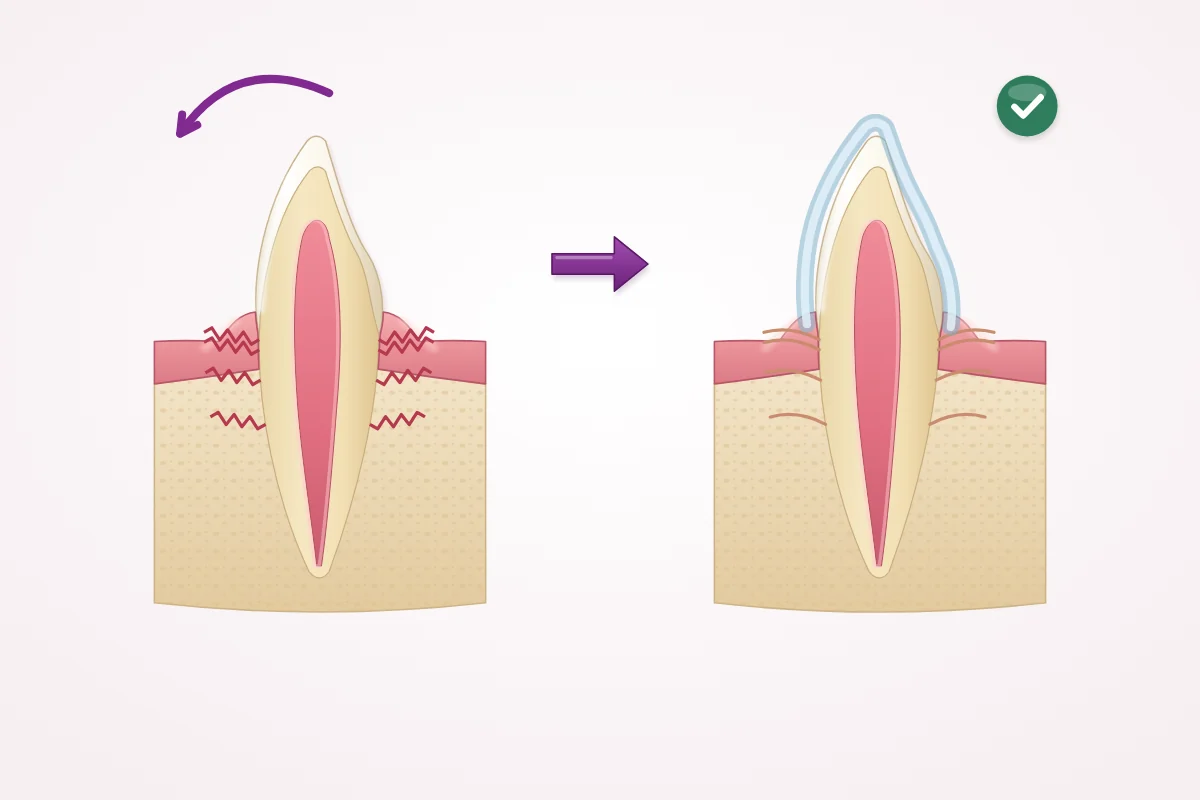
These tissues reorganize at different speeds. A review in the Thai Journal of Orthodontics summarizes the approximate times below, which is why the first months after treatment are the most sensitive and why the wearing plan usually becomes lighter step by step.
| Tissue around the tooth | Time to settle (approximate) | What it means for you |
|---|---|---|
| Periodontal ligament (fibers holding the root in the bone) | About 3 to 4 months | The early months carry the highest risk of movement, so wear is usually most of the day |
| Gum collagen and elastic fibers | About 4 to 6 months | Wear stays important while the gum settles |
| Fibers above the bone crest, around the neck of the tooth | About 8 months, and up to a year in some reports | Rotated teeth are especially likely to turn back, so night wear continues |
There is a second, slower reason. Long-term studies from the University of Washington followed hundreds of people for a decade or more after treatment. They found that the lower front teeth tend to become more crowded with age in both treated and untreated people, and that this change continued well into adult life. It could not be predicted from the records taken before treatment, and in one group only a small minority still had well-aligned lower front teeth decades after their retainers were stopped.
This is why many orthodontists now explain retention as long term. A retainer does not fight your teeth; it simply keeps them where they are while these natural changes happen.
Retainer types compared: removable and fixed
There are three main designs. Your orthodontist chooses based on how your teeth moved, your bite, how easy each type will be for you to keep clean, and how reliably you can wear a removable one. Many people have a fixed wire on the lower front teeth and a removable retainer for the upper teeth, or both on the same arch.
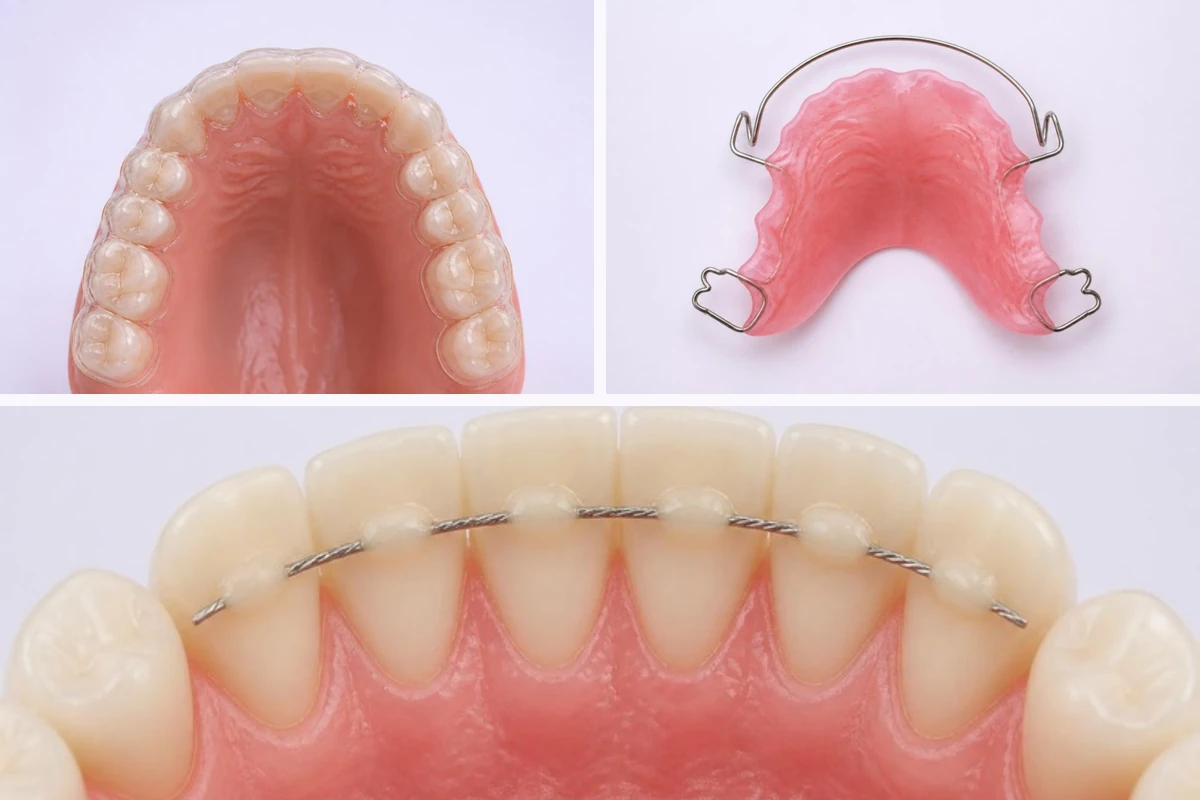
| Retainer type | Strengths | Things to watch |
|---|---|---|
| Clear removable retainer (vacuum-formed plastic, for example Vivera after Invisalign) | Hard to notice when worn, comfortable, covers all the teeth, easy to take out for eating and brushing | Can crack or wear thin, especially with grinding; warps with heat; easy to lose in a napkin |
| Wire and acrylic removable retainer (Hawley) | Sturdy and long-lasting, can sometimes be adjusted, lets the top and bottom teeth meet naturally | The wire shows across the front teeth; can feel bulkier and affect speech at first |
| Fixed or bonded retainer (a thin wire glued behind the front teeth) | Works all the time without you having to remember, cannot be lost, hidden from view | Needs daily cleaning under the wire; can come loose or break, often without pain, so it needs regular checks |
What does the research say about which is better? A Cochrane review updated in 2023 pooled 47 trials and found that the evidence is of low certainty, so no single retainer can be called the right one for everyone. In the trials, fixed retainers held the lower front teeth slightly more steadily than part-time clear retainers, but the difference was small. Clear retainers were linked with healthier gums, and each design had its own pattern of breakage. A separate systematic review found more plaque and tartar around fixed retainers, which is why cleaning under the wire matters so much.
How long to wear a retainer: a typical plan by period
There is no single schedule that every orthodontist uses, and your own plan may differ because of how your teeth moved. The table shows a common pattern drawn from orthodontic textbooks and patient guidance from Cleveland Clinic, the American Association of Orthodontists and NHS orthodontic departments. Use it to understand the logic, and follow the plan your orthodontist gives you.
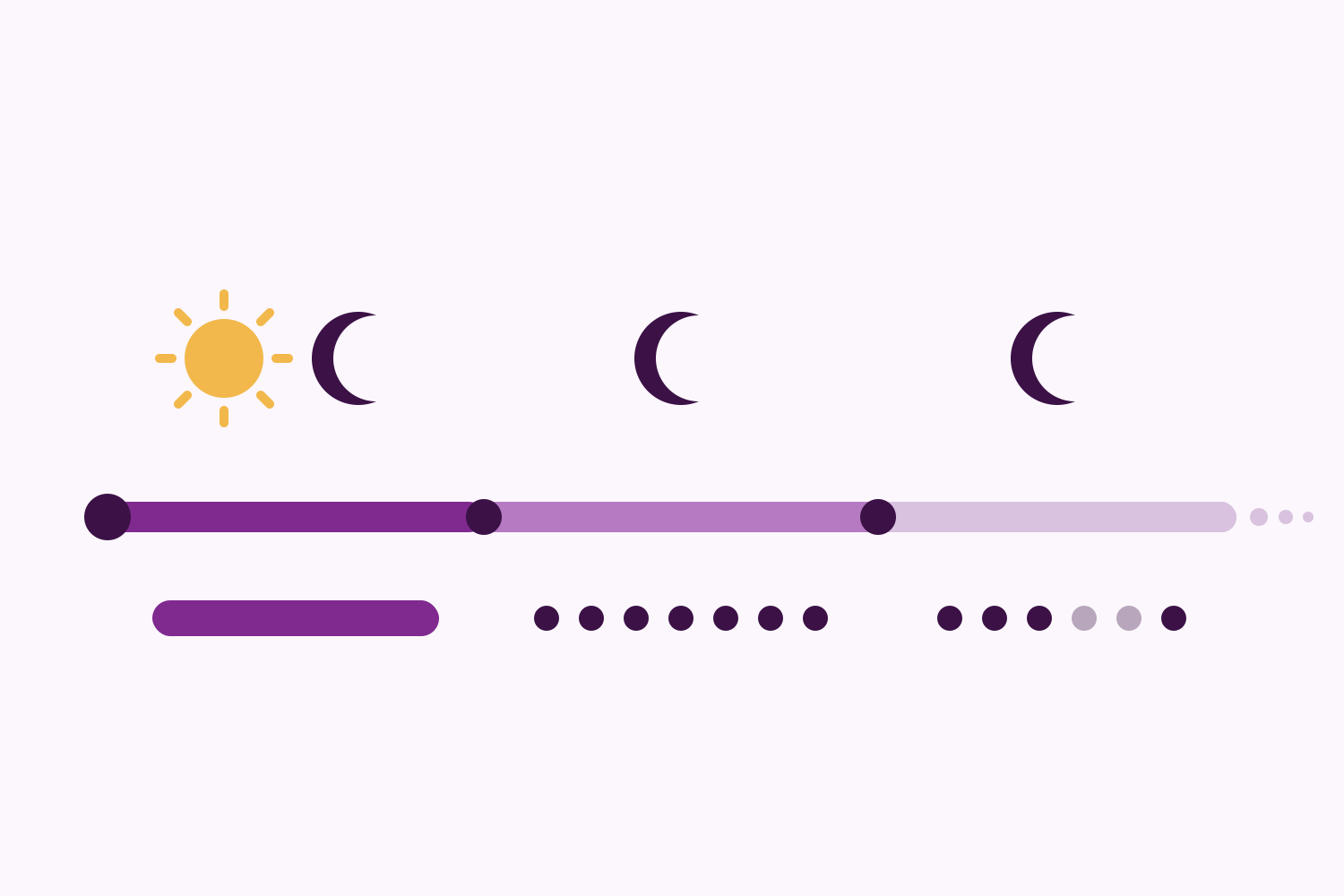
| Period after braces come off | Typical wear | Why |
|---|---|---|
| The first day to the first week | Most of the day and night; out only to eat, drink anything other than plain water, and clean | Teeth are at their most mobile; mild tightness and a slight lisp are common and usually settle in days |
| The first 3 to 6 months | Most of the day and night, as instructed | The ligament and gum fibers are reorganizing; sources range from about 3 to 6 months for this phase |
| Up to about 12 to 18 months after treatment | Every night while sleeping | The slower fibers around the neck of the tooth are still settling |
| Long term | Nights, often for the long term; some people step down to a few nights a week if the fit stays easy | Teeth keep changing slowly with age; follow your orthodontist on how far to step down |
| Fixed retainer at any stage | In place all the time; often left for the long term | Needs checks at each dental visit because a break may not be felt |
Two findings make this plan feel less strict than it sounds. A randomized trial of clear retainers found little difference in tooth position over the first year between full-time and part-time wear, and the Cochrane review found no clear difference in stability between part-time and full-time wear of Hawley retainers. A Thai review also cites evidence that about 10 hours a day of a removable retainer can be enough in many cases. That is why many orthodontists now move people to night-time wear early, once the first weeks have passed.
What matters most is not the exact number of hours but consistency over months and years. Studies of retainer wear show that many people wear them well at first and then gradually less, so the most useful thing you can do is attach the retainer to a fixed part of your evening, such as straight after brushing.
Cleaning and caring for your retainer every day
A retainer sits against your teeth for hours, so anything on it stays against your teeth too. Clean teeth and a clean retainer protect against decay, gum inflammation and odor.
A removable retainer, step by step
- Brush and floss your own teeth first, then put the retainer in. Wearing it over food traps sugar against the teeth.
- When you take it out, rinse it under cool running water so saliva does not dry onto it.
- Once a day, brush it gently inside and out with a soft brush and mild liquid soap. Several hospital leaflets advise against toothpaste because it can scratch clear plastic and make it cloudy.
- Use a soaking tablet only if your orthodontist says it suits your type of retainer, and rinse well afterward.
- Never use hot or boiling water, the dishwasher or a hot car. Heat can warp plastic so it no longer fits.
- Let it air-dry briefly and store it in its hard case, not wrapped in a tissue.
A fixed retainer, step by step
- Brush the inside surfaces of the front teeth carefully, angling the bristles toward the wire and the gum.
- Thread floss under the wire with a floss threader or use floss with a stiff end, then clean each gap up and down.
- If the gaps are wide enough, a small interdental brush is quicker. Your dentist can tell you the right size.
- Avoid biting straight into very hard food with the front teeth, such as ice or hard candy, which can break the bond.
- Have tartar removed and the wire checked at your regular cleaning visits.
Everyday habits that protect it
- Take a removable retainer out to eat, and drink only plain water while it is in. Sweet or acidic drinks pool inside it.
- Put it straight into its case when it comes out. Many lost retainers are thrown away in a napkin at restaurants.
- Keep the case away from pets; dogs in particular like to chew retainers.
- Bring your retainer to every orthodontic and dental check-up so the fit and condition can be checked.
Missed nights, a lost retainer or a broken wire: what to do
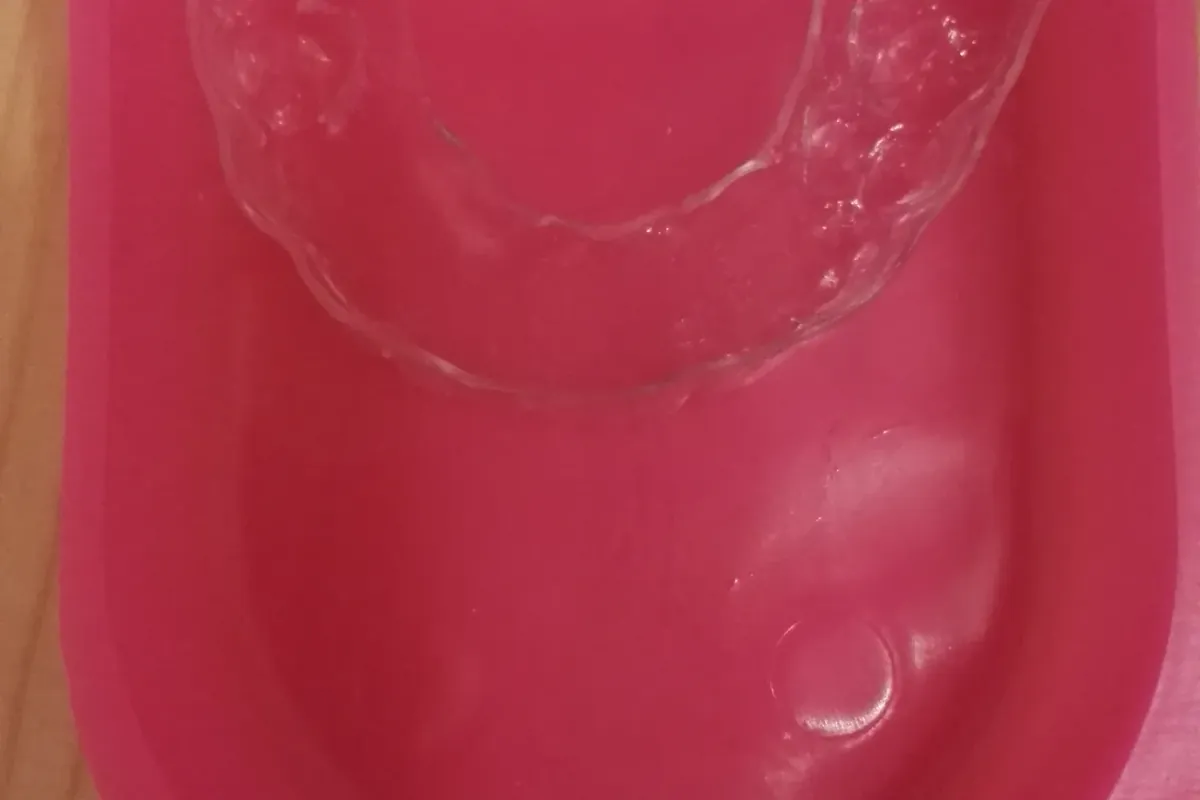
Life happens: a trip, a busy week, a retainer left in a hotel room. The goal is to limit how far the teeth move before the retainer is back in place, and the table shows sensible first steps for the most common situations.
| Situation | What to do now | Next step |
|---|---|---|
| Missed one or two nights | Put it back in tonight. Some tightness is expected and usually eases within a day or two | Wear it a little more for a few days if your orthodontist agrees |
| Missed a week or more and it feels tight | If it seats fully with gentle pressure, wear it; if it will not seat, do not force it | Contact your orthodontist so they can check whether the teeth have moved |
| Removable retainer lost or cracked through | If you have a spare or an old retainer that still fits, wear it; keep the broken pieces | Book a replacement soon; a new one is made from a scan or an impression of your teeth |
| Fixed wire loose on one tooth or broken | Do not pull or bend it; if you have a removable retainer too, wear it over the wire at night | Book a visit to rebond or replace the wire |
| A sharp end of wire is poking the tongue or cheek | Cover it with orthodontic wax or sugarless gum for comfort | Contact the clinic to have it smoothed or repaired |
A practical tip from orthodontists: if you are given two retainers, or if a new one is made, keep the old one that still fits as a spare in a separate case. It can bridge the gap if the main one is lost while you are traveling.
Common myths about retainers
| Myth | Fact |
|---|---|
| Once the braces are off, the teeth are set for good. | Teeth keep changing throughout life. The supporting fibers need months to settle, and crowding can increase slowly with age even without braces. |
| If the retainer feels tight, it is broken or the wrong one. | Tightness usually means the teeth have shifted a little since it was last worn. That is the retainer doing its job. If it will not seat at all, see your orthodontist. |
| A fixed retainer means you never have to think about it. | It needs daily cleaning under the wire and regular checks, because a loose bond is often not felt. |
| Boiling water is the cleanest way to sterilize a retainer. | Heat warps plastic retainers. Cool water, a soft brush and mild soap are enough for daily cleaning. |
| Wearing it longer each day can straighten teeth that have already moved back. | A retainer is designed to hold teeth, not to move them. Small shifts may settle, but larger changes need an orthodontic assessment. |
| Adults who finish braces do not need retainers for as long as teenagers. | Teeth move at every age. Adults also benefit from long-term night wear as their orthodontist advises. |
Signs that mean you should see your orthodontist
None of these is an emergency, but each is easier to put right when it is seen early.
- The retainer will not seat fully, rocks on the teeth, or only fits with hard pressure.
- Teeth ache for more than a day or two after putting the retainer back in, instead of settling.
- A fixed wire is loose, broken, or you can see a gap opening beside it.
- A clear retainer has a crack, a hole worn through, or a sharp edge rubbing the gum.
- The gums around a fixed retainer stay red, swollen or bleed when you clean, despite careful brushing.
- You grind your teeth at night and your retainer wears through quickly. Your orthodontist can advise on a design that suits you.
If you are not sure, take a clear photo of your teeth from the front and from below the upper teeth, and send it to the clinic through LINE or WhatsApp. The team can tell you whether it needs a visit.
Retainers at our clinic, step by step
Retention is part of orthodontic treatment at Kitcha Dental Clinic, whether you had braces or clear aligners. Treatment is planned and monitored by our orthodontists, dentists with postgraduate training in orthodontics.
- Finishing treatment: the braces or aligner attachments are removed, final X-rays are taken, and retainers are made to keep the teeth in place.
- Choosing the type: removable, fixed, or both, depending on your teeth and bite. After Invisalign, clear Vivera retainers from the makers of Invisalign are available.
- Instructions: your orthodontist explains how long and how often to wear the retainer, how to clean it, and adjusts the plan at later visits.
- Check-ups: bring your retainer to every visit so the fit and condition can be checked.
- Replacement: if a retainer is lost, broken or no longer fits, a new one can be made, removable or fixed.
Had your braces somewhere else?
We also make new retainers, both removable and fixed, for people who had their orthodontic treatment at another clinic, including visitors who finished treatment abroad. Bring your old retainer, even if it is broken, and any records you have. Your orthodontist checks how your teeth sit now and explains the options before anything is made.
Orthodontics and braces in Chiang Mai
Retainer fees are listed with orthodontic treatment on our prices page. Your orthodontist confirms the type and the fee after checking your teeth.
If this sounds like you: what to do
These are example situations, not patient stories, to help you find the next step that fits.
- Your braces came off last week and you are not sure whether to wear the retainer at lunch: follow the plan you were given. In the first months it is usually worn most of the day, out only for meals and cleaning.
- You stopped wearing your retainer a few months ago and now it feels tight: if it seats fully with gentle pressure, wear it every night and book a check. If it will not seat, do not force it; ask your orthodontist to assess the teeth.
- You are traveling to Chiang Mai and your retainer cracked on the way: keep the pieces and contact the clinic before your trip ends, so a replacement can be planned around your dates.
- Your fixed wire came off one lower tooth but nothing hurts: do not pull it. Wear your removable retainer over it at night if you have one, and book a visit to rebond it.
- You finished clear aligners and wonder if you can reuse your last aligner as a retainer: ask your orthodontist. A retainer made for retention is usually thicker and designed for long-term wear.
- You grind your teeth and your clear retainer keeps wearing through: tell your orthodontist. They can review the design and the material that suits a strong bite.
- You had braces many years ago and see a small new gap: book an orthodontic check. Depending on what is found, a new retainer or other options may help.
Frequently asked questions about retainers
Do I have to wear a retainer forever?
Many orthodontic organizations now advise long-term night-time wear, because teeth keep changing slowly throughout life. After the first months, that usually means nights only, and some people step down further if the retainer keeps fitting easily. Your orthodontist decides how far to reduce it.
How many hours a day should I wear my retainer?
In the first weeks to months, usually most of the day and night, taking it out only to eat and clean. After that, many plans move to wearing it while you sleep, roughly 8 to 10 hours a night. Follow the hours your orthodontist sets for you.
What happens if I do not wear my retainer for a week?
Teeth may shift a little, so the retainer can feel tight. If it still seats fully with gentle pressure, wear it every night and expect the tightness to ease within a few days. If it will not seat, do not force it; contact your orthodontist to check the teeth.
Is a permanent retainer better than a removable one?
Neither is better for everyone. A fixed retainer works without you having to remember and cannot be lost, but needs daily cleaning under the wire and regular checks. A removable retainer is easier to keep clean but only works when it is worn. Research has not shown one approach to be clearly superior, so your orthodontist chooses based on your teeth and habits.
How long does a fixed lingual retainer stay in?
It is often left in place for the long term, as long as it stays intact and the teeth and gums around it stay healthy. Bonds can loosen or the wire can break over time, sometimes without you noticing, so it should be checked at each dental visit and repaired or replaced when needed.
Can I eat or drink with my retainer in?
Take a removable retainer out to eat. While it is in, drink only plain water, because sweet, acidic or hot drinks can pool inside it or warp it. With a fixed retainer you can eat normally, but avoid biting very hard food directly with the front teeth.
How often should a retainer be replaced?
There is no fixed interval. Clear retainers tend to wear, crack or stain sooner, especially with grinding, while wire-and-acrylic and fixed retainers often last longer. Replace a retainer when it no longer fits well, is damaged, or your orthodontist advises it at a check-up.
Can I get a new retainer if I had braces at another clinic?
Yes. We make new retainers, both removable and fixed, for people who had orthodontic treatment elsewhere. Bring your old retainer and any records you have, and your orthodontist will check the teeth and explain the options first.
Summary
A retainer keeps the result of braces or aligners. Teeth are held by tissues that take months to settle, and they keep changing slowly with age, so long-term night wear is common.
- Wear it exactly as your orthodontist instructs: usually most of the day at first, then every night.
- Clean a removable retainer daily with cool water, a soft brush and mild soap, and keep it in its case.
- Clean under a fixed wire every day and have it checked at each dental visit.
- If it feels tight after a break, does not seat, or is lost or broken, contact your orthodontist soon and do not force it.
- New retainers, removable or fixed, can be made even if your braces were done at another clinic.
References
Cleveland Clinic: Braces and Retainers
American Association of Orthodontists: Will I Need to Wear Retainers After Treatment?
Queen Victoria Hospital NHS Foundation Trust: Care of your retainers
University Dental Hospital of Manchester (NHS): Instructions for Retainers
Thickett E, Power S. A randomized clinical trial of thermoplastic retainer wear. Eur J Orthod, 2010