
A dental implant replaces the root of a missing tooth and carries a crown, a bridge or a full arch of teeth. Treatment is planned with a 3D CBCT scan and usually takes two stages a few months apart. Knowing what each stage involves helps you plan your time and read your estimate.

Checks before treatment
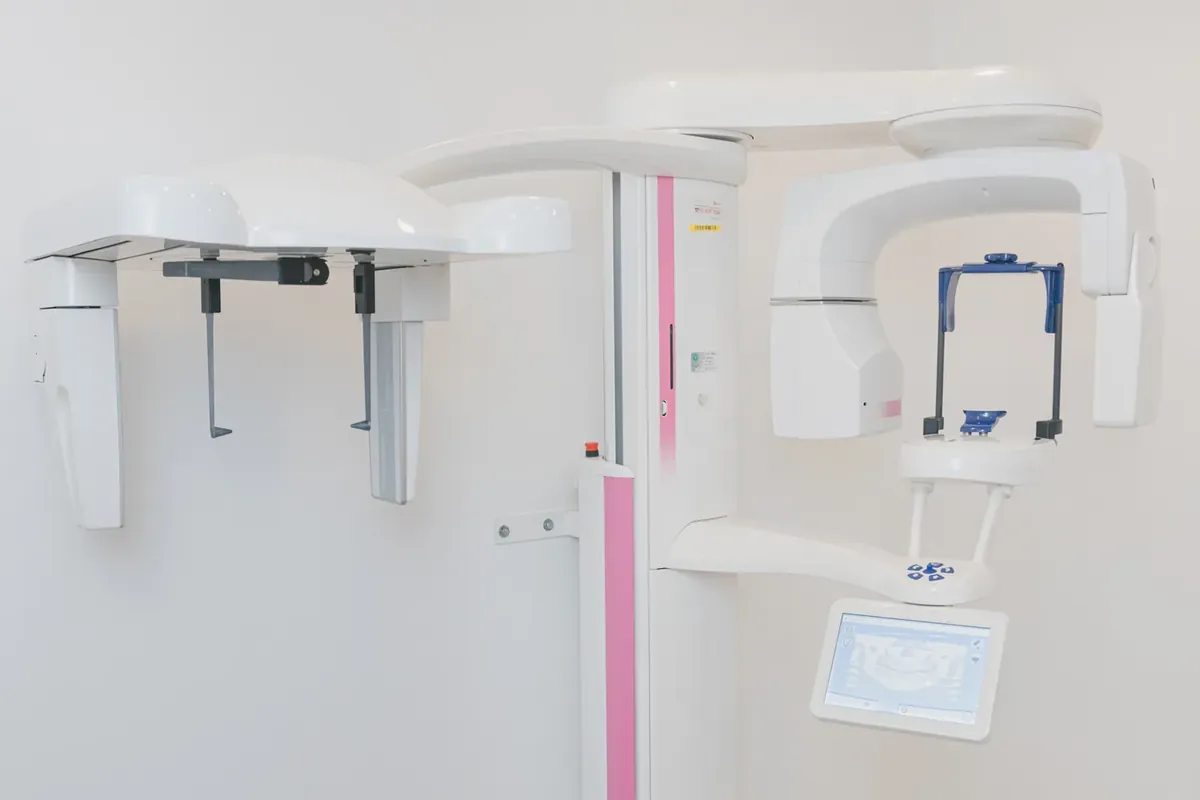
- An examination of your teeth and gums. Gum disease or decay is usually treated first.
- A 3D CBCT scan to measure the bone and plan the implant position.
- Your general health and the medicines you take. Tell your dentist about them before surgery.
- A treatment plan and a written estimate.
If radiation worries you: at our clinic, X-rays inside the mouth are digital, taken with phosphor plates and sensors that help lower the dose compared with film. Our Planmeca ProMax CBCT has an Ultra Low Dose mode, your dentist chooses the mode that suits each case, and X-rays are taken only when they are needed.
Dental X-ray radiation: how much is it, and how we keep it low
Implants are not the only way to replace teeth. A bridge or a removable denture can also be suitable, and your dentist explains the options after examining you.
Replacing a single missing tooth
If there is not enough bone
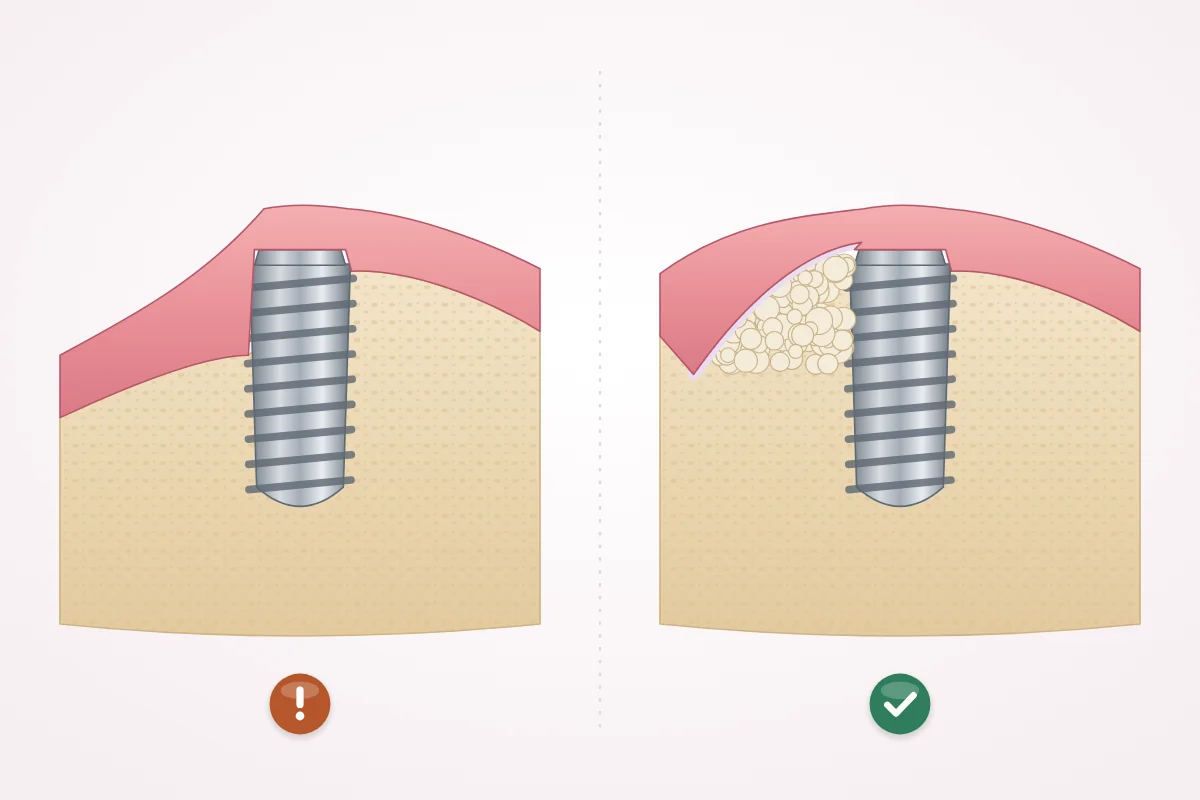
If the CBCT scan shows the bone is too thin or low, bone grafting or a sinus lift may be needed before or during implant surgery. This makes the healing time longer, often by several months, and your dentist assesses each case.
How many visits and trips?
- Trip 1, usually about 1–2 weeks: examination, CBCT scan, treatment plan and implant surgery under local anesthesia. Bone grafting is done at this stage if your plan includes it.
- Healing, usually 2–6 months: the bone grows onto the implant. You can go home during this time.
- Trip 2, usually about 1–2 weeks: your dentist checks the implant, takes an impression or digital scan, and fits the crown or bridge.
Most people can travel 2–3 days after implant surgery, and your dentist confirms this for your case. In suitable cases the implant can be placed at the same visit as the extraction, but the final crown is still made after the bone has healed.
What the cost includes
- Included in the implant package: the implant, a standard (straight) abutment and a zirconia crown.
- Charged separately, only if you need them: CBCT scan, bone grafting and graft materials, sinus lift, special abutments and a computer-guided surgical guide, plus the consultation fee and medicines.
- Payment: a deposit is required before surgery and the surgical fee is paid in full on the day of surgery; the crown is paid on the day of the impression.
1-year warranty on the restoration, terms apply: it covers implant components and laboratory work done at our clinic, is used at the clinic in Chiang Mai, and does not include travel, accommodation or treatment elsewhere.
Prices differ between implant systems, and each package is listed on our prices page. If the plan changes during treatment, the fee follows the procedures actually performed.
Implant systems
The clinic uses Straumann (Roxolid SLA, Roxolid SLActive and BLX), Dentium, and the Neodent Zi ceramic implant for suitable cases. Your dentist recommends a system after checking your bone on the CBCT scan and explains the reasons.
Questions to ask your dentist
- Is an implant the right option for this gap, or would a bridge or denture suit me better?
- Do I have enough bone, or will I need bone grafting or a sinus lift?
- Which implant system do you recommend for me, and why?
- Which items in my estimate are included, and which are charged only if needed?
- How many visits will I need, and when can I travel?
- Who will place the implant, and who will make the crown?