Laser dentistry in Chiang Mai
Kitcha Dental Clinic uses a BIOLASE Waterlase dental laser alongside conventional instruments, for treatments from gum disease and root canals to removing old veneers. Your dentist suggests it only where it suits your case, and explains what it adds and what it costs before you decide.
- Open every day, 09:00–20:00
- Opposite Chiang Mai Gate
- Coordinators in English and Thai
Laser dentistry at a glance
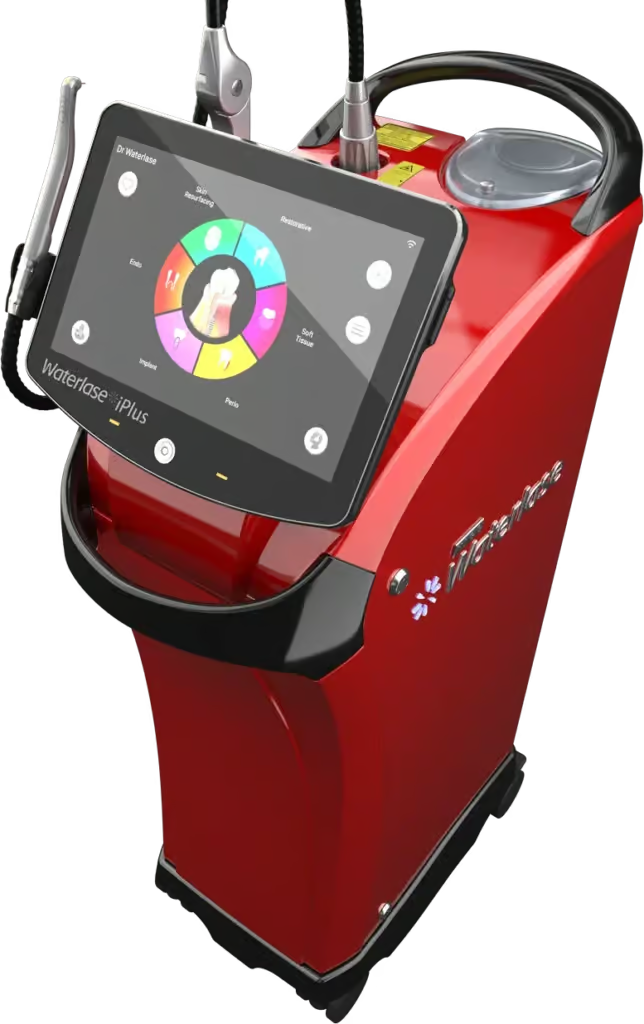
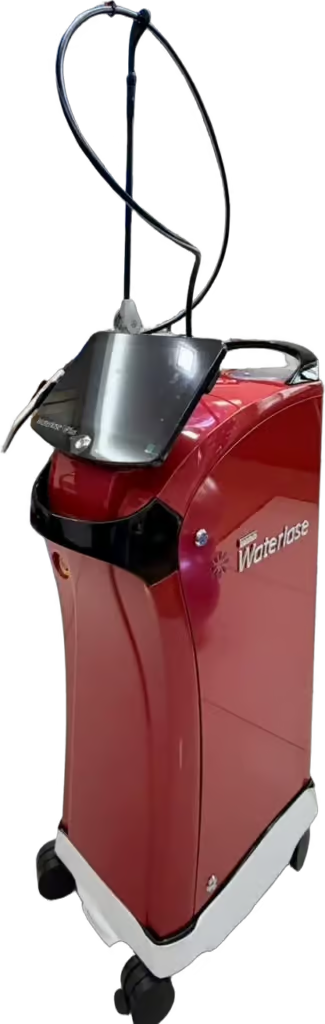
Waterlase is an erbium dental laser (Er,Cr:YSGG) that works with a fine water spray, so it can treat both gums and teeth.
The clinic uses it in 13 kinds of treatment, from gum disease and root canals to removing old veneers.
It is added to a treatment, not a separate one: your dentist uses it only where it suits your case, together with conventional instruments.
Most laser fees are added to the fee of the main treatment, charged per tooth, per area or per procedure depending on the item, and you are told the fee before treatment.
Most laser treatments still use local anesthesia, and everyone in the room wears laser safety eyewear.
What is a dental laser?
A dental laser is an instrument that delivers a concentrated beam of light energy. The Waterlase used at the clinic is an erbium laser (Er,Cr:YSGG) that works together with a fine water spray, so it can cut both soft tissue, such as the gums, and hard tissue, such as tooth and bone.
It is a tool your dentist adds to a treatment, not a separate treatment. It has dedicated tips for gum and root canal work, and it is used only when your dentist finds it suitable for your case.
Why the Waterlase works differently
Precise, so healthy tissue is kept
The laser removes tissue in very small amounts, so your dentist can work only where needed and help preserve the healthy tooth and tissue around it.
Often less vibration and noise
Instead of a spinning bur, the laser uses light energy with a water spray, so cavity work often has less vibration and noise than the drill. What you usually notice is a cool spray and a popping sound.
Little bleeding in many soft-tissue procedures
On soft tissue, such as gum contouring or a frenectomy, there is often little bleeding and in many cases no stitches are needed, which also gives your dentist a clear view.
Helps clean gum pockets and root canals
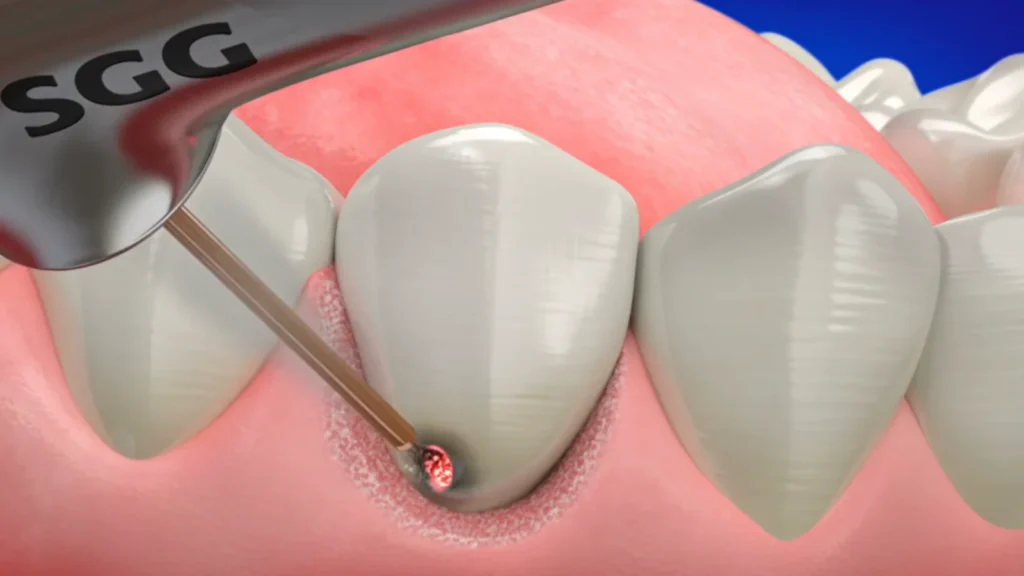
Dedicated gum and root canal tips help clean inflamed gum pockets and activate the disinfecting solution inside the canals, adding to standard treatment.
Often a gentler experience for anxious patients
Many people who dislike the sound and vibration of the drill find laser treatment a gentler experience. Your dentist explains each step first, and you can ask to pause at any time.
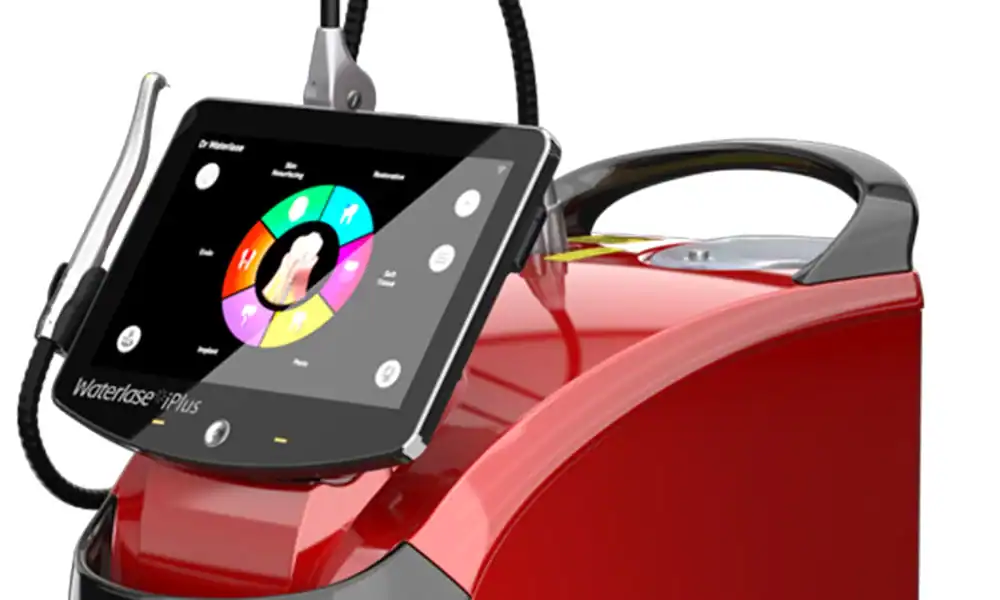
Image © BIOLASE MG LLC
Most treatments still use local anesthesia, and healing depends on the procedure and on your own care.
What we use the laser for
Which gum treatments use the laser?
Laser gum disease treatment
Helps clean inflamed gum pockets alongside deep cleaning.
Show detailsHide details
The laser is used alongside conventional deep cleaning to clean gum pockets. It does not replace deep cleaning, and deep pockets may still need gum surgery.
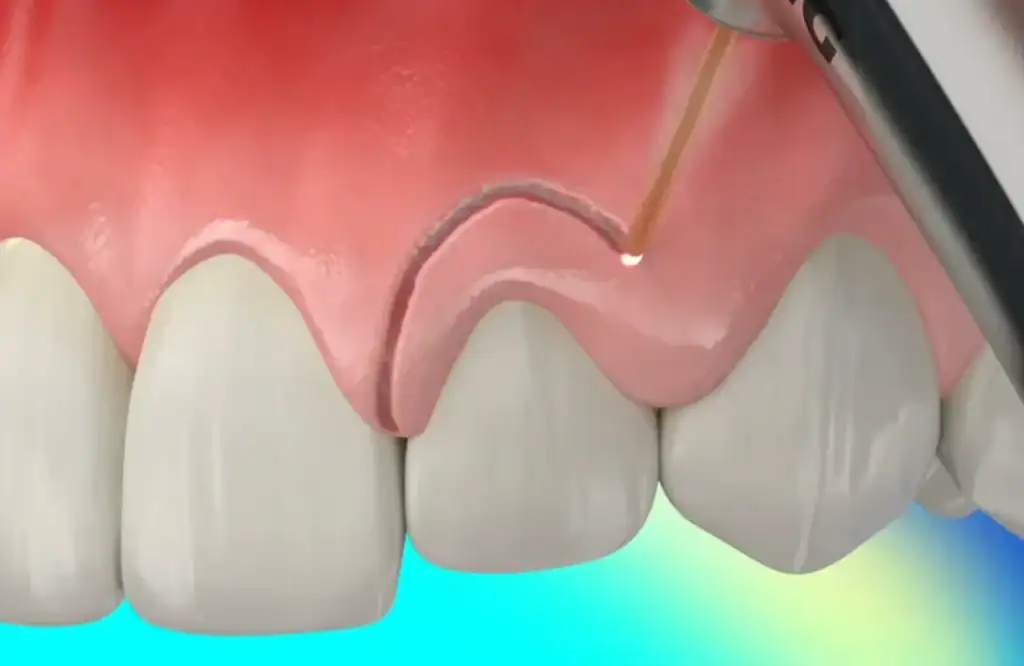
Manufacturer's 3D illustration of laser gum contouring. © BIOLASE MG LLC Gum contouring (gingivectomy)
Trims extra gum to even out the gum line, often with little bleeding.
Show detailsHide details
Extra gum can be trimmed to even out the gum line, for a gummy smile or before veneers and crowns. Your dentist checks the bone level first, because some cases need crown lengthening surgery instead.
Lightening dark gums (depigmentation)
Removes the thin pigmented layer so the gum color can look more even.
Show detailsHide details
For gums that are naturally darker in places, the laser can remove the thin pigmented surface layer. Your dentist first checks the cause of the dark areas and explains what to expect.
Inflammation around implants (peri-implantitis)
Added to the cleaning of an inflamed implant, as a supporting step.
Show detailsHide details
The laser can be added to the mechanical cleaning of an inflamed implant. The evidence for lasers here is limited and mostly short term, so it is an addition to standard care, and surgery may still be needed.
How does the laser help with fillings and root canals?
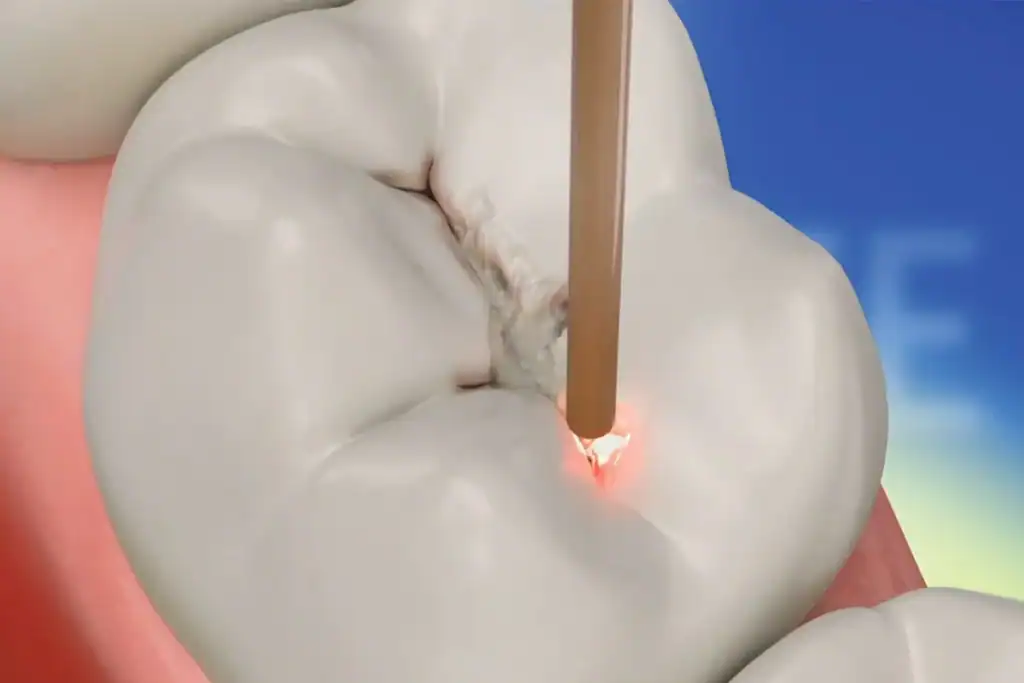
Manufacturer's 3D illustration of laser cavity preparation. © BIOLASE MG LLC Removing decay instead of the drill
Removes decay with light and water, often with less vibration and noise than the drill.
Show detailsHide details
In suitable cases, the laser removes decay and prepares the cavity, and the tooth is then filled as usual. It cannot remove metal fillings or crowns, so some teeth still need the drill.
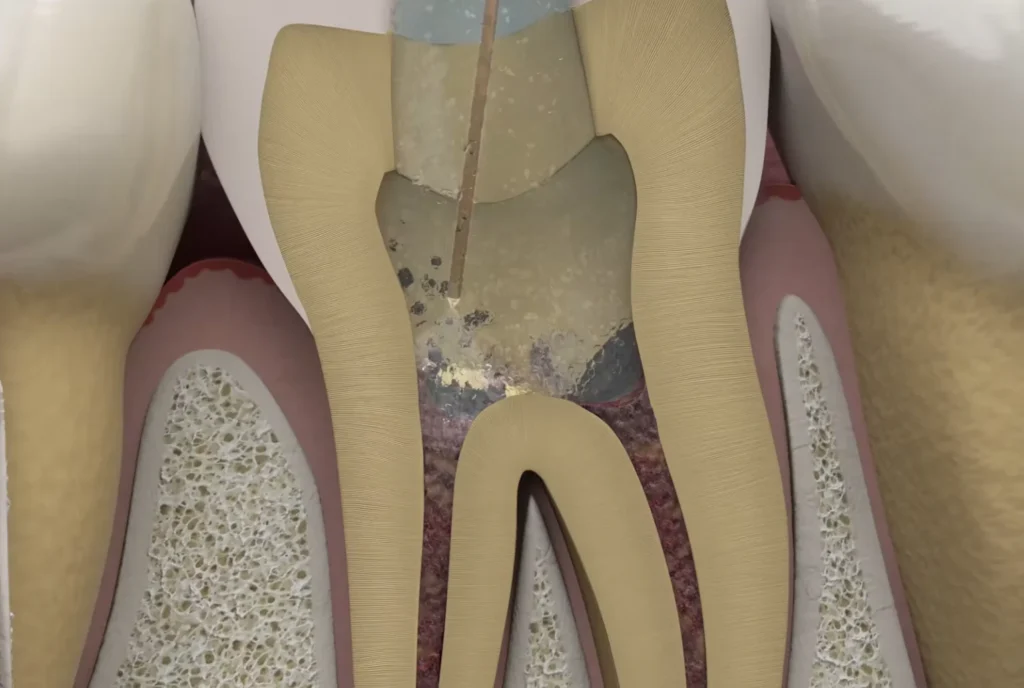
Manufacturer's 3D illustration of a laser tip inside a root canal. © BIOLASE MG LLC Root canal disinfection
Activates the cleaning solution so it reaches small spaces inside the canals.
Show detailsHide details
During root canal treatment, the laser can be used to activate the cleaning solution inside the canals. It is an addition to the usual cleaning and shaping, not a replacement for it.
Laser-assisted root-end surgery
Helps clean the area around the root tip during root-end surgery.
Show detailsHide details
In root-end surgery (apicoectomy), the laser can be used to help clean the area around the root tip. It adds to the surgical steps rather than replacing them.
Can the laser help remove veneers, crowns and braces?
Removing old veneers and crowns
In many cases, helps old veneers and ceramic crowns come off in one piece.
Show detailsHide details
The laser can help release old veneers and some all-ceramic crowns from the tooth, so they may come off in one piece before new ones are made. Whether it works depends on the material and its thickness; metal-based crowns are removed the usual way.
Removing ceramic braces brackets
Softens the adhesive so ceramic brackets come off more easily.
Show detailsHide details
At the end of orthodontic treatment, the laser can soften the adhesive under tooth-colored ceramic brackets so they come off more easily.
Which mouth sores and surgical treatments use the laser?
Mouth ulcers and soft-tissue lesions
Treats some mouth ulcers and small lesions, after a careful check.
Show detailsHide details
The laser can be used on some mouth ulcers and small soft-tissue lesions. A sore that does not heal or looks unusual is examined first, and a tissue sample (biopsy) may be needed.
Tongue-tie and lip-tie release (frenectomy)
Releases a tight tongue or lip tie through a small wound; in many cases no stitches are needed.
Show detailsHide details
A tight band of tissue under the tongue or upper lip can limit movement or pull on the gums. Your dentist first checks whether a release is actually needed, for both children and adults.
Removing small soft-tissue cysts
Removes some small soft-tissue cysts, such as one on the inner lip.
Show detailsHide details
Some small cysts in the soft tissue of the mouth, such as a fluid-filled swelling on the lip, may be removed with the laser. Cysts in the jawbone are treated surgically, and removed tissue may be sent for laboratory examination.
Bone recontouring
Cuts and reshapes small areas of bone, with a water spray to keep it cool.
Show detailsHide details
In some oral surgery procedures, the laser can be used to cut and reshape small areas of bone. Your dentist decides case by case whether the laser or conventional instruments are better suited.
Would the laser help your treatment?
Tell us which treatment you are considering. Your dentist examines you and explains whether the laser adds something to your treatment, and what it costs, before you decide.
What happens at a laser visit
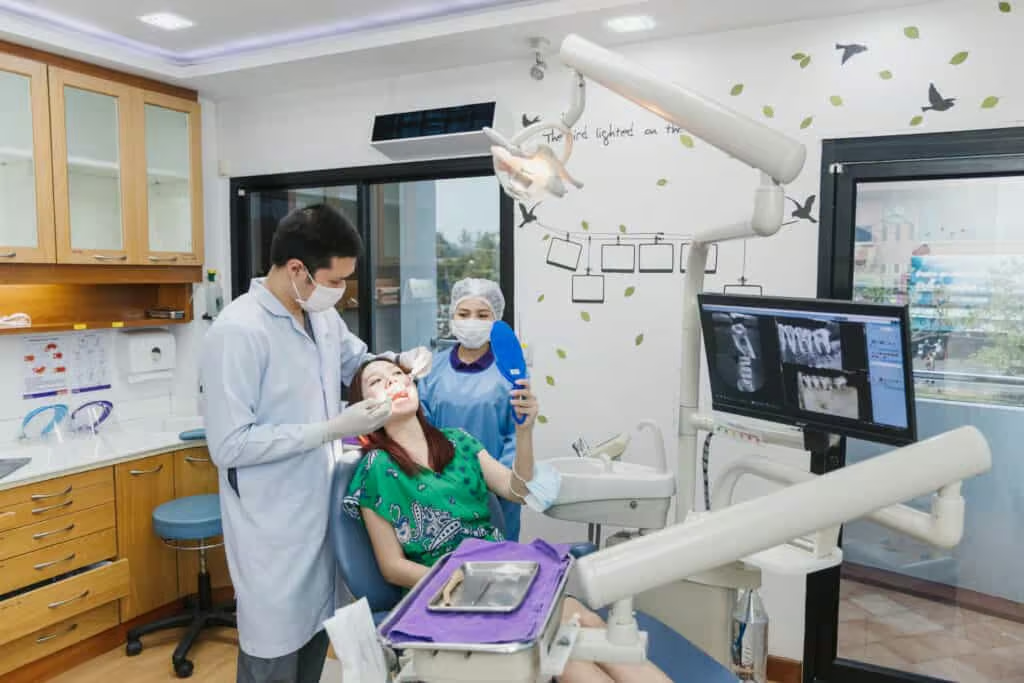
Examination and plan
Your dentist examines you, takes X-rays if needed and plans the treatment. The laser is chosen as part of that plan, and you are told about any laser fee before you agree.
Preparing for treatment
You, your dentist and the assistant wear laser protective eyewear every time, and you sign a consent form before the laser is used. If the procedure needs local anesthesia, your dentist numbs the area first.
During treatment
You may feel a cool water spray and hear a popping sound while the laser works on a tooth. Your dentist may switch to conventional instruments for some steps.
Aftercare
Aftercare follows the treatment you had, such as gum treatment, a filling or a frenectomy. Your dentist gives you instructions and tells you when to come back.
Laser or conventional treatment?
A laser does not replace every step
For many treatments the laser is used together with conventional instruments, for example alongside deep cleaning in gum treatment. Many treatments are still done entirely without it.
When a conventional method is used instead
Large cavities, metal fillings or crowns, deep gum pockets, cysts in the jawbone and advanced inflammation around implants often need conventional treatment or surgery. Your dentist explains why.
Local anesthesia
Most treatments still use local anesthesia. Your dentist tells you beforehand whether you need it.
Results depend on your case
Healing and results depend on the procedure, your health and your home care, whether or not a laser is used. We do not promise faster healing.
Laser safety
Laser light can harm the eyes, so everyone in the room wears protective glasses made for this laser while it is in use. The water spray keeps the tooth and tissue cool during treatment.
Like any dental procedure, laser treatment has risks. Your dentist explains them for your treatment, and you sign a consent form before starting.
How laser fees work
Most laser items are an additional fee on top of the treatment they are part of, such as laser root canal disinfection, laser gum treatment or laser cavity preparation. A few, such as laser gum contouring and laser removal of veneers or crowns, have their own price per tooth. Your dentist tells you before treatment whether the laser adds a fee.
Prices on our prices page are shown as ranges. Your final fee depends on what the examination finds, and may include additional items — such as a rubber dam or special materials — when your treatment needs them. Your dentist explains these before treatment.
Who treats you
Your dentist plans your treatment and decides whether to use the laser. Laser treatment is done by the same dentist, under the same treatment plan — not as a separate service.
Laser dentistry FAQs
Does laser dentistry hurt?
It depends on the procedure and on you. Most treatments still use local anesthesia. You may feel a cool water spray or warmth and hear a popping sound. Your dentist tells you beforehand what to expect and checks how you feel during treatment, and you can ask to pause at any time.
Is laser treatment safe?
Dental lasers are widely used when the correct safety steps are followed. Everyone in the room wears protective glasses, and the water spray keeps the tooth and tissue cool. Like any treatment it has risks, which your dentist explains before asking for your consent.
Laser gum treatment or deep cleaning — which do I need?
They are not alternatives. Laser gum treatment is used alongside conventional deep cleaning when your dentist finds it suitable, and deep pockets or advanced gum disease may still need gum surgery. Your dentist explains which approach fits your gums.
Can the laser fill a cavity without a drill?
In suitable cases, the laser can remove decay and prepare the cavity instead of a drill, and the tooth is then filled as usual. Whether it suits your tooth depends on the size and position of the cavity and on any existing filling; metal fillings still need the drill.
Can the laser remove my old veneers?
In suitable cases, yes. The laser can help release veneers and some all-ceramic crowns, which may then come off in one piece, before new ones are made. The fee is per tooth, and your dentist checks the material first to see whether laser removal suits it.
Can the laser release a tongue-tie?
Yes, in suitable cases, for both children and adults. Your dentist first checks whether the tongue-tie actually limits movement or causes problems, because not every tongue-tie needs treatment.
Will I heal faster after laser treatment?
Healing depends on the procedure, your health and how you care for the area afterward. We do not promise faster healing with the laser. Your dentist explains what to expect for your treatment.
How much does laser treatment cost?
Most laser items are an additional fee on top of the main treatment, and a few, such as laser gum contouring and laser removal of veneers or crowns, have their own price per tooth. Your dentist confirms the fee for your treatment after the examination.
Ask about laser treatment
Tell us which treatment you are considering. A coordinator replies in English or Thai and books a time with a dentist, who explains whether the laser suits your case. Open every day, 09:00–20:00 (Thailand time).
Or email us at [email protected]
Content reviewed by Dr. Pawak Tungthangthum — DDS, Chiang Mai University; Master's Degree in Esthetic Restorative and Implant Dentistry (International Program), Chulalongkorn University · Last reviewed