
Snoring and sleep apnea — oral appliance (MAD) in Chiang Mai
A mandibular advancement device (MAD) is a custom mouthpiece worn during sleep that holds the lower jaw slightly forward. At Kitcha Dental Clinic in Chiang Mai, our dentists make and adjust these appliances. Sleep apnea is diagnosed by a physician with a sleep test, so your care starts with a physician's sleep assessment; your dentist then checks whether your teeth, gums and jaw joints suit an appliance.
- Open every day, 09:00–20:00
- Opposite Chiang Mai Gate
- Coordinators in English and Thai
Snoring or sleep apnea?
- Loud snoring most nights.
- A partner notices pauses in your breathing, or gasping and choking during sleep.
- Waking up tired, or with a dry mouth or headache.
- Feeling sleepy during the day, even after a full night in bed.
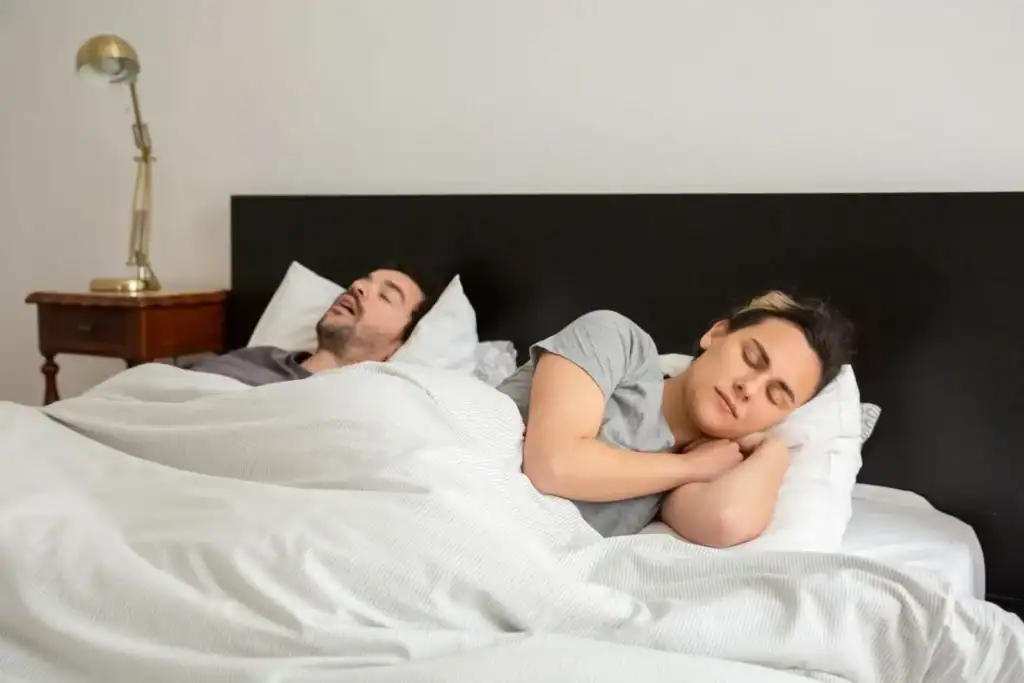
Snoring is the sound of air moving past relaxed tissues in the throat during sleep. Sometimes it comes with obstructive sleep apnea (OSA), where breathing repeatedly stops and starts while you sleep. These signs are worth discussing with a physician.
A physician diagnoses sleep apnea
A sleep test shows whether snoring comes with sleep apnea and how severe it is. Sleep tests and sleep medicine are provided by physicians we work with at Bangkok Hospital Chiang Mai. Our staff can help arrange your appointment there, and the sleep test is paid directly to the hospital. If you have already had a sleep test at another hospital or abroad, send us the report — a recent enough result can be used instead of a new test.
What a mandibular advancement device is
A MAD is made from impressions or a digital scan of your own teeth. It fits over the upper and lower teeth and is worn at night. By holding the lower jaw slightly forward, it helps keep the airway behind the tongue more open during sleep, which can reduce snoring and the breathing pauses of sleep apnea. Results differ from person to person, and your physician reviews the effect.
You may also hear it called a snoring mouthpiece, an oral appliance or an anti-snoring appliance.
Your path, step by step
Sleep assessment by a physician
A physician reviews your symptoms and arranges a sleep test. A recent enough sleep test from another hospital or from abroad can be used instead.
Dental examination
Your dentist checks your teeth, gums and jaw joints, and takes X-rays when needed, to see whether an appliance suits you.
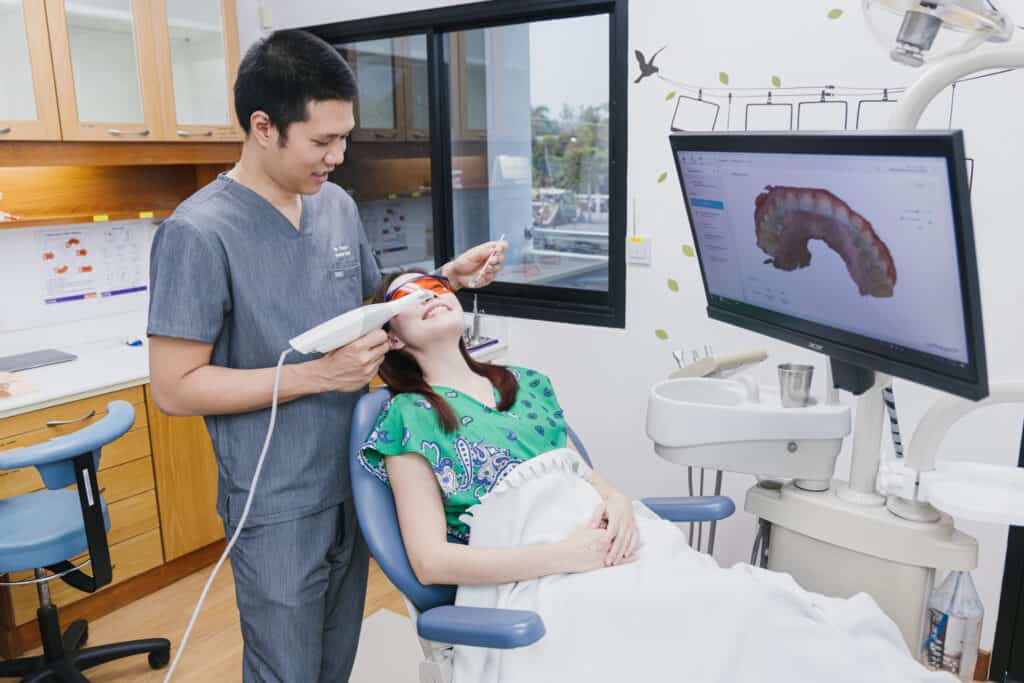
Impressions or scan
Your dentist records your teeth and the forward jaw position for the appliance.
Fitting and gradual adjustment
You receive the appliance, learn how to put it in and clean it, and your dentist moves the jaw position forward step by step over the following weeks.
Follow-up
Your dentist checks the fit, your teeth and your bite, and your physician reviews the effect on your sleep.
Who an appliance may suit
An oral appliance suits people whose physician recommends it after a sleep assessment, and whose teeth and gums are healthy enough to hold it. Your physician discusses all treatment options with you, including CPAP — a machine that delivers air through a mask during sleep — and explains which suits your sleep test results.
If you need fillings or gum treatment first, your dentist plans this with you.
Would you like to talk about a snoring appliance?
Tell us about your snoring and any sleep test you have had. Your dentist checks your teeth, gums and jaw joints and explains the next steps.
Wearing your appliance
The first weeks
Many people need a few nights to get used to the appliance. Your jaw or teeth may feel tight for a short time in the morning, and you may notice more saliva or a dry mouth. Tell your dentist about anything that persists.
Long term
Over months and years, the way your teeth meet can gradually change, so your dentist checks your bite at regular follow-up visits. Bring the appliance each time.
Daily care
Rinse and clean the appliance every morning, using a soft brush with mild soap or the cleaning tablets your dentist suggests. Keep it in its case, clean and dry, whenever it is out of your mouth.
Tell your dentist
Report jaw discomfort or changes in your bite to your dentist promptly.
A MAD and a night guard are different appliances
Mandibular advancement device (MAD)
Holds the lower jaw forward to help keep the airway open during sleep. It starts with a physician's sleep assessment, then a dental examination.
Night guard or occlusal splint
Covers the teeth to protect them from grinding and clenching. It starts with a dental examination of the teeth, jaw joints and chewing muscles.
Snoring and grinding?
If you both snore and grind your teeth, your dentist explains which appliance suits you.
Jaw pain or clicking?
For jaw pain, clicking or a jaw that locks, read about jaw-joint care.
How many visits
Plan for several dental visits: the examination, impressions or a scan, fitting, then one or more adjustment visits over the following weeks, followed by regular check-ups. Sleep assessments are arranged separately with the physician, and our staff can help book them. If you are visiting from abroad, an appliance can be made during a stay of about one week, with two to three dental visits — tell our coordinator your travel dates.
Cost of a snoring appliance
The oral appliance (MAD) and X-rays are listed on our prices page, and your dentist confirms your fee in a written estimate after the dental examination. The sleep test is paid directly to Bangkok Hospital Chiang Mai.
Prices on our prices page are shown as ranges. Your final fee depends on what the examination finds, and may include additional items — such as a rubber dam or special materials — when your treatment needs them. Your dentist explains these before treatment.
Who treats you
Your appliance is made and adjusted by dentists in our jaw-joint, bite and teeth-grinding team, who work alongside the physicians who assess your sleep.
Snoring appliance FAQs
Can a dentist tell me if I have sleep apnea?
Sleep apnea is diagnosed by a physician with a sleep test. Sleep tests and sleep medicine are provided by physicians we work with at Bangkok Hospital Chiang Mai; your dentist can arrange the referral.
I snore, but I feel fine. Do I still need a sleep test?
Your physician decides. Loud, regular snoring can come with sleep apnea even when you feel well, so a physician assesses it and advises whether a sleep test is needed.
How does a snoring mouthpiece work?
It holds your lower jaw slightly forward while you sleep, which helps keep the airway behind the tongue more open. Results differ from person to person, so your physician reviews the effect.
Is a MAD the same as a night guard for teeth grinding?
They are different appliances. A MAD holds the lower jaw forward to help your breathing during sleep; a night guard covers the teeth to protect them from grinding. Your dentist explains which one suits you.
Will my jaw or teeth feel sore?
In the first weeks your jaw or teeth may feel tight for a short time in the morning. Over the long term your bite can change, so your dentist checks it at follow-up visits.
How much does a sleep apnea appliance cost?
The oral appliance (MAD) and X-rays are listed on our prices page. Your dentist confirms your fee in a written estimate after the dental examination. The sleep test is paid directly to Bangkok Hospital Chiang Mai.
I am visiting Chiang Mai. Can I plan an appliance around my trip?
Usually, yes. Patients visiting from abroad can have an appliance made during a stay of about one week, with two to three dental visits. Send our coordinator your sleep test report, if you have one, and your travel dates; your dentist then confirms the visits you need in Chiang Mai.
Book a snoring appliance consultation
Tell us about your snoring, any sleep test you have had, and when you are in Chiang Mai. A coordinator replies in English or Thai, books a time with a dentist and can help arrange the physician's sleep assessment. Open every day, 09:00–20:00 (Thailand time).
Or email us at [email protected]
Content reviewed by Dr. Pawak Tungthangthum — DDS, Chiang Mai University; Master's Degree in Esthetic Restorative and Implant Dentistry (International Program), Chulalongkorn University · Last reviewed