
Root surgery (apicoectomy) in Chiang Mai
When infection at the tip of a tooth root continues after root canal treatment, a small surgical procedure may allow the tooth to be kept. In root-end surgery — called root resection at our clinic, also known as apicoectomy — your dentist removes the infected tissue and the root tip, then seals the root end with a retrograde (root-end) filling. At Kitcha Dental Clinic in Chiang Mai, the surgery is carried out by an endodontist under a dental operating microscope, and every case is planned with X-rays and a 3D CBCT scan. Your dentist explains every option before you decide.
- Open every day, 09:00–20:00
- Opposite Chiang Mai Gate
- Coordinators in English and Thai
When root surgery is considered
- Infection at the root tip continues after root canal treatment or retreatment — for example a lasting swelling, a gum pimple or an area on the X-ray that remains at review.
- Retreating the canals from inside the tooth would mean removing a well-made crown or post, or the canal is blocked.
- A crack in the root is suspected, and your dentist needs to look at the root directly.
Your dentist explains why surgery is suggested for your tooth, and what the other options are.
What the surgery involves
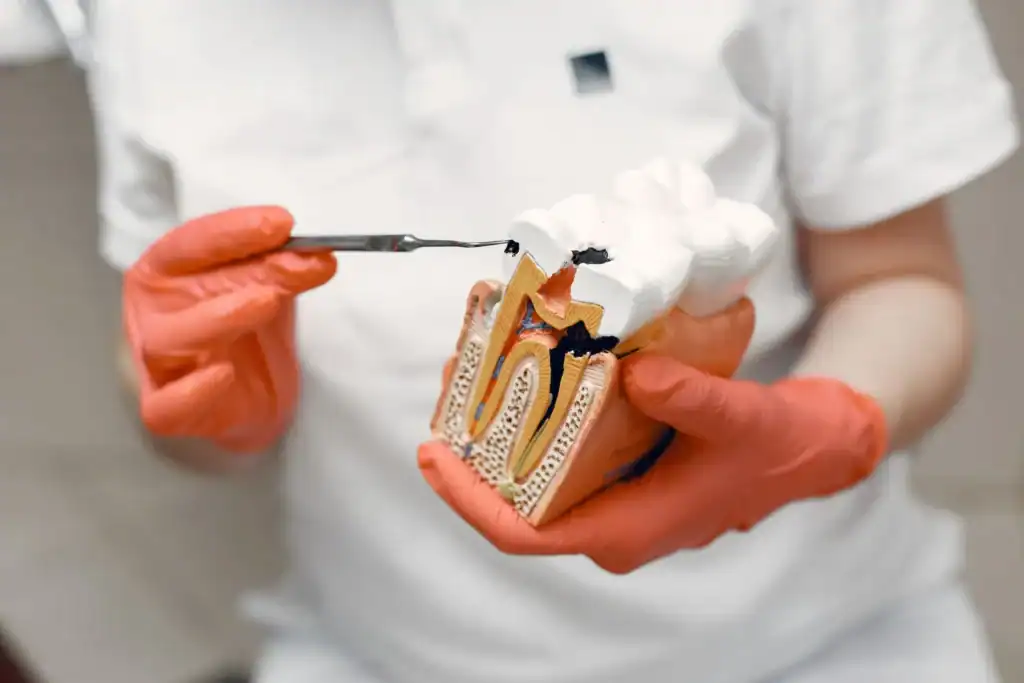
Root resection (apicoectomy)
Through a small opening in the gum, your dentist removes the inflamed tissue around the root tip and trims off the end of the root.
Retrograde (root-end) filling
Your dentist cleans a small cavity in the cut root end and seals it, closing off the inside of the root from the surrounding bone.
Both parts are usually done in the same appointment. The rest of the tooth, including its crown, stays in place, and the bone around the root tip heals over the following months.
How we assess and plan
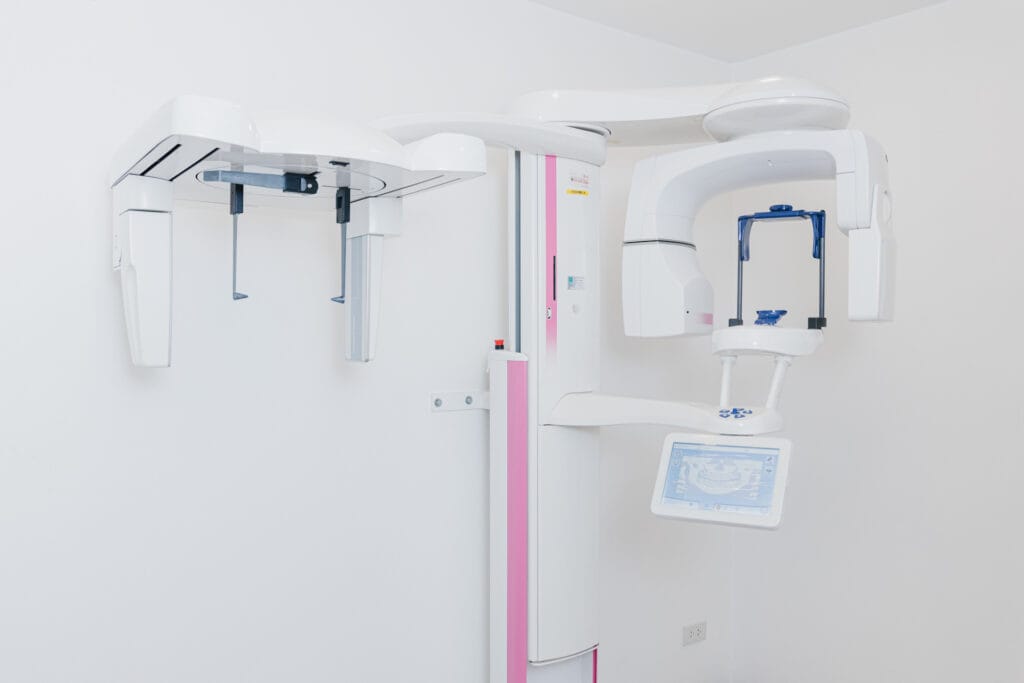
Examination and history
Your dentist reviews your symptoms and the records of your previous root canal treatment.
X-rays
A periapical X-ray shows the root tip and the bone around it.
CBCT 3D scan before every surgery
A 3D scan is taken before every root-end surgery. It shows the root, the extent of the infection and nearby nerves or the sinus, to help plan the surgery.
Options and a written estimate
Your dentist explains whether surgery, retreatment or another option suits your tooth, and gives you a written estimate before you decide.
Step by step on the day
Local anesthesia
The area is numbed while you stay awake.
Root resection
Through a small opening in the gum, the inflamed tissue and root tip are removed.
Retrograde filling
The root end is cleaned and sealed under a dental operating microscope, which is used in every root-end surgery.
Laboratory check
Tissue removed from around the root tip may be sent to a laboratory for examination.
Stitches
The gum is repositioned and stitched.
Follow-up
A review and stitch removal, then X-ray checks of the healing bone over the following months.
Has your dentist suggested root surgery?
Send us your X-rays and previous treatment records. At the first visit your dentist examines the tooth and explains your options before any treatment starts.
Technology we use
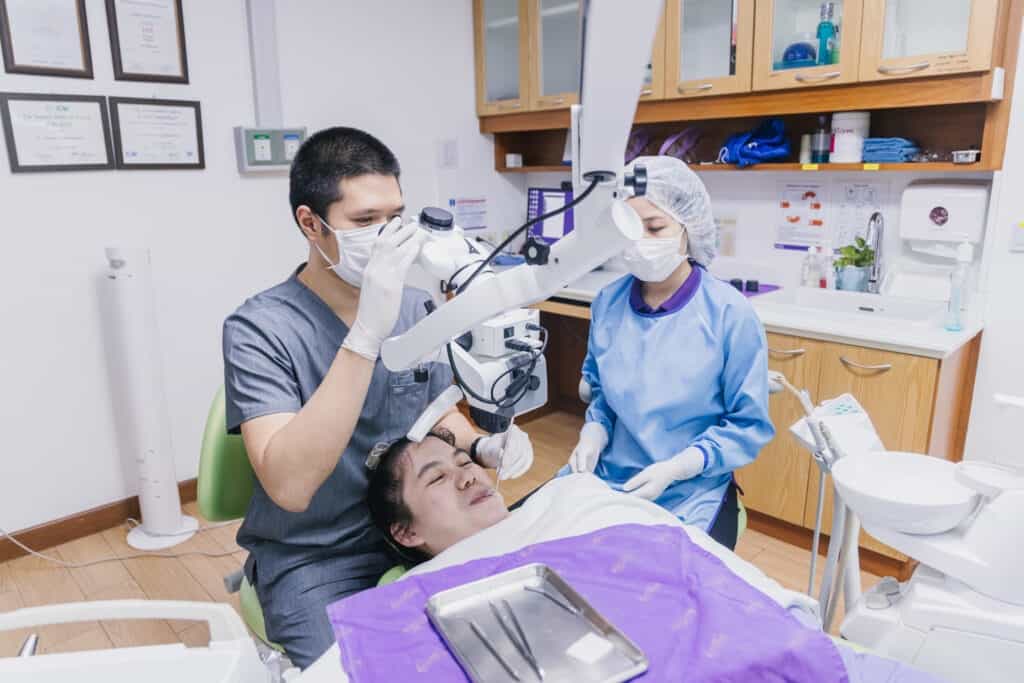
Dental operating microscope
Used in every root-end surgery. Magnification and light help your dentist see the cut root end, small cracks and extra canals.
Bioceramic materials
Such as MTA or Biodentine, which may be used to seal the root end.
3D CBCT imaging
Taken before every root-end surgery, to plan it in three dimensions.
BIOLASE Waterlase iPlus laser
Used in selected cases as an optional extra charge, explained beforehand.
The microscope and a CBCT scan are used for every root-end surgery. Your dentist decides whether your tooth also needs bioceramic materials or the laser.
Other options
Root canal retreatment
Cleaning and refilling the canals again from inside the tooth.
Extraction and replacement
Removing the tooth and replacing it with a dental implant or a bridge.
Choosing together
Root-end surgery is one of several ways to manage a tooth with continuing infection. Your dentist explains the steps and costs of each, so you can choose.
After surgery
Your dentist gives you written aftercare instructions and a follow-up appointment before you leave. Keep your follow-up visits, including X-ray reviews over the following months. If you need a new crown afterward, your dentist plans this with you.
Cost of root-end surgery
Root-end surgery, root-end filling, microscope use, bioceramic materials, the optional laser, root canal treatment and 3D CBCT scans are listed on our prices page. The fee depends on the tooth and the number of roots, so your dentist gives you a written estimate after the examination. Any laboratory examination is a separate item, explained before treatment.
Prices on our prices page are shown as ranges. Your final fee depends on what the examination finds, and may include additional items — such as a rubber dam or special materials — when your treatment needs them. Your dentist explains these before treatment.
Who treats you
Root-end surgery at our clinic is carried out by endodontists — dentists with postgraduate training in endodontics. If your tooth also needs gum treatment, a crown or a replacement, our periodontists, prosthodontists and implant dentists plan this with you in the same clinic.
Root-end surgery FAQs
What is an apicoectomy?
An apicoectomy — called root resection at our clinic — is a small procedure to remove infected tissue and the tip of a tooth root, followed by a retrograde (root-end) filling. It is considered when infection at the root tip continues after root canal treatment.
Why surgery instead of another root canal treatment?
Retreatment is often considered before surgery. Surgery is considered when retreatment would mean removing a good crown or post, when the canal is blocked, or when infection continues after retreatment.
Will I be awake during the surgery?
Yes. Root-end surgery is done under local anesthesia, so the area is numb while you stay awake, and your dentist explains each step as it happens.
How long does recovery take?
Your dentist explains what to expect and gives you written aftercare instructions. You return for stitch removal, and the healing bone is checked with X-rays over the following months.
How much does root surgery cost?
Root-end surgery, root canal treatment and CBCT scans are listed on our prices page. The fee depends on the tooth and the number of roots, so your dentist gives you a written estimate after the examination.
What if my dentist finds a crack in the root?
A small exploratory procedure lets your dentist look at the root directly. Your dentist then explains the options, which may include keeping part of the tooth or replacing it with an implant or a bridge.
I am visiting Chiang Mai. Can I have root surgery during my trip?
Often, yes, with planning. Plan to stay in Chiang Mai for at least about 7 days after the surgery, so your dentist can check the wound and remove the stitches. Send our coordinator your X-rays, previous treatment records and travel dates; the final schedule depends on the diagnosis, healing and the plan you choose.
Can my follow-up X-rays be taken in my home country?
Yes. The healing bone is checked with X-rays over the following months. If you live abroad, you can have these follow-up X-rays taken in your home country and send them to us by email, WhatsApp, LINE or Messenger, and your dentist reviews them.
Book a root surgery consultation
Tell us which tooth is affected and send any X-rays or previous treatment records. A coordinator replies in English or Thai and books a time with a dentist. Open every day, 09:00–20:00 (Thailand time).
Or email us at [email protected]
Content reviewed by Dr. Pawak Tungthangthum — DDS, Chiang Mai University; Master's Degree in Esthetic Restorative and Implant Dentistry (International Program), Chulalongkorn University · Last reviewed