

You have paid into Social Security for years and now a denture is on your mind, yours or your parents. The questions come quickly. Can the benefit be used for dentures at all? Do you pay first or does the clinic bill the Social Security Office? Which papers do you need, and what happens if the denture costs more than the benefit?
This article follows the whole path in the order you will meet it: who can use the benefit, what to check before treatment, the steps from the first exam to the claim, the document checklist, how the denture types differ in everyday use, the part you pay yourself, and how to look after the denture afterwards. It is written around dentures. For scaling, fillings, extractions and wisdom tooth surgery, there is a separate article linked below.
In short: the Social Security dental benefit can be used for dentures, depending on your own rights. At Kitcha Dental Clinic the clinic provides the treatment and issues the official receipt and a medical certificate. You pay at the clinic, then take these documents to claim the benefit yourself from the Social Security Office. Rights and conditions are set by Social Security and can change, so this article describes the general structure only. Always check your current rights and conditions directly with Social Security (sso.go.th or hotline 1506), because the policy can change.
Who can use the benefit, and a quick self-check
The dental benefit belongs to the insured person. In general terms it applies to people insured under the Social Security system, with conditions about contributions and about cover after leaving a job. The exact conditions, such as who qualifies and how long contributions must run, are set by the Social Security Office and can change, so they are not stated here as fixed facts. Always check your current rights and conditions directly with Social Security (sso.go.th or hotline 1506), because the policy can change.
Quick self-check
- You are an insured person under Section 33 or Section 39, or you are helping a parent or relative who is.
- You know roughly when your contributions were paid and can check the record online or by phone.
- You can pay for the denture first and wait for the reimbursement afterwards.
- You are not in a hurry to finish in a single week, because a denture needs several visits.
- You are ready to keep the original medical certificate and receipt safe until the claim is paid.
If most of these fit, the benefit may suit your plan. If the first one or two are unclear, check with the Social Security Office first (sso.go.th or hotline 1506), because the conditions can change.
How the benefit is built, and what to confirm first
Think of the benefit as a reimbursement. You receive treatment, you keep the paperwork, and the Social Security Office pays back an amount set by its own announcement. The amount is not the clinic fee. It depends on the kind of denture and on how many teeth it replaces, with a separate allowance mentioned for denture repair. The announced rules changed on 1 May, so older web pages and word of mouth may no longer match.
Use the table to see what is reported, what stays open, and what to do about each item. Anything marked for confirmation is something we could not verify from a primary Social Security Office announcement, so we ask you to check it.
Always check your current rights and conditions directly with Social Security (sso.go.th or hotline 1506), because the policy can change.
| What to check | What is reported | What you do |
|---|---|---|
| Who is covered | Insured persons who meet the contribution conditions Social Security sets at present. Please check. | Check your own rights with Social Security before booking. |
| Which dentures | Removable partial and removable complete dentures. Implants to hold a complete denture are mentioned for people who have lost all their teeth. | Ask your dentist which type suits your mouth, then check that type. |
| Amount you can claim | A range that depends on the number of teeth and the type, plus a separate repair allowance. Figures change, so none are quoted here. | Confirm the current rate at sso.go.th or on 1506. |
| How often you can claim | Any interval before a further denture is set by Social Security at present. Please check. | Ask Social Security (1506) before you make a second denture. |
| How you receive the money | Social Security sets how and where a claim is submitted. Check the current channels with them. | At Kitcha Dental Clinic you pay at the clinic and claim yourself. |
One practical point: the denture price at any clinic is set by the clinic, and the benefit is set by the Social Security Office. They are two separate numbers, which is why the difference between them is a normal part of planning and not a surprise at the end.
Social Security Office website (sso.go.th)
Step by step: from the first exam to your claim
Most dentures need at least 3 to 4 visits, and a complete denture usually needs more visits than a partial one. Your dentist gives you a visit plan after the exam. The steps below are the usual order, and each step also tells you what to do about the claim.
- Check your right first: confirm your rights and the current conditions with Social Security, online or on 1506, before you book.
- Examination and plan: the dentist checks your teeth, gums and bone, takes X-rays when needed, and explains which dentures suit you. Your dentist explains the plan for your case, which you can then compare with the benefit.
- Impression or digital scan: the records go to the partner dental laboratory.
- Try-in: you try the framework or the teeth set up in wax so colour, shape and fit can be adjusted before the denture is finished.
- Fitting and bite check: the finished denture is placed and your bite is checked. Follow-up visits ease any sore spots.
- Collect your documents: the clinic prepares the medical certificate and the itemised receipt. Check that the name, dates and treatment match your plan before you leave.
- Submit the claim: send the documents to the Social Security Office through the channel it currently provides, then keep your copies until the money arrives.
If you live outside Chiang Mai, tell the team your travel dates early. The visits can then be planned around them, and the order of the steps stays the same.
Document checklist for the claim
Two papers come from the clinic. The rest come from you or from the Social Security Office. Summaries of the claim form list the items below, but the Social Security Office decides the final list, so check it before you submit.

From the clinic
- Medical certificate from the dentist who treated you.
- Itemised receipt that lists each treatment. The clinic can issue receipts and medical certificates in English as well.
From you or the Social Security Office
- The claim documents that Social Security requires. Check the current list with Social Security.
- Documents about you, such as a copy of your ID card, are commonly asked for.
- Bank account details for the transfer are commonly asked for.
- Other documents, for example a treatment record for some denture bases, may be requested. Social Security decides the final list, so confirm it with them.
Tip: take a photo of every page before you send the originals, and write down the date you submitted. If the Social Security Office asks for one more paper, you can answer in a day instead of starting again.
Denture types compared in everyday use
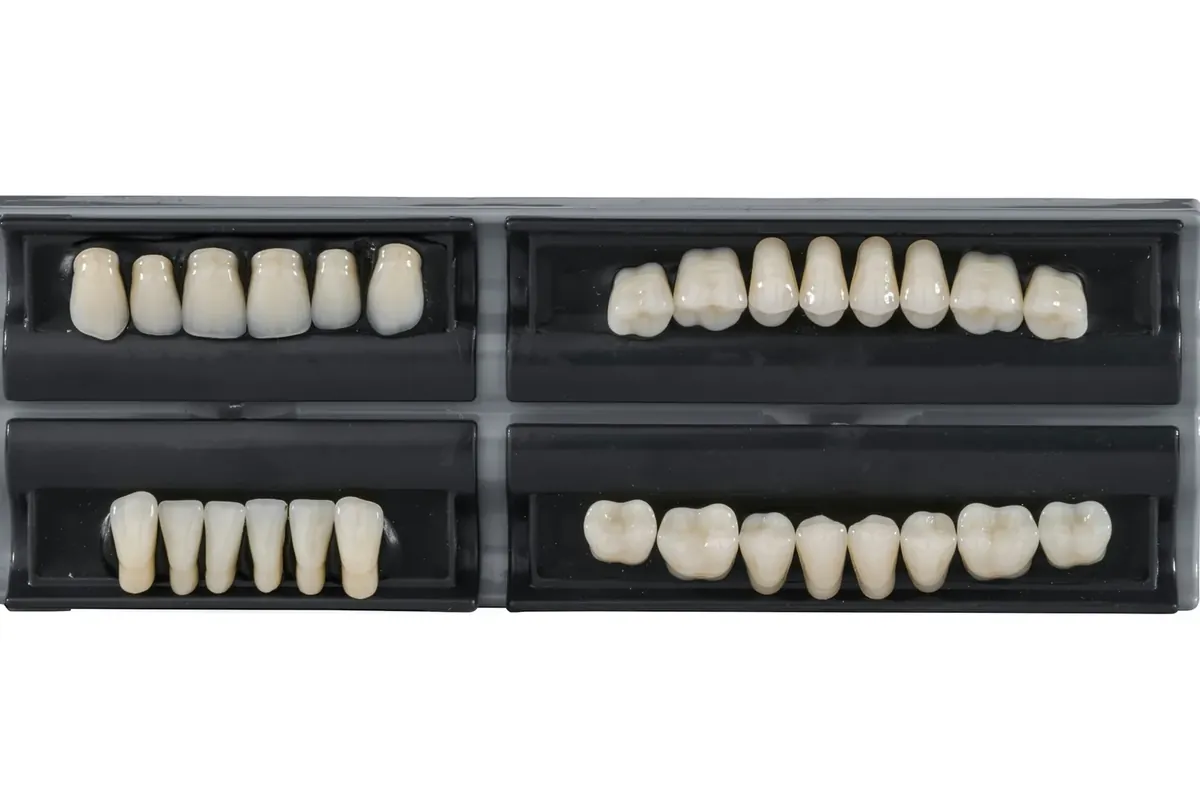
The benefit pays by type and by the number of teeth, so it helps to know the types before you talk to the dentist. The table compares them by how they behave in daily life. It does not compare prices, which are on the prices page.
| Type of denture | Suits | Good to know |
|---|---|---|
| Partial denture, acrylic base | A temporary plate worn straight after an extraction while the gums heal. | Made for the short term, so it is usually replaced after the gums settle. For long-term use, a metal framework or flexible denture is recommended. |
| Partial denture, cobalt-chromium framework | Longer-term use when natural teeth remain to hold the clasps. | A thin metal framework clips onto the remaining teeth and feels slimmer than a plastic plate. Clasps can show when you smile, depending on where the teeth are. |
| Partial denture, flexible (Valplast) | People who want no metal clasps and a softer feel. | The flexible resin follows the gum, but needs the dentist to plan the support carefully. A review of non-metal clasp dentures advises care when they are not used temporarily. |
| Complete denture, acrylic or metal base | No teeth left in the upper jaw, the lower jaw or both. | It rests on the gum, so fit changes as the gum and bone change over time. Usually needs more visits than a partial denture. |
| Digital complete denture | A complete denture designed on a computer and milled from a block of denture material. | The design file is stored, so a spare or a new one can be made from it, at a cost. It is a different way of making, not a different way of wearing. |
| Implant-retained denture (snap-in) | A removable denture that clips onto implants, for people whose denture moves a lot. | It moves less when you eat and speak, and still comes out for cleaning. It involves implant surgery, so it needs a bone assessment first. |
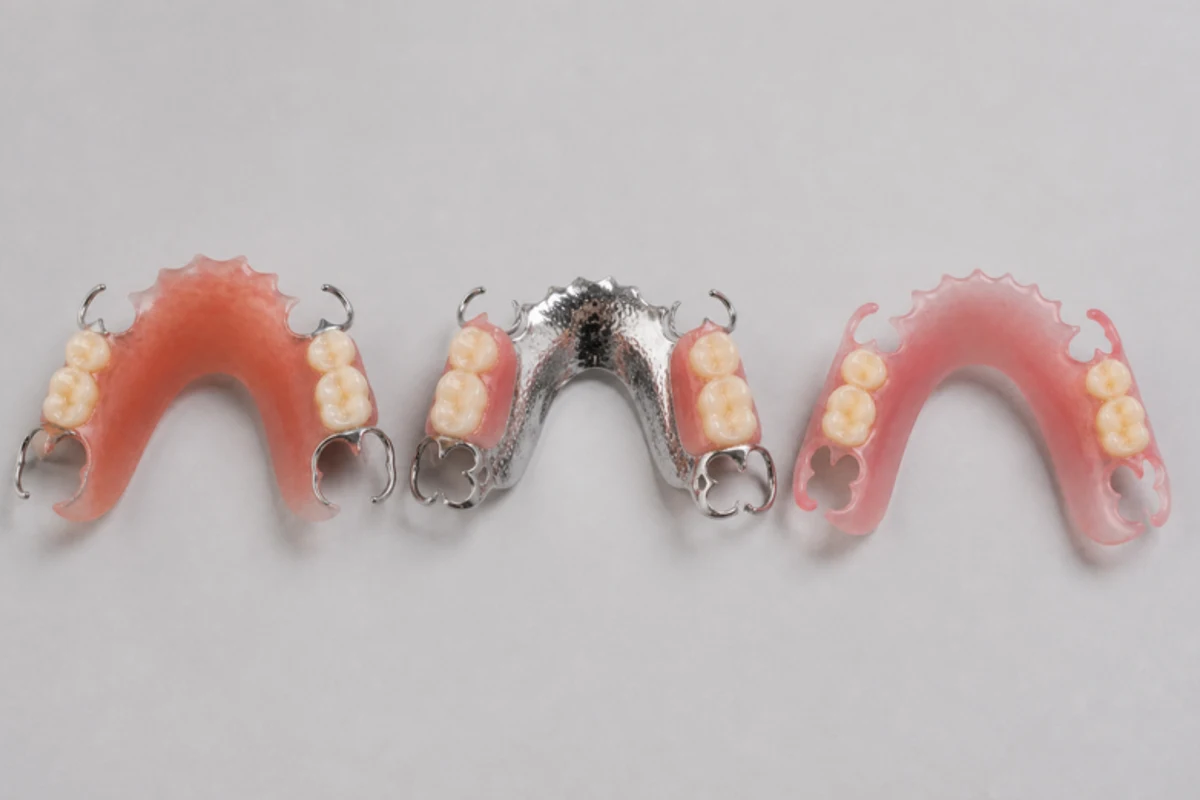
There is research behind the implant option. A review of the evidence behind the McGill and York consensus statements reports that for a lower jaw with no teeth, a denture held by two implants was named as the first choice of treatment over a conventional denture. Whether it suits you depends on your bone and general health, and the dentist assesses this after an exam and a 3D scan when needed.
Remember what the benefit reports mention: removable partial and complete dentures, plus implants to hold a complete denture in people who have lost all their teeth. Fixed bridges and single implants are different treatments, so ask the Social Security Office about them separately.
Removable dentures, fixed bridges or implants: how to choose
Acrylic or metal-framework partial dentures: the difference
The part you pay yourself
Social Security sets the benefit by type and number of teeth, and the rules can change. The clinic fee depends on the materials, the laboratory work and the number of visits. When the fee is higher than the amount you can claim, the difference is yours. You will know which case you are in only after the dentist has made the plan. Check the current conditions with Social Security.
How to plan for the difference
- Your dentist explains the plan for your case after the exam.
- Check the current claim rate for your denture type with Social Security.
- Subtract the two yourself. The result is your share, plus any extra items the dentist tells you about.
- Keep every receipt until the refund arrives.
Denture prices are on the prices page and the dentist confirms the fee after the exam. The restoration has a 1-year warranty, terms apply.
Foreign workers and non-Thai speakers
If you are a foreign worker, whether and how you can use the benefit is decided by Social Security, so check your own rights directly with them (sso.go.th or hotline 1506) before treatment, because policy can change. At the clinic the steps are the same for everyone: pay at the clinic, receive the receipt and medical certificate, then claim yourself. The clinic can issue the receipt and the medical certificate in English, and the team can explain in English or send the explanation by email or WhatsApp if you prefer to read it.
For a first-time claim, ask reception what the clinic provides. Bring the identity document you gave Social Security, so the name on the receipt matches the name in the claim.
Dentures for parents and older adults
Older adults often need a denture that is comfortable first and clever second. Dry mouth from medicines, a gum that has changed shape, or a denture that has worn down all change the plan. The Social Security benefit belongs to the insured person, so check whose record is being used. People who have left a job should ask Social Security whether their cover continues, because the conditions can change.
- Bring the list of medicines, or the boxes. The dentist reviews them and may contact the doctor who looks after you.
- Bring the old denture, even if it is cracked. It tells the dentist how the mouth has changed.
- A family member can help with the paperwork, but the claim is paid to the insured person.
Before you choose: a decision checklist
- How many teeth are missing, and do you still have natural teeth to hold a partial denture?
- Do you need something to wear right after an extraction, and a longer-term denture later?
- Does a metal clasp bother you when you smile, or would you prefer a flexible design?
- Does the denture move a lot? Then ask about implant support.
- Have you checked your contribution record and the current claim rate?
- Can you attend several visits over a number of weeks?
A partial denture can also change the health of the teeth next to it. A systematic review of long-term partial denture wearers found a high survival rate for cast-clasp dentures, with few changes in the supporting teeth, although teeth used as abutments and teeth that had root treatment were more likely to be lost. This is why the dentist checks the supporting teeth and your gums before planning, and why regular checks matter afterwards.
Daily care for your denture
A denture that is cleaned well lasts longer and keeps the gum healthier. The advice below matches the NHS and the American Dental Association pages, together with the clinic care sheet.
- Rinse the denture after meals to wash away loose food. Clean it over a sink of water or a soft towel, because it can break if dropped.
- Brush it every day with a soft brush and water or a denture cleaner. Skip toothpaste, which can scratch the surface.
- Never use hot water, which can bend the denture out of shape.
- Brush your gums, tongue and any remaining teeth with fluoride toothpaste morning and night.
- Take the denture out at night to rest the gums, unless your dentist advises otherwise, and keep it in water or a cleaning solution so it does not dry out.
If the denture slips, a little adhesive may help while it still fits well, used sparingly as the label says and washed off every day. A denture that keeps moving needs a check, not more adhesive.
A loose denture: do you need denture adhesive?
Getting used to it, and adjustments after fitting
A new denture can feel strange for the first few weeks. Muscles of the cheeks and tongue need time to learn it, and a little extra saliva or minor soreness at first is common. Start with soft food cut into small pieces and chew on both sides.
| What you feel | Usually means | What you do |
|---|---|---|
| A sore spot that rubs | A small area of the denture presses on the gum. | Come back for an adjustment. Do not file it yourself. |
| Clicking or noise when you speak | The teeth meet in the wrong place, or the fit has shifted. | Book an adjustment visit. |
| Becomes loose after some time | Gum and bone change shape over time. | Ask about relining or a repair. |
| Very red or bleeding gums, or bad breath | Poor cleaning, gum disease or a fungal infection. | See the dentist for a check. |
Because gums and bone change over time, a denture may need a reline, a repair or an adjustment later. Bring the denture with you to the check-up. The Social Security benefit mentions a separate allowance for denture repair, so ask whether your case qualifies before you pay.
What happens at Kitcha Dental Clinic
Dentures are planned by a dentist with further training in prosthodontics, the field that looks after crowns, bridges and dentures, and made by an ISO-certified partner laboratory. Staff coordinate in Thai and English.
- The dentist examines your teeth, gums and bone with X-rays, and explains the options, including bridges and implants.
- Impression or digital scan, and a record of how the jaws meet. The records go to the laboratory.
- Try-in of the denture or the metal framework to check shade, shape and fit.
- Fitting of the finished denture, a bite check, and follow-up visits to ease sore spots.
- Medical certificate and itemised receipt prepared for your Social Security claim.
If you bring a denture made elsewhere that has become loose, the team can look at adding to the base, depending on the condition of the denture.
If this sounds like you: what to do
These are example situations, not patient stories, to help you find the next step that fits.
- You need a tooth taken out and want something to wear while the gum heals: a temporary acrylic partial denture can be worn straight after the extraction. Plan a longer-term denture afterwards, and keep every receipt, because both stages may be part of the claim story.
- Several teeth are missing on one side and you still have natural teeth: a partial denture with a metal framework or a flexible one may fit. Ask the dentist to compare them for your mouth.
- Your mother has no teeth left and her old complete denture is loose: ask about a new complete denture, and about whether implants to hold the lower one suit her bone and health.
- You are a foreign worker: check your rights directly with Social Security (1506), pay at the clinic, and ask for the receipt and certificate in English if the claim office needs it.
- You are not sure you qualify: check with Social Security (1506) before booking. A short call costs less than a denture planned around a right that is not there.
- You want to know whether a digital denture is covered: ask the Social Security Office about the type, as the benefit is set by type. The method of making is a clinic choice, so ask both sides.
Common myths and the facts
| Myth | Fact |
|---|---|
| Social Security pays the whole denture bill. | It pays back an amount set by the Social Security Office, by type and number of teeth. The clinic fee is separate, so a difference is common. |
| The clinic sends the bill to Social Security. | At Kitcha Dental Clinic you pay first, receive the certificate and receipt, and submit the claim yourself. |
| The benefit covers scaling too, so the denture is the same article. | The claim steps are the same, but dentures have their own types and rates. This article focuses on dentures, and scaling, fillings and extractions have their own article. |
| A denture can be worn day and night without a problem. | NHS advises taking it out at night unless your dentist says otherwise, to let the gums rest and reduce the risk of gum infection and decay. |
| Once the denture is made, it will fit for ever. | Gums and bone change shape over time, so a denture may need a reline, a repair or a replacement. |
| Toothpaste is a good way to clean a denture. | Toothpaste can scratch denture material. Use a soft brush with water, soft soap or a denture cleaner. |
Frequently asked questions about Social Security and dentures
Always check your current rights and conditions directly with Social Security (sso.go.th or hotline 1506), because the policy can change.
Can I use Social Security for dentures?
Yes, when your rights allow it. Dentures are generally part of the dental benefit, but which types and conditions apply is set by Social Security and can change. Check directly with Social Security (sso.go.th or hotline 1506).
Do I pay first or does the clinic bill Social Security?
At Kitcha Dental Clinic you pay at the clinic, receive the medical certificate and receipt, and claim the benefit yourself. The clinic does not bill the Social Security Office directly.
How much can I claim for dentures?
The amount depends on the type of denture and the number of teeth, and a separate allowance for repair may apply. Rates change from time to time, so this article gives no figure. Check current rates and conditions directly with Social Security (sso.go.th or hotline 1506), because policy can change.
How many months of contributions do I need?
Social Security sets the contribution conditions for using the benefit, such as how many months of contributions are needed, and these can change. Check your own record and the current conditions directly with Social Security (sso.go.th or hotline 1506).
Can I use the benefit again for a second denture?
Whether there is an interval before you can claim for another denture is set by Social Security and can change. Ask Social Security (sso.go.th or hotline 1506) before planning a second denture.
What documents do I need?
From the clinic: the official receipt and the medical certificate. Other documents come from you and from the requirements of Social Security, which can change, so confirm the current list with Social Security (sso.go.th or hotline 1506).
Can an acrylic partial denture be claimed?
It is a removable partial denture, so it falls in the type the benefit describes in general terms. At Kitcha Dental Clinic the acrylic partial denture is made as a temporary plate, and a metal framework or flexible denture is recommended for long-term use. Ask Social Security which documents apply to an acrylic base.
Are digital dentures or implant dentures included?
Reports mention removable complete dentures, and implants that hold a complete denture for people who have lost all their teeth. How a digital denture or an implant denture is treated in a claim should be confirmed with the Social Security Office before you decide.
How many visits does a denture take?
Most dentures need at least 3 to 4 visits, and a complete denture usually needs more than a partial one. The dentist plans your visits after the exam.
What if the denture costs more than the benefit?
The difference is paid by you. Your dentist explains the plan for your case, you compare it with the current rate, and you decide on the type that suits your mouth and your plan.
Summary
Social Security dental benefit can be used for dentures within your own rights. The path is clear: check your right, plan with the dentist, pay at the clinic, collect the receipt and certificate, then claim yourself.
- Check your rights, conditions and the current claim rate directly with Social Security (sso.go.th or hotline 1506) before you start, because the policy can change.
- Plan for a difference between the clinic fee and the amount you can claim.
- Keep the original medical certificate and itemised receipt, and photograph every page.
- Choose the denture type for your mouth first, then check how that type is treated in the benefit.
- Clean the denture every day, take it out at night, and come back when it hurts or loosens.
Always check your current rights and conditions directly with Social Security (sso.go.th or hotline 1506), because the policy can change.
References
Social Security Office (Thailand): official website and hotline 1506
Thansettakij, 19 April: new dental benefit for insured persons from 1 May
Thairath: Social Security opens applications for dental clinics under the new announcement
Sanook Money: summary of Social Security dental benefits from 1 May
KTC: Social Security dental benefit, conditions and claim documents
American Dental Association, MouthHealthy: Dentures
MedlinePlus (US National Library of Medicine): dentures overview