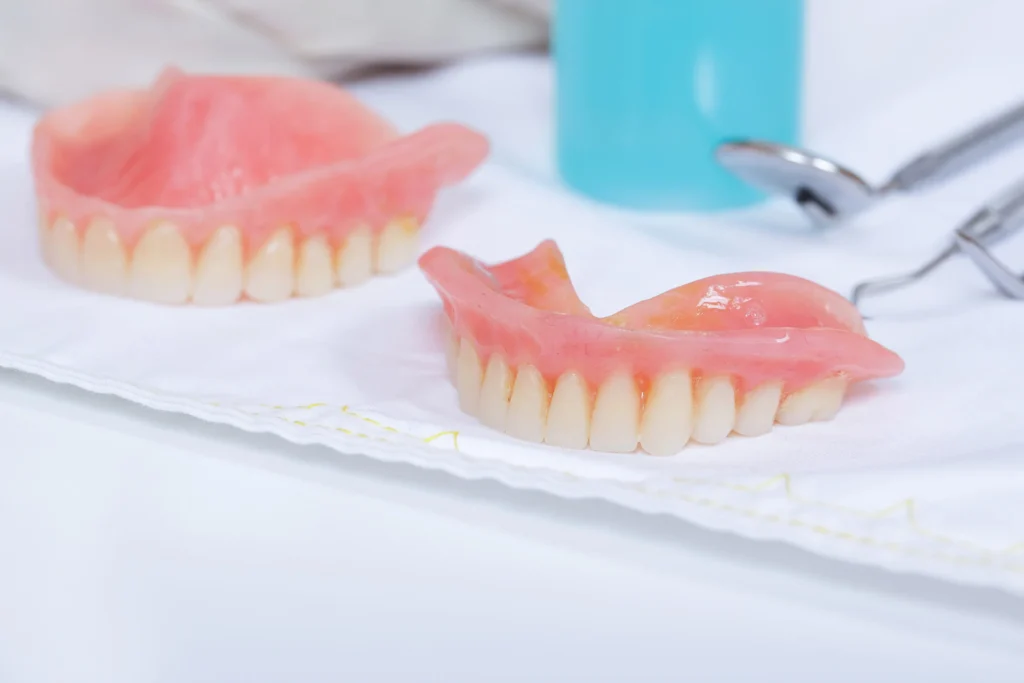
Removable dentures on a white cloth at Kitcha Dental Clinic Chiang Mai, showcasing expert dental prosthetic services.
Removable Denture

Removable Denture Removable Denture are designed for individuals with a few remaining natural teeth or for those who have lost all their teeth. These dentures can be easily removed for cleaning. Made from plastic or composite materials that closely match the color of natural teeth, they feature a base made of either plastic or metal that rests on the gums or the roof of the mouth. Evaluate the Pros and Cons of Removable Dentures Removable dentures offer several advantages, including replacing lost natural teeth, improving the quality of life for those who have lost teeth, and restoring effective chewing function. However, additional adjustments or replacements may be necessary if teeth are extracted or if the gums change over time. Consider the following benefits and drawbacks of removable dentures Advantages : Disadvantages : Preparing for Removable Denture Process for Getting Removable Denture The process of fitting removable dentures involves several steps and typically requires 5-6 visits to the dentist. The steps are as follows Possible Complications with Removable Denture Caring for Removable Denture

Bright young woman at dental clinic receiving a dental check-up, showcasing professional dental care services at Kitcha Dental Clinic Chiang Mai.
Social Security for Dental Prosthetics

Social Security for Dental ProstheticsIn addition to coverage for dental cleanings, fillings, extractions, and wisdom tooth removal, social insurance also provides benefits for dental prosthetics. You can claim reimbursement for dental prosthetics within 5 years from the date they are fitted. The details for dental prosthetics are categorized as follows Partial Removable Dentures Complete Removable Dentures

Fixed Dental Prosthesis (Crown and Bridge)

Dental Crowns and Bridges Care Instructions​ 1. What to Expect After Dental Treatment You may experience mild tooth sensitivity to hot, cold, or pressure for the first 2–3 days The crowned or bridged tooth may feel slightly “high” or different when biting; this usually improves as your bite adjusts Temporary gum irritation around the crown margins is normal If a temporary crown or bridge was placed, be cautious while eating or flossing, as these may become dislodged Important: Crowns do not make your teeth immune to decay. Tooth decay can still occur along the margins between the crown and the natural tooth, especially if oral hygiene is neglected. In some cases, root canal treatment may become necessary after crown placement, particularly if symptoms develop or the pulp becomes inflamed. Treatment may involve drilling through the crown or removing it entirely to access the underlying tooth.   2. How to Take Care of Yourself After Treatment Avoid hard, sticky, or extremely hot foods during the first 48–72 hours Brush twice daily with a soft-bristled toothbrush and use floss or interdental brushes regularly Pay special attention to cleaning around the crown margins and under bridge pontics, where plaque commonly accumulates Attend regular dental check-ups every 3–6 months to detect early signs of decay or damage beneath the crown or bridge If you grind your teeth at night, ask your dentist about a nightguard to protect your restorations Follow all oral hygiene instructions as provided by your dentist Even after crown placement, proper oral hygiene is crucial. Without it, decay may occur under the crown and lead to root infection, which can require re-treatment or crown replacement 3. What to Avoid After Treatment Do not chew on hard items like ice, hard candy, or nutshells with crowned teeth Avoid chewing sticky foods such as caramel or chewing gum, especially on temporary crowns Refrain from using your teeth to open packaging or bite hard objects Avoid highly acidic foods or beverages that can wear down restoration materials Do not neglect daily cleaning, especially around the crown edges and under bridges 4. When to Contact the Clinic The crown or bridge feels loose, cracked, too high, or has fallen out You experience sharp localized sensitivity, especially to sweets or cold You develop deep, lingering toothache or discomfort—this may indicate underlying pulp inflammation There is noticeable bad breath or an odd taste from a specific area You see redness, swelling, or bleeding in the gums around the crowned teeth These symptoms may signal decay beneath the crown, bite misalignment, or the need for root canal treatment through the crown. 5. How To Reach Us If you have any concerns, questions, or complications following your treatment, please contact Kitcha Dental Clinic. Our staff will assess the urgency of your situation and prioritize appointments accordingly to ensure you receive timely care. Contact Kitcha Dental Clinic: Phone (Thailand): 053-200201 or 091-797-7888 Website: https://www.kitchadentalclinic.com/contact-us/ LINE: nav.cx/5PmNyFR WhatsApp: https://wa.me/66917977888 Facebook Messenger: https://m.me/kitchaclinic We are here to support your recovery and ensure your well-being throughout the healing process.
Invisalign Clear Aligner

Patient Instruction Invisalign 1. General Information Invisalign is a clear aligner system that uses 3D computer technology to create personalized orthodontic devices. The process begins with the dentist taking an impression of the patient’s mouth. This impression is then scanned into a digital model of the teeth. A computer program determines the step-by-step movement of the teeth according to the treatment plan outlined by the dentist. Each stage of tooth movement is used as a template to manufacture the individual Invisalign aligners. 2. Alternatives treatment 3.  Risk and side effect of treatment 4. Pre / Post Care Wearing Invisalign   Removing Invisalign   Daily Care and Cleaning for Invisalign Proper Oral Hygiene for Invisalign Wearers Storage of Invisalign  Precautions Prohibitions    

Fixed Orthodontic Treatment-Braces

Post-Operative Care Instructions After Metal Braces Orthodontic Treatment 1. What to Expect After Treatment As you begin your journey with metal braces, it’s normal to experience: Soreness or pressure in your teeth and jaws for 2–5 days after the braces are first applied Mild irritation on your lips, cheeks, or tongue due to contact with brackets or wires Difficulty chewing or discomfort while eating certain foods during the initial days These symptoms are temporary and usually resolve as your mouth adjusts. Orthodontic wax and pain relief medication can help ease this transition. Be consistent with your oral hygiene to prevent cavities and decalcification (white spots) Keep all scheduled appointments (every 4–6 weeks) for proper adjustments Report any loose brackets or poking wires as soon as possible Ask your orthodontist if you’re unsure how to clean around new areas Stay positive—orthodontic treatment takes time, but the results are worth it 2. How to Take Care of Yourself After Treatment Brush after every meal using a soft toothbrush and an orthodontic brush to clean around brackets Use orthodontic floss or floss threaders to clean between teeth and under the wires Rinse with fluoride mouthwash to help protect against cavities and gum inflammation Avoid hard, sticky, or crunchy foods (e.g., candy, gum, popcorn, ice, sticky rice) Cut fruits and hard vegetables into small pieces before eating Stay hydrated and clean your teeth after sweet snacks or drinks Follow your orthodontist’s instructions for elastics or appliances, if prescribed 3. What to Avoid After Treatment Do not chew on hard objects like pens, nails, or ice Avoid biting into whole apples, corn on the cob, or crusty bread Do not skip brushing or flossing, especially before bed Avoid excessive sugary foods and drinks that increase plaque buildup Never try to adjust or remove your braces on your own   4. When to Contact the Clinic Please contact Kitcha Dental Clinic immediately if you notice any of the following: Severe pain that does not improve after a few days Broken or detached brackets or wires Sores or ulcers that worsen or don’t heal Questions or concerns about cleaning or appliance care 5. How to Reach Us For any concerns after your dental implant or bone graft procedure, please contact Kitcha Dental Clinic. Our staff will assess the urgency and assist with scheduling a follow-up. Contact Kitcha Dental Clinic: Phone (Thailand): 053-200201 or 091-797-7888 Website: https://www.kitchadentalclinic.com/contact-us/ LINE: nav.cx/5PmNyFR WhatsApp: https://wa.me/66917977888 Facebook Messenger: https://m.me/kitchaclinic Our team is committed to ensuring your comfort and success from surgery through recovery.

Tooth Extraction / Surgery

Post-Operative Care Instructions After Surgical removal of impacted or Embeded tooth 1. What to Expect After Surgery After surgical removal of an impacted tooth, it is common to experience pain, swelling, or facial bruising within the first 24–48 hours. Minor bleeding may also occur. If bleeding persists, bite down firmly on a gauze pad to help control it. Some patients may have difficulty opening their mouth or may experience temporary numbness in the lips or chin, depending on the depth and position of the impacted tooth. 2. How to Take Care of Yourself After Surgery Bite down on a gauze pad over the surgical site for about 1 hour. If bleeding continues, replace with a fresh pad. Avoid forceful rinsing or using straws during the first 24 hours. Suction pressure from a straw can dislodge the blood clot and lead to dry socket. Apply a cold compress to the cheek area during the first 24–48 hours to reduce swelling. Switch to a warm compress starting on day 3. Begin gentle saline rinses from day 2 onward, especially after meals and before bedtime. Eat soft foods and avoid hot, spicy, chewy, or hard foods for 3–5 days. Take all prescribed medications, especially antibiotics, exactly as instructed. Return to the clinic for follow-up and suture removal within 5–10 days if non-dissolvable stitches were used. 3. What to Avoid After Surgery Do not rinse your mouth forcefully or spit during the first 24 hours. Avoid using straws or engaging in any sucking action that may dislodge the blood clot. Refrain from smoking or consuming alcohol for at least 72 hours, as these can delay healing. Avoid hot, spicy, or hard foods that may irritate the site. Avoid using straws to drink fluids, as suction can disrupt the healing site. Do not touch the extraction area with your fingers or tongue. Avoid blowing your nose forcefully or sneezing with your mouth closed, especially if the extracted tooth was near the sinus area. 4. When to Contact the Clinic Please contact Kitcha Dental Clinic immediately if you notice any of the following: Continuous bleeding for more than 2 hours that does not stop with pressure Severe pain that intensifies after 2–3 days (a potential sign of dry socket) Signs of infection such as fever, chills, swelling that worsens, or foul odor or taste Pus discharge from the site Difficulty breathing or swallowing Sensation of retained root fragments or loose bone near the wound 5. How to Reach Us If you have any concerns, questions, or complications following your treatment, please contact Kitcha Dental Clinic. Our staff will assess the urgency of your situation and prioritize appointments accordingly to ensure you receive timely care. Contact Kitcha Dental Clinic: Phone (Thailand): 053-200201 or 091-797-7888 Website: https://www.kitchadentalclinic.com/contact-us/ LINE: nav.cx/5PmNyFR WhatsApp: https://wa.me/66917977888 Facebook Messenger: https://m.me/kitchaclinic Our team is committed to ensuring your comfort and success from surgery through recovery.
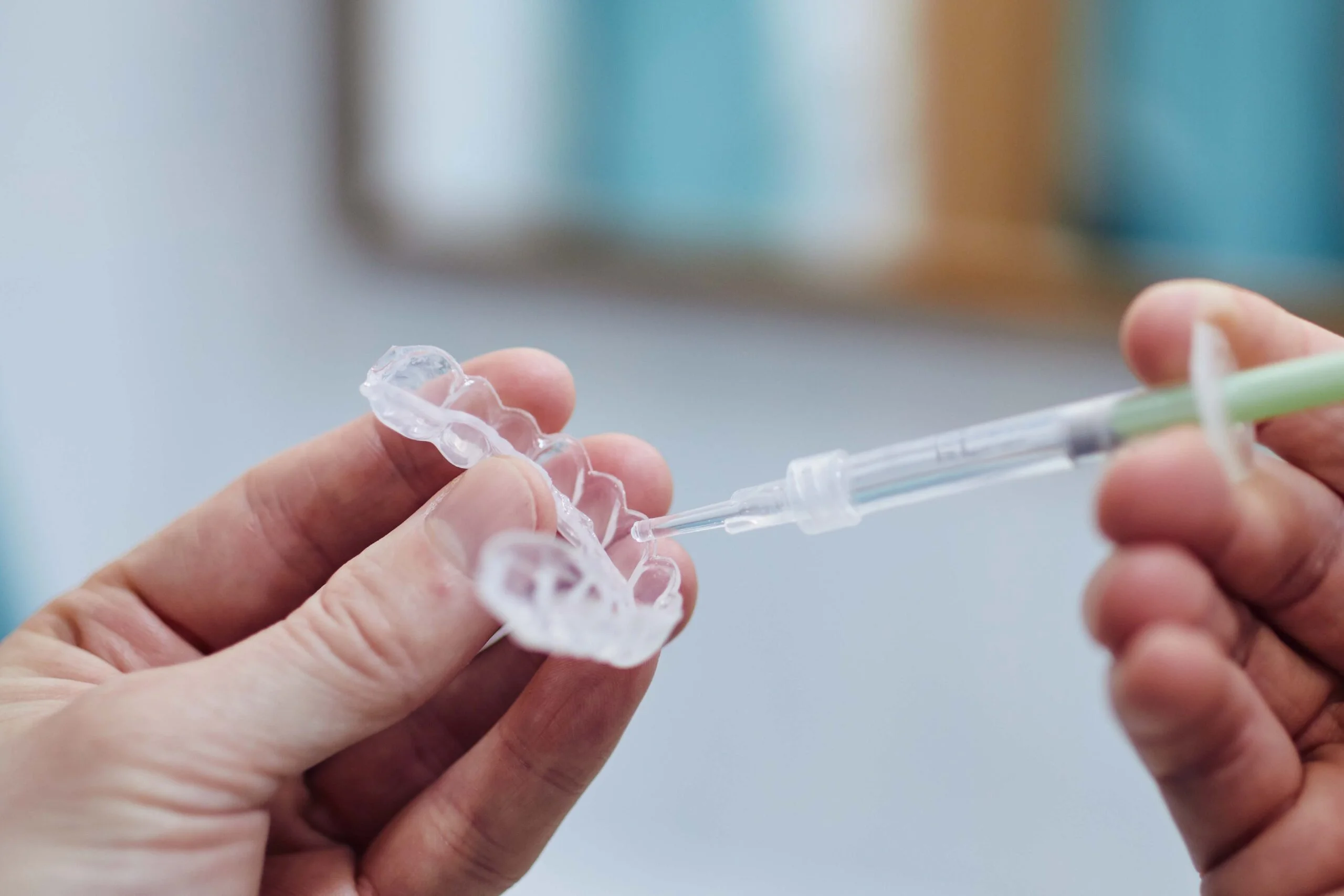
Clear dental aligners being filled with dental resin or adhesive for orthodontic treatment at Kitcha Dental Clinic Chiang Mai.
Opalescence PF Tooth Whitening Gel (Home Bleaching)

Opalescence PF is  : a water-based tooth whitening gel with concentrations of 10%, 15%, 20%, and 35%. It contains hydrogen peroxide at 10%, 15%, 20%, and 35%, respectively. This formula is used for teeth whitening, with results varying based on individual needs. It helps maintain tooth moisture during the whitening process. The higher concentration of the gel not only reduces sensitivity but also decreases the likelihood of shade relapse in the future. This is because the patient’s teeth remain moisturized from the beginning to the end of the whitening process. Mechanism of Action: Hydrogen peroxide infiltrates the tooth structure, then breaks down into water and oxygen. These oxygen molecules bind to the color molecules that make teeth appear yellow or dark, causing them to break down. As a result, the teeth appear whiter. 1. Precautions before using the whitening gel: Patients should consult a dentist to assess their dental and gum health. The dentist will select the appropriate formula and provide guidance and close monitoring. 2. How to use the whitening gel: 3. Precautions: 4. Side effects: Some potential side effects of using the whitening gel may include 5. Storage instructions: Recommendations:

Colored dental fillings on molar teeth at Kitcha Dental Clinic Chiang Mai, offering tooth restoration and cavity treatment.
The Safe Mercury Amalgam Removal Technique (SMART)

The Safe Mercury Amalgam Removal Technique (SMART) At Kitcha Dental Clinic, we prioritize your health and safety by following the Safe Mercury Amalgam Removal Technique (SMART) protocol, established by the International Academy of Oral Medicine and Toxicology (IAOMT). Our commitment to excellence ensures that your dental care is not only effective but also safe and environmentally responsible. The Safe Mercury Amalgam Removal Technique (SMART) is a set of rigorous safety recommendations designed to protect patients, dental professionals, and the environment from mercury exposure during the removal of dental amalgam fillings. These protocols are based on the latest scientific research and were most recently updated by the IAOMT on July 19, 2019. Our dentists at Kitcha Dental Clinic are certified in SMART, ensuring you receive the highest standard of care. Dental amalgam fillings contain approximately 50% mercury, which can release harmful mercury vapors during everyday activities like brushing and chewing. The release of mercury is significantly higher during the placement, replacement, and removal of these fillings. Mercury vapor is a known neurotoxin that can affect the nervous, digestive, and immune systems, as well as the lungs and kidneys. Chronic exposure to mercury vapor can have serious health implications, making it crucial to handle amalgam fillings with the utmost care. At Kitcha Dental Clinic, we implement the SMART protocol to minimize your exposure to mercury vapors and particulates. This protocol ensures that both patients and dental professionals are protected from the potential hazards associated with mercury exposure. Our SMART-certified dentists follow these comprehensive safety measures to protect your health during amalgam removal: These measures ensure that the amalgam removal process is safe for patients, dental professionals, and the environment. We adhere to all federal, state, and local regulations for the safe handling and disposal of mercury-contaminated materials. Our protocols extend beyond the removal procedure itself, encompassing the safe cleaning and disposal of any materials and equipment that come into contact with mercury. Additionally, we take extra precautions to ensure that pregnant or breastfeeding women are not exposed to mercury during their visits. The IAOMT does not recommend amalgam filling removal for women who are pregnant or breastfeeding, and we follow these guidelines rigorously to protect both our patients and staff. At Kitcha Dental Clinic, your safety and well-being are our top priorities. We are dedicated to providing you with safe and effective dental care using the latest and most reliable methods. Our commitment to the SMART protocol underscores our dedication to patient safety, environmental responsibility, and professional excellence. Contact us today to learn more about our SMART-certified services and how we can help you achieve a healthier smile. Trust Kitcha Dental Clinic for your dental care needs, where your health and safety come first.

Microscope at Kitcha Dental Clinic Chiang Mai for advanced dental examinations.
Dental Microscope

Dental Microscope At Kitcha Dental Clinic, we’re proud to offer the latest in dental technology to our patients. One of the most important tools we use for root canal treatment is a dental microscope. The microscope allows us to see the details of the tooth that we can’t see with the naked eye, making it an essential tool for providing the best possible care. If you’re not familiar with root canal treatment, it’s a procedure that’s used to save a tooth that’s become infected or inflamed. The procedure involves removing the infected or inflamed tissue from inside the tooth, and then filling the space with a special material. It’s a complex procedure that requires precision and accuracy, and that’s where the dental microscope comes in. The dental microscope is a specialized tool that’s designed to provide a magnified view of the tooth during the root canal procedure. This allows us to see the tooth in much greater detail, including the small canals and structures inside the tooth that are critical to the success of the procedure. With the microscope, we can identify and treat even the smallest issues with greater accuracy and precision. One of the most important benefits of using a dental microscope for root canal treatment is that it allows us to preserve more of the natural tooth structure. With traditional methods, it’s often necessary to remove more of the tooth than is actually necessary, which can weaken the tooth and make it more prone to future problems. With the microscope, we can see exactly what needs to be removed, and we can remove only the infected or inflamed tissue, leaving more of the healthy tooth intact. Another benefit of using a dental microscope is that it allows us to detect issues that might otherwise go unnoticed. With the magnified view provided by the microscope, we can see things like cracks, fractures, and other structural issues that might not be visible with the naked eye. This allows us to address these issues before they become bigger problems, potentially saving the tooth and preventing the need for more invasive procedures later on. At Kitcha Dental Clinic, we’re committed to providing the best possible care to our patients. That’s why we use the latest in dental technology, including a dental microscope for root canal treatment. With its precision, accuracy, and ability to detect even the smallest issues, it’s just one of the many ways we’re working to provide the best possible outcomes for our patients. If you’re looking for a Dental Clinic in Chiang Mai, Thailand that uses the latest dental technology to provide high-quality care, look no further than Kitcha Dental Clinic. Contact us today to schedule an appointment and experience the difference for yourself.

Ibuprofen 100mg / 5ml (Syrup)

Ibuprofen 100mg / 5ml (Syrup) Ibuprofen 100mg / 5ml (Syrup) is a nonsteroidal anti-inflammatory drug (NSAID) used for pain relief, fever reduction, and inflammation inhibition. 1) Precautions Before Using Ibuprofen 100mg / 5ml (Syrup) Do not use Ibuprofen 60cc 10 ml in individuals with the following conditions: 2)  How to use the medication: 2.1. What to do if you miss a dose: 3) Precautions while using the medicine:  4) Potential risks from the medication:  5) How to store the medicine: Note: This information is a general summary. Please read the medication label carefully before use and consult your doctor or pharmacist if you have any questions.