
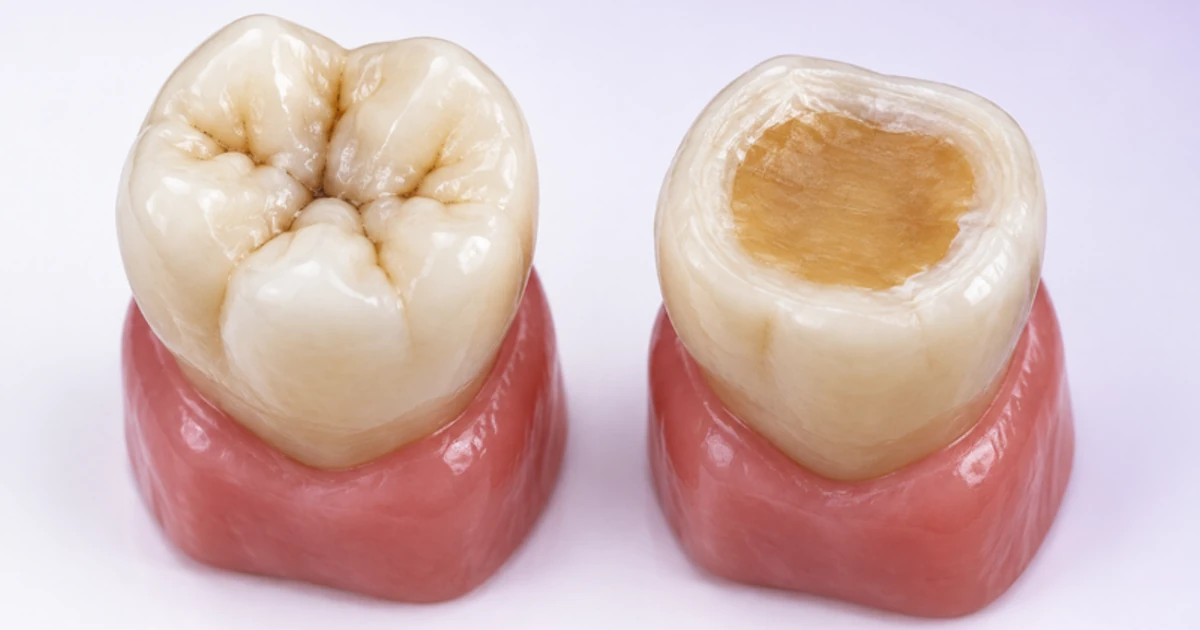
Some people look in the mirror and notice their front teeth seem shorter, the edges have thinned and chipped, or a back tooth has a dip worn into its chewing surface. Others find their teeth getting sensitive even though there’s no decay. Then the question comes: if my teeth keep wearing down, do I need treatment, or is this just part of getting older?
Here’s a dentist’s answer. A little wear is very common, and for many people, keeping an eye on it and dealing with the cause is enough. Only a smaller number wear down so much that a restoration needs planning. This article helps you work out which group you’re probably in, and what to ask your dentist.
Quick summary
- Worn teeth have several causes: grinding and clenching, acid from food or reflux, and brushing. Most people have more than one at once
- Mild wear with no symptoms usually just needs watching and some changes in habits. For heavier wear or sensitivity, options range from adding filling material to crowns
- Full mouth reconstruction is not where everyone ends up. It’s considered when many teeth are worn enough to affect chewing or your smile
- Lost enamel doesn’t grow back, so the key is stopping further wear
Tooth wear vs tooth erosion: what’s the difference?
Most people use the two words to mean the same thing, but dentists separate them by cause, because each one is prevented differently.
- Wear from grinding and clenching. Your upper and lower teeth grind or press against each other, for example when you grind in your sleep. The chewing surfaces turn flat and smooth, the wear on upper and lower teeth often matches, and the edges of teeth or fillings may chip.
- Erosion from acid. Acid from food and drinks, or from the stomach, dissolves the tooth surface. You see scooped-out areas, shallow pits on the tips of the back teeth, and fillings that seem to stand higher than the tooth around them.
- Wear from rubbing (abrasion). Brushing too hard, a very abrasive toothpaste, or using your teeth as tools. The wear appears only where the rubbing keeps happening, such as near the gumline.
In real life, one person often has several of these at once. Someone who grinds at night and also has acid reflux is a good example: the acid softens the tooth surface, and the grinding wears it away faster. That’s why your dentist needs to find everything that’s going on, not just fix the tooth.
What causes worn teeth?
Acid from food and drinks. Acid softens enamel for a while. Sipping sour drinks all day, such as soft drinks, fruit juice or lemon water, keeps your teeth in contact with acid far longer than drinking in one go. After something sour, don’t brush straight away. Rinse with plain water and wait a little before brushing, because softened enamel wears away more easily.
Acid reflux and frequent vomiting. Stomach acid tends to affect the inner surfaces of the teeth (the tongue and palate side), which you can’t see yourself. If you think you have reflux, talk to your doctor as well as your dentist. Treating the cause protects your remaining teeth better than repairing the teeth alone.
A dry mouth, and medicines that cause it. Saliva rinses your mouth and reduces acid. Many medicines reduce saliva. If your mouth often feels dry, tell your dentist, and try sipping plain water often.
Brushing and tooth habits. Brushing hard or using a very abrasive toothpaste every day can wear the necks of the teeth, near the gums. Try a soft brush and a lighter touch. Biting your nails, chewing straws or opening bottles with your teeth can also chip and wear them.
Grinding at night and clenching during the day. Repeated biting force, stronger than normal chewing, flattens chewing surfaces and chips fillings. Read more about bruxism and what to do about it and teeth grinding and night guards.
bruxism and what to do about it
teeth grinding and night guards
Age. Some wear with age is normal, and the older you are, the more likely you are to have some. That doesn’t mean everyone needs treatment.
What’s normal, and when should a dentist look?
Compare these with what you see.
Mild wear, no symptoms. The tooth surface is still smooth, with no sensitivity and no pain. Usually the answer is to watch, adjust your diet and habits, and have your dentist check from time to time. Taking photos of your teeth every six months to a year to compare can help.
Sensitivity where the tooth is worn. The dentine (the layer under the enamel) is exposed, so cold, hot or sweet things set it off. Your dentist has options, such as desensitizing agents and fluoride varnish. At the clinic we also use laser, which can help ease sensitivity from exposed dentine for many people. But if the cause is still there, the sensitivity may come back, so the cause has to be dealt with at the same time. Read more about sensitive teeth and dental laser.
Short or chipped front teeth, or a dip in the chewing surface. It’s worth having your dentist look, because at this stage they can still be repaired in ways that remove very little tooth.
Many worn teeth, a feeling that your bite has got lower, trouble chewing, or a change in your smile. Book a visit so your dentist can assess your whole mouth.
Your dentist looks at several things together: the pattern of wear, where it is, what you like to eat and drink, any reflux symptoms, your medicines, and whether you grind your teeth. So expect quite a few questions at the exam. Just answer honestly.
Your options, depending on your situation
The right choice depends on the cause, how many teeth are involved, your symptoms and what you want. Here is the overview your dentist works from.
- Mild wear, no symptoms. Watch, and adjust diet and habits
- Sensitivity at the worn surface. Desensitizing agents, fluoride varnish, or laser to help ease sensitivity
- One or two short or chipped front teeth. Build them up with tooth-colored composite. This removes very little tooth and is easy to adjust later. See composite bonding and dental filling treatment
- Dips worn into the chewing surfaces of some teeth. A composite filling, or an inlay or onlay (a custom-made piece bonded into or onto the tooth), which keeps healthy tooth structure. See inlay, onlay or crown
- Several worn front teeth, and you want a new shape. Veneers, when the teeth themselves are still mostly in good condition. Your dentist will check your bite first
- A badly worn or cracked tooth. A crown, which covers the whole tooth to protect it. See dental crowns
- You grind or clench. A night guard protects your teeth and any restorations from grinding force, but it doesn’t stop the grinding habit
- Many worn teeth, a lower bite, and your chewing or smile is affected. An assessment for a full mouth reconstruction plan
Every restoration needs looking after and checking from time to time, and none of them makes your teeth exactly as they were. But they help protect the teeth you have left and get them working properly again.
When is full mouth reconstruction considered?
Full mouth reconstruction means planning your teeth, bite and smile together as one plan, instead of repairing one tooth at a time without linking the work. Dentists often consider it when:
- Many teeth are worn, front and back, not just one
- The wear has reached the dentine and there are symptoms, such as sensitivity or trouble chewing
- Your bite feels lower, and your upper and lower teeth don’t meet the way they used to
- Several old fillings or crowns are failing, chipped or due for replacement
- Your front teeth are short enough to affect your smile
- Teeth repaired one at a time keep breaking or wearing again
The important thing: full mouth reconstruction is not where everyone with worn teeth ends up. If your wear is mild, you most likely don’t need to think about it at all. And if teeth are missing across a whole jaw, that’s a different situation, full-mouth missing teeth, with different approaches. You can read about the bite at bite and jaw (occlusion).
How is a full mouth reconstruction done?
This is the usual sequence, based on the clinic’s service page. Your dentist will tell you which steps your plan includes.
- Whole-mouth exam. Teeth, gums, jaw joints and bite
- X-rays and 3D imaging. Taken only as needed, when the roots, bone or jaws need to be seen
- Scans and photos. An intraoral scan (a digital scan of your teeth), photos, and a digital smile design when appearance matters
- Models and a wax-up. The planned tooth shapes are built on a model, so you can see the changes before anything is done
- Building a strong foundation. Treating gums and roots, removing teeth that can’t be saved, and placing implants when they’re part of the plan
- Trial temporary teeth. Worn for a while to check chewing, speech, comfort and looks before the permanent work
- Permanent teeth. Crowns, onlays, veneers, bridges or the tops of implants, as planned, fitted in stages
- Protection and ongoing care. Usually a night guard to protect the new work, plus check-ups and cleanings at your appointments
If you’ve been grinding your teeth, a night guard after the work is finished is an important part of the plan, because it protects both your own teeth and the new work. A night guard is not the same as a snoring appliance. Read about the difference at night guard vs MAD.
This kind of work usually takes several visits over several weeks to several months, because some steps need healing time and the temporary teeth need a trial period. Your dentist will give you a schedule after the exam. If you’re coming from another province or another country, the plan may need several trips. You can send X-rays and photos ahead of time for the dentist to look at. See international patients. For costs, see the prices, cosmetic section and how fees are calculated. Your dentist always explains the full plan and costs before starting.
Protecting the teeth you have left
Lost enamel doesn’t grow back. What you can do is protect what’s left.
- Cut down on sour drinks and on sipping all day. Drink in one go or use a straw, then rinse with plain water
- Don’t brush straight after eating or drinking something sour. Wait a little
- Use a soft brush, a light touch and a fluoride toothpaste
- If you have acid reflux or vomit often, talk to your doctor
- If you grind your teeth at night, ask your dentist about a night guard
- Come for check-ups and cleanings at your appointments, so your dentist can compare the wear over time
Questions to take to your dentist
- What is wearing my teeth down: grinding, acid or brushing?
- Which teeth can just be watched, and which should be repaired now?
- If they need repair, what are the options? What are the pros and cons of each, and how much more tooth will be removed?
- Should I wear a night guard?
- What extra care do I need, and how often should I come for check-ups?
- If I need a full mouth reconstruction, how many visits will it take, and what happens at each step?
Frequently asked questions about worn teeth
Does everyone with worn teeth need treatment?
No. Mild wear with no symptoms usually just needs watching and some changes in habits. The teeth that need treatment are the ones that are badly worn, sensitive or chipped, or that affect your chewing and smile.
What is the difference between tooth erosion and tooth decay?
Decay happens when bacteria turn sugar into acid, and it shows up as a hole or a dark spot. Erosion comes from acid acting directly on the tooth. The surface becomes thin and broadly scooped out, rather than forming a deep hole. Your dentist can tell them apart at the exam.
Can brushing too hard wear teeth down?
Yes, especially near the gumline. Try a soft brush and a lighter touch.
Can acid reflux wear teeth down?
Yes. Stomach acid erodes teeth, especially on the inner surfaces. Talk to your doctor as well as your dentist.
Can worn teeth be repaired to look the way they used to?
Lost enamel doesn’t grow back, but the shape can be rebuilt and protected with composite, inlays, onlays, veneers or crowns. These restore function and appearance, but they don’t make the teeth exactly as they were.
Will a night guard stop my teeth wearing down?
A night guard can help protect your teeth from grinding force, but it doesn’t stop the grinding habit, and it doesn’t protect against the acid that causes erosion.
Does full mouth reconstruction take a long time? How many visits?
Usually several visits over weeks to months, depending on the plan. Your dentist gives you a schedule after the exam.
Is there anything that helps with sensitivity from worn teeth?
Yes, for example desensitizing agents, fluoride varnish, and laser, which can help ease sensitivity from exposed dentine for many people. Results vary from person to person, and the cause has to be dealt with at the same time.
Summary
A little tooth wear is common, and for many people it’s enough to watch it and deal with the cause. If the wear is heavy, the teeth are sensitive or chipped, or your chewing and smile are affected, the options run from adding filling material to crowns, veneers and full mouth reconstruction, which only a small number of people need. Lost enamel doesn’t grow back, so the focus is on protecting the teeth you have left.
Not sure which group you’re in? Come and let a dentist take a look. You can book an appointment at Kitcha Dental Clinic, call +66 53 200 201, message us on LINE @kitchaclinic or WhatsApp +66 91 797 7888. See our service information at full mouth reconstruction and dental veneers and crowns.
The clinic is open every day, 09:00-20:00, except 31 December, 1 January and 13-15 April. Walk-ins are welcome, but our dentists see patients with appointments first, so you may have to wait a while. Booking ahead gives you a fixed time.
Sources for this article
- Aránguiz et al., recommendations on the BEWE criteria for assessing tooth erosion, British Dental Journal, 2020
- Wetselaar et al., the Tooth Wear Evaluation System (TWES 2.0), Journal of Oral Rehabilitation, 2020
- Loomans et al., European consensus on severe tooth wear, Journal of Adhesive Dentistry, 2017
- Reviews on acid reflux (Chatzidimitriou, 2023), saliva and tooth wear (Madariaga, 2023), and risk factors for erosion (Marschner, 2024)
- Healthdirect Australia on tooth erosion, and NIDCR on dry mouth
- The clinic’s own service experience