The whine of the drill, the vibration in your tooth, the smell. For many people, these are the reasons a dental visit keeps getting put off. So when you hear “there are lasers now, no more drilling,” it’s natural to wonder whether that’s true, and whether it would work for your teeth.
The short answer: a laser really does help with some jobs, but it doesn’t replace the drill for everything. For some small to medium cavities, the dentist can remove the decay with a laser. Large cavities, metal fillings and preparing a tooth for a crown still need the drill. And many of the things we use the laser for at the clinic, such as helping to remove an old veneer or caring for the gums, have nothing to do with drilling at all.
Quick summary
- The Waterlase laser works on both gums and teeth, but it can’t cut metal
- For some small to medium cavities, a laser can remove the decay. Large cavities and metal work still need the drill
- At the clinic, the laser helps with removing veneers, root canal treatment, cutting soft tissue (such as a tongue tie), treating cysts in the bone, easing tooth sensitivity, gum care and peri-implantitis, mostly as an extra tool
- Local anesthetic (a numbing injection) is still used for many jobs, and your dentist will tell you beforehand
How a laser differs from a drill
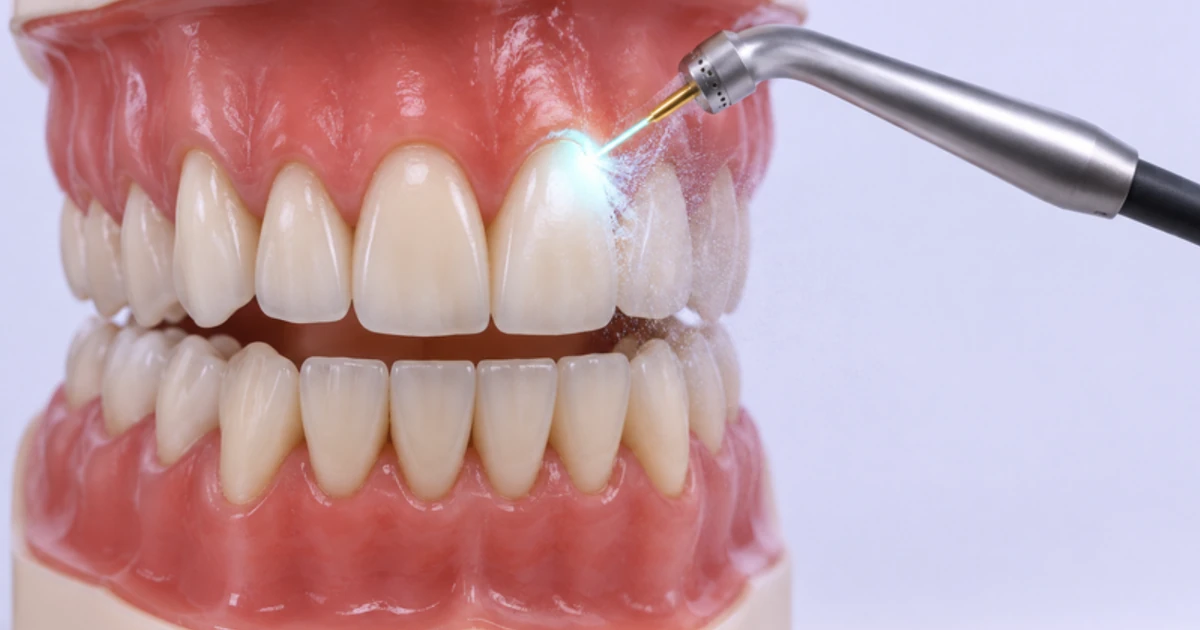
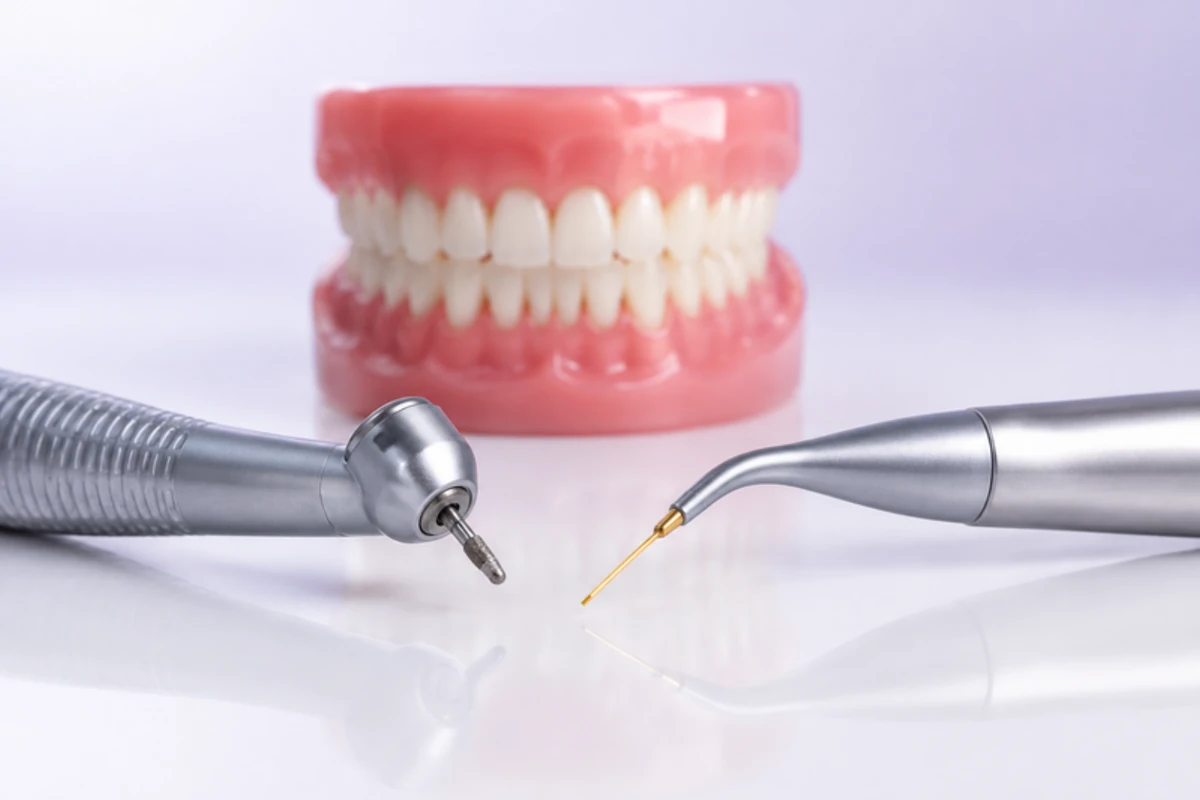
A drill spins very fast to grind away tooth. The Waterlase laser releases light energy at its tip together with a fine water spray. It can cut soft tissue, like gum, and hard tissue, like tooth and bone. The tip doesn’t spin, so patients usually feel less vibration and hear less noise.
The dentist picks a tip to suit the job: one for teeth, one for gums, and a thin one that fits into a root canal. So one machine can do many things, but “can do many things” doesn’t mean “suits every tooth”.
A laser doesn’t replace the exam or the planning. X-rays and the choice of filling or crown material stay exactly the same.
Cavities: when a laser can replace the drill
For a small to medium cavity that isn’t deep enough to be near the nerve and hasn’t been filled before, the dentist can sometimes use the laser to remove the decay and prepare the cavity. The tooth is then filled with a tooth-colored material in the usual way. People who dislike the noise and vibration of the drill often find this more comfortable.
Pooled research suggests a laser may mean less pain and less need for anesthetic, but the evidence isn’t strong enough to say it can replace the drill in every case. That review is also old, and most of the lasers studied weren’t the model we use. So the dentist sees the laser as one more tool to choose from, not a replacement for the drill.
Some small cavities aren’t suitable for a laser either, for example decay under an old filling, or deep decay. The dentist will explain why, and sometimes uses both tools on the same tooth.
Jobs that still need the drill
The dentist usually chooses the drill for these:
- Large cavities. The drill removes decay and shapes the cavity faster, with better control.
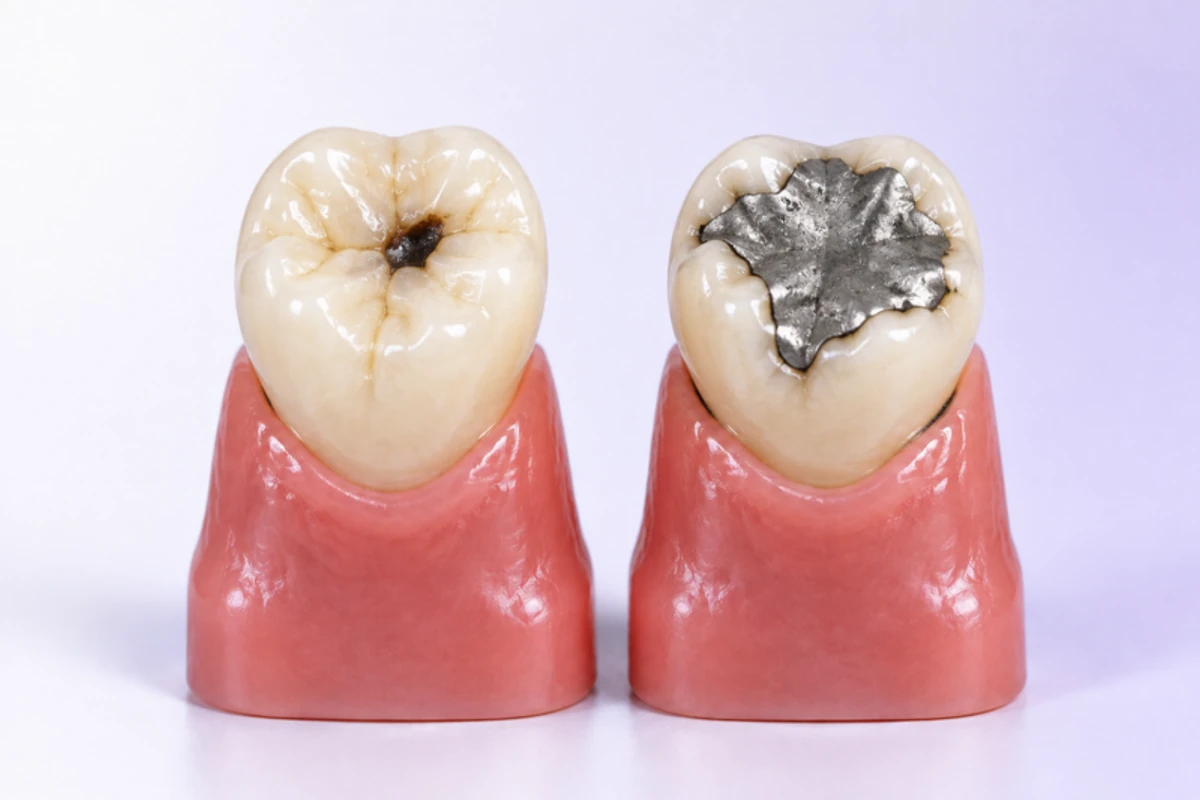
- Metal fillings. A laser can’t cut metal, so these have to be drilled out. See safe amalgam removal.
- Preparing a tooth for a crown. Several sides of the tooth have to be shaped precisely, and this is done mainly with the drill. In some cases the dentist uses the laser for certain steps.
- A throbbing toothache or a suspected infection. The cause has to be diagnosed first, including whether root canal treatment is needed.
In short, when the job means removing hard material or metal, or shaping a tooth precisely, the drill is still the main tool.
Other ways the clinic uses the laser
At the clinic, the laser is an extra tool within your treatment plan, not a separate treatment. It’s used most often in seven areas.
Helping to remove old veneers and crowns. A laser can help remove veneers and crowns, but the old bonding layer still has to be polished off and the tooth smoothed before the new piece is made. Some cases need drilling as well, and crowns with metal are removed the usual way. More here: removing veneers and old crowns.
removing veneers and old crowns
Helping with root canal treatment. At the clinic, the Waterlase laser helps root canal treatment give better results. The laser energy helps the rinsing solution flow into tiny spaces that the instruments can’t reach. Opening the tooth and shaping the canals are still done with the usual root canal instruments. See root canal treatment at the clinic.
root canal treatment at the clinic
Cutting soft tissue. A laser can cut soft tissue in the mouth, such as a tongue tie, or a band of tissue pulling on the lip that stops the tongue or lip moving freely. It’s also used for gum reshaping. The dentist checks first which tissue needs cutting.
Helping to treat cysts in the bone. The dentist uses the laser to help treat cysts (fluid-filled sacs) inside the jawbone, after looking at the X-ray and explaining which treatment your case needs.
Easing tooth sensitivity. Teeth that twinge with cold, hot or sweet things are often sensitive because the gum has receded or the tooth surface has worn down, leaving the dentin exposed. Dentin has tiny tubes that carry sensation to the nerve. The dentist uses a low-energy laser on the exposed dentin, which eases the sensitivity for many people. It’s quick and usually needs no drilling. But if the cause is still there, such as brushing too hard or receding gums, the sensitivity can come back, so the dentist also looks at the cause and advises on care. Results differ from person to person.
Helping to care for peri-implantitis. Peri-implantitis is inflammation of the gum and bone around an implant. The laser is used alongside cleaning of the implant surface and the surrounding tissue, but it isn’t what decides whether the problem settles. So far, the evidence doesn’t show that adding a laser gives a different result from non-surgical treatment alone. If a lot of the bone around the implant has been lost, surgery is often needed. The dentist looks at the X-ray and explains where your case stands.
Gum care. Laser work on the gums is more than trimming gum:
- Helping to clean gum pockets in gum disease, together with deep cleaning under the gum, not instead of it
- Evening out the gum line, for example before veneers, when the bone level allows
- Lightening dark gums, after the dentist has checked the cause
For gum disease, pooled research found that the same type of laser as Waterlase helped a little at first, but about six months later the results were no different from standard treatment. The core of treatment is still thorough cleaning and good care at home. See gum disease treatment.
What does laser treatment feel like?
Anesthetic. Many jobs still use local anesthetic. The dentist tells you beforehand whether yours needs it, and checks how you’re doing during the work. You can ask to stop at any time. If you’re very anxious, the clinic offers inhaled and oral sedation, which you can discuss with the dentist.
What you feel. Mostly a cool water spray, a soft sound, and sometimes a little warmth in the tooth. It varies with the job and the person, and it doesn’t mean you’ll feel nothing at all.
Safety. Everyone in the room, including you, wears protective glasses made for this type of laser, and you sign a consent form before starting.
Afterwards. How quickly you heal depends on the work done, your health and how you look after yourself, whether or not a laser was used. The dentist gives you aftercare instructions and a follow-up date.
What to ask your dentist before deciding
- Is this tooth suitable for a laser? If not, why not?
- Which steps use the laser, and which still use the drill?
- Will I need anesthetic for this?
- Is there an extra fee for the laser? Is it charged per tooth or per item?
- I have a medical condition or take regular medicine. Is there anything else I should tell you?
The dentist treating you decides whether to use a laser, based on your tooth and the work needed.
Frequently asked questions about dental lasers
Does laser dentistry really mean no drilling?
Not for every job. For some small to medium cavities, the laser can remove the decay and prepare the cavity. But large cavities, metal fillings and preparing a tooth for a crown still need the drill, and sometimes both are used on the same tooth.
Does a laser mean no numbing injection?
Not always. Many jobs still use local anesthetic, and your dentist will tell you beforehand.
Is a dental laser safe?
Lasers are widely used in dentistry when the safety steps are followed. As with any treatment, your dentist explains the precautions for your treatment before starting.
Can a laser remove veneers?
It can help remove veneers and crowns, but the old bonding layer still has to be polished off and the tooth smoothed every time. Some cases need drilling as well, and crowns with metal are removed the usual way.
How much extra does the laser cost?
Most laser work is charged on top of the main treatment, and some items are charged per tooth. See laser on the prices page and how fees work. Your dentist will tell you before starting.
Summary
- The Waterlase laser works on both gums and teeth, but it can’t cut metal.
- For some small to medium cavities, a laser can replace the drill. Large cavities, metal work and crown preparation still need the drill.
- At the clinic, the laser helps with removing veneers and crowns, root canal treatment, cutting soft tissue, treating cysts in the bone, easing tooth sensitivity, peri-implantitis and gum care, mostly as an extra tool.
- Before deciding, ask your dentist whether your tooth suits a laser and which tool is used for each step.
If you’d like to find out whether your tooth suits a laser, you can book an appointment at Kitcha Dental Clinic, call +66 53 200 201 or message us on LINE @kitchaclinic. More about our services: laser dentistry, dental fillings and root canal treatment at the clinic.
root canal treatment at the clinic
Sources for this article
- Cochrane review on using lasers to remove decay in baby and adult teeth, 2016
- Research and reviews on lasers in root canal treatment, peri-implantitis and gum disease, 2014-2026
- Laser Institute of America: ANSI Z136.3, safe use of lasers in health care
- The clinic’s own experience, and the laser dentistry page