

Your baby is chewing on everything, drooling more than usual and waking at night, and you wonder whether the first tooth is on its way. Or your six-year-old proudly shows you a wobbly front tooth, and a few weeks later you spot a new tooth growing in behind it. Every stage of baby teeth brings its own small questions, and most parents ask them for the first time.
The reassuring news is that most of what you will see is normal. Baby teeth usually start to come through at around 6 months, and the first ones usually fall out at around age 6, but a few months earlier or later is common. Knowing the usual order, the signs that are part of teething and the few signs worth a dental check makes each stage much calmer for the whole family.
This guide follows your child from before the first tooth to the first wobbly tooth: a chart of when each baby tooth comes in and falls out, teething signs and safe ways to soothe them, cleaning gums and first teeth, the first dental visit, loose teeth, adult teeth that come in behind baby teeth, thumb and pacifier sucking, knocks and falls, and when a bite check helps.
In short: most babies get their first tooth at around 6 months and have all 20 baby teeth by about age 2 to 3. The first baby teeth usually fall out at around age 6, and the last ones at about age 10 to 12. Clean your baby gums from birth, start brushing when the first tooth appears, and bring your child for a first dental visit when the first tooth comes through or by the first birthday.
Quick check: what you are seeing now
Most changes in baby teeth are part of normal growth. Use this list to decide whether to keep caring at home, book a routine check, or see a dentist soon.
Usually normal: keep caring at home
- Drooling, chewing on fingers or toys, and a little fussiness while a tooth is coming through.
- A front tooth that wobbles at around age 6, with the new tooth not yet visible.
- Teeth coming in a few months earlier or later than the chart, in roughly the usual order.
Book a routine dental check
- Your child has a first tooth, or is turning one, and has not seen a dentist yet.
- An adult tooth is coming in behind a baby tooth that is not loose yet.
- Thumb or pacifier sucking continues past age 3.
- Past the first birthday with no teeth yet, which can still be normal, or no tooth has fallen out by age 8 to 9.
See a dentist soon
- A tooth is knocked out, pushed in, or broken after a fall.
- A baby tooth becomes loose before about age 4 without a fall.
- Swelling of the gum or face, or pain that keeps your child awake.
- A head injury with dizziness, vomiting or drowsiness: see a doctor first, the same day.
Baby teeth chart: when each tooth comes in and falls out
Children have 20 baby teeth: 10 in the upper jaw and 10 in the lower jaw. In each jaw there are 4 front teeth (incisors), 2 canines and 4 back teeth (molars). The NHS notes that the lower teeth usually come in before the matching upper teeth, and that most children have all their baby teeth by age 2 to 3. The ranges below are from Cleveland Clinic. Each child follows their own timetable, so treat them as a guide, not a deadline.
| Tooth | Comes in | Falls out |
|---|---|---|
| Central incisors (middle front teeth) | Lower 6 to 10 months, upper 8 to 12 months | Age 6 to 7 |
| Lateral incisors (next to the middle teeth) | Upper 9 to 13 months, lower 10 to 16 months | Age 7 to 8 |
| First molars | Upper 13 to 19 months, lower 14 to 18 months | Age 9 to 11 |
| Canines | Upper 16 to 22 months, lower 17 to 23 months | Lower age 9 to 12, upper age 10 to 12 |
| Second molars | Lower 23 to 31 months, upper 25 to 33 months | Age 10 to 12 |
Two things surprise many parents. First, the first adult back tooth, often called the 6-year molar, comes in behind the last baby molar at around age 6 to 7 without any baby tooth falling out, so it is easy to mistake it for a baby tooth. It is permanent, so it needs the same careful brushing as the front teeth. Second, the baby back molars stay until about age 10 to 12, so they need care for many years.
Read about decay in baby teeth and how much toothpaste to use by age
Teething: what is normal and how to soothe it safely
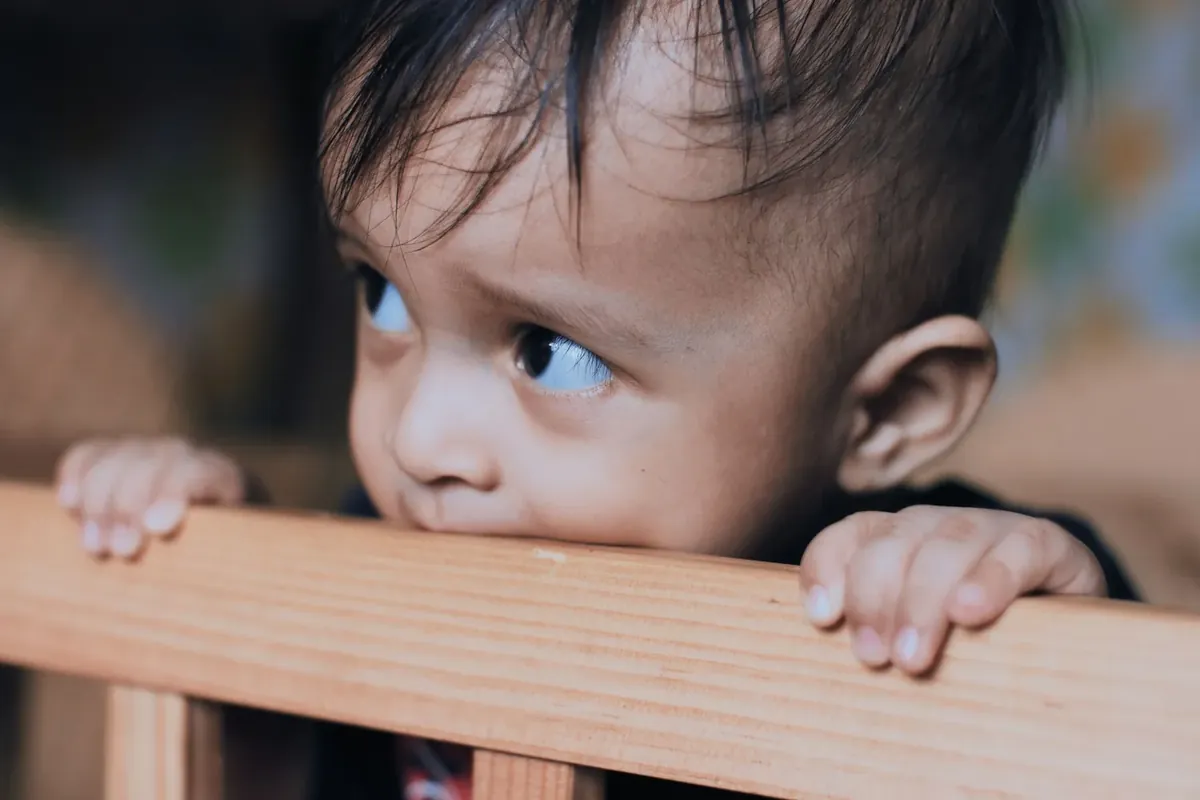
According to the NHS, most babies get their first tooth at around 6 months, although some start before 4 months and some after 12 months. The American Academy of Pediatrics notes that signs can start weeks before a tooth shows. Common signs include red, sore gums where the tooth is coming through, drooling, a flushed cheek, rubbing the ear, chewing on things, fussiness and disturbed sleep. A slightly raised temperature below 38°C can happen.
The AAP is clear that teething does not cause a high fever, diarrhea or long periods of crying. If your baby has a temperature of 38°C or higher, diarrhea that lasts more than a day, or seems unwell, it is likely to be something else, so contact your doctor rather than putting it down to teeth.
Safe ways to help
- Rub the sore gum gently with a clean finger.
- Offer a firm, solid teething ring, chilled in the fridge rather than frozen, and stay with your baby while they use it.
- A clean, damp, chilled washcloth to chew on can help too.
- Wipe drool from the face often to protect the skin.
- If your baby is very uncomfortable, ask your doctor or pharmacist about a children pain reliever and the right dose.
Things the FDA and AAP advise against
The US Food and Drug Administration warns against teething gels and liquids that contain benzocaine or lidocaine, because of rare but serious side effects, and against amber, wooden or other teething necklaces and bracelets, because of the risk of choking and strangulation. The AAP also advises against teething rings filled with liquid and teethers frozen hard.
Caring for gums and first teeth
Mouth care starts before the first tooth. The Thai Department of Health suggests wiping your baby gums, cheeks and tongue twice a day, in the morning and before bed: wash your hands, wrap a clean gauze or cloth around your index finger, dampen it with boiled water that has cooled, and wipe gently. This removes milk residue and gets your baby used to having the mouth cleaned.
When the first tooth comes through, switch to a soft, small-headed baby toothbrush and brush twice a day, with the last brush after the final feed at night. The amount of fluoride toothpaste matters at this age, and it is covered step by step in our article on decay in baby teeth, so we will not repeat it here.

From bottle to cup, step by step
A gradual move from bottle to cup helps protect new teeth. The Thai Department of Health guide suggests these steps.
- From about 3 to 6 months, let your baby hold and play with an empty cup to get used to it.
- From about 4 to 6 months, slowly reduce night feeds as your doctor advises.
- From about 8 to 10 months, replace one bottle feed a day with a cup.
- Avoid putting your baby to sleep with a bottle of milk or a sweet drink. If a bottle is needed at bedtime, plain water only.
The first dental visit: when and what happens
The American Academy of Pediatric Dentistry and the NHS both recommend a first dental visit when the first tooth comes through, or by the first birthday. This can feel early, but the first visit is mostly about getting to know each other, checking that teeth and gums are developing well, and giving you practical tips for your child age. Early visits also help find small problems while they are easy to manage.
What usually happens at the clinic
- A short, friendly visit. Your child can sit on your lap, and a parent can stay in the room.
- The dentist looks at the teeth, gums and how the teeth and jaws are growing.
- You are shown how to brush your child teeth at home.
- Your questions about feeding, teething and thumb sucking are answered.
- The dentist explains anything found and the next steps. Regular checks about every six months follow how the teeth and jaws grow.
Helping your child feel at ease
- Talk about the dentist in simple, positive words, such as the dentist will count your teeth.
- Choose a time when your child is usually rested and fed, not nap time.
- Play dentist at home with a toy or a mirror, and let your child count your teeth too.
- Bring a favorite toy, and keep your own voice calm and relaxed.
Read about dental care for children at the clinic
Loose baby teeth: the usual order and what to do
Baby teeth fall out because the adult teeth growing underneath slowly dissolve their roots. As the root shortens, the baby tooth loosens, and by the time it falls out there is often very little root left. This is why a baby tooth that comes out on its own usually looks like a crown with almost no root, and the gum heals quickly.
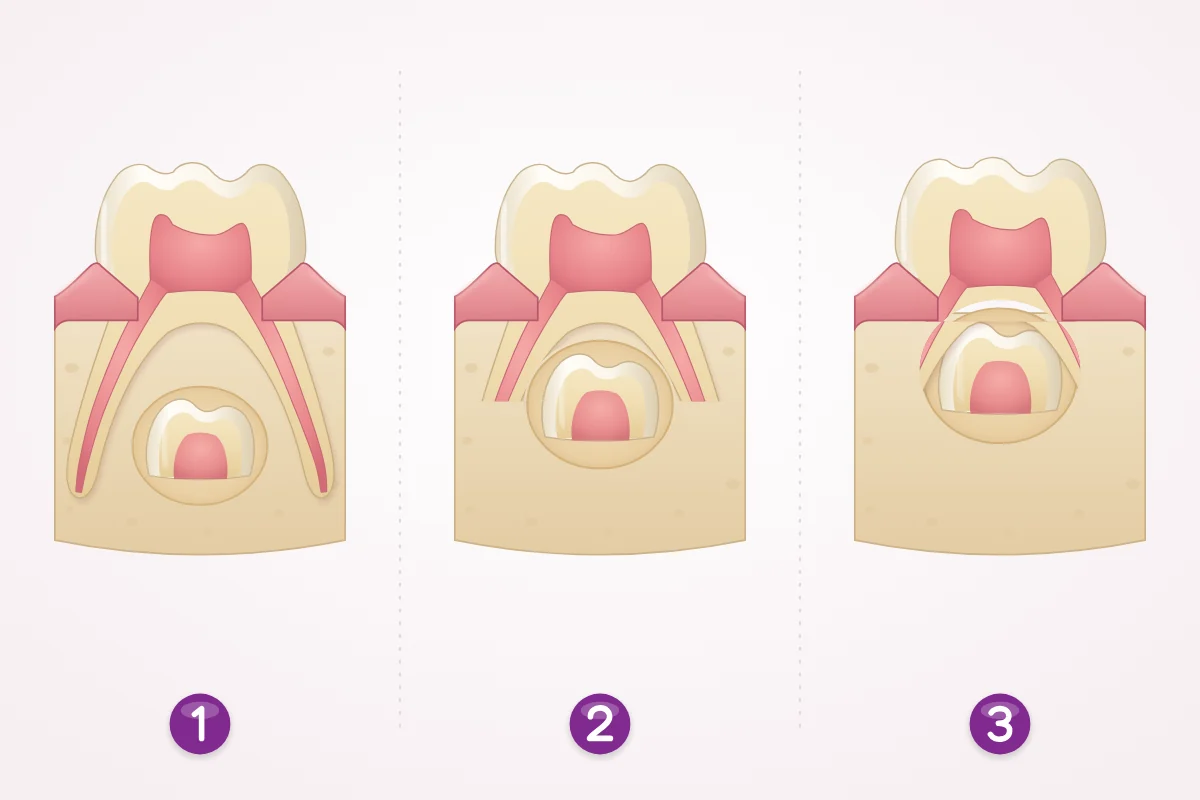
Cleveland Clinic describes the usual order. Teeth that came in first tend to fall out first, and it often happens in waves rather than one tooth at a time.
| Age | What usually happens |
|---|---|
| Age 6 to 7 | Middle front teeth loosen, lower before upper. The first adult molars come in at the back. |
| Age 7 to 8 | The front teeth next to them follow. |
| Age 9 to 10 | Lower canines. |
| Age 10 to 11 | First baby molars. |
| Age 11 to 12 | Upper canines and second baby molars. The second adult molars come in at the back. |
A wobbly tooth at home
- Let your child wiggle it gently with the tongue or a clean finger. Most loose baby teeth come out on their own with little discomfort.
- Pulling a tooth that is only slightly loose can hurt and tear the gum, so give it time.
- When it comes out, a little bleeding is normal. Press a clean gauze on the spot for a few minutes.
- Keep brushing the area gently. The new tooth usually appears within a few weeks to a few months.
Cleveland Clinic suggests seeing a dentist if a tooth is lost from an injury, including a baby tooth, if a baby tooth comes out before about age 4, if no tooth has fallen out by age 8 to 9, if an adult tooth does not come in where a tooth was lost, or if there is a lot of pain.
An adult tooth coming in behind a baby tooth
It is common to see a lower front adult tooth coming in on the tongue side while the baby tooth is still in place, so for a while there seem to be two rows of teeth. Parents sometimes call these shark teeth. The lower adult front teeth naturally develop slightly behind the baby teeth, so this is often a timing difference rather than a problem.
A study that followed 105 children aged 5 to 7.5 found adult lower front teeth coming in on the tongue side in 18.4 percent. In about 70 percent of these, the baby tooth fell out on its own without treatment, and about 15 percent needed the baby tooth removed. As the baby tooth goes, the tongue usually guides the adult tooth forward into line.
If the baby tooth is still firm while the adult tooth is clearly through, book a check. The dentist looks at how loose the baby tooth is and how much space there is, then suggests waiting a little longer or removing the baby tooth.
Thumb and pacifier sucking: when to help your child stop
Sucking is a natural way for babies and toddlers to comfort themselves, and the AAPD considers it normal at this age. What matters is how long and how often it continues. A review of 15 studies found that the longer sucking habits continue, the more they are associated with bite problems: pacifier use was linked more with a crossbite of the back teeth, and thumb sucking more with front teeth that stick out. A 2025 review also linked daily, long-term sucking with an open bite, where the front teeth do not meet.
The AAPD suggests that early dental visits help parents support their child to stop by about 36 months. Many children stop on their own. If not, these gentle steps often help.
- Praise your child for the times they do not suck, rather than scolding when they do.
- Notice when it happens, such as when tired or bored, and offer a cuddle, a toy or a story instead.
- Use a sticker chart for older children so they can see their progress.
- If sucking continues past about age 3, ask your dentist. A Cochrane review found that reminder appliances and positive reinforcement can help children stop, although the evidence is limited.
Knocks and falls: baby teeth and adult teeth are handled differently
Toddlers learning to walk often bump their front teeth. International dental trauma guidelines treat injuries to baby teeth differently from adult teeth, mainly to protect the adult tooth developing just above the root of the baby tooth.
| If this happens | Baby tooth | Adult tooth |
|---|---|---|
| Tooth knocked out | Do not put it back. Bring your child to the dentist to check the area. | Hold it by the crown, not the root. Rinse briefly if dirty, put it back if you can, or keep it in milk, and come to the clinic straight away. |
| Tooth pushed in, loose or out of place | See a dentist soon. Many baby teeth settle back on their own, and the dentist checks the adult tooth below. | See a dentist the same day. |
| Chipped or broken | Keep any pieces and bring them to the dentist. | Keep any pieces and bring them. Some can be bonded back. |
For any fall that also involves the head, watch your child closely. Dizziness, vomiting, drowsiness or loss of consciousness need a doctor first, and the teeth can be checked afterwards.
Emergency dentist in Chiang Mai
Checking the bite as your child grows
The American Association of Orthodontists recommends a first orthodontic check by about age 7, when the first adult molars and front teeth have come in. Most children do not need treatment at that visit. The check may find nothing to treat, a reason to watch growth for a while, or, for some children, a reason to start early.
Some problems are easier to guide while the jaws are still growing, such as a narrow upper jaw or a crossbite of the back teeth. A Cochrane review found that for children aged 7 to 11 with a crossbite of the back teeth, expansion appliances corrected it more often than waiting. At the clinic, the orthodontist checks children and offers early treatment, such as a 2×4 appliance or a palatal expander, typically for children aged 8 to 12 when it suits them.
Orthodontics and braces in Chiang Mai
Common myths and the facts
| Myth | Fact |
|---|---|
| Teething causes a high fever and diarrhea. | The AAP and NHS say teething does not cause a high fever or diarrhea. A temperature of 38°C or more, or diarrhea lasting over a day, needs a doctor. |
| Baby teeth fall out anyway, so they do not matter. | Baby back teeth stay until about age 10 to 12. They help with chewing and speech and hold space for the adult teeth. |
| Amber necklaces ease teething. | There is no good evidence that they help, and the FDA warns of choking and strangulation. A chilled, solid teething ring is a safer choice. |
| Children do not need a dentist until all their baby teeth are in. | The AAPD and NHS advise a first visit when the first tooth comes through or by the first birthday. |
| An adult tooth behind a baby tooth always needs the baby tooth pulled straight away. | In one study, about 70 percent of these baby teeth fell out on their own. A dentist can tell whether waiting a little longer is reasonable. |
Children dental care at the clinic, step by step
- From the first tooth: a short, friendly first visit. A parent can stay in the room.
- Check-ups about every six months, following how the teeth and jaws grow, with gentle cleaning and brushing advice.
- Prevention when it helps: fluoride varnish to strengthen enamel and sealants for the grooves of back teeth.
- Treatment if needed: tooth-colored fillings, crowns for badly decayed baby teeth, and a space maintainer if a baby tooth is lost early.
- A bite check by the orthodontist when needed, including early treatment for growing children.
- The dentist explains the plan and the costs before starting.
If this sounds like you: what to do
These are example situations, not patient stories, to help you find the next step that fits.
- Your 10-month-old has no teeth yet but drools a lot: this is usually within the normal range. Keep wiping the gums twice a day, and ask at the first dental visit if there is still no tooth after the first birthday.
- Your baby is teething and has a temperature of 38.5°C: treat the fever as a separate matter and contact your doctor, because teething alone does not cause a high fever.
- Your child turns one next month and has six teeth: book a first dental visit and bring your questions about feeding and brushing.
- Your 6-year-old has a new lower tooth behind a baby tooth that is barely loose: encourage gentle wiggling and book a check if the baby tooth is still firm after a few weeks.
- Your 4-year-old still sucks a thumb at bedtime: use praise and a bedtime routine to help, and ask the dentist to check the bite at the next visit.
- Your toddler fell and a front baby tooth came out: do not put it back, check for any head injury, and bring your child to the dentist.
- Your 8-year-old has a back tooth that bites inside the lower teeth on one side: ask about an orthodontic check, as some crossbites are easier to correct while the jaw is growing.
Frequently asked questions about baby teeth
When do baby teeth start coming in?
Most babies get their first tooth at around 6 months, usually a lower middle front tooth. Some start before 4 months and some after 12 months, and both can be normal.
At what age do baby teeth fall out?
The first baby teeth usually fall out at around age 6, starting with the lower middle front teeth. The last baby molars and upper canines usually go at about age 10 to 12.
Should I pull out my child loose tooth?
It is better to let it come out on its own. Your child can wiggle it gently with the tongue or a clean finger. Pulling a tooth that is only slightly loose can hurt and tear the gum. If it is very loose but hanging on, or it bothers your child when eating, a dentist can help.
Does teething cause fever and diarrhea?
Teething can cause a slightly raised temperature below 38°C, but not a high fever or diarrhea. If your baby has a temperature of 38°C or more, or diarrhea for more than a day, contact your doctor.
Can I use teething gel or an amber necklace?
The FDA advises against teething gels and liquids containing benzocaine or lidocaine, and against teething necklaces and bracelets of any material. Gentle gum massage and a chilled, solid teething ring are safer choices.
How old should my child be for the first dental visit?
When the first tooth comes through, or by the first birthday. The first visit is short and friendly, and you get advice on brushing, feeding, teething and thumb sucking.
An adult tooth is growing in behind a baby tooth. Is that a problem?
Often not. It is common with the lower front teeth, and in one study about 70 percent of these baby teeth fell out on their own. If the baby tooth is still firm once the adult tooth is clearly through, book a check so the dentist can advise whether to wait or remove it.
My child baby tooth was knocked out. Can it be put back?
Baby teeth are not put back, because this could harm the adult tooth developing underneath. Bring your child to the dentist to check the area. Adult teeth are different: put them back or keep them in milk and come straight away.
Summary
Baby teeth follow a fairly predictable path, and most of what parents see along the way is normal.
- The first tooth usually comes in at around 6 months, and all 20 are usually in by age 2 to 3.
- Teething can make babies sore and fussy, but not feverish with diarrhea. Use gum massage and a chilled solid teether, not gels or necklaces.
- Clean gums from birth, brush from the first tooth, and book a first dental visit by the first birthday.
- Baby teeth usually start falling out at around age 6. Let loose teeth come out on their own.
- Help your child stop thumb or pacifier sucking by about age 3, and plan a bite check by about age 7.
References
Cleveland Clinic: Teeth eruption timetable
Cleveland Clinic: When do kids start losing teeth?
NHS (UK): Baby teething symptoms
NHS (UK): Taking care of children teeth
American Academy of Pediatrics (HealthyChildren): Teething pain
US Food and Drug Administration: Safely soothing teething pain in infants and children
American Academy of Pediatric Dentistry: Parent FAQ
American Academy of Pediatric Dentistry: Management of the developing dentition and occlusion (PDF)
American Association of Orthodontists: When should my child see an orthodontist?
Department of Health, Thailand: Oral care guide for young children (PDF, Thai)
Ugolini A et al. Orthodontic treatment for posterior crossbites. Cochrane Review, 2021
Aminabadi NA et al. Lingual eruption of mandibular permanent incisors. J Contemp Dent Pract, 2009