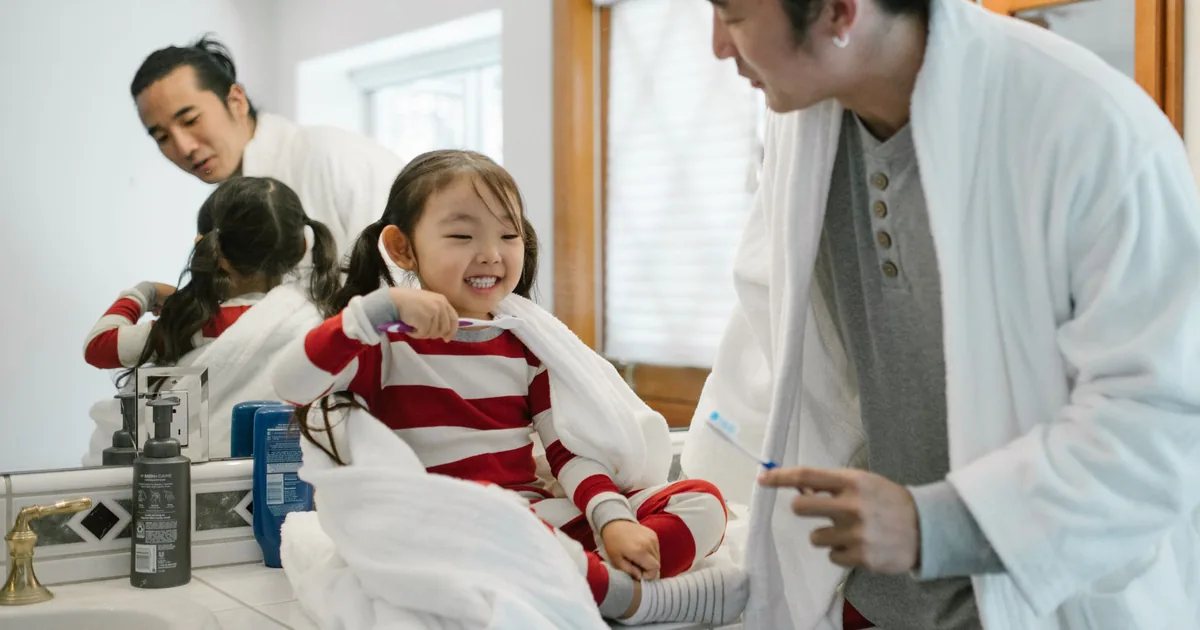
You are brushing your child at bedtime and notice a chalky white line near the gums of the front teeth, or a small brown spot on a back tooth. Maybe your child has started to avoid cold milk, or complains when chewing on one side. The first thought for many parents is guilt, and the second is a question: baby teeth fall out anyway, so do they really need treatment?
The reassuring part is that decay in baby teeth is very common, it can often be slowed or stopped when it is found early, and you are not alone. The CDC describes cavities as the most common chronic disease of childhood in the US, with more than half of children aged 6 to 8 having had a cavity in a baby tooth. The answer to the question is usually yes: baby teeth hold space for the adult teeth and help with chewing and speech, and untreated decay can cause pain and infection.
This guide is written for parents. You will find a quick check of your child, how decay in baby teeth starts, what each stage means for treatment, the right amount of fluoride toothpaste by age, a daily routine you can start tonight, snack and drink swaps, common myths, warning signs, and what a child visit at the clinic is like.
In short: yes, decay in baby teeth usually needs attention. White chalky spots can often be reversed with fluoride and better brushing, while brown holes need treatment such as a filling. Brush twice a day with fluoride toothpaste, a rice-grain smear under age 3 and a pea-sized amount from age 3 to 6, limit sugary snacks and drinks between meals, and bring your child for a check-up from the first tooth.
Check your child teeth: a quick guide for parents
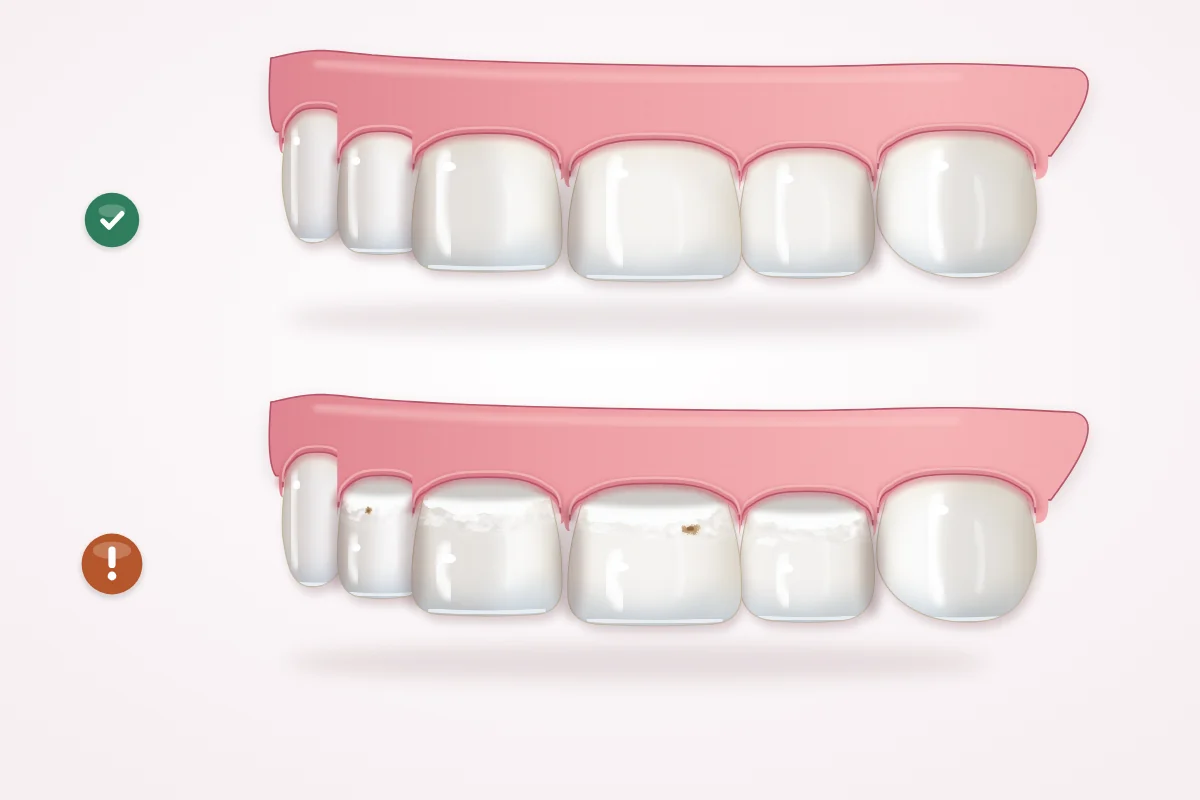
Lift your child upper lip in good light, after brushing, and look at the front teeth near the gums, then at the chewing surfaces of the back teeth.
Early signs: start prevention and book a check
- Chalky white spots or lines near the gum line that do not brush off.
- Plaque that builds up on the front teeth, especially in the morning.
- Your child falls asleep with a bottle of milk or a sweet drink.
Signs of a cavity: book a dental visit soon
- Brown or black spots, or a small hole, on any tooth.
- Food keeps getting stuck in the same tooth.
- Your child avoids cold or sweet food on one side.
See a dentist promptly
- Toothache that wakes your child at night, or pain when chewing.
- A pimple-like bump on the gum, or swelling near a tooth.
- Swelling of the face, with fever or your child seeming unwell: seek care the same day.
Why baby teeth matter, and how decay starts
Some baby back teeth stay in the mouth until around age 10 to 12. During those years they help your child chew, speak clearly and smile with confidence, and they hold the space the adult teeth will need. The ADA notes that baby teeth support chewing, speech and the proper alignment of adult teeth. When a baby back tooth is lost early, a review found that most of the space can close within the first three months, which can crowd the adult teeth later.
Decay starts when bacteria in plaque turn sugar into acid. The acid draws minerals out of the enamel. At first this shows as a chalky white spot, and at this stage minerals can return with fluoride and good brushing. If acid attacks keep happening, the surface breaks and a cavity forms. Baby teeth have thinner enamel than adult teeth, so decay can move faster. How often sugar is eaten matters more than how much in one sitting, because each snack or sweet drink starts a new acid attack. The World Health Organization lists sugar consumption among the main modifiable risks for decay and recommends brushing twice a day with fluoride toothpaste of 1,000 to 1,500 ppm.
Common reasons children get decay
| Cause | Why it matters | What to do |
|---|---|---|
| Falling asleep with milk or sweet drinks | Saliva slows at night, so sugar sits on the teeth for hours. Often affects the upper front teeth first. | Finish the bottle before sleep, then brush. Offer only water at night. |
| Frequent snacks and sweet drinks | Each one starts a new acid attack. | Keep sweet foods to mealtimes, offer water between meals. |
| Brushing without fluoride toothpaste, or not twice a day | Fluoride helps enamel repair early damage. | Brush twice a day with the right amount for age, including last thing at night. |
| Sharing spoons or cleaning a pacifier in the mouth | The ADA notes that decay-causing bacteria can pass from caregiver to baby through saliva. | Use separate spoons, and rinse pacifiers with water. |
| Deep grooves in back teeth | Food and plaque collect where brushes do not reach. | Ask about sealants for back teeth. |
Stages of decay and how they are treated
| Stage | What you may see | Usual approach |
|---|---|---|
| Early white spots | Chalky white areas, no hole, usually no pain | Fluoride varnish, better brushing and fewer sugary snacks. Often reversible. |
| Small cavity | Brown spot or small hole, sometimes sensitive | A tooth-colored filling. |
| Large cavity | Larger hole, food trapping, pain with sweet or cold | A larger filling, or a crown for a badly decayed baby tooth so it can stay until the adult tooth comes through. |
| Decay reaching the nerve | Toothache at night, swelling or a bump on the gum | Your dentist explains the options for that tooth, which may include treatment inside the tooth or removal with a space maintainer. |
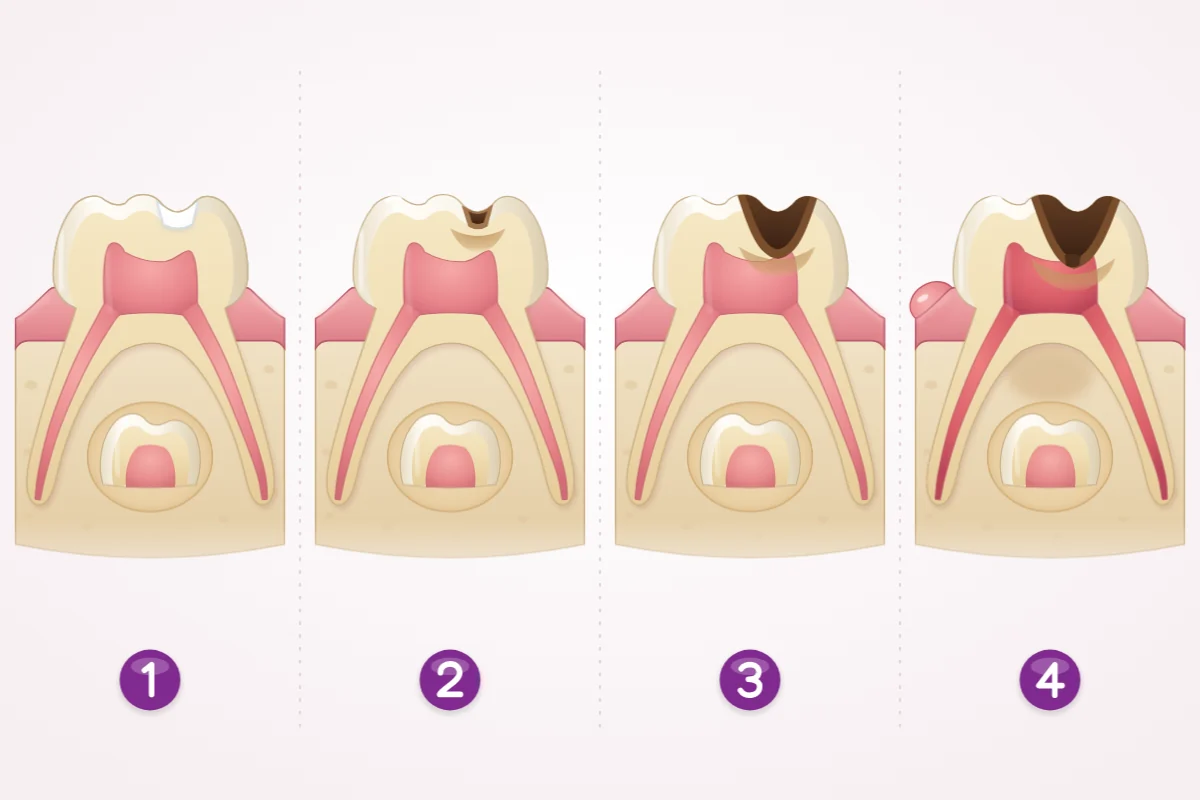
Fluoride varnish has good evidence behind it. A Cochrane review of 22 trials found that fluoride varnish was associated with about 37 percent fewer decayed, missing or filled surfaces in baby teeth compared with no varnish. The CDC gives a similar estimate of about a third of cavities in baby teeth prevented. At the clinic, varnish is painted on in a few minutes, usually at a check-up.
Read about dental care for children at the clinic
How much fluoride toothpaste by age
Fluoride toothpaste is one of the simplest ways to protect baby teeth. The amount matters: enough to protect, small enough to be safe if some is swallowed. The Dental Association of Thailand updated its fluoride guidance in 2022, and a Naresuan University dental school article summarizes it for parents. NHS advice is similar.
| Age | Amount and toothpaste | Who brushes |
|---|---|---|
| First tooth to under 3 | A smear the size of a grain of rice, fluoride toothpaste of about 1,000 ppm, or higher if the dentist advises for high risk | A parent brushes and wipes away the foam |
| Age 3 to under 6 | About pea-sized, or the width of the brush, with 1,000 ppm or higher strength as advised | A parent squeezes the toothpaste and helps brush. Spit out, little or no rinsing |
| Age 6 and over | A strip the length of the brush, toothpaste of 1,400 to 1,500 ppm | Your child brushes, and a parent checks |
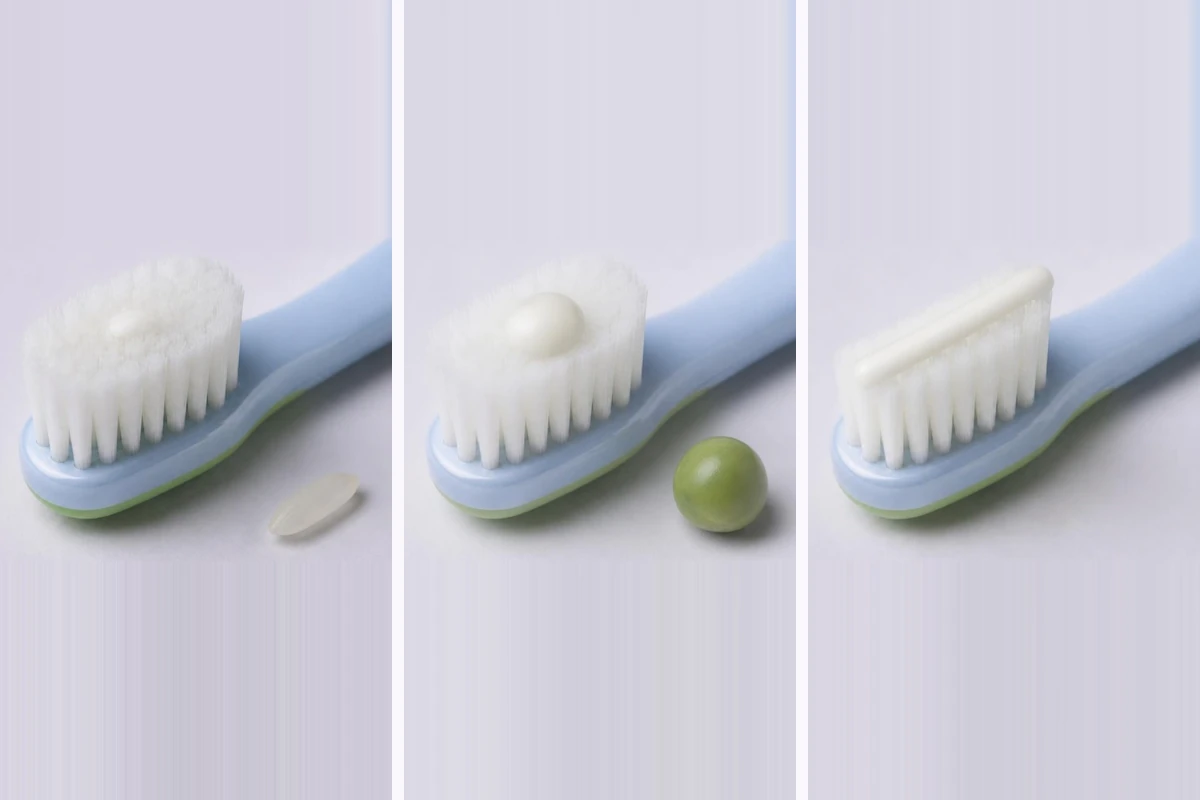
Fluorosis, white or brown marks on adult teeth, comes from swallowing too much fluoride while the adult teeth are forming in early childhood. Using the right amount and teaching children to spit out helps prevent it. Fluoride varnish at the clinic is a small, controlled amount and is not meant to be swallowed.
A daily routine you can start tonight
- Brush twice a day for about 2 minutes, including last thing at night after the last drink of milk.
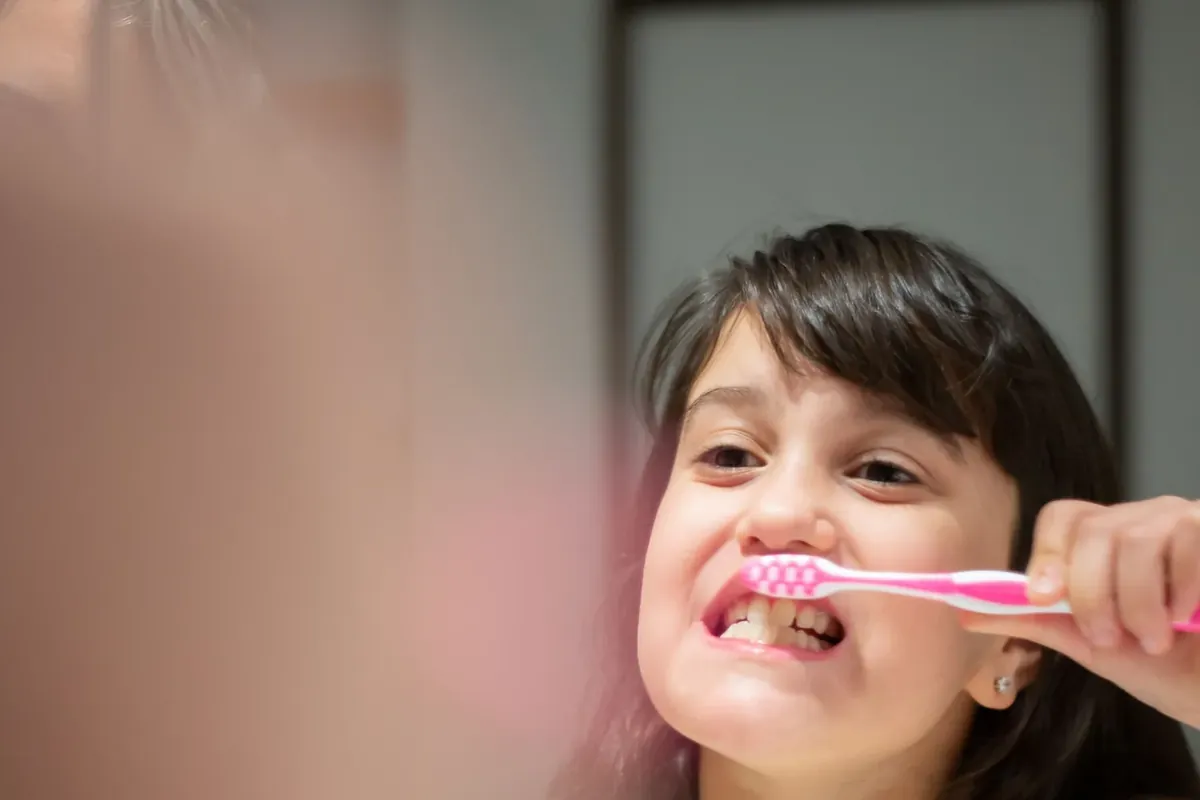
- Sit or stand behind your child, tip the head back slightly and lift the lip so you can see the gum line.
- Angle the brush slightly toward the gums and use short back-and-forth strokes, covering about 2 teeth at a time, as the Naresuan University article describes.
- Brush the chewing surfaces of the back teeth, where grooves trap food.
- Once teeth touch each other, start flossing between them.
- Let your child spit out the foam, with little or no rinsing.
- Keep brushing for your child until about age 6 or 7, then check their brushing.
Snack and drink swaps
| Instead of | Try | Why |
|---|---|---|
| Milk or juice in a bottle at bedtime | Finish milk before brushing, water only after | Sugar does not sit on teeth overnight |
| Sweet drinks between meals | Water or plain milk | Fewer acid attacks |
| Sticky sweets and dried fruit as snacks | Fresh fruit, cheese, plain yogurt, vegetables | Less sugar that clings to teeth |
| Grazing all afternoon | Set snack times, with water in between | Saliva has time to repair enamel |
The American Academy of Pediatric Dentistry recommends avoiding frequent sugary drinks and snacks, avoiding added sugars before age 2, and avoiding night-time bottle feeding. The ADA adds that bottles should contain only formula, milk or breast milk, not juice or sugar water, and that children can start drinking from a cup by their first birthday.

Common myths about baby teeth
| Myth | Fact |
|---|---|
| Baby teeth fall out, so decay does not matter. | Some baby teeth stay until around age 10 to 12. Decay can cause pain and infection, and early loss can crowd the adult teeth. |
| Children should not use fluoride toothpaste. | Fluoride toothpaste is recommended from the first tooth, in a small amount for age. |
| Brown teeth in children are just stains. | Brown spots can be decay. A dentist can tell the difference. |
| Decay only comes from candy. | Frequent milk at night, sweet drinks, biscuits and snacks all count. Frequency matters most. |
| The first dental visit should wait until there is a problem. | A visit from the first tooth helps find problems early and lets your child get used to the dentist. |
| A cavity in a baby tooth will heal on its own. | Early white spots can recover, but a hole does not grow back. It needs treatment. |
When to bring your child to a dentist soon
- Toothache, especially at night or when chewing.
- A pimple-like bump on the gum near a decayed tooth.
- Swelling of the cheek or face, especially with fever: seek care the same day, at a dentist or a hospital.
- A knocked-out or broken tooth. Do not put a baby tooth back. Bring your child in so the area can be checked.
- Your child refuses to eat or drink because of mouth pain.
Your child visit at the clinic, step by step
Children are welcome from the first tooth. Our dentists see children for check-ups, cleaning, fluoride, sealants and fillings, and explain each step to the child and parent. You can stay in the room.
- Tell the coordinator your child age and any concerns. A short, friendly first visit is booked.
- The dentist looks at the teeth, gums and how the teeth and jaws are growing, and shows you how to brush.
- You can ask about feeding, teething and thumb-sucking. A study of more than 1,000 young children in Hong Kong linked daily thumb or pacifier sucking for more than a year with changes in how the front teeth meet.
- If decay is found, the dentist explains the options for each tooth and the fee before starting.
- Fluoride varnish takes only a few minutes. Avoid eating and drinking for about 30 minutes afterward, or as your dentist advises.
- Sealants can protect the grooves of back teeth, and a space maintainer keeps room if a baby tooth is lost early. For children who play contact sports, a custom mouth guard helps protect the teeth; a review of athletes found fewer dental injuries among mouthguard users.
- Regular check-ups about every six months let the dentist follow how the teeth develop and treat small problems early.
What a filling visit is like for a child
Many parents worry more about the visit than the child does. A filling for a baby tooth usually follows a few simple steps, and the dentist explains each step to the child and parent.
- Dentists often explain and show the tools before starting, in words a child understands.
- The tooth is numbed when needed, to keep your child comfortable during the filling.
- The decay is cleaned out and the tooth is filled with a tooth-colored material.
- The bite is checked and your child gets praise for helping.
- If the cheek or lip is numb, watch that your child does not bite it until the feeling returns.
Helping your child feel comfortable
- Talk about the visit in a positive, simple way. Avoid words like hurt or needle.
- Start with short check-ups before any treatment is needed.
- Choose a time when your child is rested, not hungry or tired.
- Praise your child afterward for helping the dentist.
Fees depend on the treatment your child needs. The dentist explains the plan and the fee before starting, and the prices page lists cleaning and prevention fees.
See cleaning and prevention prices
If this sounds like you: what to do
These are example situations, not patient stories, to help you find the next step that fits.
- Your 2-year-old has white chalky lines on the upper front teeth and still has milk at night: finish milk before brushing, offer water after, and book a check. Early white spots can often recover.
- Your 5-year-old has a brown spot on a back tooth but no pain: book a visit. A small filling is usually simpler than waiting until it hurts.
- Your child woke at night with toothache and a swollen gum: contact a dentist promptly. If the face is swollen with fever, seek care the same day.
- Your child baby tooth first appeared last month: come for a first visit. It is short and friendly, and you can ask about brushing and feeding.
- Your child is anxious about dentists: start with a short check-up when nothing hurts, and tell the coordinator so the visit is planned gently.
- Your child lost a baby back tooth early because of decay: ask whether a space maintainer is needed to keep room for the adult tooth.
- Grandparents give sweets every afternoon: agree on a set snack time with water in between, and keep sweets to mealtimes.
Frequently asked questions about decay in baby teeth
Do decayed baby teeth need fillings if they will fall out?
Often, yes. Baby teeth hold space for the adult teeth and help with chewing and speech, and untreated decay can cause pain and infection. Your dentist explains the options for each tooth, depending on how deep the decay is and when the tooth is due to fall out.
When should my child first see a dentist?
Once the first tooth appears, or by the first birthday. Early visits help find problems early and let your child get used to the dentist.
Can early decay in baby teeth be reversed?
Early chalky white spots, before a hole forms, can often recover with fluoride varnish, fluoride toothpaste and fewer sugary snacks. Once there is a hole, it needs treatment.
How much toothpaste should my child use?
Under age 3, a thin smear about the size of a grain of rice, with an adult brushing. From 3 to 6, a pea-sized amount. Teach children to spit out, not swallow, the toothpaste.
Why are my child front teeth turning brown or black?
It can be decay, especially near the gums when milk or sweet drinks are taken at night. Sometimes it is a stain or an old knock to the tooth. A dentist can tell which and explain what to do.
Is fluoride varnish safe for children?
Yes. Fluoride varnish is widely used by dentists to help prevent decay in children. Only a small amount is applied, and it is not meant to be swallowed.
My child will not let me brush. What can I do?
Make it a short, predictable routine at the same times each day. Let your child hold a brush too, brush together, use a song or timer for 2 minutes, and praise cooperation. For toddlers, lying them on your lap with the head toward you can make it easier to see.
What happens if decay in a baby tooth is left?
Decay can grow toward the nerve and cause pain, a gum infection or facial swelling, and may lead to early loss of the tooth. Treating it while it is small is usually simpler for your child.
Summary
Decay in baby teeth is common, it matters, and much of it can be prevented or caught early.
- Baby teeth help chewing, speech and space for adult teeth, so decay usually needs attention.
- White spots can recover. Holes need treatment, usually simpler when small.
- Brush twice a day with fluoride toothpaste in the right amount for age, including before bed.
- Keep sweet foods to mealtimes and give only water at night.
- Bring your child from the first tooth, then about every six months.
References
CDC (US): Oral health tips for children
NHS (UK): Taking care of children teeth
American Dental Association (MouthHealthy): Baby Bottle Tooth Decay
American Academy of Pediatric Dentistry: Early childhood caries, preventive strategies