
Clear aligners and fixed braces both straighten teeth. Aligners are removable clear trays; braces are brackets fixed to the teeth and joined by a wire. Which one suits you depends mostly on your bite and on how you will wear them, and an orthodontist decides this after an examination and X-rays.

How clear aligners work
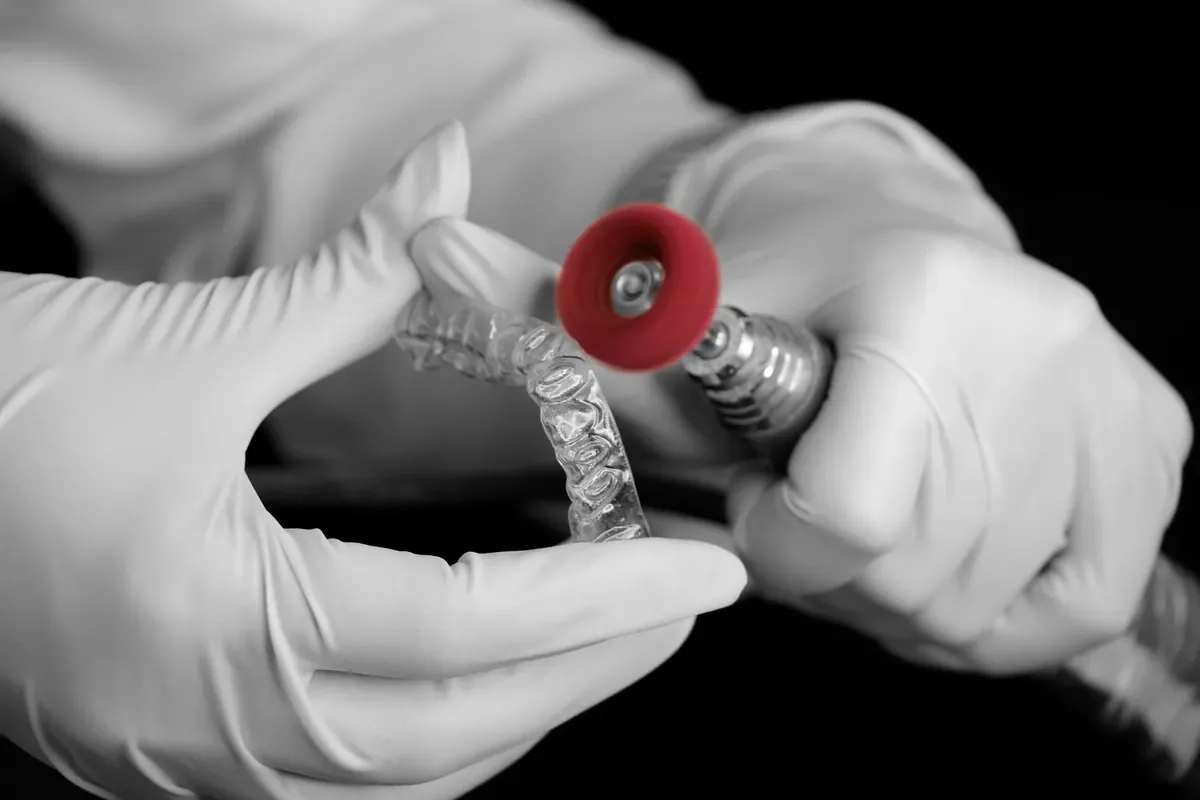
Each aligner is a clear plastic tray made for your teeth. You wear each set for one to two weeks, and every new set moves the teeth a little further. Small tooth-colored attachments on some teeth help the aligners hold and move them. At the clinic, aligner treatment starts with a digital scan instead of a conventional impression, and the orthodontist shows you the planned tooth movements before the aligners are made.
How fixed braces work
Fixed braces stay on the teeth for the whole treatment, and the orthodontist adjusts them at regular visits. Options include metal braces, tooth-colored ceramic braces that are less visible, and Damon self-ligating braces, which hold the wire with a built-in clip.
Wear time, eating and cleaning
- Aligners need to be worn 20–22 hours a day. Wearing them for fewer hours can slow treatment down.
- Aligners come out to eat and drink, and you brush your teeth before putting them back in.
- Braces stay on, so cleaning around the brackets and wire takes more time each day.
- With both, most people feel some pressure for the first few days after an adjustment or a new set of aligners.
How often you visit
With braces, you come back about every 4–6 weeks for an adjustment. With aligners, about every 6–8 weeks for a check and your next aligners, and digital monitoring can track progress between visits. If you live outside Chiang Mai, ask before you start so the visits can be planned.
Which bites suit aligners?
Many crowding, spacing and bite problems can be treated with either option. For some bite problems, fixed braces may be recommended instead, because some tooth movements are planned differently with aligners and with braces. When the jaw position itself causes the problem, orthodontic treatment may need to be combined with jaw surgery.
Braces and aligners for adults
There is no upper age limit for orthodontic treatment, and many orthodontic patients at the clinic are adults. Your gums and teeth are checked first, and any gum treatment or fillings are done before treatment starts. Because adults are no longer growing, some bite problems are corrected differently, and your orthodontist explains what is possible.
After treatment: retainers
Teeth tend to move back after treatment, so a removable or fixed retainer is made when treatment ends. Wear it as your orthodontist instructs and bring it to your check-ups.