Sedation dentistry for anxious patients in Chiang Mai
If dental visits make you anxious, two options can help you feel calmer during treatment: nitrous oxide (laughing gas), which you breathe through a small nose mask, and an oral sedative medicine prescribed by your dentist and taken before treatment. Both are used together with local anesthesia. They help you relax — you usually stay awake and can talk with your dentist. Your dentist reviews your health first and recommends what suits you.
- Open every day, 09:00–20:00
- Opposite Chiang Mai Gate
- Coordinators in English and Thai
Is this for you?
- You feel anxious or tense about dental treatment, or you have put off treatment because of it.
- You find it hard to sit through a longer appointment.
- You are planning a surgical treatment, such as wisdom tooth removal or implant surgery, and would like to feel more relaxed.
- You want to know your options and what to expect before you book.
Sedation is not suitable for everyone. Your dentist decides after reviewing your health, your medicines and the treatment you need.
The two options we offer
Nitrous oxide (laughing gas)
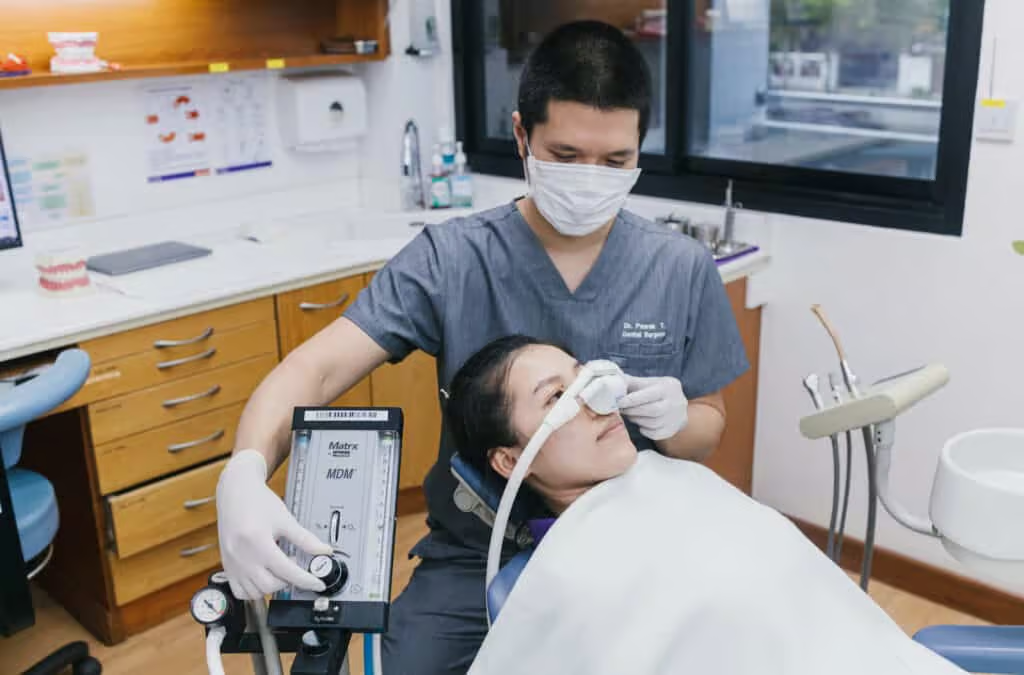
You breathe a mix of nitrous oxide and oxygen through a small mask over your nose. You usually stay awake, can talk with your dentist and start to feel more relaxed within a few minutes. Your dentist adjusts the level during treatment. When treatment ends, you breathe oxygen and the effect wears off quickly. It is charged by time.
Oral sedation
An oral sedative medicine prescribed by your dentist, taken before treatment exactly as your dentist instructs. It helps you feel calm and drowsy, and you stay awake. Its effect lasts much longer than nitrous oxide and can continue into the following day. With every oral sedative the clinic prescribes, you must not drive afterward, an adult must come with you and take you home, and you should not drink alcohol.
Local anesthesia is still used
Sedation helps with anxiety; it does not numb the tooth. The area is still numbed with local anesthesia, so you should feel pressure rather than sharp pain. Tell your dentist if you feel anything sharp.
Sedation is not general anesthesia
With both options you usually stay awake and can respond to your dentist. The clinic offers nitrous oxide and oral sedation only. It does not offer sedation through a drip (IV sedation) or general anesthesia.
If treatment under general anesthesia is needed, we refer you to a hospital and coordinate your care.
What happens, step by step
Tell us when you book
Let our coordinator know which treatment you need and that you would like sedation, so enough time is booked with the right dentist.
Your health and medicines
Your dentist reviews your health conditions and medicines before deciding. Tell your dentist about any breathing problem or a blocked nose. Sedation is not given during pregnancy, so tell us if you are or might be pregnant. You are asked to give your consent before sedation is used.
On the day
Nitrous oxide starts in the dental chair, a few minutes before treatment, and you can have a light meal before you come. For oral sedation, take the medicine exactly as your dentist instructs, and come with the adult who will take you home.
During treatment
Sedation is given by a dentist trained in sedation, and your oxygen level is checked with a fingertip monitor while you are sedated. The area is numbed with local anesthesia and your dentist works at a pace that suits you. Tell your dentist at any time if you feel uncomfortable.
Before you leave
After nitrous oxide you breathe oxygen for a short time. After any sedation, you rest at the clinic until your dentist confirms you are ready to leave.
Ask about sedation options
Tell us which treatment you need and what worries you. Your dentist reviews your health and explains whether nitrous oxide or oral sedation suits you.
Safety and who should not have sedation
Choosing who can have sedation is your dentist's decision, made after reviewing your health. Some health conditions, medicines and breathing problems mean sedation is not suitable, or that one option suits you better than the other. Bring a list of your medicines, and tell us about any health condition, even if it seems unrelated to your teeth.
Sedation is given by a dentist trained in sedation. While you are sedated, your oxygen level is checked with a fingertip monitor, and oxygen and emergency equipment are ready at the clinic.
If sedation is not suitable for you, your dentist explains other ways to make treatment easier, such as shorter visits, or referral to a hospital when treatment under general anesthesia is needed.
After your appointment
Nitrous oxide wears off quickly once you breathe oxygen. Most people can drive or go back to work the same day, after resting and once the dentist has checked them.
After oral sedation, do not drive or ride a motorbike, and do not drink alcohol. The drowsiness can last into the following day, so plan to rest, and have an adult take you home.
Your dentist also gives you aftercare advice for the treatment itself, such as an extraction or a filling.
Cost
Nitrous oxide is charged by time: a fee for the first 30 minutes, then a fee for each additional 15 minutes. Both are listed on our prices page, under oral surgery.
The fee for oral sedation is confirmed by your dentist before treatment. Sedation is charged in addition to the treatment itself, only if you have it.
Sedation dentistry FAQs
Will I be asleep during treatment?
No. With nitrous oxide or oral sedation you usually stay awake and can respond to your dentist, although you may feel drowsy and remember less of the appointment after oral sedation. Sedation at the clinic is not general anesthesia. If treatment under general anesthesia is needed, we refer you to a hospital and coordinate your care.
Will I feel pain?
Sedation helps you feel calmer; numbing is done separately with local anesthesia. You should feel pressure rather than sharp pain. Tell your dentist if you feel anything sharp, and some soreness afterward is common for some treatments.
Which option is right for me?
It depends on how anxious you feel, how long the treatment takes and your health. Nitrous oxide works quickly, can be adjusted during treatment and wears off soon after. Oral sedation lasts longer and needs an adult to take you home. Your dentist recommends an option after reviewing your health.
Can I drive home afterward?
Not after oral sedation: you must not drive, and an adult must come with you and take you home. Nitrous oxide wears off quickly once you breathe oxygen, and most people can drive the same day after resting and once the dentist has checked them.
Is sedation safe?
Like any medicine, sedation has possible side effects, and it is not suitable for everyone. That is why your dentist reviews your health conditions, medicines and breathing before recommending it, and asks for your consent. Follow your dentist's instructions before and after the appointment.
I have a health condition or take several medicines. Can I still have sedation?
Often you can, but your dentist needs to check first. Bring your list of medicines and tell us about your health conditions and any breathing problem. Sedation, including nitrous oxide, is not given during pregnancy. Your dentist explains which option is suitable, or other ways to make treatment easier if sedation is not.
How much does sedation cost?
Nitrous oxide is charged by time — a fee for the first 30 minutes, then for each additional 15 minutes — and is listed on our prices page. The fee for oral sedation is confirmed by your dentist before treatment. Sedation is charged in addition to the treatment itself.
Do I need to tell you in advance?
Yes, please mention it when you book. Your dentist needs to review your health first, and the appointment needs extra time. Our coordinators can also answer questions by WhatsApp, LINE or phone before you decide.
Ask about sedation before your visit
Tell us which treatment you need, that you would like sedation, and any health conditions or medicines. A coordinator replies in English or Thai and books enough time with the right dentist. Open every day, 09:00–20:00 (Thailand time).
Or email us at [email protected]
Content reviewed by Dr. Pawak Tungthangthum — DDS, Chiang Mai University; Master's Degree in Esthetic Restorative and Implant Dentistry (International Program), Chulalongkorn University · Last reviewed