
Dental Crowns in Chiang Mai
Restore Your Tooth. Stronger Protection. Natural look.
Porcelain fused to Metal (PFM) Crowns. All Ceramic Crowns.
Crowns
Dental crown also is known as dental cap that encases damaged or severely chipped teeth. Unlike dental veneers that cover only the front side of teeth, crowns cover the entire surface of your tooth. It is commonly used in tooth restoration.
Benefits of Tooth Crown
Crowns can be used to resolve a variety of dental crowns. Crowns looks like natural teeth and you are able to specify with your dentist the shape, size and color shades. Benefits of crowns include:
- for teeth with large cavities, crowns act as overlays for large filings
- restores fractured, damaged or cracked teeth
- crowns are false teeth fitted above dental implant post
- used in rehabilitation cases to rebuild worn-down teeth
- improves appearance of your teeth and can help straighten mildly mis-aligned teeth for cases that do not want to undergo orthodontic braces
- re-shape uneven or mishap teeth
- protect a weaken tooth that has large decay or after root canal treatment from breakage
- cover severely discolored teeth that porcelain veneers may not sufficiently cover such as in severe dental fluorosis
Crowns are also used to form dental bridges to replace missing gaps. After crowns are done, they will need to be taken care simliar to your natural teeth.
Kitcha Dental Clinic Restorative Dental Clinic
Porcelain and ceramic crowns for Kitcha Dental Clinic are produced by an ISO-certified dental laboratory using CAD/CAM technology, with a 1–2 day turnaround and capacity for urgent cases. Treatment is planned digitally with TRIOS intraoral scanning so your crown can be customised for fit and shade, and adjustments can still be made with you at the chairside.

Digital Smile Design
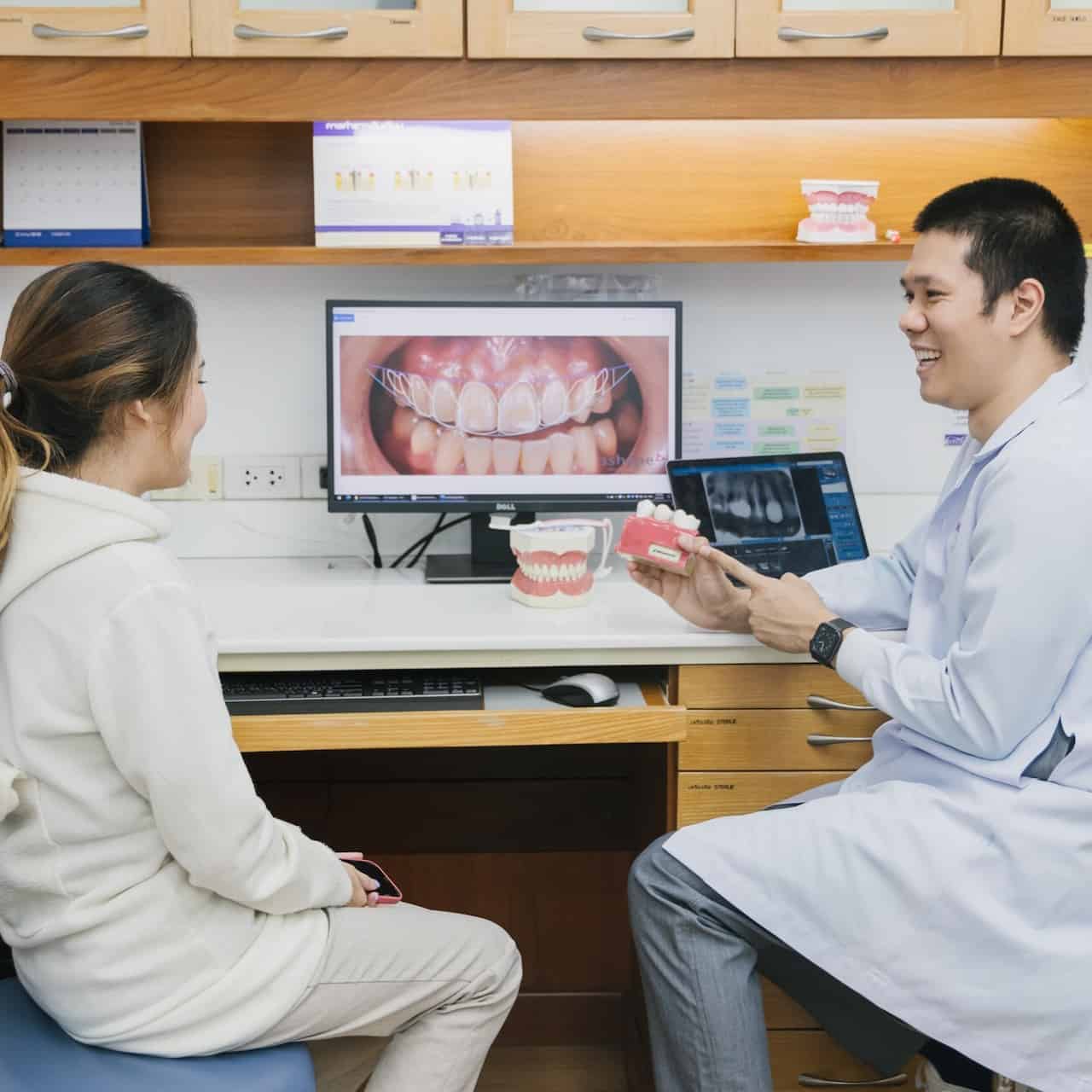
planned with Digital Smile Design (DSD) software

ISO-Certified Dental Laboratory
Lab Technican & Digital Dentistry
Digital Crown & Restorative Dentistry in Chiang Mai
Patients from Chiang Mai, along with Thai residents, expats and international visitors, choose Kitcha Dental Clinic for dental crowns and smile restoration. What treatment here involves:
- Crowns planned and fitted by dentists with postgraduate prosthodontic training — including an MSc in Prosthodontics (International Program, Khon Kaen University) and a Higher Graduate Diploma in Clinical Science, Maxillofacial Prosthetics (Mahidol University)
- A digital workflow using TRIOS intraoral scanning and CAD/CAM restorations, so fit and shade can be planned before your crown is made
- Crowns are made by an ISO-certified dental laboratory that can produce a crown in 1–2 days and accommodate urgent cases, so turnaround is not a limitation
- A choice of crown materials — metal, porcelain-fused-to-metal, all-ceramic IPS e.max and Empress, zirconia, and digital CAD/CAM crowns — selected with you according to the tooth being restored
- Transparent pricing: crowns from THB 9,000 (metal) to THB 20,000 (digital CAD/CAM), with all-ceramic and zirconia crowns at THB 18,000. Prices current as of 1 July 2026
Kitcha Dental Clinic holds TDCA 2403 Level 3 accreditation, passed in April 2026. The most suitable crown type for your tooth is confirmed by your dentist after examination.

Type Of Dental Crowns
There are basically several types of dental crowns materials:
- Stainless Steel and Metal Crowns : these crowns are made from metal alloys that rarely uses due to aesthetics and metal contents
- Porcelain-fused-to Metal Crowns (PFM) : made of porcelain on the outer surface and metal alloy on the inner surface. Sometimes know as metal ceramic crowns.
- All Ceramic Crowns : most commonly done, all ceramic crowns provide a natural look and does not have the issue of oxidization causing black margins over the long term
- Composite Crowns : made from composite resin, these are normally used as temporary crowns.
PFM and all ceramic crowns are made at the dental laboratory. With advancements in ceramics, such as zirconia, all ceramic crowns are strong and stain resistant. Below is the steps on the dental crowns process. The type of crown material chose determines your dental crown costs.

Metal Crown

Ceramic Crown

Gold Crown

PFM crown
Tooth Crown Procedure
1. Treatment Plan & Diagnoses
Your dentist does a diagnose on oral condition and required crown treatment plan. Your prosthodontist may take x-rays to check the tooth root and bone. If there is extensive decay, infection or injury to the pulp of the tooth, a root canal treatment may first be performed prior to the start of dental crown.
For full mouth or full jaw rehabilitation cases and aesthetic cases, a possible study model or wax up impressions may also be taken.
2. Tooth Preparation for Crowns
After discussing on crown material and confirming your treatment plan, your teeth is preped for crowns. The tooth receiving the crown may be filed to make room for the crown or built up to fill missing tooth structure to support the crown.
After tooth reshaping, your prosthodontist make a tooth impression either through moulds or with a digital intraoral scanner.
The model impression or scan of your teeth is sent out to the dental laboratory that builds and fabricates your new crowns. For PFM and porcelain crown, the shade that matches your surrounding teeth is selected. A temporary crown is placed over the prepared tooth to cover and protect your tooth whilst waiting for the dental lab to delivery the crowns.
3. Crowns Bonding
When your tooth crown is ready, your dentist remove the temporary crown and places the crown to check the color and fit. The porcelain crowns may be adjusted at chairside by your prosthodontist to achieve required specification.
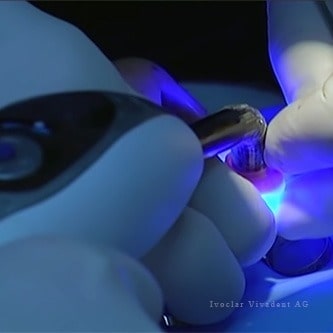
If everything is confirmed, the crown is permanently glued onto the tooth. A special cement is applied to attach the crown and cured securely by light into place. Your occlusion bite checked and final adjustments made to ensure a comfortable and proper fit. Your dentists instructs you on the care of your dental crown.
Crowns Post Care Instuctions
Dental crowns are maintain simliar to your normal natural teeth.
- follow good oral hygiene with brushing and flossing
- maintain a healthy diet
- avoid biting on hards foods
Crown Costs
Dental crown cost varies with the material chosen. There are 3 basic types of materials used in crowns:
- Metal Crowns : compose of standard alloys or full gold
- PFM Crowns : has an outer porcelain shell surface simliar to natural teeth with internal metal structure that caps over existing tooth
- All Ceramic crowns : composes only of porcelain and is non-metallic. There are different types of ceramics, zirconia ceramic being one of the current strongest material type.
Standard metal alloy without gold are the basic materal and normally the most economical option. PFM crowns or porcelain fused to metal alloy crowns has an outer porcelain shell but its internal structure is made of metal alloy, typically combined with gold, in attain both aesthetics and strength. PFM dental crown cost increases with the amount of gold alloy used. The higher amount of gold, the higher the cost of your crown. In Thailand, at Kitcha Dental Clinic, PFM standard alloy crown cost starts at THB10,000 (estimated USD$315 per tooth) ranging upwards with the amount of gold toTHB20,000 (estimated USD$624 per tooth).
Nowadays, all ceramic crowns is the preferred material for dental crowns. An all ceramic tooth crown price is around THB18,000 (estimated USD$565 per tooth) and provides for good aesthetics without the issue of long term gum-margin stains that PFM standard alloy crowns may cause over the long run. Consult with our prosthodontist when decide on which crown material is best suited for you.
Dental Crown Faqs
What are my cracked tooth treatment options?
Depending on how your tooth has cracked, teeth can be repaired by dental bonding or simply re-attaching the broken porcelain piece. If teeth has been more severly cracked, you may need a crown or root canal treatment to fix your tooth. Visit your dentist as soon as possible after injury to determine what should be the treatment option for your chipped tooth to prevent it from deteriorating in condition.
Is having a dental cap painful?
When your tooth is being preped for a crown, your dentist may administer local anesthesia to numb the area, so you do not feel pain during the procedure. After treatment when the anesthesia has worn off, you may sometime feel some sensitivity with the temporary crown or some soreness in the gums. The pain is normally minimal and does decrease over time. If you are bothered by the pain, you are able to take pain relieve medication by asking your dentist.
Is there any difference between front tooth crown to a molar crown?
Having front tooth crown done follows the same procedure as a molar crown. The only difference point of consideration between a front and molar crown is that your prosthodontist may request a stronger crown materials or composition for posterior teeth due to heavier back bite. This may thus affect the crown costs. Consult and discuss with you the most suited crown material for your case.
What is dental fluorosis? And what are the dental flurosis treatment?
Fluorosis is caused by overexposure to fluoride when you are still a child when permanent teeth are being formed. Dental flurosis may identified with white markings, stains ranging from yellow to dark brown or surface irregularities. Although fluorosis can be cosmetically treated, the condition is permanent. Dental fluorosis treatment options varies on its severity ranging from: For mild cases : calcium phosphate toothpaste can sometimes help to minimize tooth discoloration For moderate cases : porcelain veneers, composite veneers and dental bonding may be done to covers the front surface of teeth to improve their appearance For severe cases : teeth whitening followed by veneers or crowns may be recommended Ask our cosmetic dentist by emailing us any photos of your condition who can then advise on treatment options.
Summary
