Kitcha Dental Clinic Chiang Mai

kitcha dental clinic logo
Invisalign®

Invisalign® In the pursuit of a radiant, flawless smile, traditional orthodontic methods have often presented hurdles. From the discomfort induced by metal wires and brackets to the self-consciousness stemming from a conspicuously altered appearance, achieving straight teeth historically demanded sacrifices. However, with the advent of groundbreaking dental technology, a revolutionary solution has emerged, offering unparalleled convenience, comfort, and discretion: Invisalign. And here at Kitcha Dental Clinic, we take immense pride in offering this cutting-edge orthodontic treatment to our cherished patients, paving the way for a straighter, more confident smile like never before. What sets Invisalign apart from traditional braces is its ingenious approach to teeth straightening. Instead of relying on conspicuous metal components, Invisalign harnesses the power of transparent aligners meticulously crafted to fit snugly over your teeth. This means that as you undergo treatment, your aligners remain virtually invisible to others, empowering you to smile, speak, and laugh with unparalleled confidence. Yet, the allure of Invisalign transcends mere aesthetics. Unlike traditional braces, which can induce discomfort and irritation, Invisalign aligners are fashioned from smooth, comfortable materials that glide seamlessly over your teeth, sparing your gums and cheeks from unwelcome abrasion. With Invisalign, you can seamlessly navigate through your daily activities without the hindrance of bulky metal brackets chafing against the delicate interior of your mouth. Moreover, Invisalign offers a level of flexibility unparalleled in orthodontic treatment. While traditional braces impose restrictions on certain foods due to the risk of hardware damage, Invisalign aligners can be effortlessly removed before meals, granting you the freedom to relish all your favorite culinary delights without constraint. Whether you’re indulging in a crisp apple or savoring a succulent steak, you can do so with unwavering confidence, knowing that your aligners can be conveniently slipped out and reinserted afterward. At Kitcha Dental Clinic, we are dedicated to providing our patients with a level of care that transcends expectations. When you entrust us with your Invisalign journey, you can rest assured that you are in the capable hands of a team of seasoned dental professionals committed to your well-being. From your initial consultation to the culmination of your treatment, we embark on this transformative journey alongside you, ensuring that every step is marked by comfort, ease, and efficacy. Leveraging state-of-the-art 3D scanning technology, we meticulously craft a bespoke treatment plan tailored to your unique dental needs, ensuring optimal results with each successive aligner change. However, our dedication to your oral health extends far beyond the confines of your treatment plan. Throughout your Invisalign journey, we vigilantly monitor your progress, making any necessary adjustments to ensure that your teeth are shifting according to plan. Our ultimate goal is not only to bestow upon you a beautifully aligned smile but also to enhance your overall oral health and well-being, fostering a lifelong commitment to dental excellence.
Fixed Orthodontic Treatment-Braces

Post-Operative Care Instructions After Metal Braces Orthodontic Treatment 1. What to Expect After Treatment As you begin your journey with metal braces, it’s normal to experience: Soreness or pressure in your teeth and jaws for 2–5 days after the braces are first applied Mild irritation on your lips, cheeks, or tongue due to contact with brackets or wires Difficulty chewing or discomfort while eating certain foods during the initial days These symptoms are temporary and usually resolve as your mouth adjusts. Orthodontic wax and pain relief medication can help ease this transition. Be consistent with your oral hygiene to prevent cavities and decalcification (white spots) Keep all scheduled appointments (every 4–6 weeks) for proper adjustments Report any loose brackets or poking wires as soon as possible Ask your orthodontist if you’re unsure how to clean around new areas Stay positive—orthodontic treatment takes time, but the results are worth it 2. How to Take Care of Yourself After Treatment Brush after every meal using a soft toothbrush and an orthodontic brush to clean around brackets Use orthodontic floss or floss threaders to clean between teeth and under the wires Rinse with fluoride mouthwash to help protect against cavities and gum inflammation Avoid hard, sticky, or crunchy foods (e.g., candy, gum, popcorn, ice, sticky rice) Cut fruits and hard vegetables into small pieces before eating Stay hydrated and clean your teeth after sweet snacks or drinks Follow your orthodontist’s instructions for elastics or appliances, if prescribed 3. What to Avoid After Treatment Do not chew on hard objects like pens, nails, or ice Avoid biting into whole apples, corn on the cob, or crusty bread Do not skip brushing or flossing, especially before bed Avoid excessive sugary foods and drinks that increase plaque buildup Never try to adjust or remove your braces on your own   4. When to Contact the Clinic Please contact Kitcha Dental Clinic immediately if you notice any of the following: Severe pain that does not improve after a few days Broken or detached brackets or wires Sores or ulcers that worsen or don’t heal Questions or concerns about cleaning or appliance care 5. How to Reach Us For any concerns after your dental implant or bone graft procedure, please contact Kitcha Dental Clinic. Our staff will assess the urgency and assist with scheduling a follow-up. Contact Kitcha Dental Clinic: Phone (Thailand): 053-200201 or 091-797-7888 Website: https://www.kitchadentalclinic.com/contact-us/ LINE: nav.cx/5PmNyFR WhatsApp: https://wa.me/66917977888 Facebook Messenger: https://m.me/kitchaclinic Our team is committed to ensuring your comfort and success from surgery through recovery.

Dental Implant Placement Surgery

Post-Operative Care Instructions After Dental Implant and Bone Grafting Surgery 1. What to Expect After Surgery After dental implant and bone graft surgery, patients commonly experience mild to moderate discomfort, swelling, or bruising around the surgical site. This typically occurs within the first 24–48 hours. Minor bleeding or oozing is also expected and can usually be managed by biting gently on gauze. Temporary numbness or tingling in the lips, chin, or cheek area may occur, particularly when the lower jaw is involved. These are natural responses during the healing phase of dental implant treatment. At Kitcha Dental Clinic, a leading dental implant clinic in Chiang Mai, our patients receive personalized post-operative care instructions to help ensure safe healing and long-term success of their implants. 2. How to Take Care of Yourself After Surgery Bite down on a gauze pad over the surgical site for 1–2 hours to control bleeding. Apply a cold compress to the outside of your cheek for 15–20 minutes at a time during the first 24–48 hours. Follow all prescribed medications, including antibiotics and pain relievers, as directed. Avoid excessive talking, chewing on the surgical side, or using removable dentures over the area unless cleared by your dentist. Bring any removable prosthetics or appliances with you to your follow-up visit so the dentist can ensure they do not apply pressure to the surgical area. Consume soft, cool or lukewarm foods (e.g., soup, yogurt, mashed foods); avoid hot, spicy, sticky, or hard items. Brush gently with a soft toothbrush, avoiding the surgical site. Rinse with antiseptic mouthwash or warm saline after meals and before bed. Return to the clinic for scheduled follow-ups and suture removal if needed. Proper care is essential to achieving successful osseointegration (bone healing around the implant), a key phase in dental implant treatment at Kitcha Dental Clinic in Chiang Mai. 3. What to Avoid After Surgery Avoid rinsing or spitting forcefully for the first 24 hours. Do not smoke for at least one week before and after surgery, as this significantly increases the risk of implant failure. Refrain from alcohol and caffeine, which may interfere with healing. Avoid touching the surgical site with your fingers or tongue. Do not wear removable appliances unless specifically permitted by your dentist. Following these precautions supports the healing process and reduces the risk of complications such as infection or peri-implantitis. 4. When to Contact the Clinic Please contact Kitcha Dental Clinic immediately if you notice any of the following: Bleeding that continues after applying pressure for more than two hours Severe pain or swelling that worsens after the third day Signs of infection: fever, chills, pus, or a foul odor Persistent numbness or abnormal sensations beyond 7 days Loose crowns, shifting implants, or clicking sensations at the implant site 5. How to Reach Us For any concerns after your dental implant or bone graft procedure, please contact Kitcha Dental Clinic. Our staff will assess the urgency and assist with scheduling a follow-up. Contact Kitcha Dental Clinic: Phone (Thailand): 053-200201 or 091-797-7888 Website: https://www.kitchadentalclinic.com/contact-us/ LINE: nav.cx/5PmNyFR WhatsApp: https://wa.me/66917977888 Facebook Messenger: https://m.me/kitchaclinic Kitcha Dental Clinic in Chiang Mai specializes in dental implants, offering advanced treatment options and expert surgical care.  Our team is committed to ensuring your comfort and success from surgery through recovery.

Tooth Extraction / Surgery

Post-Operative Care Instructions After Surgical removal of impacted or Embeded tooth 1. What to Expect After Surgery After surgical removal of an impacted tooth, it is common to experience pain, swelling, or facial bruising within the first 24–48 hours. Minor bleeding may also occur. If bleeding persists, bite down firmly on a gauze pad to help control it. Some patients may have difficulty opening their mouth or may experience temporary numbness in the lips or chin, depending on the depth and position of the impacted tooth. 2. How to Take Care of Yourself After Surgery Bite down on a gauze pad over the surgical site for about 1 hour. If bleeding continues, replace with a fresh pad. Avoid forceful rinsing or using straws during the first 24 hours. Suction pressure from a straw can dislodge the blood clot and lead to dry socket. Apply a cold compress to the cheek area during the first 24–48 hours to reduce swelling. Switch to a warm compress starting on day 3. Begin gentle saline rinses from day 2 onward, especially after meals and before bedtime. Eat soft foods and avoid hot, spicy, chewy, or hard foods for 3–5 days. Take all prescribed medications, especially antibiotics, exactly as instructed. Return to the clinic for follow-up and suture removal within 5–10 days if non-dissolvable stitches were used. 3. What to Avoid After Surgery Do not rinse your mouth forcefully or spit during the first 24 hours. Avoid using straws or engaging in any sucking action that may dislodge the blood clot. Refrain from smoking or consuming alcohol for at least 72 hours, as these can delay healing. Avoid hot, spicy, or hard foods that may irritate the site. Avoid using straws to drink fluids, as suction can disrupt the healing site. Do not touch the extraction area with your fingers or tongue. Avoid blowing your nose forcefully or sneezing with your mouth closed, especially if the extracted tooth was near the sinus area. 4. When to Contact the Clinic Please contact Kitcha Dental Clinic immediately if you notice any of the following: Continuous bleeding for more than 2 hours that does not stop with pressure Severe pain that intensifies after 2–3 days (a potential sign of dry socket) Signs of infection such as fever, chills, swelling that worsens, or foul odor or taste Pus discharge from the site Difficulty breathing or swallowing Sensation of retained root fragments or loose bone near the wound 5. How to Reach Us If you have any concerns, questions, or complications following your treatment, please contact Kitcha Dental Clinic. Our staff will assess the urgency of your situation and prioritize appointments accordingly to ensure you receive timely care. Contact Kitcha Dental Clinic: Phone (Thailand): 053-200201 or 091-797-7888 Website: https://www.kitchadentalclinic.com/contact-us/ LINE: nav.cx/5PmNyFR WhatsApp: https://wa.me/66917977888 Facebook Messenger: https://m.me/kitchaclinic Our team is committed to ensuring your comfort and success from surgery through recovery.

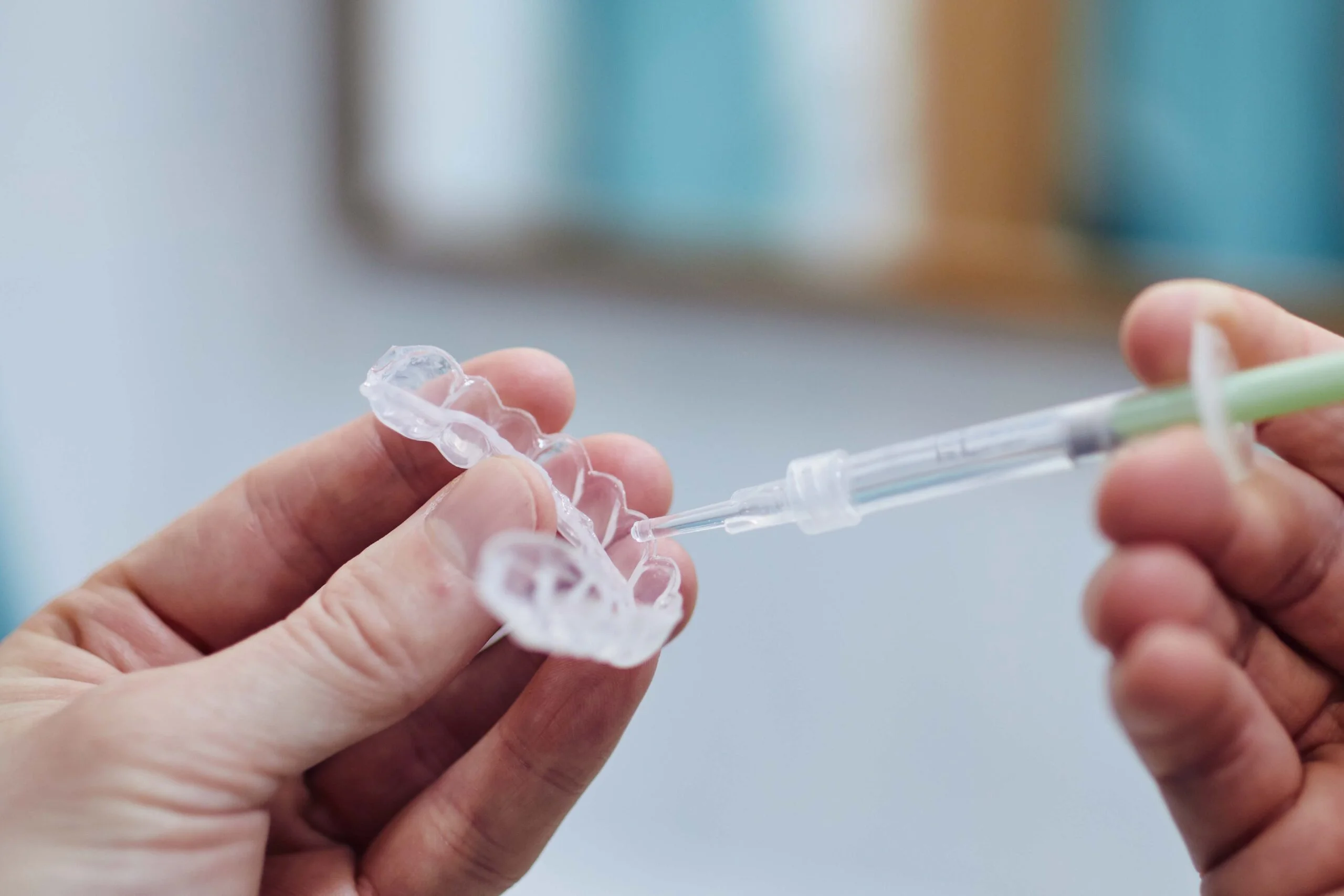
Clear dental aligners being filled with dental resin or adhesive for orthodontic treatment at Kitcha Dental Clinic Chiang Mai.
Opalescence PF Tooth Whitening Gel (Home Bleaching)

Opalescence PF is  : a water-based tooth whitening gel with concentrations of 10%, 15%, 20%, and 35%. It contains hydrogen peroxide at 10%, 15%, 20%, and 35%, respectively. This formula is used for teeth whitening, with results varying based on individual needs. It helps maintain tooth moisture during the whitening process. The higher concentration of the gel not only reduces sensitivity but also decreases the likelihood of shade relapse in the future. This is because the patient’s teeth remain moisturized from the beginning to the end of the whitening process. Mechanism of Action: Hydrogen peroxide infiltrates the tooth structure, then breaks down into water and oxygen. These oxygen molecules bind to the color molecules that make teeth appear yellow or dark, causing them to break down. As a result, the teeth appear whiter. 1. Precautions before using the whitening gel: Patients should consult a dentist to assess their dental and gum health. The dentist will select the appropriate formula and provide guidance and close monitoring. 2. How to use the whitening gel: 3. Precautions: 4. Side effects: Some potential side effects of using the whitening gel may include 5. Storage instructions: Recommendations:

Colored dental fillings on molar teeth at Kitcha Dental Clinic Chiang Mai, offering tooth restoration and cavity treatment.
The Safe Mercury Amalgam Removal Technique (SMART)

The Safe Mercury Amalgam Removal Technique (SMART) At Kitcha Dental Clinic, we prioritize your health and safety by following the Safe Mercury Amalgam Removal Technique (SMART) protocol, established by the International Academy of Oral Medicine and Toxicology (IAOMT). Our commitment to excellence ensures that your dental care is not only effective but also safe and environmentally responsible. The Safe Mercury Amalgam Removal Technique (SMART) is a set of rigorous safety recommendations designed to protect patients, dental professionals, and the environment from mercury exposure during the removal of dental amalgam fillings. These protocols are based on the latest scientific research and were most recently updated by the IAOMT on July 19, 2019. Our dentists at Kitcha Dental Clinic are certified in SMART, ensuring you receive the highest standard of care. Dental amalgam fillings contain approximately 50% mercury, which can release harmful mercury vapors during everyday activities like brushing and chewing. The release of mercury is significantly higher during the placement, replacement, and removal of these fillings. Mercury vapor is a known neurotoxin that can affect the nervous, digestive, and immune systems, as well as the lungs and kidneys. Chronic exposure to mercury vapor can have serious health implications, making it crucial to handle amalgam fillings with the utmost care. At Kitcha Dental Clinic, we implement the SMART protocol to minimize your exposure to mercury vapors and particulates. This protocol ensures that both patients and dental professionals are protected from the potential hazards associated with mercury exposure. Our SMART-certified dentists follow these comprehensive safety measures to protect your health during amalgam removal: These measures ensure that the amalgam removal process is safe for patients, dental professionals, and the environment. We adhere to all federal, state, and local regulations for the safe handling and disposal of mercury-contaminated materials. Our protocols extend beyond the removal procedure itself, encompassing the safe cleaning and disposal of any materials and equipment that come into contact with mercury. Additionally, we take extra precautions to ensure that pregnant or breastfeeding women are not exposed to mercury during their visits. The IAOMT does not recommend amalgam filling removal for women who are pregnant or breastfeeding, and we follow these guidelines rigorously to protect both our patients and staff. At Kitcha Dental Clinic, your safety and well-being are our top priorities. We are dedicated to providing you with safe and effective dental care using the latest and most reliable methods. Our commitment to the SMART protocol underscores our dedication to patient safety, environmental responsibility, and professional excellence. Contact us today to learn more about our SMART-certified services and how we can help you achieve a healthier smile. Trust Kitcha Dental Clinic for your dental care needs, where your health and safety come first.

High-tech dental equipment used at Kitcha Dental Clinic Chiang Mai for safe and effective dental treatments, featuring advanced air purification systems for patient safety.
Guided Biofilm Therapy (GBT)

Experience a New Level of Teeth Cleaning with GBT Looking for a dental cleaning that is more effective and comfortable than a normal air-flow procedure? Kitcha Dental Clinic in Chiang Mai, Thailand, offers Guided Biofilm Therapy (GBT) – a modern approach to dental cleaning that combines air polishing and ultrasonic scaling to remove plaque and calculus from teeth and gums, resulting in a more thorough and efficient cleaning that is superior to a normal air-flow procedure. At Kitcha Dental Clinic, we understand the importance of maintaining healthy teeth and gums, and our dental professionals are dedicated to providing the best possible care to our patients. That’s why we use GBT, a popular option among our patients who want a more comfortable and painless dental cleaning experience. GBT uses a fine powder to remove biofilm and stains from teeth, which is gentler and less abrasive than the traditional air-flow procedure. This allows for a more comfortable and painless cleaning experience for patients, while still achieving superior results. In addition, GBT’s specially formulated powder is gentle on teeth and gums, making it a safer and more effective option for those with sensitive teeth. GBT also uses ultrasonic scaling, a more efficient and effective method than manual scaling, to remove calculus and plaque from teeth and gums. This results in a more thorough and comfortable cleaning experience for patients, as well as a reduced risk of gum disease and other dental problems. At Kitcha Dental Clinic, we are proud to offer GBT as a valuable tool in the management of periodontal disease and the promotion of long-term oral health. Our patients have reported significant improvements in gum health and satisfaction after undergoing GBT, making it a popular choice for those who want to maintain healthy teeth and gums. With its superior cleaning technology, improved patient outcomes, and scientific support, GBT is a modern and valuable tool in the management of periodontal disease and the promotion of long-term oral health. If you’re looking for a more comfortable and painless dental cleaning experience in Chiang Mai, Thailand, visit Kitcha Dental Clinic and experience the benefits of GBT for yourself. Here are some scientific articles that support the benefits of GBT over traditional scaling and root planing: These studies provide strong evidence for the benefits of GBT over traditional scaling and root planing, and support its use as a valuable tool in the management of periodontal disease.

Bright smiling woman in swimming cap and goggles resting at the edge of a pool, showcasing relaxation and wellness at Kitcha Dental Clinic Chiang Mai, promoting health, dental care, and aquatic fitness in Thailand.
The Impact of Chlorine in Swimming Pools on Dental Health

The Impact of Chlorine in Swimming Pools on Dental Health Swimming is an excellent way to stay fit and have fun, but regular swimmers may face an unexpected issue: the impact of chlorine on their teeth. Chlorine is widely used in swimming pools to keep the water clean and free from harmful bacteria. While it is effective for maintaining water quality, chlorine can have adverse effects on dental health. Chlorine and Its Effects on Teeth Chlorine is a strong chemical that, when added to swimming pools, reacts with water to form hypochlorous acid and hydrochloric acid. These acids help in disinfecting the pool but can also create an environment that is not friendly to teeth. Swimmers who spend a lot of time in chlorinated pools might experience dental erosion or sensitivity due to prolonged exposure to these acids. Dental erosion occurs when the enamel, the hard, protective coating on the surface of teeth, is worn away by acidic substances. Chlorinated pool water can have a low pH, making it acidic enough to contribute to the erosion of dental enamel. As the enamel erodes, the underlying dentin, which is softer and more vulnerable, becomes exposed. This can lead to increased sensitivity, discoloration, and a higher risk of cavities. Exposure to chlorinated water can lead to increased tooth sensitivity. When the enamel is eroded, hot, cold, or sweet foods and drinks can cause discomfort or pain. Additionally, the acids in chlorinated water can cause staining and discoloration of the teeth, leading to an unattractive appearance and potentially affecting self-confidence. Research Findings Studies and Observations: Case Studies: In a case study published in the Journal of the American Dental Association, a young competitive swimmer exhibited severe dental erosion and sensitivity. Upon investigation, it was found that the pool’s pH levels were not adequately regulated, leading to excessive chlorine exposure and subsequent dental damage. Preventive Measures for Swimmers Swimmers can take several steps to protect their teeth from the harmful effects of chlorine: 1. Regular Dental Check-ups: Regular visits to the dentist can help detect early signs of dental erosion and address any issues before they become severe. 2. Mouthguard Use: Wearing a mouthguard while swimming can help minimize direct exposure of teeth to chlorinated water. 3. Rinse After Swimming: Rinsing your mouth with fresh water after swimming can help wash away chlorine and reduce its impact on teeth. 4. Maintain Good Oral Hygiene: Brushing twice a day with fluoride toothpaste and flossing daily can strengthen enamel and protect teeth from erosion. 5. Stay Hydrated: Drinking plenty of water helps maintain a healthy flow of saliva, which neutralizes acids and washes away harmful substances. While swimming is a great way to maintain physical fitness, it’s important to be aware of the potential impact of chlorine on dental health. By understanding the risks and taking preventive measures, swimmers can enjoy the benefits of swimming without compromising their dental well-being. Regular dental care, protective practices, and good oral hygiene are key to ensuring that teeth remain healthy and strong, even for avid swimmers.

Microscope at Kitcha Dental Clinic Chiang Mai for advanced dental examinations.
Dental Microscope

Dental Microscope At Kitcha Dental Clinic, we’re proud to offer the latest in dental technology to our patients. One of the most important tools we use for root canal treatment is a dental microscope. The microscope allows us to see the details of the tooth that we can’t see with the naked eye, making it an essential tool for providing the best possible care. If you’re not familiar with root canal treatment, it’s a procedure that’s used to save a tooth that’s become infected or inflamed. The procedure involves removing the infected or inflamed tissue from inside the tooth, and then filling the space with a special material. It’s a complex procedure that requires precision and accuracy, and that’s where the dental microscope comes in. The dental microscope is a specialized tool that’s designed to provide a magnified view of the tooth during the root canal procedure. This allows us to see the tooth in much greater detail, including the small canals and structures inside the tooth that are critical to the success of the procedure. With the microscope, we can identify and treat even the smallest issues with greater accuracy and precision. One of the most important benefits of using a dental microscope for root canal treatment is that it allows us to preserve more of the natural tooth structure. With traditional methods, it’s often necessary to remove more of the tooth than is actually necessary, which can weaken the tooth and make it more prone to future problems. With the microscope, we can see exactly what needs to be removed, and we can remove only the infected or inflamed tissue, leaving more of the healthy tooth intact. Another benefit of using a dental microscope is that it allows us to detect issues that might otherwise go unnoticed. With the magnified view provided by the microscope, we can see things like cracks, fractures, and other structural issues that might not be visible with the naked eye. This allows us to address these issues before they become bigger problems, potentially saving the tooth and preventing the need for more invasive procedures later on. At Kitcha Dental Clinic, we’re committed to providing the best possible care to our patients. That’s why we use the latest in dental technology, including a dental microscope for root canal treatment. With its precision, accuracy, and ability to detect even the smallest issues, it’s just one of the many ways we’re working to provide the best possible outcomes for our patients. If you’re looking for a Dental Clinic in Chiang Mai, Thailand that uses the latest dental technology to provide high-quality care, look no further than Kitcha Dental Clinic. Contact us today to schedule an appointment and experience the difference for yourself.

Ibuprofen 100mg / 5ml (Syrup)

Ibuprofen 100mg / 5ml (Syrup) Ibuprofen 100mg / 5ml (Syrup) is a nonsteroidal anti-inflammatory drug (NSAID) used for pain relief, fever reduction, and inflammation inhibition. 1) Precautions Before Using Ibuprofen 100mg / 5ml (Syrup) Do not use Ibuprofen 60cc 10 ml in individuals with the following conditions: 2)  How to use the medication: 2.1. What to do if you miss a dose: 3) Precautions while using the medicine:  4) Potential risks from the medication:  5) How to store the medicine: Note: This information is a general summary. Please read the medication label carefully before use and consult your doctor or pharmacist if you have any questions.

 
Privacy Overview

This website uses cookies so that we can provide you with the best user experience possible. Cookie information is stored in your browser and performs functions such as recognising you when you return to our website and helping our team to understand which sections of the website you find most interesting and useful.

 
Privacy Overview

This website uses cookies so that we can provide you with the best user experience possible. Cookie information is stored in your browser and performs functions such as recognising you when you return to our website and helping our team to understand which sections of the website you find most interesting and useful.