Senior dental care in Chiang Mai
Dental care for older adults, planned around your health, your medicines and what matters to you. Our team includes a dentist with a master's degree in geriatric dentistry and special patient care, who plans care together with our prosthodontists, periodontists and implant dentists. Kitcha Dental Clinic has served Chiang Mai since 1981, opposite Chiang Mai Gate, and is open every day.
- Open every day, 09:00–20:00
- Opposite Chiang Mai Gate
- Coordinators in English and Thai
Is this for you?
- You are an older adult and want a dentist who looks at your teeth, gums and dentures together, with your health in mind.
- You take several medicines, including blood thinners, or have a health condition that affects dental treatment.
- Your dentures feel loose, or you are thinking about implants to hold them steady.
- Teeth near the gumline feel sensitive, or old fillings and crowns are wearing out.
- You live in Chiang Mai long-term and want one clinic for check-ups and larger treatment.
- You are helping a parent or relative find a dentist, in Chiang Mai or from abroad.
Your dentist examines your mouth and reviews your health first, then explains your options before any treatment starts.
Who will look after you
Our team includes a dentist with an MSc in Geriatric Dentistry and Special Patient Care from Chulalongkorn University. Her training focuses on dental care for older adults and for patients whose health makes treatment more complex. Appointments with her are arranged through our coordinators.
When your plan includes dentures, gum treatment, root canal treatment or implants, she works with our prosthodontists, periodontists, endodontists and implant dentists, and the plan is agreed within the clinic. All our dentists can explain your treatment in English. You can ask for a particular dentist; our coordinators will suggest the right one for your treatment.
Kitcha Dental Clinic passed the TDCA 2403 (Level 3) assessment of the Thai Dental Clinic Accreditation in April 2026.
Geriatric and special-care dentistry
 Dr. Patcharaporn GavilaMSc in Geriatric Dentistry and Special Patient Care, Chulalongkorn University
Your senior oral-health assessment
Your health and medicines
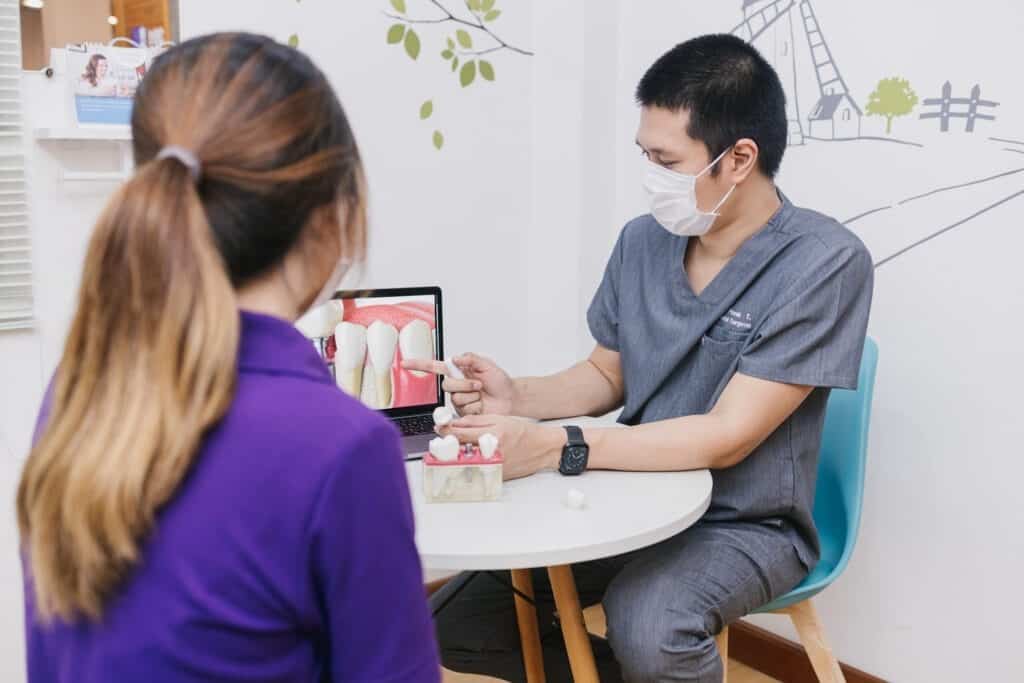
Bring a list of your medicines (or the boxes) and tell us about your health conditions. Your dentist reviews them, checks for dry mouth — which is often linked to medicines — and may contact your doctor before some treatments.
A full check of your mouth
Your teeth, gums and dentures, with X-rays, and how you bite and chew. Your dentist also checks the soft tissues inside your mouth — cheeks, tongue and gums — to screen for anything unusual. A 3D CBCT scan is taken only when planning needs it.
What matters to you
Comfortable chewing, a confident smile, easy cleaning or a simple plan — your priorities shape the options.
A yearly care plan and written estimate
Your dentist explains the options, the order of the steps and how many visits are likely, then gives you a care plan for the year ahead and a written estimate before treatment starts.
Treatment in steps
Urgent problems first, then the rest of the plan at a pace that suits you, with regular check-ups afterward.
The assessment takes about 30–45 minutes. It is charged as a regular consultation plus X-rays, both listed on our prices page — it is not a package.
Common concerns as we age

Root caries
When gums recede, the exposed root surface is softer than enamel and decays more easily — this is root caries. Regular check-ups help find it early, when a small filling or preventive care may be enough.
Dry mouth
Saliva protects the teeth and helps dentures stay in place. A drier mouth is common with age, often linked to medicines. Your dentist checks for early decay, suggests ways to protect your teeth, and may suggest discussing the cause with your doctor.
Worn and broken teeth
Years of chewing, grinding or aging fillings can leave teeth short or chipped; your dentist suggests repairs that suit your bite.
Sores and changes in the mouth
Show your dentist any sore spot under a denture, or a patch or lump that stays for more than two weeks. If needed, your dentist may take a small tissue sample (biopsy) for laboratory examination.
How we can help
Dentures for older adults
New full, partial, flexible or metal-framework dentures, and relines, repairs and adjustments for the denture you already have.
Dentures held by implants
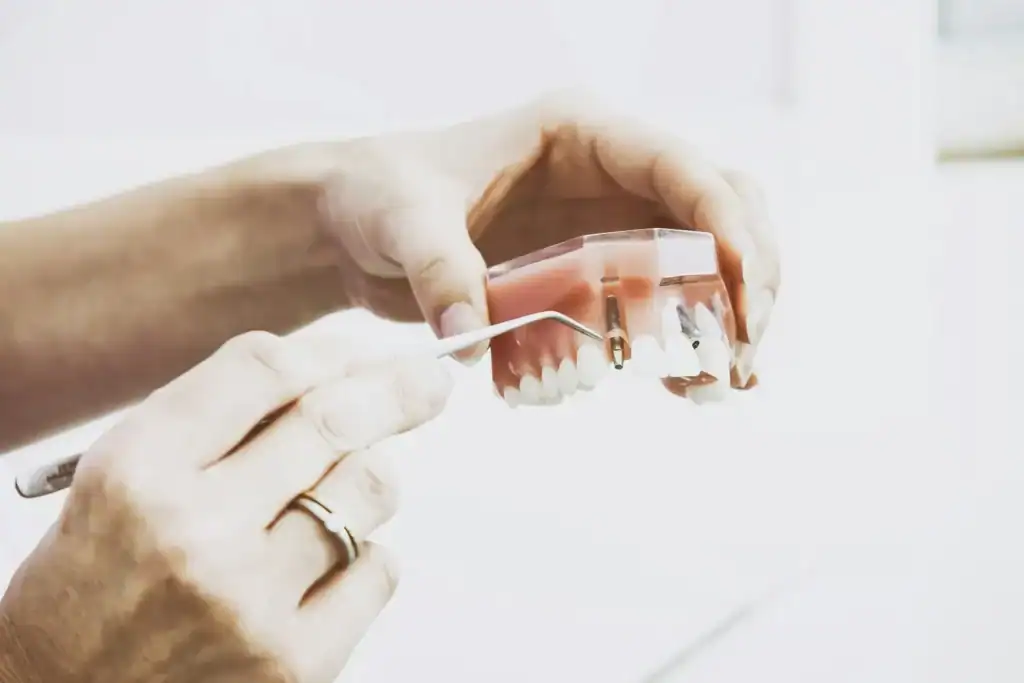
A few implants with snap-on attachments, including mini implants, can help keep a loose denture steady (an implant overdenture).
Keeping your natural teeth
Tooth-colored and fluoride-releasing glass-ionomer fillings, silver diamine fluoride (SDF) with your consent, fluoride trays and desensitizing care.
Gums and cleaning
Professional cleaning, Guided Biofilm Therapy (GBT) and regular gum maintenance visits.
Restoring worn or broken teeth
Crowns, bridges, and larger plans carried out in stages when many teeth are worn or missing.
Special-care planning
For people who use a wheelchair (treated at the clinic), older adults with health conditions or several medicines, and people living with dementia who come with a caregiver — planned with the family or caregiver. We do not offer home visits.
International patient coordination
English-speaking coordinators, a coordinator who speaks Chinese, and direct billing for eligible insurers.
Book a senior oral-health assessment
At the first visit your dentist reviews your health and medicines, checks your mouth and explains your options before any treatment starts.
Visits, comfort and getting in
Treatment can be divided into shorter visits when that suits you, and your dentist explains the order of the steps before you begin. Choose the time of day you prefer — the clinic is open every day from 09:00 to 20:00. If you feel anxious about treatment, nitrous oxide (laughing gas) sedation is available for suitable cases; your dentist decides after reviewing your health.
With your consent, a family member or caregiver is welcome to come with you into the treatment room and hear the plan. Tell our coordinator before your visit if you need help getting in or moving around, and we will prepare for your arrival.
The clinic entrance has a ramp and no steps, and you can reach the treatment rooms without stairs. There is a wheelchair-accessible restroom, a wheelchair you can borrow, a drop-off point in front of the clinic, and parking for patients.
Fees and written estimates
The assessment is charged as a regular consultation plus X-rays — both are listed on our prices page. Fillings, cleaning and GBT, SDF and fluoride trays, dentures, denture relines and repairs, mini implants, overdentures and implant packages are listed there too. Your dentist gives you a written estimate after the examination.
Prices on our prices page are shown as ranges. Your final fee depends on what the examination finds, and may include additional items — such as a rubber dam or special materials — when your treatment needs them. Your dentist explains these before treatment.
Dentures and other laboratory work are paid in full on the day the impression is taken.
1-year warranty on the restoration, terms apply: it covers laboratory work and implant components, used at our Chiang Mai clinic.
You can pay in Thai baht cash, by credit card (including American Express), Thai QR PromptPay, PayPal, Alipay or bank transfer. Direct billing is available for eligible Cigna, Allianz, International SOS and April patients after benefit verification — contact us before your visit so we can check your cover.
Living in Chiang Mai, or caring for a parent from abroad
If you live in Chiang Mai long-term, are visiting family, or have family overseas who help you plan care, our coordinators reply in English and Thai, and a coordinator who speaks Chinese is available. Recent X-rays or reports can be sent ahead by WhatsApp, LINE or email ([email protected]) so the right dentist sees your case.
1-year warranty on the restoration, terms apply: it covers laboratory work and implant components, used at our Chiang Mai clinic.
Finding us
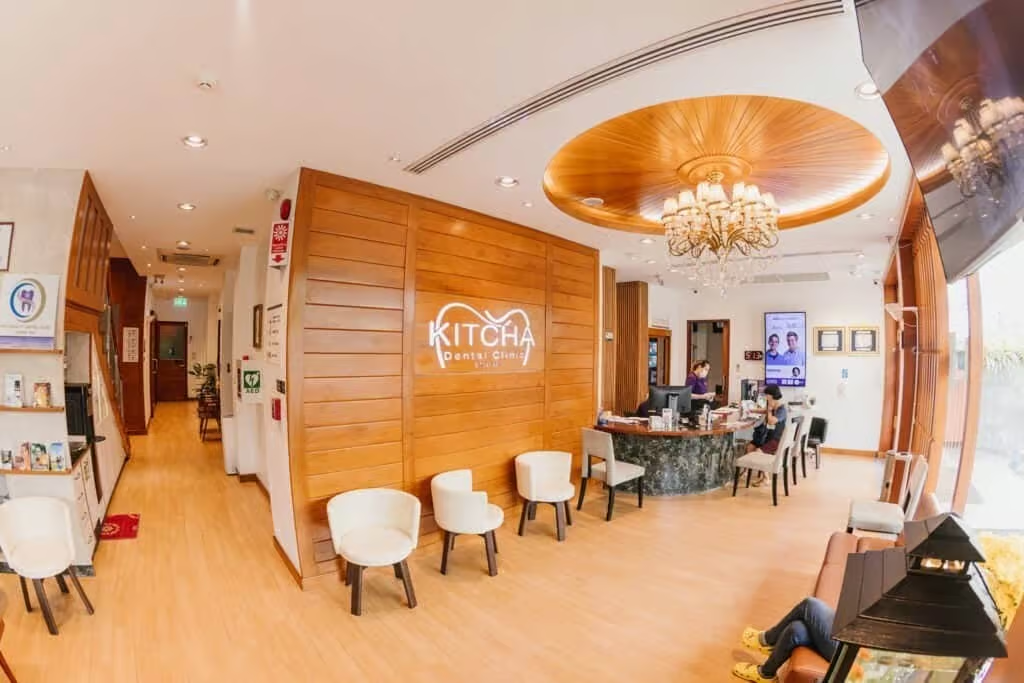
Kitcha Dental Clinic, 7/2-3 Changloa Road, Haiya, Mueang Chiang Mai 50100 — opposite Chiang Mai Gate, near the Saturday Walking Street. Open every day, 09:00–20:00, except 31 December, 1 January and 13–15 April.
Senior dental care FAQs
At what age should I see a dentist for older adults?
It is about your needs rather than a set age. A senior oral-health assessment suits older adults who take several medicines, have health conditions that affect treatment, wear dentures, or want to plan care for the years ahead.
What does the senior oral-health assessment include, and how long does it take?
Your dentist examines your teeth, gums and dentures with X-rays, checks the soft tissues inside your mouth for anything unusual, and reviews your health conditions, medicines and any dry mouth. You then receive a care plan for the year ahead and a written estimate. It takes about 30–45 minutes and is charged as a regular consultation plus X-rays.
Can my old teeth be saved?
Often they can, and keeping natural teeth is usually the first option your dentist looks at. Depending on what the examination finds, a tooth may be kept with a filling, root canal treatment, gum treatment or a crown. When a tooth is too damaged to keep, your dentist explains the ways to replace it.
My dentures feel loose. Do I need new ones?
Your dentist checks first. Gums and bone change shape over time, so a denture that once fitted well can become loose. Often it can be adjusted or relined to fit again; sometimes a new denture, or implants to hold it steady, works better.
I take blood thinners and other medicines. Can I still have dental treatment?
Yes, most people can. Bring your list of medicines and tell your dentist about your health conditions. Your dentist plans treatment around them and, before some procedures such as extractions or surgery, may contact your doctor. Keep taking your medicines as prescribed unless your doctor advises a change.
Am I too old for dental implants?
Age by itself is rarely the deciding factor. Your dentist looks at your general health, medicines, bone and gums, and how easily you can clean around implants, then explains whether implants — or a denture held by implants — suit you.
Can my son or daughter overseas help arrange my care?
Yes. A family member can contact our coordinators by WhatsApp, LINE or email to arrange appointments. Before we share your treatment details, plan or estimate with them, we confirm your permission with you directly — by phone or at the clinic — and we share them only with the people you name.
How much does treatment cost?
It depends on what you need. The consultation, X-rays, fillings, cleaning, dentures and implant packages are listed on our prices page. For other items, your dentist gives you a written estimate after the examination. The final fee depends on what the examination finds and may include additional items.
Book a senior oral-health assessment
Tell us what you or your family member would like help with, and any health conditions or medicines. A coordinator replies in English or Thai and books a time with the right dentist. Open every day, 09:00–20:00 (Thailand time).
Or email us at [email protected]
Content reviewed by Dr. Pawak Tungthangthum — DDS, Chiang Mai University; Master's Degree in Esthetic Restorative and Implant Dentistry (International Program), Chulalongkorn University · Last reviewed