
Microscope root canal treatment in Chiang Mai
A dental operating microscope gives your dentist strong magnification and bright, focused light inside the tooth. At Kitcha Dental Clinic, dentists with postgraduate training in endodontics use it during root canal treatment, retreatment and root-end surgery to see the fine details of the canals more clearly. It is used when your dentist judges that it will help with your tooth.
- Open every day, 09:00–20:00
- Opposite Chiang Mai Gate
- Coordinators in English and Thai
What a dental operating microscope is
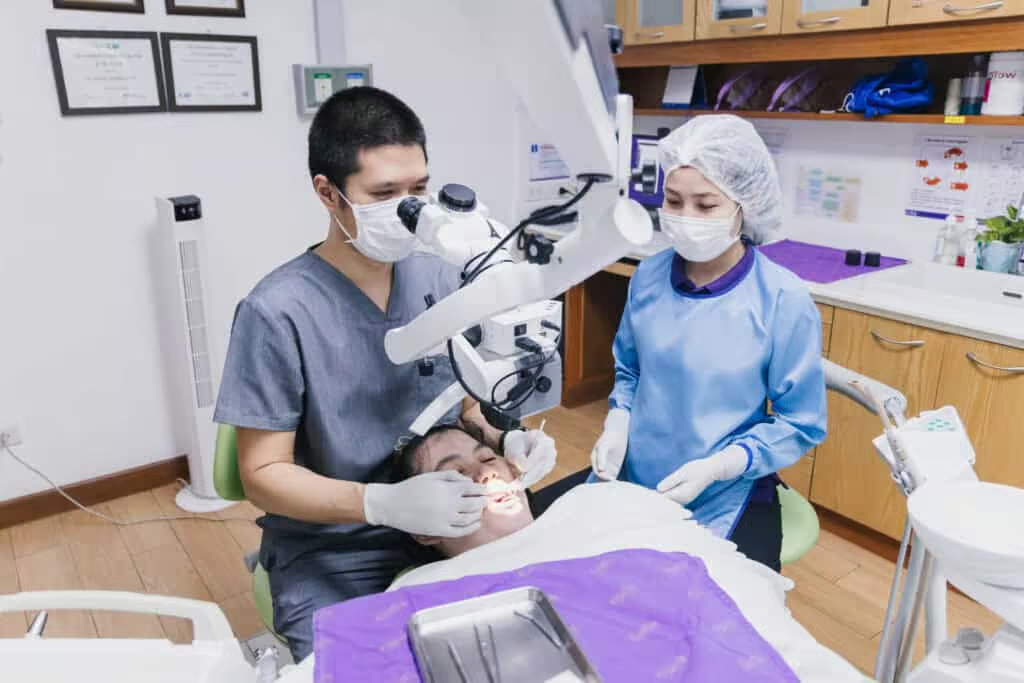
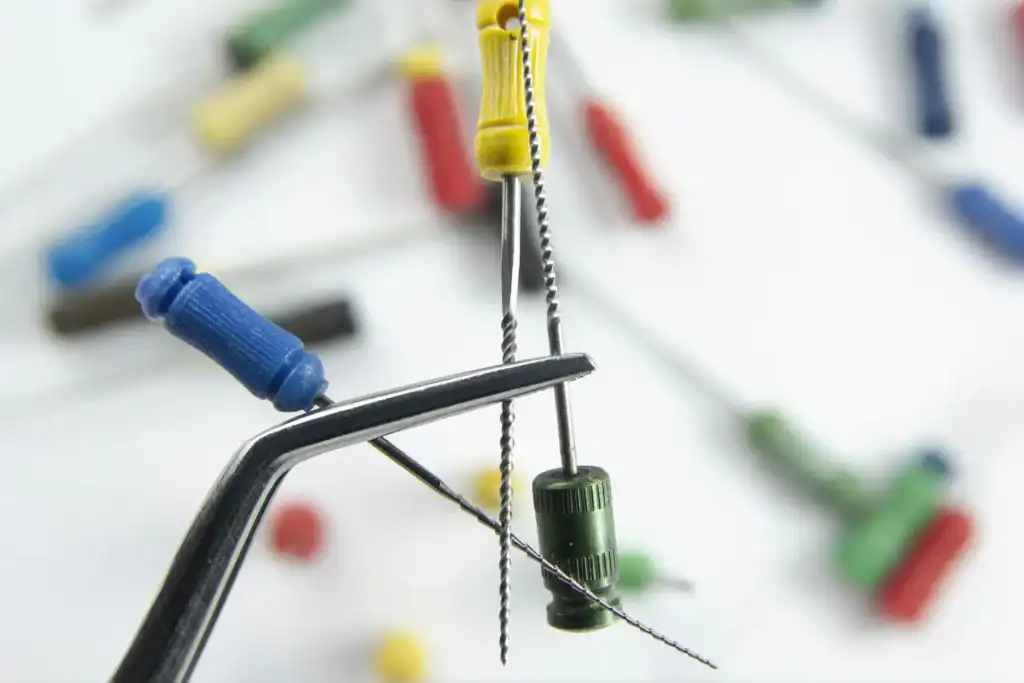
The canals inside a tooth's roots are very narrow, and the entrances to them can be hard to see by eye. A dental operating microscope sits above the treatment chair and lets your dentist look into the tooth under magnification, with light shining along the same line of sight. It is used alongside the usual root canal tools — X-rays, an apex locator that measures root length, and fine instruments for cleaning and shaping the canals.
You stay in the dental chair as you would for any root canal treatment; the microscope is positioned above you, at a distance from your face.
What it helps your dentist see
Hidden and narrow canals
Some teeth have extra canals, or canals that have narrowed with age or past treatment. Magnification helps your dentist locate their openings.
Old filling material and posts
In retreatment, the microscope helps your dentist see old root filling material, and sometimes an old post, while removing it from the canal.
Cracks
Magnification and light can help show some cracks in the tooth or root that are difficult to see by eye.
The root end during surgery
In root-end surgery, it helps your dentist see the cut root surface and place the retrograde (root-end) filling.
When the microscope is used
Your dentist uses the microscope when they judge that it will help with your tooth, after examining it and reviewing the X-rays — and, when needed, a CBCT 3D scan. It is most often considered for retreatment, molars with complex canal anatomy, teeth with narrowed canals, suspected cracks and root-end surgery. Using the microscope adds a small additional fee; you can see the price range on our prices page. If your dentist recommends it, they tell you before treatment starts, together with the estimate.
Has your tooth been treated before?
Send a recent X-ray if you have one. At the first visit your dentist examines the tooth and explains whether the microscope is needed before any treatment starts.
What to expect
Root canal treatment with a microscope follows the same steps as any root canal: numbing the tooth, cleaning and shaping the canals, medication between visits when needed, then filling and sealing the canals and restoring the tooth with a crown or onlay. The number of visits depends on the tooth and is explained at your first visit.
Other treatments under the microscope
Root-end surgery (apicoectomy)
When infection continues around a root tip after root canal treatment, the root tip may be removed (root resection) and the root end sealed with a retrograde filling under magnification.
Periodontal microsurgery
Some gum procedures, such as gum grafts for receding gums, can be carried out under the microscope.
Cost of microscope root canal treatment
The root canal treatment itself is listed on our prices page. Using the microscope adds a small additional fee, charged per visit only when your dentist uses it for your tooth; the price range is on our prices page. Your dentist gives you a written estimate after the examination.
Prices on our prices page are shown as ranges. Your final fee depends on what the examination finds, and may include additional items — such as special materials — when your treatment needs them. Your dentist explains these before treatment.
Who treats you
Microscope-assisted root canal treatment and endodontic surgery are carried out by dentists with postgraduate training in endodontics, with our consultant endodontist advising on complex cases. Gum microsurgery is carried out by dentists who treat gum conditions. You can ask for a particular dentist; our coordinators will suggest the right one for your treatment.
Microscope root canal treatment FAQs
Is every root canal done with a microscope?
Not necessarily. The microscope is used when your dentist judges that it will help with your tooth — most often for retreatment, complex molars, narrowed canals, suspected cracks and root-end surgery. It adds a small additional fee, and your dentist tells you before treatment if they recommend it.
Does a microscope make root canal treatment more successful?
The microscope helps your dentist see the inside of the tooth in more detail. How a treated tooth does over time depends on many things — the tooth's condition before treatment, how much tooth structure remains, the final restoration and your care at home — so your dentist discusses the outlook for your own tooth.
Does using the microscope cost extra?
Yes, a small additional fee. Microscope use is a separate item, charged per visit when your dentist uses it; the price range is on our prices page. Your dentist includes it in your written estimate after the examination.
Can the microscope find a crack in my tooth?
It can help show some cracks. Others sit deep along the root and are confirmed only by looking directly at the root during a small surgical procedure, which your dentist explains if it is needed. A CBCT scan may also help with planning.
My tooth had a root canal before and still hurts — can a microscope help?
Your dentist first examines the tooth and takes X-rays, and a CBCT scan if needed, to find out why. If retreatment is suitable, the microscope helps your dentist remove the old filling material and look for canals that may need treatment. If retreatment through the tooth is impractical, root-end surgery may be an option.
Does treatment with a microscope take longer?
Appointment length depends mainly on the tooth and how many canals it has. Your dentist tells you how long each visit is likely to take when they explain your plan.
Is the microscope used for anything besides root canals?
Yes. It is also used in root-end surgery and in some gum procedures (periodontal microsurgery), such as gum grafts.
Book a root canal consultation
Tell us about your tooth, or send a recent X-ray if you have one — especially if the tooth has been treated before. A coordinator replies in English or Thai and books a time with a dentist. Open every day, 09:00–20:00 (Thailand time).
Or email us at [email protected]
Content reviewed by Dr. Pawak Tungthangthum — DDS, Chiang Mai University; Master's Degree in Esthetic Restorative and Implant Dentistry (International Program), Chulalongkorn University · Last reviewed