
Dental bonding in Chiang Mai
Bonding uses tooth-colored composite resin to repair chips, close small gaps and reshape teeth, usually in one visit and with little or no drilling. At Kitcha Dental Clinic, the shade is matched to your teeth and the composite is shaped and polished at the chair.
- Open every day, 09:00–20:00
- Opposite Chiang Mai Gate
- Coordinators in English and Thai
Is this you?
- A front tooth has a small chip or rough edge.
- There is a small gap between your front teeth.
- A tooth is slightly shorter or a different shape from its neighbors.
- You would like a quick improvement before deciding on veneers.
Bonding suits small changes. For larger changes in color or shape, porcelain veneers or crowns usually last longer; your dentist explains the options.
What bonding can do
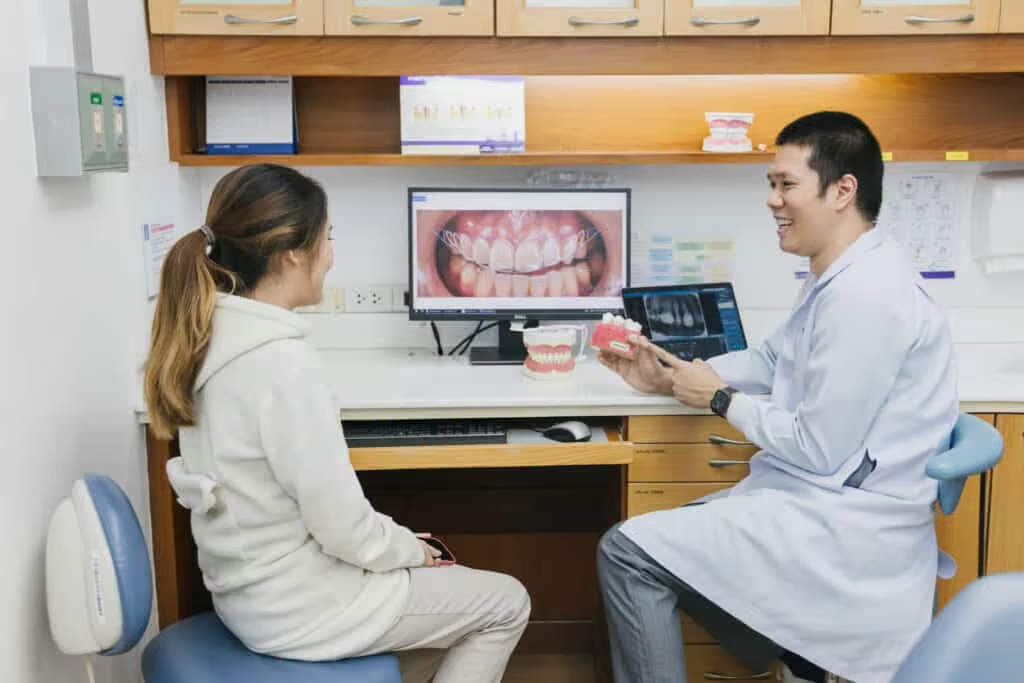
Repair a chipped tooth
Composite is added to rebuild the missing part and polished to blend in.
Close small gaps
Composite is added to the sides of the teeth to close a small space.
Reshape teeth
Small differences in length or shape are evened out.
Composite veneers
A layer of composite over the front of the tooth to change its color or shape.
Composite is not as strong or stain-resistant as porcelain, so bonding can chip or change color over time and may need polishing or replacing.
Would you like to fix a chip or gap?
Send a clear photo of your smile and tell us what you would like to change. Your dentist explains whether bonding or another option suits you.
What happens, and how many visits
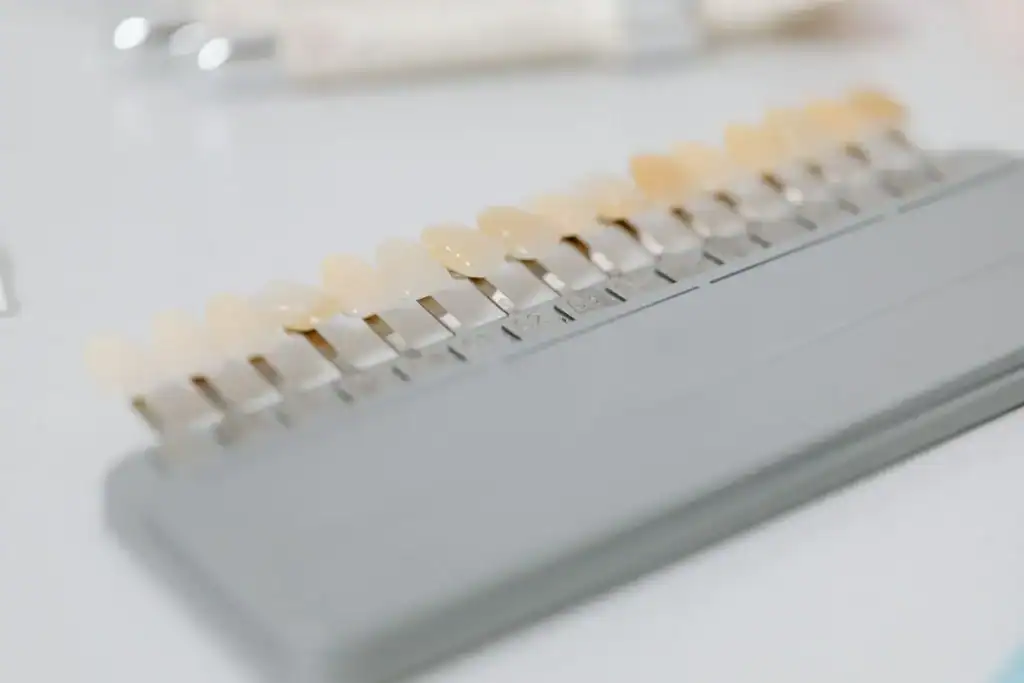
Planning and shade
Your dentist checks the teeth and chooses the composite shade with you.
Preparing the surface
The tooth surface is lightly roughened and conditioned so the composite can bond to it. Little or no drilling is usually needed.
Shaping and polishing
Composite is applied in layers, hardened with a curing light, shaped and polished, and your bite is checked.
Most bonding is done in one visit. Larger smile changes are planned first, sometimes with Digital Smile Design.
Caring for bonding
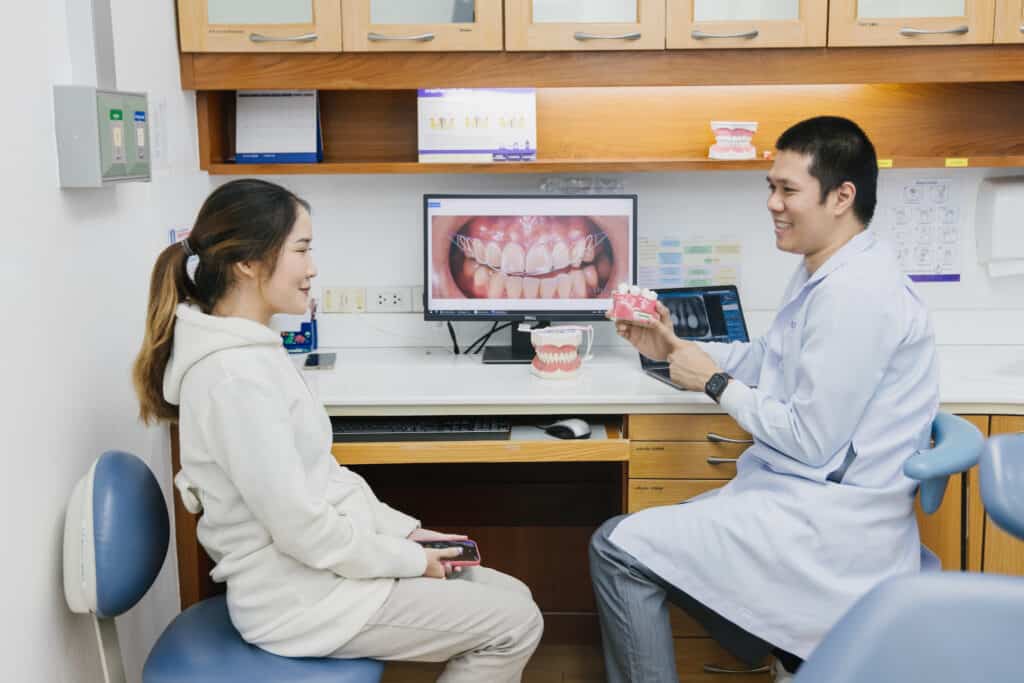
Brush and floss as usual with a soft toothbrush, and avoid biting directly on very hard food or using your teeth to open things. Coffee, tea and smoking can stain composite over time. Regular check-ups let your dentist polish the bonding and repair small chips early.
Cost of dental bonding
Bonding is priced per tooth and depends on how much composite is needed, from a small chip repair to closing a gap or a composite veneer. Prices are on our prices page, and your dentist confirms the fee after the examination.
Prices on our prices page are shown as ranges. Your final fee depends on what the examination finds, and may include additional items — such as a rubber dam or special materials — when your treatment needs them. Your dentist explains these before treatment.
Dental bonding FAQs
How long does bonding take?
Most bonding is done in one visit. Your dentist tells you how long to allow, depending on how many teeth are involved.
Bonding or veneers: which should I choose?
Bonding suits small chips, gaps and shape changes and needs little or no drilling. Porcelain veneers suit larger changes in color or shape and resist staining better. Your dentist explains which suits your teeth.
Does bonding damage the teeth?
Bonding usually needs little or no drilling; the surface is only lightly roughened so the composite can stick. Composite is not as strong as natural teeth or porcelain, so it can chip and may need repairing.
Can bonding be whitened?
No. Whitening only changes the color of natural teeth. If you plan to whiten, it is usually done first so the bonding can be matched to your lighter shade.
How do I look after bonding?
Brush and floss as usual with a soft toothbrush, avoid biting directly on very hard food, and come for regular check-ups so your dentist can polish it and repair small chips early.
How much does dental bonding cost?
It is priced per tooth and depends on how much composite is needed. Prices are on our prices page, and your dentist confirms the fee after the examination.
Book a bonding consultation
Send a clear photo of your smile and tell us what you would like to change. A coordinator replies in English or Thai and books a time. Open every day, 09:00–20:00 (Thailand time).
Or email us at [email protected]
Content reviewed by Dr. Pawak Tungthangthum — DDS, Chiang Mai University; Master's Degree in Esthetic Restorative and Implant Dentistry (International Program), Chulalongkorn University · Last reviewed